Results by title
56 books match the query 'Pictorials' and 12 start with t
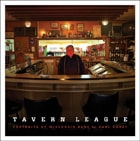
Tavern League
Portraits of Wisconsin BarsCarl Corey
Wisconsin Historical Society Press, 2011
In Tavern League, photographer Carl Corey documents a unique and important segment of the Wisconsin community. Our bars are unique micro-communities, offering patrons a sense of belonging. Many of these bars are the only public gathering place in the rural communities they serve. These simple taverns offer the individual the valuable opportunity for face to face conversation and camaraderie, particularly as people become more physically isolated through the accelerated use of the internet’s social networking, mobile texting, gaming, and the rapid-fire of email.
This collection of 60 pictures captures the Wisconsin tavern as it is today. Carl Corey’s view is both familiar and undeniably unique, his pictures resonant with anyone who has set foot in a Wisconsin tavern. As the Milwaukee Journal Sentinel’s Mary Louise Schumacher has written, “Carl Corey’s photographs . . . document iconic American places that are taken for granted. . . . They are comforting images, places we know, but also eerie and remote, presented with a sense of romance and nostalgia that suggests they are already past.”
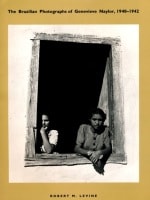
The Brazilian Photographs of Genevieve Naylor, 1940–1942
Robert M. Levine
Duke University Press, 1998
Working under the constraints of the Vargas dictatorship, the instructions of her employers, and a chronic shortage of film and photographic equipment, Naylor took advantage of the freedom granted her as an employee of the U.S. government. Traveling beyond the fashionable neighborhoods of Rio de Janeiro, she conveys in her work the excitement of an outside observer for whom all is fresh and new—along with a sensibility schooled in depression-era documentary photography of Dorothea Lange and Walker Evans, as well as the work of Cartier-Bresson and filmmaker Serge Eisenstein. Her subjects include the very rich and the very poor, black Carnival dancers, fishermen, rural peasants from the interior, workers crammed into trolleys—ordinary Brazilians in their own setting—rather than simply Brazilian symbols of progress as required by the dictatorship or a population viewed as exotic Latins for the consumption of North American travelers.
With Levine’s text providing details of Naylor’s life, perspectives on her photographs as social documents, and background on Brazil’s wartime relationship with the United States, this volume, illustrated with more than one hundred of Naylor’s Brazilian photographs will interest scholars of Brazilian culture and history, photojournalists and students of photography, and all readers seeking a broader perspective on Latin American culture during World War II.
Genevieve Naylor began her career as a photojournalist with Time, Fortune, and the Associated Press before being sent to Brazil. In 1943, upon her return, she became only the second woman to be the subject of a one-woman show at New York’s Museum of Modern Art. She served as Eleanor Roosevelt’s personal photographer and, in the 1950s and 1960s became well known for her work in Harper’s Bazaar, primarily as a fashion photographer and portraitist. She died in 1989.

The New Jersey Churchscape
Encountering Eighteenth- and Nineteenth-Century ChurchesFrank L. Greenagel
Rutgers University Press, 2001
Although best known as the Garden State, New Jersey could also be called the Church State. The state boasts thousands of houses of worship, with more than one thousand still standing that were built in the eighteenth and nineteenth centuries. Frank L. Greenagel has photographed more than six hundred. He has selected two hundred of these historic landmarks for an examination of why they are sited where they are and why they look the way they do.
Greenagel has sought out and included images of not only mainstream Christian churches, but also Jewish synagogues as well as the places of worship of religious groups such as the Moravians, the Church of the Brethren, and the Seventh Day Baptists. The photographs are arranged chronologically within sections on three major early settlement regions of the state ¾ the Hudson River, the Delaware River, and the Raritan Valley. For each building, Greenagel details the date of construction, the cultural, historic, and religious influences that shaped it, the architectural details that distinguish it, and what purpose it currently serves.
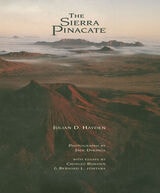
The Sierra Pinacate
Julian D. Hayden; Photographs by Jack Dykinga; With Essays by Charles Bowden and Bernard L. Fontana
University of Arizona Press, 1998

The Steam and Diesel Era in Wheeling, West Virginia
Photographs by J. J. Young Jr.Nicholas Fry
West Virginia University Press, 2016
For nearly seventy years, John J. Young Jr. photographed railroads. With unparalleled scope and span, he documented the impact and beauty of railways in American life from 1936 to 2004.
As a child during the Great Depression, J. J. Young Jr. began to photograph railroads in Wheeling, West Virginia. This book collects over one hundred fifty of those images—some unpublished until now—documenting the railroads of Wheeling and the surrounding area from the 1930s until the 1960s.
The photographs within this book highlight the major railroads of Wheeling: the Baltimore & Ohio, the Pennsylvania, the Wheeling & Lake Erie, the Pittsburgh & West Virginia, the New York Central, and the industrial and interurban rail lines that crisscrossed the region. These images capture the routine activities of trains that carried passengers and freight to and from the city and its industries, as well as more unusual traffic, such as a circus-advertising car, the General Motors Train of Tomorrow, and the 1947 American Freedom Train.
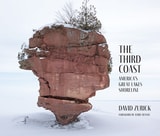
The Third Coast
America’s Great Lakes ShorelineZurick, David
Northwestern University Press, 2025
A full-color photographic journey around the Great Lakes
Locals affectionately call the Great Lakes the “third coast”—though at 4,500 miles, this beloved freshwater shoreline is the nation’s longest, covering more distance than the country’s Atlantic and Pacific coasts combined.
Divided into four galleries by lake and season, David Zurick’s award-winning photographs spotlight the distinct personality of each coastline and the people who call its shores home. We visit windswept Lake Superior in winter, Lake Michigan bursting into spring, Lakes Erie and Ontario under the summer sun, and Lake Huron in the changing palette of autumn, with an additional gallery devoted to the straits and rivers that connect them. An evocative foreword from award-winning nature writer Jerry Dennis sets the stage for this sweeping visual tour.
In Zurick’s photographs, lifelong lovers of the Great Lakes will find the familiar shorelines of coastal hometowns, summer refuges, and secret fishing spots—as well as images that reawaken us to the majesty and mystery of North America’s “freshwater seas.”

The Ultimate Guide to the Jersey Shore
Where to Eat, What to Do, and so Much MorePeter Genovese
Rutgers University Press, 2023
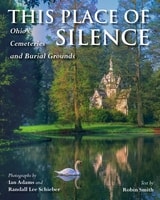
This Place of Silence
Ohio's Cemeteries and Burial GroundsIan Adams; Randall Lee Schieber; Robin L. Smith
Ohio University Press, 2024
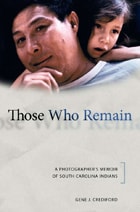
Those Who Remain
A Photographer's Memoir of South Carolina IndiansGene J. Crediford
University of Alabama Press, 2009
Through interviews and a generous photograph montage stretching over two decades, reveals the commonality and diversity among these people of Indian identity
When DeSoto (in 1540) and later Juan Pardo (in 1567) marched through what was known as the province of Cofitachequi (which covered the southern part of today’s North Carolina and most of South Carolina), the native population was estimated at well over 18,000. Most shared a common Catawba language, enabling this confederation of tribes to practice advanced political and social methods, cooperate and support each other, and meet their common enemy. The footprint of the Cofitachequi is the footprint of this book.
The contemporary Catawba, Midland, Santee, Natchez-Kusso, Varnertown, Waccamaw, Pee Dee, and Lumbee Indians of North and South Carolina, have roots in pre-contact Cofitachequi. Names have changed through the years; tribes split and blended as the forces of nature, the influx of Europeans, and the imposition of federal government authority altered their lives. For a few of these tribes, the system has worked well—or is working well now. For others, the challenge continues to try to work with and within the federal government’s system for tribal recognition—a system governing Indians but not created by them. Through interviews and a generous photograph montage stretching over two decades, Gene Crediford reveals the commonality and diversity among these people of Indian identity; their heritage, culture, frustrations with the system, joys in success of the younger generation, and hope for the future of those who come after them. This book is the story of those who remain.

Tierra Santa
Sacred Beauty in the AmericasCarolyn Brown
Bridwell Press, 2026
Tierra Santa follows photographer Carolyn Brown into the Americas, from the temple mountains of the Maya and the kivas of the Pueblo Southwest to the candlelit churches of colonial Mexico and Guatemala. Over decades of travel, Brown has photographed wherever people have recognized something holy, whether an ancient plaza open to the sky or a village chapel at the end of a dirt road.
The photographs do more than document. In a bank of flickering candles and a hillside terraced into a pyramid, Brown finds the vitality that many cultures have felt in these places—the sense that earth and sky were already sacred and that human beings have only answered its call. Essays by leading scholars of archaeology, anthropology, and colonial history trace how successive peoples made room for the divine. Brown's own reflections close the book with a pilgrimage through the Sierra Gorda.
Together, the images and essays offer an invitation to look slowly and to notice. Stay with them long enough and these places begin to stir memory and awe, along with a profound sense that the sacred was here long before we arrived and remains, patiently, wherever we're willing to see it.
Time and Change
150 Years of The Ohio State UniversityTamar Chute with a Letter by President Michael V. Drake and an Afterword by Provost Bruce A. McPheron
The Ohio State University Press, 2019
Gain a visually stunning new perspective on iconic landmarks such as Mirror Lake, the Oval, Ohio Stadium, and the neighborhoods surrounding the Columbus and regional campuses. From beloved teams, symbols, and traditions to scenes from academic and campus life, reflect on time and change and rediscover the extraordinary connection that unites generations of Buckeyes.

Tséyi' / Deep in the Rock
Reflections on Canyon de ChellyText by Laura Tohe; photographs by Stephen E. Strom
University of Arizona Press, 2005
Diné poet Laura Tohe draws deeply on her heritage to create lyrical writings that are rooted in the canyon but universal in spirit, while photographer Stephen Strom captures images that reveal the very soul of this ancient place. Tohe’s words take readers on a journey from the canyon rim down sheer sandstone walls to its rich bottomlands; from the memory of Kit Carson’s rifle shots and the forced march of the Navajo people to the longings of modern lovers. Her poems view the land through Diné eyes, blending history, tradition, and personal reflection while remaining grounded in Strom’s delicate yet striking images. These photographs are not typical of most southwestern landscapes. Strom’s eye for the subtleties and mysticism of the canyon creates powerful images that linger in the mind long after the pages are turned, compelling us to look at the earth in new ways.
Tséyi' / Deep in the Rock is a unique evocation of Canyon de Chelly and the people whose lives and spirits are connected to it. It is a collaboration that conjures the power of stories and images, inviting us to enter a world of harmony and be touched by its singularly haunting beauty.