Results by title
77 books match the query 'Pioneers' and 18 start with t
Tenderfoot in Colorado
Richard Baxter Townshend
University Press of Colorado, 1968
The Brothers Robidoux and the Opening of the American West
Robert J. Willoughby
University of Missouri Press, 2012
The Daring Trader
Jacob Smith in the Michigan Territory, 1802-1825Kim Crawford
Michigan State University Press, 2012
A fur trader in the Michigan Territory and confidant of both the U.S. government and local Indian tribes, Jacob Smith could have stepped out of a James Fenimore Cooper novel. Controversial, mysterious, and bold during his lifetime, in death Smith has not, until now, received the attention he deserves as a pivotal figure in Michigan’s American period and the War of 1812. This is the exciting and unlikely story of a man at the frontier’s edge, whose missions during both war and peace laid the groundwork for Michigan to accommodate settlers and farmers moving west. The book investigates Smith’s many pursuits, including his role as an advisor to the Indians, from whom the federal government would gradually gain millions of acres of land, due in large part to Smith’s work as an agent of influence. Crawford paints a colorful portrait of a complicated man during a dynamic period of change in Michigan’s history.
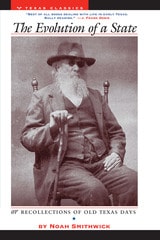
The Evolution of a State, or, Recollections of Old Texas Days
By Noah Smithwick
University of Texas Press, 1983
"I was but a boy in my nineteenth year, and in for adventure when I started out from Hopkinsville, Kentucky, with all my worldly possessions, consisting of a few dollars in money, a change of clothes, and a gun, of course, to seek my fortune in this lazy man's paradise."
Noah Smithwick was an old man, blind and near his ninetieth year, when his daughter recorded these words. He had stayed on in "paradise"—Texas—from 1827 to 1861, when his opposition to secession took him to California. The Evolution of a State is his story of these "old Texas days."
A blacksmith and a tobacco smuggler, Noah Smithwick made weapons for the Battle of Concepción, and he fought in that battle. With Hensley's company, he chased the Mexican army south of the Rio Grande after the Battle of San Jacinto. Twice he served with the Texas Rangers. In quieter times, he was a postmaster and justice of the peace in little Webber's Prairie.
Eyewitness to so much Texas history, Smithwick recounts his life and adventures in a simple, straightforward style, with a wry sense of humor. His keen memory for detail—what the people wore, what they ate, how they worked and played— vividly evokes the sights, sounds, and smells of the frontier.
First published in part by the Dallas Morning News, Smithwick's recollections gained such popularity that they were published in book form, as The Evolution of a State, in 1900. This new edition of a Texas classic makes widely available for the first time in many years this "best of all books dealing with life in early Texas."
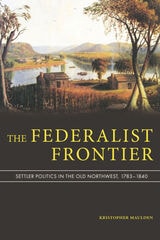
The Federalist Frontier
Settler Politics in the Old Northwest, 1783-1840Kristopher Maulden
University of Missouri Press, 2023
Historians of early American politics will have a chance to read about Federalists in the Northwest, and they will see the early American state in action in fighting Indians, shaping settler understandings of space and social advancement, and influencing political ideals among the citizens. For historians of the early American West, Maulden’s work demonstrates that the origins of state-led expansion reach much further back in time than generally understood.

The Follinglo Dog Book
A Norwegian Pioneer Story from IowaPeder Gustav Tjernagel
University of Iowa Press, 1999
The Follinglo Dog Book both is and is not about dogs. The dogs are certainly here: from Milla to Chip the Third, we encounter a procession of heroic if often unfortunate creatures who, along with their immigrant masters, led a hard life on the nineteenth-century American frontier. However, if you pick up this book thinking it will offer a heartwarming read about canine experiences, you will find yourself reinformed by the way it unfolds.
Instead, these are the stories of a Norwegian pioneer family that came in 1860 to settle the Iowa prairie on a homestead called Follinglo Farm in Story County, Iowa. In the Tjernagels' experience one may read a chronicle of the state, the region, and the nation. Arriving in Iowa in what was still the age of wooden equipment and animal power, the Tjernagels witnessed each successive revolution on the land. They built homes and barns, cultivated the land, and encountered every manner of natural disaster from prairie fires to blizzards. Through all the struggles and setbacks, Peder Gustav Tjernagel's stories sparkle with boyhood pranks and adventures, in which the family dogs frequently play a role.
Readers will discover a wonderful cast of Norwegian relatives and neighbors, including a Herculean uncle, Store Per (Big Pete), who could lift a cow by its horns; a mysterious aunt, Stora Fastero (Big Sister), whose arrival signaled that a baby was soon to be born; and Elling Eilson, the walking Lutheran apostle. And, of course, there are the dogs who shepherd, protect, and even baby-sit the residents of Follinglo Farm.
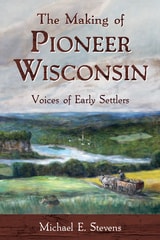
The Making of Pioneer Wisconsin
Voices of Early SettlersMichael E. Stevens
Wisconsin Historical Society Press, 2018
The Making of Pioneer Wisconsin provides a unique and intimate glimpse into the lives of these early settlers, as they describe what it felt like to be a teenager in a wagon heading west or an isolated young wife living far from her friends and family. Woven together with context provided by historian Michael E. Stevens, these first-person accounts form a fascinating narrative that deepens our ability to understand and empathize with Wisconsin’s early pioneers.
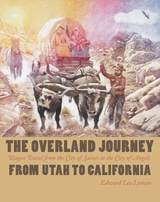
The Overland Journey From Utah To California
Wagon Travel From The City Of Saints To The City Of AngelsEdward Leo Lyman
University of Nevada Press, 2008
The wagon trail between Salt Lake City and Los Angeles is one of the most important and least-known elements of nineteenth-century Western migration. Known as the Southern Route, it included the western half of the Old Spanish Trail and was favored because it could be used for travel and freighting year-round. It was, however, likely the most difficult route that pioneers traveled with any consistency, following not rivers but leading from one--sometimes dubious--desert watering place to the next and offering few havens for the sick, weary, or unfortunate. Historian Edward Leo Lyman has provided the first history of the complete Southern Route and of the people who developed and used it. Based on extensive research in primary sources--including many early travelers’ accounts--and on Lyman’s own investigation of the route and its branches, the book discusses the exploration and development of the Old Spanish Trail, its horse thieves and traders, including Jed Smith and Kit Carson, along with government explorere John C. Frémont. Developing the old pack mule trail as a wagon road between Salt Lake City and Los Angeles, miners heading for the California gold fields first used the route extensively. Mormon missionaries and the colonizers of San Bernardino and other communities also traveled that way, as did a wide array of mail carriers, soldiers and world travelers. Later, a steady stream of Anglo-American emigrants seeking new homes or fortunes in California shared the road with a surprising number of freight wagon operators. The trail passed through the territories of numerous Native American peoples, and contacts with them--both friendly and hostile--played a significant role in the experiences of travelers and in the fates of Native American cultures in this region. Lyman’s discussions of Mormon-Indian relations and of the infamous Mountain Meadows Massacre offer fresh and important analyses of these vital aspects of the westward movement.
The Pioneers of Judicial Behavior
Nancy Maveety, Editor
University of Michigan Press, 2002
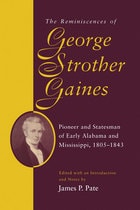
The Reminiscences of George Strother Gaines
Pioneer and Statesman of Early Alabama and Mississippi, 1805–1843George Strother Gaines
University of Alabama Press, 1998
One man’s remarkable account of nation‑building, Native diplomacy, and the making of the early American South.
The Reminiscences of George Strother Gaines: Pioneer and Statesman of Early Alabama and Mississippi, 1805–1843 offers one of the most vivid, irreplaceable firsthand accounts of the American Southeast during its most transformative decades. Edited and expertly contextualized by historian James P. Pate, this volume gathers Gaines’s dictated memoirs, rare letters, early newspaper publications, oral-history interviews, and extensive editorial notes to illuminate a world on the cusp of monumental change.
George Strother Gaines was no ordinary frontier figure. Trusted by U.S. officials and Choctaw leaders alike, he played central roles as federal factor at the Choctaw Trading House, a key intermediary during treaty negotiations, a primary organizer of the first Choctaw removal, a banker and state senator in newly formed Alabama, and later a driving force behind the Mobile & Ohio Railroad. His reminiscences reveal intimate knowledge of the region’s political development, frontier economy, Native diplomacy, and daily life. They are written in a strikingly elegant “Addisonian” style praised even in his own lifetime.
This edition’s special features—including detailed maps, illustrations, genealogical material, and a robust scholarly introduction—make it the most comprehensive and authoritative presentation of Gaines’s writings ever published. It not only preserves his voice but situates him within the broader historical forces reshaping the Gulf South and Native nations in the nineteenth century.
Ideal readers include:
• Historians of Alabama, Mississippi, and the early American South
• Scholars of Native American and Choctaw/Chickasaw history
• Readers of frontier, antebellum, or political history
• Genealogists and local-history enthusiasts
• Anyone seeking an engaging, elegantly written window into the early Southeast
This is a foundational text for understanding the region’s past—and a compelling story told by one of its most influential witnesses.
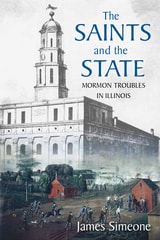
The Saints and the State
The Mormon Troubles in IllinoisJames Simeone
Ohio University Press, 2021
A compelling history of the 1846 Mormon expulsion from Illinois that exemplifies the limits of American democracy and religious tolerance.
When members of the Church of Jesus Christ of Latter-day Saints (known as Mormons) settled in Illinois in 1839, they had been persecuted for their beliefs from Ohio to Missouri. Illinoisans viewed themselves as religiously tolerant egalitarians and initially welcomed the Mormons to their state. However, non-Mormon locals who valued competitive individualism perceived the saints‘ western Illinois settlement, Nauvoo, as a theocracy with too much political power. Amid escalating tensions in 1844, anti-Mormon vigilantes assassinated church founder Joseph Smith and his brother Hyrum. Two years later, the state expelled the saints. Illinois rejected the Mormons not for their religion, but rather for their effort to create a self-governing state in Nauvoo.
Mormons put the essential aspirations of American liberal democracy to the test in Illinois. The saints’ inward group focus and their decision to live together in Nauvoo highlight the challenges strong group consciousness and attachment pose to democratic governance. The Saints and the State narrates this tragic story as an epic failure of governance and shows how the conflicting demands of fairness to the Mormons and accountability to Illinois’s majority became incompatible.
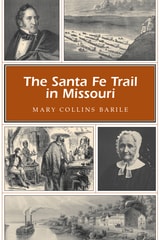
The Santa Fe Trail in Missouri
Mary Collins Barile
University of Missouri Press, 2010

The Sutton-Taylor Feud
The Deadliest Blood Feud in TexasChuck Parsons
University of North Texas Press, 2009
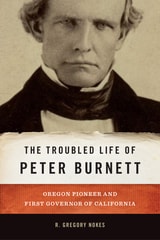
The Troubled Life of Peter Burnett
Oregon Pioneer and First Governor of CaliforniaR. Gregory Nokes
Oregon State University Press, 2018
It was one heck of a resume. Yet with the exception of the wagon road to California, in none of these roles was Burnett considered successful or well remembered. Indeed, he resigned from many of his most important positions, including the governorship, where he was widely perceived a failure.
Burnett’s weakness was that he refused to take advice from others. He insisted on marching to his own drum, even when it led to some terrible decisions. A former slaveholder, he could never seem to get beyond his single-minded goal of banning blacks and other minorities from the West.
The Troubled Life of Peter Burnett is the first full-length biography of this complicated character. Historians, scholars, and general readers with an interest in Western history will welcome R. Gregory Nokes’ accessible and deeply researched account.
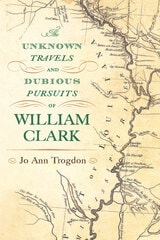
The Unknown Travels and Dubious Pursuits of William Clark
Jo Ann Trogdon
University of Missouri Press, 2023
In this vivid history, Jo Ann Trogdon reveals William Clark’s highly questionable activities during the years before his famous journey west of the Mississippi. Delving into the details of Clark’s diary and ledger entries, Trogdon investigates evidence linking Clark to a series of plots—often called the Spanish Conspiracy—in which corrupt officials sought to line their pockets with Spanish money and to separate Kentucky from the United States. The Unknown Travels and Dubious Pursuits of William Clark gives readers a more complex portrait of the American icon than has been previously written.
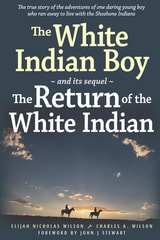
The White Indian Boy
and its sequel The Return of the White Indian BoyElijah Nicholas Wilson and Charles A. Wilson
University of Utah Press, 1985
These books, published here as a single volume, are testaments to a unique time and place in American history. Because he had a heart for adventure and unusual proficiency with Native American languages, Wilson’s life became an historical canvas on which was painted both the exploration and the closing of a frontier, as he went from childhood among the Shoshone to work as an interpreter for the U.S. government on Indian reservations in Wyoming and Idaho in his later years. This volume includes new introductory material, a family tree, and a background of Indian-white relations in Jackson Hole. Packed with amazing details about life in the Old West, Wilson’s colorful escapades are once again available to a new generation of readers.
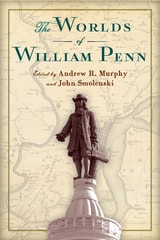
The Worlds of William Penn
Murphy, Andrew R
Rutgers University Press, 2019
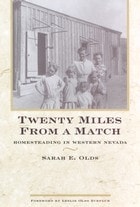
Twenty Miles From A Match
Homesteading In Western NevadaSarah E. Olds
University of Nevada Press, 1978