Results by title
87 books match the query 'Political Freedom' and 20 start with t
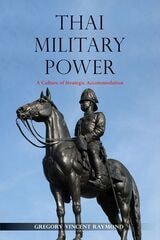
Thai Military Power
A Culture of Strategic AccommodationGregory Vincent Raymond
National University of Singapore Press, 2018

The ANC and the Liberation Struggle
A Critical Political BiographyDale T. McKinley
Pluto Press, 1997
eloquent testimony of the continuing vitality of the South African left' Modern African Studies
The African National Congress, the ANC, negotiated a transition of government and power in South Africa in the early 1990s and gained widespread respect and legitimacy when Nelson Mandela was voted in as President in 1994.
In this controversial and radical critique of the ANC and the struggle for liberation in South Africa, Dale T. McKinley challenges conventional public perceptions of the organisation and its celebrated rise to power. McKinley offers the first detailed analysis of the ANC's leadership, tactics and strategies from the 1920s, through the years of exile, to the 1990s, focusing on its close alliance with the South African Communist Party. he reveals that the organisation, despite historical claims to the contrary, failed to stay in touch with the south African masses. The ANC made fundamental compromises to gain political power, and in so doing has ensured that the economic power-base of the ruling elites in South Africa remains essentially unaltered.

The Autonomous Animal
Self-Governance and the Modern SubjectClaire E. Rasmussen
University of Minnesota Press, 2011
Autonomy is a vital concept in much of modern theory, defining the Subject as capable of self-governance. Democratic theory relies on the concept of autonomy to provide justification for participatory government and the normative goal of democratic governance, which is to protect the ability of the individual to self-govern.
Offering the first examination of the concept of autonomy from a postfoundationalist perspective, The Autonomous Animal analyzes how the ideal of self-governance has shaped everyday life. Claire E. Rasmussen begins by considering the academic terrain of autonomy, then focusing on specific examples of political behavior that allow her to interrogate these theories. She demonstrates how the adolescent—a not-yet-autonomous subject—highlights how the ideal of self-governance generates practices intended to cultivate autonomy by forming the individual’s relationship to his or her body. She points up how the war on drugs rests on the perception that drug addicts are the antithesis of autonomy and thus must be regulated for their own good. Showing that the animal rights movement may challenge the distinction between human and animal, Rasmussen also examines the place of the endurance athlete in fitness culture, where self-management of the body is the exemplar of autonomous subjectivity.
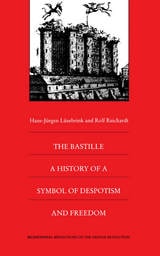
The Bastille
A History of a Symbol of Despotism and FreedomHans-Jürgen Lüsebrink and Rolf Reichardt
Duke University Press, 1997
To facilitate the symbolic nature of the investigation, this analysis of the evolving signification of the Bastille moves from the French Revolution to the nineteenth century to contemporary history. The narrative also shifts from France to other cultural arenas, like the modern European colonial sphere, where the overthrow of the Bastille acquired radical new signification in the decolonization period of the 1940s and 1950s. The Bastille demonstrates the potency of the interdisciplinary historical research that has characterized the end of this century, combining quantitative and qualitative approaches, and taking its methodological tools from history, sociology, linguistics, and cultural and literary studies.

The Complete Writings and Selected Correspondence of John Dickinson
Volume 1Jane E. Calvert
University of Delaware Press, 2011

The Complete Writings and Selected Correspondence of John Dickinson
Volume 2Jane E. Calvert
University of Delaware Press, 2021
Dickinson’s hard work on behalf of his clients brought him success in other areas of his public life. In October 1759, he was elected to his first public position as a representative for Kent County, Del., the following year he was elevated to the position of speaker, and in 1762, he became a representative for Philadelphia County, Pa. As a legislator in two colonies, learning his craft as a global war unfolded, he contributed to bills on military and defense, Indian relations, infrastructure improvements and city management, and served on various committees. The death of George II occasioned debates over laws and judges, in which Dickinson participated. This era concludes with Dickinson playing a central role in managing the unfolding Paxton Riots, in which frontiersmen massacred peaceful Indians and threatened the Quaker leadership of Pennsylvania.
In private, Dickinson lost the two most prominent male figures in his life in 1760, his father, Samuel, and soon thereafter, his mentor, colleague, and friend, John Moland. In honor of Moland, Dickinson published a poem and became a proxy head to Moland’s large family. Though his extant correspondence during this period is small, he exchanged letters with Mary Cadwalader Dickinson, Israel Pemberton, William Allason, George Read, Thomas McKean, and others. Perhaps most significant, he wrote a lengthy, unpublished essay on the flag-of-truce trade and also maintained commonplace books as he considered his place within the British Empire, opening up the next phase in Dickinson’s life as a leader of the resistance against Britain.
Published by the University of Delaware Press. Distributed worldwide by Rutgers University Press.

The Complete Writings and Selected Correspondence of John Dickinson
Volume 3Jane E. Calvert
University of Delaware Press, 2024

The Complete Writings and Selected Correspondence of John Dickinson
Volume 4, 1767-1769John Dickinson
University of Delaware Press, 0

The Eagle Has Eyes
The FBI Surveillance of César Estrada Chávez of the United Farm Workers Union of America, 1965–1975José Angel Gutiérrez
Michigan State University Press, 2019
The Ethics of Care
A Feminist Approach to Human SecurityFiona Robinson
Temple University Press, 2011
In The Ethics of Care, Fiona Robinson demonstrates how the responsibilities of sustaining life are central to the struggle for basic human security. She takes a unique approach, using a feminist lens to challenge gender biases in rights-based, individualist approaches.Robinson's thorough and impassioned consideration of care in both ethical and practical terms provides a starting point for understanding and addressing the material, emotional and psychological conditions that create insecurity for people. The Ethics of Careexamines “care ethics” and “security” at the theoretical level and explores the practical implications of care relations for security in a variety of contexts: women's labor in the global economy, humanitarian intervention and peace building, healthcare, and childcare.
Theoretically-innovative and policy-relevant, this critical analysis demonstrates the need to understand the obstacles and inequalities that obstruct the equitable and adequate delivery of care around the world.

The Indecent Screen
Regulating Television in the Twenty-First CenturyChris, Cynthia
Rutgers University Press, 2019
The Intimate Life of Dissent
Anthropological PerspectivesEdited by Harini Amarasuriya, Tobias Kelly, Sidharthan Maunaguru, Galina Oustinova-Stjepanovic and Jonathan Spencer
University College London, 2020
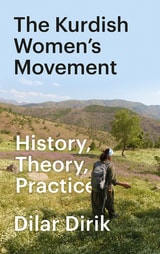
The Kurdish Women’s Movement
History, Theory, PracticeDilar Dirik
Pluto Press, 2021
'One the foremost writers and participants in the Kurdish women's movement' - Harsha Walia
The Kurdish women's movement is at the heart of the most exciting revolutionary experiment in the world today: Rojava. Forged over decades of struggle, most recently in the fight against ISIS, Rojava embodies a radical commitment to ecology, democracy and gender equality. But while striking images of Kurdish women in desert fatigues proliferate, a true understanding of the women's movement remains elusive.
Taking apart the superficial and Orientalist frameworks that dominate, Dilar Dirik offers instead an empirically rich account of the women's movement in Kurdistan. Drawing on original research and ethnographic fieldwork, she surveys the movement's historical origins, ideological evolution, and political practice over the past forty years. Going beyond abstract ideas, Dirik locates the movement's culture and ideology in its concrete work for women's liberation and radical democracy.
Taking the reader from the guerrilla camps in the mountains to radical women's academies and self-organized refugee camps, the book invites readers around the world to engage with the revolution in Kurdistan, both theoretically and practically, as a vital touchstone in the wider struggle for a militant anti-fascist, anti-capitalist feminist internationalism.
The Social Programs of Sweden
A Search for Security in a Free SocietyAlbert H. RosenthalForeword by Marquis Childs
University of Minnesota Press, 1967
The Social Programs of Sweden was first published in 1967. Minnesota Archive Editions uses digital technology to make long-unavailable books once again accessible, and are published unaltered from the original University of Minnesota Press editions.
In his forward to this book, Marquis Childs, author of the classic work Sweden: The Middle Way,comments: "There has been a great deal of emotional writing about the effort of the labor government in Stockholm to regulate capitalism and provide a decent standard of living for every citizen. Much of this emotional writing has come from those who for one reason or another have sought to discredit the Swedish experiment ... The net result of much of this highly colored writing has been to ignore the real contribution that Sweden has made in a half dozen fields and particularly in the fields of social security and health. But now comes an author ideally equipped to appraise this contribution by reason of his background. This is the great virtue of this book. It is a careful and thorough examination of Sweden's achievement by a specialist familiar with our own social security, public health and welfare systems ... No subsequent appraisal of what Sweden has done can be made henceforth without this basic work."
The author traces the development of the Swedish programs and provides detailed descriptions of the social security, health insurance, public health, and welfare programs, with case examples. He evaluates and compares the programs with their American counterparts, and, in conclusion, considers the effects of the Swedish system on personal freedom. The work is based on extensive research done in Sweden.
The Theatre of Genocide
Four Plays about Mass Murder in Rwanda, Bosnia, Cambodia, and ArmeniaEdited and with an introduction by Robert Skloot
University of Wisconsin Press, 2008

The Transparent Traveler
The Performance and Culture of Airport SecurityRachel Hall
Duke University Press, 2015
The U.S. Army Stability Operations Field Manual
U.S. Army Field Manual No. 3-07The United States Army
University of Michigan Press, 2009
Field Manual 3-07, Stability Operations, represents a milestone in Army doctrine.
With a focus on transforming conflict, managing violence when it does occur and maintaining stable peace, The U.S. Army Stability Operations Field Manual (otherwise known as FM 3-07) signals a stark departure from traditional military doctrine. The Army officially acknowledges the complex continuum from conflict to peace, outlines the military's responsibility to provide stability and security, and recognizes the necessity of collaboration, coordination, and cooperation among military, state, commercial, and non-government organizations in nation-building efforts.
The manual reflects a truly unique collaboration between the Army and a wide array of experts from hundreds of groups across the United States Government, the intergovernmental and non-governmental communities, America's allies around the world, and the private sector. All branches of the armed forces, U.S. agencies ranging from the State Department to Homeland Security to Health and Human Services, international agencies from the United Nations to the Red Cross to the World Bank, countries from the United Kingdom to India to South Africa, private think tanks from RAND to the United States Institute of Peace to the Center for New American Security, all took part in the shaping of this document.
The U.S. Army Stability Operations FieldManual, marks just the second time in modern history that the U.S. Army has worked with a private publisher to produce a military doctrinal document.
Lieutenant General William B. Caldwell, IV is Commander of the Combined Arms Center at Fort Leavenworth, Kansas.
Michèle Flournoy, Under Secretary of Defense for Policy
Shawn Brimley, Fellow, Center for a New American Security
Janine Davidson, Deputy Assistant Secretary of Defense for Plans
"It is a roadmap from conflict to peace, a practical guidebook for adaptive, creative leadership at a critical time in our history. It institutionalizes the hard-won lessons of the past while charting a path for tomorrow. This manual postures our military forces for the challenges of an uncertain future, an era of persistent conflict where the unflagging bravery of our Soldiers will continue to carry the banner of freedom, hope, and opportunity to the people of the world."
—From the foreword by Lieutenant General William B. Caldwell, IV, Commander of the Combined Arms Center at Fort Leavenworth, Kansas
The University and Social Justice
Struggles Across the GlobeAziz Choudry
Pluto Press, 2020
Whether calling for the decommodification or the decolonization of education, many of these struggles have attempted to draw on (and in turn, resonate with) longer histories of popular resistance, broader social movements and radical visions of a fairer world. In this critical collection, Aziz Choudry, Salim Vally and a host of international contributors bring grounded, analytical accounts of diverse struggles relating to higher education into conversation with each other.
Featuring contributions written by students and staff members on the frontline of struggles from 12 different countries, including Canada, Chile, France, India, Mexico, Nigeria, Occupied Palestine, the Philippines, South Africa, Turkey, the UK and the USA, the book asks what can be learned from these movements' strategies, demands and visions.
The World after Iraq
A Special Issue, Volume 14Nikolaos A. Stavrou, ed.
Duke University Press, 0
Contributors from the Mediterranean Basin and the U.S.—both supporters and critics of U.S. foreign policy in pre- and postwar Iraq—investigate the U.S.’s “war on terrorism” and its associated concept of “preemptive war” as viable political strategies. Other essays weigh the ramifications of recent U.S. foreign policy in the Middle East for the institutions that have governed international relations since World War II and consider the political, social, and economic costs of this policy both for the U.S. itself and for the countries it targets.
Contributors. Stephen C. Calleya, Vincent M. Cannistraro, Ted Galen Carpenter, Mohamed A. El-Khawas, Ivan Eland, William H. Lewis, Raymond Muhula, Bernard Reich, Burton M. Sapin, Joseph J. Sisco, Nikolaos A. Stavrou, Stansfield Turner
Transformations of Warfare in the Contemporary World
John C. Torpey
Temple University Press, 2016
Today’s warfare has moved away from being an event between massed national populations and toward small numbers of combatants using high-tech weaponry. The editors of and contributors to the timely collection Transformations of Warfare in the Contemporary World show that this shift reflects changes in the technological, strategic, ideological, and ethical realms.
The essays in this volume discuss:
·the waning connection between citizenship and soldiering;
·the shift toward more reconstructive than destructive activities by militaries;
·the ethics of irregular or asymmetrical warfare;
·the role of novel techniques of identification in military settings;
·the stress on precision associated with targeted killings and kidnappings;
·the uses of the social sciences in contemporary warfare.
In his concluding remarks, David Jacobson explores the extent to which the contemporary transformation of warfare is a product of a shift in the character of the combatants themselves.
Contributors include: Ariel Colonomos, Roberto J. González, Travis R. Hall, Saskia Hooiveld, Rob Johnson, Colonel C. Anthony Pfaff, Ian Roxborough, and the editors