Results by title
64 books match the query 'Political corruption' and 17 start with t
The City Electric
Infrastructure and Ingenuity in Postsocialist TanzaniaMichael Degani
Duke University Press, 2022
The Gambler King of Clark Street
Michael C. McDonald and the Rise of Chicago's Democratic MachineRichard C. Lindberg with a Foreword by John Miya.
Southern Illinois University Press, 2009
The Gambler King of Clark Street tells the story of a larger-than-life figure who fused Chicago’s criminal underworld with the city’s political and commercial spheres to create an urban machine built on graft, bribery, and intimidation. Lindberg vividly paints the life of the Democratic kingmaker against the wider backdrop of nineteenth-century Chicago crime and politics.
McDonald has long been cited in the published work of city historians, members of academia, and the press as the principal architect of a unified criminal enterprise that reached into the corridors of power in Chicago, Cook County, the state of Illinois, and ultimately the Oval Office. The Gambler King of Clark Street is both a major addition to Chicago’s historical literature and a revealing biography of a powerful and troubled man.
Illinois State Historical Society Scholarly Award, Certificate of Excellence, 2009
Society of Midland Authors Biography Award, 2009
The Gospel of Progressivism
Moral Reform and Labor War in Colorado, 1900-1930R. Todd Laugen
University Press of Colorado, 2010
Sharing enemies like the party boss and corporate lobbyist who undermined honest and responsive government, Progressive leaders were determined to root out selfish political action with public exposure. Labor unions defied bosses and rallied for government protection of workers. Women's clubs appealed to other women as mothers, calling for social welfare, economic justice, and government responsiveness. Protestant church congregations formed a core of support for moral reform. Labor relations experts struggled to prevent the outbreak of violence through mediation between corporate employers and organized labor. Persevering through World War I, Colorado reformers faced their greatest challenge in the 1920s, when leaders of the Ku Klux Klan drew upon the rhetoric of Protestant Progressives and manipulated reform tools to strengthen their own political machine. Once in power, Klan legislators turned on Progressive leaders in the state government.
A story of promising alliances never fully realized, zealous crusaders who resisted compromise, and reforms with unexpected consequences, The Gospel of Progressivism will appeal to those interested in Progressive Era reform, Colorado history, labor relations, and women's activism.
The Jackson County Rebellion
A Populist Uprising in Depression-Era OregonJeffrey Max LaLande
Oregon State University Press, 2023
The Jackson County Rebellion explores a dramatic if little-known populist insurgency in the American West. Author Jeff LaLande takes a deep dive into a tumultuous uprising that captured national attention as it played out in rural Oregon. First tracing its roots back to the area’s tradition of protest, including the Ku Klux Klan of the 1920s, he focuses on Jackson County’s politics of upheaval during the worst days of the Great Depression. The broad strokes of the episode may be familiar to contemporary readers: Demagogues fanning rage — relentlessly accusing an elite of corruption and conspiracy. The strife-torn episode featured nativist and anti-Semitic elements.
The local press played a key role in the events. Two inflammatory newspapers, one owned by wealthy orchardist Llewellyn Banks and the other by politician Earl Fehl, became the vehicles by which these men won the loyalty of rural and working-class residents. Partners in demagoguery, Banks and Fehl created a movement — dubbed the “Good Government Congress” that very nearly took over county government through direct action, ballot theft, and threats of violence. Among those opposing the two men was Harvard-educated Robert Ruhl, owner/editor of the Medford Mail-Tribune, who faced off against Banks and Fehl. Despite boycotts and threats of sabotage. Ruhl ran a resolute editorial campaign against the populist threat in his Mail-Tribune, which won a Pulitzer Prize for its reporting on the uprising.
The rebellion blazed hotly but not for long. Its end was marked by the arrest of its leaders after the fiercely contested 1932 election and by Banks’s murder of the police officer sent to arrest him. Placing the Jackson County Rebellion squarely within America’s long tradition of populist uprisings against the perceived sins of an allegedly corrupt, affluent local elite, LaLande argues that this little-remembered episode is part of a long history of violent conflict in the West that continues today.
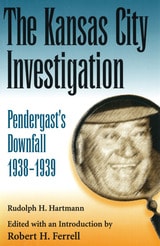
The Kansas City Investigation
Pendergast's Downfall, 1938-1939Rudolph H. Hartmann, Edited & Intro by Robert H. Ferrell
University of Missouri Press, 1999
The long reign of Kansas City political boss Thomas J. Pendergast came to an end in 1939, after an investigation led by Special Agent Rudolph Hartmann of the U.S. Department of the Treasury resulted in Pendergast's conviction for income tax evasion. In 1942, Hartmann's account was submitted to Secretary of the Treasury Henry Morgenthau, Jr., in whose papers it remained for the past fifty-six years unbeknownst to historians. While researching the relations between Pendergast and Franklin D. Roosevelt, Robert H. Ferrell came across Hartmann's landmark report—the only firsthand account of the investigation that brought down the greatest political machine of its time, possibly one of the greatest in all of American history.
Reading like a "whodunit," The Kansas City Investigation traces Pendergast's political career from its beginnings to its end. As one of America's major city bosses, Pendergast was at the height of his influence in 1935-1936 when his power reached not merely to every ward and precinct in Kansas City but also to the statehouse in Jefferson City and Capitol Hill in Washington, D.C. It was during this time that the boss took a massive bribe—$315,000—from 137 national fire insurance companies operating within Missouri, opening him to attack by his enemies.
Early in 1938, an official in the Washington headquarters of the Bureau of Internal Revenue, a former Missourian, quit his job to accept private employment, but not without first tipping off a reporter from the Kansas City Star about Pendergast's bribe. The reporter immediately phoned Lloyd C. Stark, the governor of Missouri and a known enemy of Pendergast. Stark then went to Washington to inform President Roosevelt. Although the president had been a supporter of Pendergast, he now considered Stark a more important political ally. Roosevelt asked the Treasury Department to investigate Pendergast's income taxes. The intelligence unit of the Treasury Department put Hartmann, its best operative, on the case. Within a year, after the most minute of inquiries into checkbooks, serial numbers on currency, a safe-deposit box, and a telegraphed transfer of $10,000, Hartmann and his agents found enough evidence to convict Boss Tom.
More than a simple account of what the Roosevelt administration did to cause the collapse of the Pendergast machine, The Kansas City Investigation takes the reader through the ups and downs, twists and turns, of this intriguing investigation, all from an insider's perspective. More important, Hartmann's report provides historians and readers alike the opportunity to evaluate the machine era in American political history—an era that, according to the investigation, "proved the old axiom that `truth is stranger than fiction.'"

The Land of Green Plums
Herta Muller
Northwestern University Press, 1998
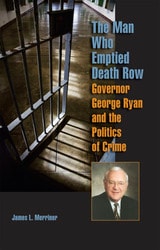
The Man Who Emptied Death Row
Governor George Ryan and the Politics of CrimeJames L. Merriner
Southern Illinois University Press, 2008
George H. Ryan, Illinois governor from 1999 to 2003, became nationally known for two significant and very different reasons. The first governor in the United States to clear out his state’s death row and put a moratorium on the death penalty, he was also convicted and sent to prison on corruption charges. The Man Who Emptied Death Row: Governor George Ryan and the Politics of Crime details the career of a man who both enhanced and tarnished the image of the highest office in Illinois and examines the political history and culture that shaped him.
Author James L. Merriner explores the two very different stories of George Ryan: the brave crusader against the death penalty and the petty crook. An extensive analysis of the official record, exclusive interviews, and previously undisclosed incidents in Ryan’s career expose why the governor pardoned or commuted the sentences of all 171 prisoners on Illinois’s death row before leaving office and how he later was convicted of eighteen counts of official corruption.
This biography traces Ryan’s family history and the Illinois political climate that influenced his development as a politician. Although Ryan championed “good-government” initiatives—organ donations, tougher drunken-driving and lobbyist disclosure laws—he never overcame a reputation as a wheeler-dealer, notes Merriner.
Merriner goes beyond Ryan’s life and career to explore the politics of crime, highlighting the successes and failures of the criminal justice system and suggesting how both white-collar fraud and violent crime shape politics. A fascinating story that reveals much about the way Illinois politics works, The Man Who Emptied Death Row will help determine how history will judge Illinois governor George Ryan.
The Moneywasting Machine
Five Months Inside Serbia‘s Ministry of EconomyDusan Pavlovic
Central European University Press, 2022
For five months in 2013–2014, Dušan Pavlović took time off from teaching to accept a senior position in Serbia’s Ministry of Economy. This short period was long enough for him to make a penetrating diagnosis of the economic activity of the postcommunist government. He found that a coterie of tycoons and politicians live off the wealth of the majority of citizens and smaller entrepreneurs, while the economy performs below its capacities. In academic terms, extractive economic institutions create allocative inefficiency.
Vivid, suggestive, and even entertaining accounts depict how privatization is administered and foreign investment projects are handled, and how party members, relatives, and friends are hired into public administration and state-owned companies. They show how the managers of firms that queue for state subsidies resist the systematic screening of their businesses. The principles of Keynesian economics are distorted and misused to conceal deliberate fiscal mismanagement. Huge ill-conceived development projects siphon taxpayers’ money from “non-economic” activities like social services, health, education, science, and culture.
What Pavlović found in Serbia is acutely symptomatic of many other European post-communist regimes of our time, lending his book singular importance.

The Muckrakers
Edited by Arthur Weinberg and Lila Weinberg
University of Illinois Press, 1964
From 1902, when it latched onto such mass circulation magazines as Collier's and McClure's, until it merged into the Progressive movement in 1912, muckraking relentlessly pricked the nation's social conscience by exposing the abuses of industry and politics. Ranging in tone from the scholarly to the sensational, muckraking articles attacked food adulteration, unscrupulous insurance practices, fraudulent claims for patent medicines, and links between government and vice. When muckrakers raised their voices against child labor, graft, monopoly, unsafe mill conditions, and the white slave trade of poor immigrant girls, they found a receptive audience. "I aimed at the public's heart," wrote Upton Sinclair about The Jungle, "and by accident I hit it in the stomach."
Gathering the most significant pieces published during the heyday of the muckraking movement, The Muckrakers brings vividly to life this unique era of exposure and self-examination. For each article, Arthur and Lila Weinberg provide concise commentary on the background of its subject and the specific and long-range repercussions of its publication. The volume features the work of both journalists and fiction writers, including Ida Tarbell, Lincoln Steffens, Upton Sinclair, Ray Stannard Baker, Samuel Hopkins Adams, Thomas W. Lawson, Charles Edward Russell, and Mark Sullivan.
Eloquent and uncompromising, the muckrakers shocked America from a state of lethargy into Progressive reform. This generous volume vividly captures the urgency of their quest.
The Politics of Bad Governance in Contemporary Russia
Vladimir Gel'man
University of Michigan Press, 2022
The Pursuit of Absolute Integrity
How Corruption Control Makes Government IneffectiveFrank Anechiarico and James B. Jacobs
University of Chicago Press, 1996
The Quality of Government
Corruption, Social Trust, and Inequality in International PerspectiveBo Rothstein
University of Chicago Press, 2011
The Rule of Dons
Criminal Leaders and Political Authority in Urban JamaicaRivke Jaffe
Duke University Press, 2024
The Scandal of Reform
The Grand Failures of New York's Political Crusaders and the Death of NonpartisanshipBarry, Francis S
Rutgers University Press, 2009
The Scandal of Reform pulls the curtain back on New York's reformers past and present, revealing the bonds they have always shared with the bosses they disdain, the policy failures they still refuse to recognize, and the transition they have made from nonpartisan outsiders to ideological insiders.
Francis S. Barry examines the evolution of political reform from the frontlines of New York City's recent reform wars. He offers an insider's account and analysis of the controversial 2003 referendum debate on nonpartisan elections, and he challenges reformersùand members of both partiesùto reconsider their faith in reforms that are no longer serving the public interest.
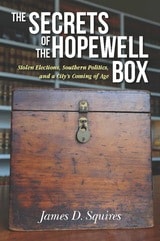
The Secrets of the Hopewell Box
Stolen Elections, Southern Politics, and a City's Coming of AgeJames D. Squires
Vanderbilt University Press, 1996
—Kirkus Reviews
"His richly textured narrative charts the Nashville machine's rupture with the state's top political boss, Edward Crump of Memphis, and traces the sweeping reforms that shattered rural white control of the state legislature. Squires dramatically reenacts the downfall of Nashville lawyer Tommy Osborn, convicted of jury tampering in 1964 after defending Teamsters boss Jimmy Hoffa. He follows Nashville's transformation into a crucible of the civil rights movement in this stirring chronicle of the South's coming-of-age."
—Publishers Weekly
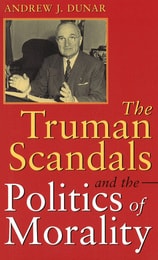
The Truman Scandals and the Politics of Morality
Andrew J. Dunar
University of Missouri Press, 1997
The Truman Scandals and the Politics of Morality is a thoroughly researched effort offering an excellent historical narrative of the scandals and accusations of scandal that bedeviled Harry Truman throughout his political career. The book is particularly significant in light of the connections the author establishes between Truman's early political experiences and his subsequent difficulties as president.
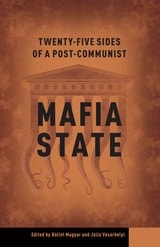
Twenty-Five Sides of a Post-Communist Mafia State
Bálint Magyar
Central European University Press, 2017