Results by title
115 books match the query 'Portraits' and 19 start with t
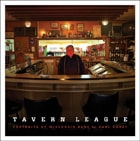
Tavern League
Portraits of Wisconsin BarsCarl Corey
Wisconsin Historical Society Press, 2011
In Tavern League, photographer Carl Corey documents a unique and important segment of the Wisconsin community. Our bars are unique micro-communities, offering patrons a sense of belonging. Many of these bars are the only public gathering place in the rural communities they serve. These simple taverns offer the individual the valuable opportunity for face to face conversation and camaraderie, particularly as people become more physically isolated through the accelerated use of the internet’s social networking, mobile texting, gaming, and the rapid-fire of email.
This collection of 60 pictures captures the Wisconsin tavern as it is today. Carl Corey’s view is both familiar and undeniably unique, his pictures resonant with anyone who has set foot in a Wisconsin tavern. As the Milwaukee Journal Sentinel’s Mary Louise Schumacher has written, “Carl Corey’s photographs . . . document iconic American places that are taken for granted. . . . They are comforting images, places we know, but also eerie and remote, presented with a sense of romance and nostalgia that suggests they are already past.”
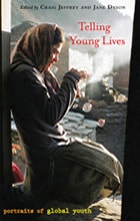
Telling Young Lives
Portraits of Global Youthedited by Craig Jeffrey and Jane Dyson
Temple University Press, 2008
Telling Young Lives presents more than a dozen fascinating, ethnograph-ically informed portraits of young people facing rapid changes in society and politics from different parts of the world. From a young woman engaged in agricultural labor in the High Himalayas to a youth activist based in Tanzania, the distinctive voices from the U.K., India, Germany, Sierra Leone, South Africa and Bosnia Herzegovina, provide insights into the active and creative ways these youths are addressing social and political challenges such as war, hunger and homelessness.
Telling Young Lives has great appeal for classroom use in geography courses and makes a welcome contribution to the growing field of “young geographies,” as well as to politics and political geography. Its focus on individual portraits gives readers a fuller, more vivid picture of the ways in which global changes are reshaping the actual experiences and strategies of young people around the world.

The Black Presence in the Era of the American Revolution
Sidney Kaplan and Emma Nogrady Kaplan
University of Massachusetts Press, 1989
The book is a revised and expanded edition of the authors' classic catalog that accompanied a pioneering exhibition mounted in 1973 by the National Portrait Gallery.
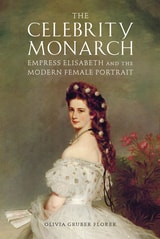
The Celebrity Monarch
Empress Elisabeth and the Modern Female PortraitOlivia Gruber Florek
University of Delaware Press, 2023
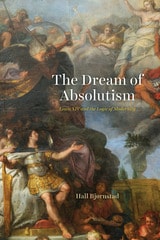
The Dream of Absolutism
Louis XIV and the Logic of ModernityHall Bjørnstad
University of Chicago Press, 2021
What was absolutism, and how did it work? What was the function of the ostentatious display surrounding Louis XIV at Versailles? What is gained—and what is lost—by approaching such expressions of absolutism as propaganda, as present-day scholars tend to do?
In this sweeping reconsideration of absolutist culture, Hall Bjørnstad argues that the exuberance of Louis XIV’s reign was not top-down propaganda in any modern sense, but rather a dream dreamt collectively, by king, court, image-makers, and nation alike. Bjørnstad explores this dream through a sustained close analysis of a corpus of absolutist artifacts, ranging from Charles Le Brun’s famous paintings in the Hall of Mirrors at Versailles via the king’s secret Mémoires to two little-known particularly extravagant verbal and textual celebrations of the king. The dream of absolutism, Bjørnstad concludes, lives at the intersection of politics and aesthetics. It is the carrier of a force that emerges as a glorious image; a participatory emotional reality that requires reality to conform to it. It is a dream, finally, that still shapes our collective political imaginary today.
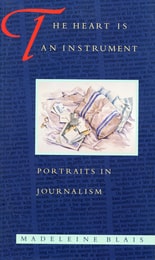
The Heart Is an Instrument
Portraits in JournalismMadeleine Blais
University of Massachusetts Press, 1992
From the Foreword by Geneva Overholser
What is it about really fine writers, how they delight, intrigue, compel us?
Style, you say. But style is not something you begin with. Rather, it's what you end up with, a result of far more fundamental traits. Traits such as an ear and an eye and a heart, traits that Madeleine Blais has honed superbly well.
This is a book well named: The Heart Is an Instrument: Portraits in Journalism. The heart is surely first among Blais's gifts. Whether she is writing about the famous—playwright Tennessee Williams, novelist Mary Gordon—or about the least elevated among us—a teenage prostitute infected with the AIDS virus, a homeless schizophrenic—she brings to her subjects an incomparable empathy.

The Homoerotic Photography of Carl Van Vechten
Public Face, Private ThoughtsJames Smalls
Temple University Press, 2006
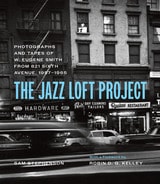
The Jazz Loft Project
Photographs and Tapes of W. Eugene Smith from 821 Sixth Avenue, 1957–1965W. Eugene Smith and Sam Stephenson
University of Chicago Press, 2023
In 1957, Eugene Smith walked away from his longtime job at Life and the home he shared with his wife and four children to move into a dilapidated, five-story loft building at 821 Sixth Avenue in New York City’s wholesale flower district. The loft was the late-night haunt of musicians, including some of the biggest names in jazz—Charles Mingus, Zoot Sims, Bill Evans, and Thelonious Monk among them. Here, from 1957 to 1965, he made nearly 40,000 photographs and approximately 4,000 hours of recordings of musicians. Smith found solace in the chaotic, somnambulistic world of the loft and its artists, and he turned his documentary impulses away from work on his major Pittsburg photo essay and toward his new surroundings.
Smith’s Jazz Loft Project has been legendary in the worlds of art, photography, and music for more than forty years, but until the publication of this book, no one had seen his extraordinary photographs or read any of the firsthand accounts of those who were there and lived to tell the tales.

The Korean-American Dream
Portraits of a Successful Immigrant CommunityJames Flanigan
University of Nevada Press, 2018
In The Korean-American Dream, respected and distinguished business journalist James Flanigan uncovers the struggles and contributions of the people who have made Los Angeles the largest Korean city outside of Seoul.
This intimate account illustrates how Korean immigrants have preserved their culture and history as well as adapted to the American culture of E Pluribus Unum, the radical promise of “out of many, one.” Flanigan shows how Los Angeles emerged as a capital of the Asia Pacific region.
At less than 2 million, Korean Americans are a relatively small group compared to new Americans from China, the Philippines, and India. But with energy and drive, they are building landmarks in New York as well as L.A., lobbying for causes in Washington, founding businesses, heading universities and hospitals, and holding public office in all parts of the U.S.
Flanigan’s compelling narrative told largely through personal interviews provides a front-row seat to the economic, business, and cultural developments of the Korean American Community. At a time of spirited debate about immigration, their energy and ambition serve as a ringing reminder of the promise of the American mosaic.

The Life of Lambert Lombard (1565); and Effigies of Several Famous Painters from the Low Countries (1572)
Dominicus Lampsonius
J. Paul Getty Trust, The, 2022
Dominicus Lampsonius’s The Life of Lambert Lombard (1565) is the earliest published biography of a Netherlandish artist. This neo-Latin account of the life of the painter, architect, and draftsman Lambert Lombard of Liège offers a theoretical exposition on the nature and ideal practice of Netherlandish art, emphasizing Lombard’s intellectual curiosity, interest in antiquity, attentive study of the human body, and exemplary generosity as a teacher.
This volume offers the first English edition of The Life of Lambert Lombard, complemented by a new translation of the inscriptions Lampsonius composed to accompany the Effigies of Several Famous Painters from the Low Countries (1572), a cycle of twenty-three engraved portraits of Netherlandish artists developed in collaboration with the print publisher Hieronymus Cock.
Together, The Life of Lambert Lombard and the Effigies established frameworks for a distinctly Netherlandish history of art. Responding to a growing sense of Netherlandish cultural and political identity on the eve of the Dutch Revolt, these texts proposed a critical alternative to Giorgio Vasari’s Lives of the Artists and its Italian model of art historical development, celebrating local ingenuity and skill. They remain the starting point for any history of the northern Renaissance.
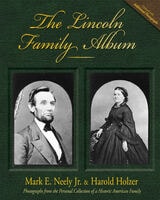
The Lincoln Family Album
Mark E. Neely Jr. and Harold Holzer
Southern Illinois University Press, 2006
Chronicling the private lives of the Lincolns through their personal photographic collection
The Lincoln Family Album offers a rare and revealing glimpse into the private life of Abraham Lincoln and the first family. Showcasing original and previously unpublished photographs collected and preserved by Mary Todd Lincoln and four generations of descendants, the volume includes pictures displayed in a family album when the Lincolns lived in the White House. Chronicled are the lives of the Lincolns’ three sons, including the tragic death of Willie in 1862, the rapid change of Tad during the war, and Robert’s marriage, children, and political career. Soldiers and statesmen of the Civil War, period figures such as Tom Thumb and Henry Ward Beecher, and even the family dog also graced the album that became the nucleus of the Lincolns’ personal collection.
This updated edition, which provides both additional pictures and new introductory materials by renowned Lincoln scholars Mark E. Neely Jr. and Harold Holzer, paints a portrait of the Lincolns’ rise to prominence and the exclusion of poorer relations after the family moved to the nation’s capital. With 150 illustrations and detailed captions, this authoritative and enlightening nineteenth-century history also includes capsule biographies of the Lincolns’ friends and relatives.
In such images as the First Lady in mourning or the assassin John Wilkes Booth, the pictures cannot disguise the painful truth about a family that suffered as many tragedies as triumphs. Willie’s death at the age of eleven abruptly ended Mary and Abraham’s personal collecting, but Lincoln descendants continued the tradition. The last pages of The Lincoln Family Album conclude with the death of Robert Lincoln’s last grandchild, Robert Todd Lincoln Beckwith, in 1985, ending the direct line of Abraham and Mary Lincoln.
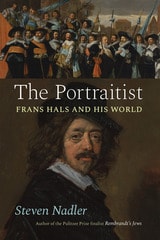
The Portraitist
Frans Hals and His WorldSteven Nadler
University of Chicago Press, 2022
Frans Hals was one of the greatest portrait painters in history, and his style transformed ideas and expectations about what portraiture can do and what a painting should look like.
Hals was a member of the great trifecta of Dutch Baroque painters alongside Rembrandt and Vermeer, and he was the portraitist of choice for entrepreneurs, merchants, professionals, theologians, intellectuals, militiamen, and even his fellow artists in the Dutch Golden Age. His works, with their visible brush strokes and bold execution, lacked the fine detail and smooth finish common among his peers, and some dismissed his works as sloppy and unfinished. But for others, they were fresh and exciting, filled with a sense of the sitter’s animated presence captured with energy and immediacy.
Steven Nadler gives us the first full-length biography of Hals in many years and offers a view into seventeenth-century Haarlem and this culturally rich era of the Dutch Republic. He tells the story not only of Hals’s life, but also of the artistic, social, political, and religious worlds in which he lived and worked.
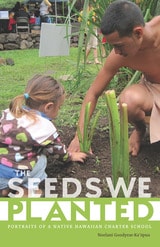
The Seeds We Planted
Portraits of a Native Hawaiian Charter SchoolNoelani Goodyear-Ka'opua
University of Minnesota Press, 2013
In 1999, Noelani Goodyear-Ka‘ōpua was among a group of young educators and parents who founded Hālau Kū Māna, a secondary school that remains one of the only Hawaiian culture-based charter schools in urban Honolulu. The Seeds We Planted tells the story of Hālau Kū Māna against the backdrop of the Hawaiian struggle for self-determination and the U.S. charter school movement, revealing a critical tension: the successes of a school celebrating indigenous culture are measured by the standards of settler colonialism.
How, Goodyear-Ka‘ōpua asks, does an indigenous people use schooling to maintain and transform a common sense of purpose and interconnection of nationhood in the face of forces of imperialism and colonialism? What roles do race, gender, and place play in these processes? Her book, with its richly descriptive portrait of indigenous education in one community, offers practical answers steeped in the remarkable—and largely suppressed—history of Hawaiian popular learning and literacy.
This uniquely Hawaiian experience addresses broader concerns about what it means to enact indigenous cultural–political resurgence while working within and against settler colonial structures. Ultimately, The Seeds We Planted shows that indigenous education can foster collective renewal and continuity.
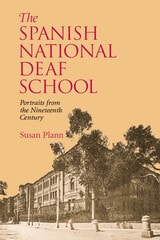
The Spanish National Deaf School
Portraits from the Nineteenth CenturySusan Plann
Gallaudet University Press, 2007
In nineteenth-century Spain, the education of deaf students took shape through various contradictory philosophies and practices. Susan Plann depicts this ambivalence by profiling a select group of teachers and students in her detailed history The Spanish National Deaf School: Portraits from the Nineteenth Century.
Plann’s subjects reveal the political, financial, and identity issues that dominated the operation of the National School for Deaf-Mutes and the Blind in Madrid from 1805 to1899. Roberto Francisco Prádez y Gautier, the first deaf teacher in Spain, taught art from 1805–36; he also was the last deaf teacher for the next 50 years. Juan Manuel Ballesteros, the hearing director from 1835 to1868, enacted an “ableist” policy that barred deaf professors. At the same time, another hearing teacher, Francisco Fernández Villabrille, wrote the first Spanish Sign Language dictionary. In the 1870s, two deaf students, Manuel Tinoco and Patricio García, resisted the physical abuse they received and set the stage for the growth of a Deaf identity that opposed the deprecating medical model of deafness. Marcelina Ruiz Ricote y Fernández a hearing female teacher who taught from 1869 to 1897, combated the school’s sexist polices. The Spanish National Deaf School concludes with Martín de Martín y Ruiz, the most famous deaf-blind student from the Madrid school. Through these portraits, Plann has brought life to the major issues that defined education in nineteenth-century Spain, themes that have influenced the status of deaf Spaniards today.
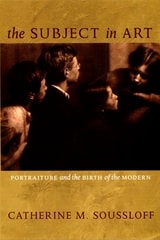
The Subject in Art
Portraiture and the Birth of the ModernCatherine M. Soussloff
Duke University Press, 2006
Soussloff combines a historically grounded examination of art and art historical thinking in Vienna with subsequent theories of portraiture and a careful historiography of philosophical and psychoanalytic approaches to human consciousness from Hegel to Sartre and from Freud to Lacan. She chronicles the emergence of a social theory of art among the art historians of the Vienna School, demonstrates how the Expressionist painter Oskar Kokoschka depicted the Jewish subject, and explores the development of pictorialist photography. Reflecting on the implications of the visualized, modern subject for textual and linguistic analyses of subjectivity, Soussloff concludes that the Viennese art historians, photographers, and painters will henceforth have to be recognized as precursors to such better-known theorists of the subject as Sartre, Foucault, and Lacan.

The Temple of Fame and Friendship
Portraits, Music, and History in the C. P. E. Bach CircleAnnette Richards
University of Chicago Press, 2020
One of the most celebrated German composers of the eighteenth century, C. P. E. Bach spent decades assembling an extensive portrait collection of some four hundred music-related items—from oil paintings to engraved prints. The collection was dispersed after Bach’s death in 1788, but with Annette Richards’s painstaking reconstruction, the portraits once again present a vivid panorama of music history and culture, reanimating the sensibility and humor of Bach’s time. Far more than a mere multitude of faces, Richards argues, the collection was a major part of the composer’s work that sought to establish music as an object of aesthetic, philosophical, and historical study.
The Temple of Fame and Friendship brings C. P. E. Bach’s collection to life, giving readers a sense of what it was like for visitors to tour the portrait gallery and experience music in rooms thick with the faces of friends, colleagues, and forebears. She uses the collection to analyze the “portraitive” aspect of Bach’s music, engaging with the influential theories of Swiss physiognomist Johann Caspar Lavater. She also explores the collection as a mode of cultivating and preserving friendship, connecting this to the culture of remembrance that resonates in Bach’s domestic music. Richards shows how the new music historiography of the late eighteenth century, rich in anecdote, memoir, and verbal portrait, was deeply indebted to portrait collecting and its negotiation between presence and detachment, fact and feeling.
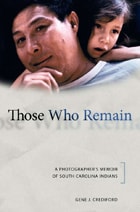
Those Who Remain
A Photographer's Memoir of South Carolina IndiansGene J. Crediford
University of Alabama Press, 2009
Through interviews and a generous photograph montage stretching over two decades, reveals the commonality and diversity among these people of Indian identity
When DeSoto (in 1540) and later Juan Pardo (in 1567) marched through what was known as the province of Cofitachequi (which covered the southern part of today’s North Carolina and most of South Carolina), the native population was estimated at well over 18,000. Most shared a common Catawba language, enabling this confederation of tribes to practice advanced political and social methods, cooperate and support each other, and meet their common enemy. The footprint of the Cofitachequi is the footprint of this book.
The contemporary Catawba, Midland, Santee, Natchez-Kusso, Varnertown, Waccamaw, Pee Dee, and Lumbee Indians of North and South Carolina, have roots in pre-contact Cofitachequi. Names have changed through the years; tribes split and blended as the forces of nature, the influx of Europeans, and the imposition of federal government authority altered their lives. For a few of these tribes, the system has worked well—or is working well now. For others, the challenge continues to try to work with and within the federal government’s system for tribal recognition—a system governing Indians but not created by them. Through interviews and a generous photograph montage stretching over two decades, Gene Crediford reveals the commonality and diversity among these people of Indian identity; their heritage, culture, frustrations with the system, joys in success of the younger generation, and hope for the future of those who come after them. This book is the story of those who remain.
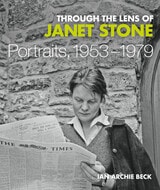
Through the Lens of Janet Stone
Portraits, 1953-1979Ian Archie Beck
Bodleian Library Publishing, 2018
Included between these pages are portraits of the composers, actors, novelists, poets, and philosophers in the Stones’ milieu—from Benjamin Britten to Siegfried Sassoon and Frances Partridge—as well as members of the Stone family. Although not a trained photographer, Janet instinctively knew to click the shutter when her subjects were off-guard and at their most informal, capturing an array of candid shots—like one of John Bayley trying on a headscarf and a young Daniel Day-Lewis dressed up as a knight.
These unique portraits offer beguiling insight into a special set of circumstances: an idyllic place and time and a group of people drawn together by two contrasting but complimentary personalities, the shy genius of Reynolds met by the outgoing style and glamour of Janet Stone.

Travels in a Gay Nation
Portraits of LGBTQ AmericansPhilip Gambone
University of Wisconsin Press, 2010
In this age when contemporary gay America is still coming under attack, Gambone captures the humanity of each individual. For some, their identity as a sexual minority is crucial to their life’s work; for others, it has been less so, perhaps even irrelevant. But, whether splashy or quiet, center-stage or behind the scenes, Gambone’s subjects have managed—despite facing ignorance, fear, hatred, intolerance, injustice, violence, ridicule, or just plain indifference—to construct passionate, inspiring lives.
Outstanding Book in the High School Category, selected by the American Association of School Libraries
Best Book in Special Interest Category, selected by the Public Library Association