Results by title
50 books match the query 'Press and politics' and 7 start with t
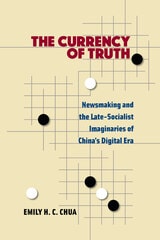
The Currency of Truth
Newsmaking and the Late-Socialist Imaginaries of China's Digital EraEmily H. C. Chua
University of Michigan Press, 2023
In The Currency of Truth, Emily H. C. Chua argues that news in China works less as a medium of mass communication than as a kind of currency as industry players make and use news articles to create agreements, build connections, and protect and advance their positions against one another. Looking at the ethical and professional principles that well-intentioned and civically minded journalists strive to uphold, and the challenges and doubts that they grapple with in the process, Chua brings her findings into conversation around “post-truth” news and the “crisis” of professional journalism in the West. The book encourages readers to rethink contemporary news, arguing that rather than setting out from the assumption that news works either to inform or deceive its publics, we should explore the “post-public” social and political imaginaries emerging among today’s newsmakers and remaking the terms of their practice.
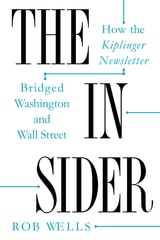
The Insider
How the Kiplinger Newsletter Bridged Washington and Wall StreetRob Wells
University of Massachusetts Press, 2022
When Willard M. Kiplinger launched the groundbreaking Kiplinger Washington Letter in 1923, he left the sidelines of traditional journalism to strike out on his own. With a specialized knowledge of finance and close connections to top Washington officials, Kiplinger was uniquely positioned to tell deeper truths about the intersections between government and business. With careful reporting and insider access, he delivered perceptive analysis and forecasts of business, economic, and political news to busy business executives, and the newsletter’s readership grew exponentially over the coming decades.
More than just a pioneering business journalist, Kiplinger emerged as a quiet but powerful link between the worlds of Presidents Hoover and Roosevelt, and used his Letter to play a little-known but influential role in the New Deal. Part journalism history, part biography, and part democratic chronicle, The Insider offers a well-written and deeply researched portrayal of how Kiplinger not only developed a widely read newsletter that launched a business publishing empire but also how he forged a new role for the journalist as political actor.
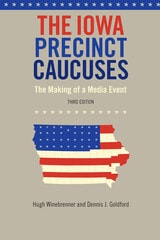
The Iowa Precinct Caucuses
The Making of a Media Event, Third EditionHugh Winebrenner
University of Iowa Press, 2010
Although some people
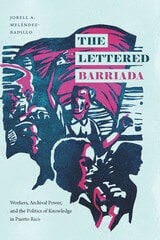
The Lettered Barriada
Workers, Archival Power, and the Politics of Knowledge in Puerto RicoJorell A. Meléndez-Badillo
Duke University Press, 2021
Duke University Press Scholars of Color First Book Award recipient
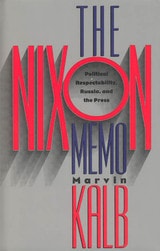
The Nixon Memo
Political Respectability, Russia, and the PressMarvin Kalb
University of Chicago Press, 1994
The story begins on March 10, 1992. Nixon had written a private memo critical of president George Bush's policy toward Russia. The memo leaked and exploded on the front page of The New York Times. Why would Nixon attack Bush, a fellow party member fighting for re-election? Why on an issue of foreign affairs, which was Bush's strength? The questions are as intriguing as the answers, and distinguished journalist and scholar Marvin Kalb offers a suspenseful, eye-opening account of how our conventional wisdom on United States foreign policy is shaped by the insider's game of press/politics.
This story of Nixon's Machiavellian efforts to pressure the White House, by way of the press, into helping Boris Yeltsin and Russia sheds new light on the inner workings of the world inside the government of the United States. Marvin Kalb read the documents behind the Nixon memo and interviewed scores of journalists, scholars, and officials in and from Washington and Moscow. Drawing on his years of experience as a diplomatic correspondent, he identifies and illuminates the intersection of press and politics in the fashioning of public policy.
"An absorbing and often compelling argument that Richard Nixon directed his own political rehabilitation on the world stage, using presidents, lesser politicians, and the press as his supporting cast. This is a first-class job of unraveling a complex and usually unseen tapestry."—Ted Koppel
"With Marvin Kalb's captivating account, Richard Nixon continues to fascinate us even in death."—Al Hunt
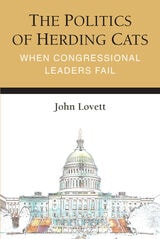
The Politics of Herding Cats
When Congressional Leaders FailJohn Lovett
University of Michigan Press, 2021

The Powers That Be
David Halberstam
University of Illinois Press, 1979
Beginning with FDR's masterful use of radio to establish the sense of a personal, benevolently paternal relationship with the American people and culminating in the discovery and coverage of the Watergate break-in, Halberstam tracks the firm establishment of the media as a potent means of shaping both public opinion and public policy. He tells the story through vivid, intimate portraits of the men, women, and politics behind four key media organizations: CBS and its board chairman William S. Paley; Time magazine and its cofounder Henry Luce; the Washington Post and successive publishers Philip Graham and his wife, Katherine; and the Los Angeles Times and publishers Norman Chandler and his son, Otis.