Results by title
176 books match the query 'Prevention' and 34 start with t
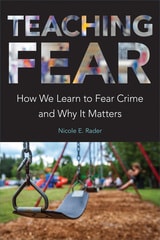
Teaching Fear
How We Learn to Fear Crime and Why It MattersNicole E. Rader
Temple University Press, 2023
Where do lessons of “stranger danger” and safety come from—and do they apply differently for women? A gender-fear paradox shows that although women are less likely to be victims of most crimes (sexual assault aside), their fear of crime is greater. Moreover, girls and women—especially White women—are taught to fear the wrong things and given impossible tools to prevent victimization. In Teaching Fear, Nicole Rader zooms in on the social learning process, tracing the ways that families, schools, and the media have become obsessed with crime myths, especially regarding girls and women.
Based on in-depth research and family studies, Rader reveals the dubious and dangerous origins of many of the most prominent safety guidelines that teach young girls to be more afraid of crime. These guidelines carry over to adulthood, influencing women’s behaviors and the way they order their worlds, with dangerous consequences. As women teach their learned behavior and conditioned fear to others, gendered crime myths are recirculated from generation to generation, making them a staple in our society.
Teaching Fear includes suggestions for taking precautionary measures and crime prevention strategies. Rader also provides guidance for instilling safety values and demonstrating how we can “teach fear better” to break this cycle and truly create greater security.
Teaching against Violence
The Reassessing ToolboxInez Testoni
Central European University Press, 2014
Terrorism on Trial
Political Violence and Abolitionist FuturesNicole Nguyen
University of Minnesota Press, 2023
A landmark sociological examination of terrorism prosecution in United States courts
Rather than functioning as a final arbiter of justice, U.S. domestic courts are increasingly seen as counterterrorism tools that can incapacitate terrorists, maintain national security operations domestically, and produce certain narratives of conflict. Terrorism on Trial examines the contemporary role that these courts play in the global war on terror and their use as a weapon of war: hunting, criminalizing, and punishing entire communities in the name of national security.
Nicole Nguyen advocates for a rethinking of popular understandings of political violence and its root causes, encouraging readers to consider anti-imperial abolitionist alternatives to the criminalization, prosecution, and incarceration of individuals marked as real or perceived terrorists. She exposes how dominant academic discourses, geographical imaginations, and social processes have shaped terrorism prosecutions, as well as how our fundamental misunderstanding of terrorism has led to punitive responses that do little to address the true sources of violence, such as military interventions, colonial occupations, and tyrannical regimes. Nguyen also explores how these criminal proceedings bear on the lives of defendants and families, seeking to understand how legal processes unevenly criminalize and disempower communities of color.
A retheorization of terrorism as political violence, Terrorism on Trial invites readers to carefully consider the role of power and politics in the making of armed resistance, addressing the root causes of political violence, with a goal of building toward a less violent and more liberatory world.
Terrorism, Ticking Time-Bombs, and Torture
A Philosophical AnalysisFritz Allhoff
University of Chicago Press, 2012
Terrorism
The Self-Fulfilling ProphecyJoseba Zulaika
University of Chicago Press, 2009
In counterterrorism circles, the standard response to questions about the possibility of future attacks is the terse one-liner: “Not if, but when.” This mantra supposedly conveys a realistic approach to the problem, but, as Joseba Zulaika argues in Terrorism, it functions as a self-fulfilling prophecy. By distorting reality to fit their own worldview, the architects of the War on Terror prompt the behavior they seek to prevent—a twisted logic that has already played out horrifically in Iraq. In short, Zulaika contends, counterterrorism has become pivotal in promoting terrorism.
Exploring the blind spots of counterterrorist doctrine, Zulaika takes readers on a remarkable intellectual journey. He contrasts the psychological insight of Truman Capote’s In Cold Blood with The 9/11 Commission Report, plumbs the mindset of terrorists in works by Orianna Fallaci and Jean Genet, maps the continuities between the cold war and the fight against terrorism, and analyzes the case of a Basque terrorist who tried to return to civilian life. Zulaika’s argument is powerful, inventive, and rich with insights and ideas that provide a new and sophisticated perspective on the War on Terror.
The Banality of Good
The UN's Global Fight against Human TraffickingLieba Faier
Duke University Press, 2024
The Battered Child
Edited by Mary Edna Helfer, Ruth S. Kempe, and Richard D. Krugman
University of Chicago Press, 1999
The new edition of this classic text continues the legacy. While updating and significantly adding to previous editions, the fifth edition retains the multidisciplinary and comprehensive approach that initially set the work apart. This new edition contains chapters from professionals in such diverse fields as pediatrics, psychiatry, legal studies, and social work that reflect the past decade's extraordinary advances in research and techniques. Twenty of the book's 30 chapters are entirely new, while the remaining material has been extensively revised.
Part I provides a historical overview of child abuse and neglect as well as background material on the cultural, psychiatric, social, economic, and legal contexts of child maltreatment. Part II discusses the processes of assessing cases of physical, emotional, and sexual abuse and neglect from the unique perspectives of all the professionals involved, including teachers, pediatricians, and social workers. Part III describes intervention and treatment, focusing on legal issues, investigative procedures, and therapeutic processes, while Part IV addresses prevention and policy issues.
Previous editions of The Battered Child have earned the labels of "a classic" and a "Bible." With its up-to-date information, unequaled scope, and contributions from experts on every aspect of child abuse, the fifth edition of this cornerstone text is even more essential to the field than its predecessors.
"Comprehensive and up-to-date."—David Cottrell, British Journal of Psychiatry
"A valuable contribution to the field of abuse and neglect"—Prasanna Nair, Journal of the American Medical Association
The Consequences of Counterterrorism
Martha Crenshaw
Russell Sage Foundation, 2010
The Crisis of School Violence
A New PerspectiveMarianna King
Michigan State University Press, 2020
The Force of Witness
Contra FeminicideRosa-Linda Fregoso
Duke University Press, 2023
The Future of Fallout, and Other Episodes in Radioactive World-Making
Joseph Masco
Duke University Press, 2020
The Future of Youth Violence Prevention
A Mixtape for Practice, Policy, and ResearchPaul Boxer
Rutgers University Press, 2025
The Hand Book
Surviving in a Germ-Filled WorldMiryam Z. Wahrman
Brandeis University Press, 2016
The Historical Ecology of Malaria in Ethiopia
Deposing the SpiritsJames C. McCann
Ohio University Press, 2015
Malaria is an infectious disease like no other: it is a dynamic force of nature and Africa’s most deadly and debilitating malady. James C. McCann tells the story of malaria in human, narrative terms and explains the history and ecology of the disease through the science of landscape change. All malaria is local. Instead of examining the disease at global or continental scale, McCann investigates malaria’s adaptation and persistence in a single region, Ethiopia, over time and at several contrasting sites.
Malaria has evolved along with humankind and has adapted to even modern-day technological efforts to eradicate it or to control its movement. Insecticides, such as DDT, drug prophylaxis, development of experimental vaccines, and even molecular-level genetic manipulation have proven to be only temporary fixes. The failure of each stand-alone solution suggests the necessity of a comprehensive ecological understanding of malaria, its transmission, and its persistence, one that accepts its complexity and its local dynamism as fundamental features.
The story of this disease in Ethiopia includes heroes, heroines, witches, spirits—and a very clever insect—as well as the efforts of scientists in entomology, agroecology, parasitology, and epidemiology. Ethiopia is an ideal case for studying the historical human culture of illness, the dynamism of nature’s disease ecology, and its complexity within malaria.

The Library Security and Safety Guide to Prevention, Planning, and Response
Miriam B. Kahn
American Library Association, 2008
The Long War on Drugs
Anne L. Foster
Duke University Press, 2023
The Money Problem
Rethinking Financial RegulationMorgan Ricks
University of Chicago Press, 2016
In The Money Problem, Morgan Ricks addresses all of these questions and more, offering a practical yet elegant blueprint for a modernized system of money and banking—one that, crucially, can be accomplished through incremental changes to the United States’ current system. He brings a critical, missing dimension to the ongoing debates over financial stability policy, arguing that the issue is primarily one of monetary system design. The Money Problem offers a way to mitigate the risk of catastrophic panic in the future, and it will expand the financial reform conversation in the United States and abroad.
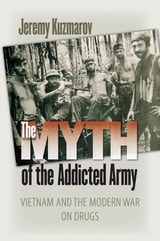
The Myth of the Addicted Army
Vietnam and the Modern War on DrugsJeremy Kuzmarov
University of Massachusetts Press, 2009
The image of the drug-addicted American soldier—disheveled, glassy-eyed, his uniform adorned with slogans of antiwar dissent—has long been associated with the Vietnam War. More specifically, it has persisted as an explanation for the U.S. defeat, the symbol of a demoralized army incapable of carrying out its military mission.
Yet as Jeremy Kuzmarov documents in this deeply researched book, popular assumptions about drug use in Vietnam are based more on myth than fact. Not only was alcohol the intoxicant of choice for most GIs, but the prevalence of other drugs varied enormously. Although marijuana use among troops increased over the course of the war, for the most part it remained confined to rear areas, and the use of highly addictive drugs like heroin was never as widespread as many imagined.
Like other cultural myths that emerged from the war, the concept of an addicted army was first advanced by war hawks seeking a scapegoat for the failure of U.S. policies in Vietnam, in this case one that could be linked to “permissive” liberal social policies and the excesses of the counterculture. But conservatives were not alone. Ironically, Kuzmarov shows, elements of the antiwar movement also promoted the myth, largely because of a presumed alliance between Asian drug traffickers and the Central Intelligence Agency. While this claim was not without foundation, as new archival evidence confirms, the left exaggerated the scope of addiction for its own political purposes.
Exploiting bipartisan concern over the perceived “drug crisis,” the Nixon administration in the early 1970s launched a bold new program of federal antidrug measures, especially in the international realm. Initially, the “War on Drugs” helped divert attention away from the failed quest for “peace with honor” in Southeast Asia. But once institutionalized, it continued to influence political discourse as well as U.S. drug policy in the decades that followed.
The Night is Young
Sexuality in Mexico in the Time of AIDSHéctor Carrillo
University of Chicago Press, 2002
Carrillo finds that young Mexicans today grapple in a variety of ways with two competing tendencies. On the one hand, many seek to challenge traditional ideas and values they find limiting. But they also want to maintain a sense of Mexico's cultural distinctiveness, especially in relation to the United States. For example, while Mexicans are well aware of the dangers of unprotected sex, they may also prize the surrender to sexual passion, even in casual sexual encounters—an attitude which stems from the strong values placed on collective life, spontaneity, and an openness toward intimacy. Because these expectations contrast sharply with messages about individuality, planning, and overt negotiation commonly promoted in global public health efforts, Carrillo argues that they demand a new approach to AIDS prevention education in Mexico.
A Mexican native, Carrillo has written an exceptionally insightful and accessible study of the relations among sexuality, social change, and AIDS prevention in Mexico. Anyone concerned with the changing place of sexuality in a modern and increasingly globalized world will profit greatly from The Night Is Young.

The Ocean Is a Wilderness
Atlantic Piracy and the Limits of State Authority, 1688-1856Guy Chet
University of Massachusetts Press, 2014
Chet shows how the traditional focus on the growth of the modern state overlooked the extent to which old attitudes and cultural practices continued to hold sway. Even as the British government extended its naval, legal, and bureaucratic reach, in many parts of the Atlantic world illegal trade was not only tolerated but encouraged. In part this was because Britain's constabulary command of the region remained more tenuous than some have suggested, and in part because maritime insurance and wartime tax policies ensured that piracy and smuggling remained profitable. When Atlantic piracy eventually waned in the early nineteenth century, it had more to do with a reduction in its profitability at port than with forceful confrontation at sea.
Challenging traditional accounts that chronicle forces of civilization taming a wild Atlantic frontier, this book is a valuable addition to a body of borderlands scholarship reevaluating the relationship between the emerging modern state and its imperial frontiers.
The Outbreak Atlas
Rebecca Katz and Mackenzi S. Moore
Vanderbilt University Press, 2024
For years the Georgetown University Center for Global Health Science and Security has curated an interactive online tool for professionals that identifies the activities involved across all phases of an outbreak. The Georgetown Outbreak Activity Library (GOAL) captures what needs to get done, when, and by whom. Now, in The Outbreak Atlas, Rebecca Katz and Mackenzie S. Moore have translated this complex material into a book designed for a public audience.
This book provides an overview of outbreak activities alongside compelling case studies and visuals to guide readers through the complexity involved in outbreak preparedness, response, and recovery. It lifts the curtain on the rationale and interconnectedness of outbreak responses across different fields and at various levels, presenting accessible information that ensures a shared understanding of the essential activities to control an outbreak.
The Piracy Crusade
How the Music Industry's War on Sharing Destroys Markets and Erodes Civil LibertiesAram Sinnreich
University of Massachusetts Press, 2013
In the decade and a half since Napster first emerged, forever changing the face of digital culture, the claim that “internet pirates killed the music industry” has become so ubiquitous that it is treated as common knowledge. Piracy is a scourge on legitimate businesses and hard-working artists, we are told, a “cybercrime” similar to identity fraud or even terrorism.
In The Piracy Crusade, Aram Sinnreich critiques the notion of “piracy” as a myth perpetuated by today's cultural cartels—the handful of companies that dominate the film, software, and especially music industries. As digital networks have permeated our social environment, they have offered vast numbers of people the opportunity to experiment with innovative cultural and entrepreneurial ideas predicated on the belief that information should be shared widely. This has left the media cartels, whose power has historically resided in their ability to restrict the flow of cultural information, with difficult choices: adapt to this new environment, fight the changes tooth and nail, or accept obsolescence. Their decision to fight has resulted in ever stronger copyright laws and the aggressive pursuit of accused infringers.
Yet the most dangerous legacy of this “piracy crusade” is not the damage inflicted on promising start-ups or on well-intentioned civilians caught in the crosshairs of file-sharing litigation. Far more troubling, Sinnreich argues, are the broader implications of copyright laws and global treaties that sacrifice free speech and privacy in the name of combating the phantom of piracy—policies that threaten to undermine the foundations of democratic society.
The Politics of Possibility
Risk and Security Beyond ProbabilityLouise Amoore
Duke University Press, 2013
The Punishment of Pirates
Interpretation and Institutional Order in the Early Modern British EmpireMatthew Norton
University of Chicago Press, 2023
Early in the seventeenth-century boom of seafaring, piracy allowed many enterprising and lawless men to make fortunes on the high seas, due in no small part to the lack of policing by the British crown. But as the British empire grew from being a collection of far-flung territories into a consolidated economic and political enterprise dependent on long-distance trade, pirates increasingly became a destabilizing threat. This development is traced by sociologist Matthew Norton in The Punishment of Pirates, taking the reader on an exciting journey through the shifting legal status of pirates in the seventeenth and eighteenth centuries.
Norton shows us that eliminating this threat required an institutional shift: first identifying and defining piracy, and then brutally policing it. The Punishment of Pirates develops a new framework for understanding the cultural mechanisms involved in dividing, classifying, and constructing institutional order by tracing the transformation of piracy from a situation of cultivated ambiguity to a criminal category with violently patrolled boundaries—ending with its eradication as a systemic threat to trade in the English Empire. Replete with gun battles, executions, jailbreaks, and courtroom dramas, Norton’s book offers insights for social theorists, political scientists, and historians alike.
The Soviet Union and the Gutting of the UN Genocide Convention
Anton Weiss-Wendt
University of Wisconsin Press, 2017
Based on extensive archival research, Anton Weiss-Wendt reveals in detail how the political aims of the superpowers rendered the convention a weak instrument for addressing abuses against human rights. The Kremlin viewed the genocide treaty as a political document and feared repercussions. What the Soviets wanted most was to keep the subjugation of Eastern Europe and the vast system of forced labor camps out of the genocide discourse. The American Bar Association and Senate Committee on Foreign Relations, in turn, worried that the Convention contained vague formulations that could be used against the United States, especially in relation to the plight of African Americans. Sidelined in the heated discussions, Weiss-Wendt shows, were humanitarian concerns for preventing future genocides.
The Suspect
Counterterrorism, Islam, and the Security StateRizwaan Sabir
Pluto Press, 2021
What impact has two decades' worth of policing and counterterrorism had on the state of mind of Muslims in Britain? The Suspect draws on the author's lived experiences of being suspected of terrorism to take the reader on a journey through British counterterrorism practices and the policing of Muslims.
Rizwaan Sabir describes what led to his arrest for suspected terrorism, his time in detention, and the surveillance he was subjected to on release from custody, including stop and frisk on the roadside, detentions at the border, and monitoring by police and government departments throughout his research.
Writing publicly for the first time about the traumatizing mental health effects of these experiences, he argues that these harmful outcomes are not the result of errors in government planning, but the consequences of using a counterinsurgency warfare approach to surveillance. If we are to break this injustice, we need to resist counterterrorism policy and practice.
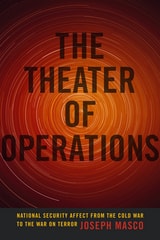
The Theater of Operations
National Security Affect from the Cold War to the War on TerrorJoseph Masco
Duke University Press, 2014

The Violence of Protection
Policing, Immigration Law, and Asian American WomenLee Ann S. Wang
Duke University Press, 2026

The Web of Violence
From Interpersonal to GlobalEdited by Jennifer Turpin and Lester Kurtz
University of Illinois Press, 1996
Violence is a topic of concern everywhere--in the media, in churches, in the halls of governments. In every land and in every culture violence is considered by most to be taboo, a last resort. Yet under certain conditions, from the level of the family to the level of nations, violence is used as a mechanism of social control. Various rationalizations thus emerge to distinguish between legitimate and illegitimate violence.
The Web of Violence explores the interrelationship among personal, collective, national, and global levels of violence. This unique collection brings together a number of internationally known contributors to address the genesis and manifestations of violence in the search for a remedy for this confounding social problem.
As the global community becomes more intimate, we must better understand the nature of violence. The Web of Violence supports this aim by examining the dangerous human phenomenon from many perspectives, at different levels, and using multiple methodologies.
Contributors: Robert Jay Lifton, Christopher G. Ellison, John P. Bartkowski, Yuan-Horng Chu, Philip Smith, Robert Elias, Birgit Brock-Utne, Riane Eisler, Johan Galtung
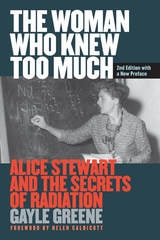
The Woman Who Knew Too Much, Revised Ed.
Alice Stewart and the Secrets of RadiationGayle Greene
University of Michigan Press, 2017
Author Gayle Greene traces Stewart's life and career as she came up against ever more powerful authorities, first the British medical profession, then the U.S. nuclear industry, and finally the regulatory agencies that set radiation safety standards throughout the world. Stewart endured the fate of other women scientists in having her findings dismissed and funding cut, but today is recognized as a pioneering figure in epidemiological research on the dangers of nuclear radiation. In her preface to the second edition, Greene looks at new information that’s come out about the forces and individuals responsible for marginalizing her as a scientist and downplaying the disturbing implications of her research.
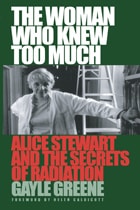
The Woman Who Knew Too Much
Alice Stewart and the Secrets of RadiationGayle Greene
University of Michigan Press, 2001
This biography illuminates the life and achievements of the remarkable woman scientist who revolutionized the concept of radiation risk.
In the 1950s Alice Stewart began research that led to her discovery that fetal X rays double a child's risk of developing cancer. Two decades later---when she was in her seventies---she again astounded the scientific world with a study showing that the U.S. nuclear weapons industry is about twenty times more dangerous than safety regulations permit. This finding put her at the center of the international controversy over radiation risk. In 1990, the New York Times called Stewart "perhaps the Energy Department's most influential and feared scientific critic."
The Woman Who Knew Too Much traces Stewart's life and career from her early childhood in Sheffield to her medical education at Cambridge to her research positions at Oxford University and the University of Birmingham.
Gayle Greene is Professor of Women's Studies and Literature, Scripps College.
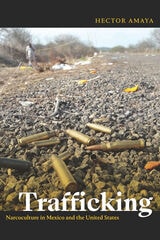
Trafficking
Narcoculture in Mexico and the United StatesHector Amaya
Duke University Press, 2020
Troubled IT Projects
Prevention and turnaroundJohn M. Smith
The Institution of Engineering and Technology, 2001

Tuberculosis Control and Institutional Change in Shanghai, 1911–2011
Rachel S. Core
Hong Kong University Press, 2023
Tuberculosis Control and Institutional Change in Shanghai, 1911–2011 is the first book on the most widespread and deadly infectious disease in China, both historically and today. Weaving together interviews with data from periodicals and local archives in Shanghai, Rachel Core examines the rise and fall of tuberculosis control in China from the 1950s to the 1990s. Under the socialist work unit system, the vast majority of people had guaranteed employment, a host of benefits tied to their workplace, and there was little mobility—factors that made the delivery of medical and public health services possible in both urban and rural areas. The dismantling of work units amid wider market reforms in the 1980s and 1990s led to the rise of temporary and casual employment and a huge migrant worker population, with little access to health care, creating new challenges in TB control. This study of Shanghai will provide valuable lessons for historians, social scientists, public health specialists, and many others working on public health infrastructure on both the national and global levels.