Results by title
70 books match the query 'Prisons' and 13 start with t

Tall Walls and High Fences
Bob Alexander
University of North Texas Press, 2020

Teach the Free Man
StoriesPeter Nathaniel Malae
Ohio University Press, 2007
The twelve stories in Teach the Free Man mark the impressive debut of Peter Nathaniel Malae. The subject of incarceration thematically links the stories, yet their range extends beyond the prison’s barbed wire and iron bars. Avoiding sensationalism, Malae exposes the heart and soul in those dark, seemingly inaccessible corridors of the human experience.
The stories, often raw and startlingly honest, are distinguished by the colloquial voices of California’s prison inmates, who, despite their physical and cultural isolation, confront dilemmas with which we can all identify: the choice to show courage against peer pressure; the search for individual rights within a bureaucracy; and the desperate desire for honor in the face of great sacrifice. These stories present polished and poetic examples of finding something redemptive in the least among us.
The book’s epigraph by W. H. Auden, from which the book takes its title, exemplifies the spirit of these dynamic stories:
In the deserts of the heart
Let the healing fountain start.
In the prison of his days
Teach the free man how to praise.
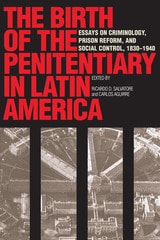
The Birth of the Penitentiary in Latin America
Essays on Criminology, Prison Reform, and Social Control, 1830-1940Edited by Ricardo D. Salvatore and Carlos Aguirre
University of Texas Press, 1996
Opening a new area in Latin American studies, The Birth of the Penitentiary in Latin America showcases the most recent historical outlooks on prison reform and criminology in the Latin American context. The essays in this collection shed new light on the discourse and practice of prison reform, the interpretive shifts induced by the spread of criminological science, and the links between them and competing discourses about class, race, nation, and gender. The book shows how the seemingly clear redemptive purpose of the penitentiary project was eventually contradicted by conflicting views about imprisonment, the pervasiveness of traditional forms of repression and control, and resistance from the lower classes.
The essays are unified by their attempt to view the penitentiary (as well as the variety of representations conveyed by the different reform movements favoring its adoption) as an interpretive moment, revealing of the ideology, class fractures, and contradictory nature of modernity in Latin America. As such, the book should be of interest not only to scholars concerned with criminal justice history, but also to a wide range of readers interested in modernization, social identities, and the discursive articulation of social conflict. The collection also offers an up-to-date sampling of new historical approaches to the study of criminal justice history, illuminates crucial aspects of the Latin American modernization process, and contrasts the Latin American cases with the better known European and North American experiences with prison reform.
The Cat Who Taught Me How to Fly
An Arab Prison NovelHashem Gharaibeh
Michigan State University Press, 2017
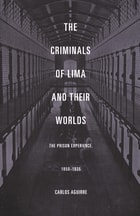
The Criminals of Lima and Their Worlds
The Prison Experience, 1850-1935Carlos Aguirre
Duke University Press, 2005
Drawing on a large collection of prison and administrative records archived at Peru’s Ministry of Justice, Aguirre offers a detailed account of the daily lives of men incarcerated in Lima’s jails. In showing the extent to which the prisoners actively sought to influence prison life, he reveals the dynamic between prisoners and guards as a process of negotiation, accommodation, and resistance. He describes how police and the Peruvian state defined criminality and how their efforts to base a prison system on the latest scientific theories—imported from Europe and the United States—foundered on the shoals of financial constraints, administrative incompetence, corruption, and widespread public indifference. Locating his findings within the political and social mores of Lima society, Aguirre reflects on the connections between punishment, modernization, and authoritarian traditions in Peru.
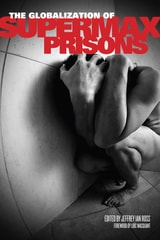
The Globalization of Supermax Prisons
Ross, Jeffrey Ian
Rutgers University Press, 2013
2013 Choice Outstanding Academic Title
“Supermax” prisons, conceived by the United States in the early 1980s, are typically reserved for convicted political criminals such as terrorists and spies and for other inmates who are considered to pose a serious ongoing threat to the wider community, to the security of correctional institutions, or to the safety of other inmates. Prisoners are usually restricted to their cells for up to twenty-three hours a day and typically have minimal contact with other inmates and correctional staff. Not only does the Federal Bureau of Prisons operate one of these facilities, but almost every state has either a supermax wing or stand-alone supermax prison.
The Globalization of Supermax Prisons examines why nine advanced industrialized countries have adopted the supermax prototype, paying particular attention to the economic, social, and political processes that have affected each state. Featuring essays that look at the U.S.-run prisons of Abu Ghraib and Guantanemo, this collection seeks to determine if the American model is the basis for the establishment of these facilities and considers such issues as the support or opposition to the building of a supermax and why opposition efforts failed; the allegation of human rights abuses within these prisons; and the extent to which the decision to build a supermax was influenced by developments in the United States. Additionally, contributors address such domestic matters as the role of crime rates, media sensationalism, and terrorism in each country’s decision to build a supermax prison.
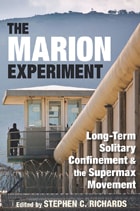
The Marion Experiment
Long-Term Solitary Confinement and the Supermax MovementEdited by Stephen C. Richards
Southern Illinois University Press, 2015
Taking readers into the darkness of solitary confinement, this searing collection of convict experiences, academic research, and policy recommendations shines a light on the proliferation of supermax (super-maximum-security) prisons and the detrimental effects of long-term high-security confinement on prisoners and their families.
Stephen C. Richards, an ex-convict who served time in nine federal prisons before earning his PhD in criminology, argues the supermax prison era began in 1983 at USP Marion in southern Illinois, where the first “control units” were built by the Federal Bureau of Prisons. The Marion Experiment, written from a convict criminology perspective, offers an introduction to long-term solitary confinement and supermax prisons, followed by a series of first-person accounts by prisoners—some of whom are scholars—previously or currently incarcerated in high-security facilities, including some of the roughest prisons in the western world. Scholars also address the widespread “Marionization” of solitary confinement; its impact on female, adolescent, and mentally ill prisoners and families; and international perspectives on imprisonment.
As a bold step toward rethinking supermax prisons, Richards presents the most comprehensive view of the topic to date to raise awareness of the negative aspects of long-term solitary confinement and the need to reevaluate how prisoners are housed and treated.

The Missouri State Penitentiary
170 Years inside "The Walls"Jamie Pamela Rasmussen
University of Missouri Press, 2012
In TheMissouri State Penitentiary, Jamie Pamela Rasmussen recounts the long and fascinating history of the place, focusing on the stories of inmates and the struggles by prison officials to provide opportunities for reform while keeping costs down. Tales of prominent prisoners, including Pretty Boy Floyd, Sonny Liston, and James Earl Ray, provide intrigue and insight into the institution’s infamous reputation.
The founding of the penitentiary helped solidify Jefferson City’s position as the state capital. A highlight in the chapter on the Civil War years is the story of George Thompson, who was imprisoned for attempting to help a number of slaves to freedom. The narrative enters the twentieth century with the controversy surrounding the various systems of inmate labor; the effort to make the prison self-supporting eventually caused punishment to be driven by factory needs. The example of Firebug Johnson demonstrates how inmates reacted to the prison labor system while Kate Richards O’Hare’s struggles and efforts to improve conditions in the penitentiary illuminate the role of women in the system at the time. A full chapter is devoted to the riot of 1954, and another concentrates on the reforms made in the wake of that catastrophe. Rasmussen also considers the effect inmate lawsuits during the 1980s and 1990s had on prison life before telling the story of the decision to close the prison.
The Missouri State Penitentiary provides a fitting account of an institution that was part of Missouri’s history for well over a century. Numerous illustrations and a list of recommended reading contribute to the readers’ understanding of the history of the institution.
The Powers that Punish
Prison and Politics in the Era of the "Big House", 1920-1955Charles Bright
University of Michigan Press, 1996
In a pathbreaking study of a major state prison, Michigan's Jackson State Penitentiary during the middle years of this century, Charles Bright addresses several aspects of the history and theory of punishment. The study is an institutional history of an American penitentiary, concerned with how a carceral regime was organized and maintained, how prisoners were treated and involved in the creation of a regime of order and how penal practices were explained and defended in public. In addition, it is a meditation upon punishment in modern society and a critical engagement with prevailing theories of punishment coming out of liberal, Marxist and post structuralist traditions. Deploying theory critically in a historic narrative, it applies new, relational theories of power to political institutions and practices. Finally, in studying the history of the Jackson prison, Bright provides a rich account, full of villains and a few heroes, of state politics in Michigan during a period of rapid transition between the 1920s to the 1950s.
The book will be of direct relevance to criminologists and scholars of punishment, and to historians concerned with the history of punishment and prisons in the United States. It will also be useful to political scientists and historians concerned with exploring new approaches to the study of power and with the transformation of state politics in the 1930s and 1940s. Finally Bright tells a story which will fascinate students of modern Michigan history.
Charles Bright is a historian and Lecturer at the Residential College of the University of Michigan.
The Prison
Policy and PracticeGordon J. Hawkins
University of Chicago Press, 1977
"Hawkins devotes a large portion of this relatively short book to a discussion of some of the really crucial policy activities that tend to stifle meaningful reform and then goes on to tell how at least some of these policies can be altered. . . . The book concludes with a chapter devoted to a discussion of impediments to change that should be required reading for all serious students of penology."—Choice
"Hawkins has added a much needed down-to-earch analysis of prison. . . . This is not a pessimistic book. It is a realistic book. It avoids the pitfall of utopian and single-factor solutions to an extremely complex problem."—Graeme R. Newman, Annals of the American Academy of Political and Social Science
The Professional Convict's Tale
The Survival of John O'Neill In and Out of PrisonElmer H. Johnson
Southern Illinois University Press, 2007
Challenging the ideology of treatment in the prison world
The Professional Convict’s Tale: The Survival of John O’Neill In and Out of Prison offers a unique, inside view of life behind bars in the 1960s. Elmer H. Johnson, a criminologist who has specialized in prison life for half a century, gave Menard Penitentiary parolee John O’Neill a tape recorder and a set of questions designed to draw out his opinions and observations about the prison world.
This study frames O’Neill’s responses with Johnson’s analysis. O’Neill’s narrative guides readers through the world beyond the prison gate as he shares his strategies for survival and proposes alternatives to rebellion or submission. He discusses the fractionalization between the keepers and the kept and the effects that subterranean communication, threats of inmate predators, and prison riots can have on the psyche of both inmates and staff.
O’Neill’s frustrations and the inadequate responses from the community to which he was paroled illustrate the social costs and impact of parole for the community and for the parolee. Although O’Neill recorded his comments more than forty years ago, they are still relevant today when thousands of convicts are being released from prison each year.
The Scale of Imprisonment
Franklin E. Zimring and Gordon J. Hawkins
University of Chicago Press, 1991
"The Scale of Imprisonment has an exceptionally well designed literature review of interest to public policy, criminal justice, and public law scholars. Its careful review, analysis, and critique of research is stimulating and inventive."—American Political Science Review
"The authors fram our thoughts about the soaring use of imprisonment and stimulate our thinking about the best way we as criminologists can conduct rational analysis and provide meaningful advice."—Susan Guarino-Ghezzi, Journal of Quantitative Criminology
"Zimring and Hawkins bring a long tradition of excellent criminological scholarship to the seemingly intractable problems of prisons, prison overcrowding, and the need for alternative forms of punishment."—J. C. Watkins, Jr., Choice
Time of Grace
Thoughts on Nature, Family, and the Politics of Crime and PunishmentKen Lamberton
University of Arizona Press, 2007
Time of Grace is a remarkable book, written with great eloquence by a former science teacher who was incarcerated for twelve years for his sexual liaison with a teenage student. Far more than a “prison memoir,” it is an intimate and revealing look at relationships—with fellow humans and with the surprising wildlife of the Sonoran Desert, both inside and beyond prison walls. Throughout, Ken Lamberton reflects on human relations as they mimic and defy those of the natural world, whose rhythms calibrate Lamberton’s days and years behind bars. He writes with candor about his life, while observing desert flora and fauna with the insight and enthusiasm of a professional naturalist.
While he studies a tarantula digging her way out of the packed earth and observes Mexican freetail bats sailing into the evening sky, Lamberton ruminates on his crime and on the wrenching effects it has had on his wife and three daughters. He writes of his connections with his fellow inmates—some of whom he teaches in prison classes—and with the guards who control them, sometimes with inexplicable cruelty. And he unflinchingly describes a prison system that has gone horribly wrong—a system entrapped in a self-created web of secrecy, fear, and lies.
This is the final book of Lamberton’s trilogy about the twelve years he spent in prison. Readers of his earlier books will savor this last volume. Those who are only now discovering Lamberton’s distinctive voice—part poet, part scientist, part teacher, and always deeply, achingly human—will feel as if they are making a new friend.
Gripping, sobering, and beautifully written, Lamberton’s memoir is an unforgettable exploration of crime, punishment, and the power of the human spirit.