70 books match the query 'Protection' and 9 start with t
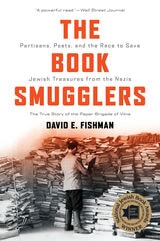
cover of The Book Smugglers: Partisans, Poets, and the Race to Save Jewish Treasures from the Nazis

The Book Smugglers

Partisans, Poets, and the Race to Save Jewish Treasures from the Nazis

David E. Fishman

University Press of New England, 2018
The Book Smugglers is the nearly unbelievable story of ghetto residents who rescued thousands of rare books and manuscripts—first from the Nazis and then from the Soviets—by hiding them on their bodies, burying them in bunkers, and smuggling them across borders. It is a tale of heroism and resistance, of friendship and romance, and of unwavering devotion—including the readiness to risk one’s life—to literature and art. And it is entirely true. Based on Jewish, German, and Soviet documents, including diaries, letters, memoirs, and the author’s interviews with several of the story’s participants, The Book Smugglers chronicles the daring activities of a group of poets turned partisans and scholars turned smugglers in Vilna, “The Jerusalem of Lithuania.” The rescuers were pitted against Johannes Pohl, a Nazi “expert” on the Jews, who had been dispatched to Vilna by the Nazi looting agency, Einsatzstab Reichsleiter Rosenberg, to organize the seizure of the city’s great collections of Jewish books. Pohl and his Einsatzstab staff planned to ship the most valuable materials to Germany and incinerate the rest. The Germans used forty ghetto inmates as slave-laborers to sort, select, pack, and transport the materials, either to Germany or to nearby paper mills. This group, nicknamed “the Paper Brigade,” and informally led by poet Shmerke Kaczerginski, a garrulous, street-smart adventurer and master of deception, smuggled thousands of books and manuscripts past German guards. If caught, the men would have faced death by firing squad at Ponar, the mass-murder site outside of Vilna. To store the rescued manuscripts, poet Abraham Sutzkever helped build an underground book-bunker sixty feet beneath the Vilna ghetto. Kaczerginski smuggled weapons as well, using the group’s worksite, the former building of the Yiddish Scientific Institute, to purchase arms for the ghetto’s secret partisan organization. All the while, both men wrote poetry that was recited and sung by the fast-dwindling population of ghetto inhabitants. With the Soviet “liberation” of Vilna (now known as Vilnius), the Paper Brigade thought themselves and their precious cultural treasures saved—only to learn that their new masters were no more welcoming toward Jewish culture than the old, and the books must now be smuggled out of the USSR. Thoroughly researched by the foremost scholar of the Vilna Ghetto—a writer of exceptional daring, style, and reach—The Book Smugglers is an epic story of human heroism, a little-known tale from the blackest days of the war.
[more]
cover of The Cultural Production of Intellectual Property Rights: Law, Labor, and the Persistence of Primitive Accumulation

The Cultural Production of Intellectual Property Rights

Law, Labor, and the Persistence of Primitive Accumulation

Sean Johnson Andrews

Temple University Press, 2019

The protection and accumulation of intellectual property rights—like property rights in general—is one of the most important contemporary American values. In his cogent book, The Cultural Production of Intellectual Property Rights, Sean Johnson Andrews shows that the meaning, power, and value of intellectual properties are the consequence of an extended process of cultural production. 

Johnson Andrews argues that it is deeper ideological and historical roots which demand that, in the contemporary global, digital economy, all property rights be held sacrosanct and all value must flow back to the legal owner.  

Johnson Andrews explains that if we want to rebalance the protection of copyrights and trademarks, we should focus on undermining the reified culture of property that underpins capitalism as a whole. He outlines a framework for analyzing culture; situates intellectual property rights in the history of capitalist property relations; synthesizes key theories of media, politics, and law; and ultimately provides scholars and activists a path to imagining a different future where we prioritize our collective production of value in the commons.

[more]
cover of The Culture of Property: The Crisis of Liberalism in Modern Britain

The Culture of Property

The Crisis of Liberalism in Modern Britain

Jordanna Bailkin

University of Chicago Press, 2004

What kind of property is art? Is it property at all? Jordanna Bailkin's The Culture of Property offers a new historical response to these questions, examining ownership disputes over art objects and artifacts during the crisis of liberalism in the United Kingdom. From the 1870s to the 1920s, Britons fought over prized objects from ancient gold ornaments dug up in an Irish field to a portrait of the Duchess of Milan at the National Gallery in London. They fought to keep these objects in Britain, to repatriate them to their points of origin, and even to destroy them altogether. Bailkin explores these disputes in order to investigate the vexed status of property within modern British politics as well as the often surprising origins of ongoing institutional practices. Bailkin's detailed account of these struggles illuminates the relationship between property and citizenship, which has constituted the heart of liberal politics as well as its greatest weakness.

Drawing on court transcripts, gallery archives, exhibition reviews, private correspondence—and a striking series of cartoons and photographs—The Culture of Property traverses the history of gender, material culture, urban life, colonialism, Irish and Scottish nationalism, and British citizenship. This fascinating book challenges recent scholarship in museum studies in light of ongoing culture wars. It should be required reading for cultural policy makers, museum professionals, and anyone interested in the history of art and Britain.

[more]
cover of The Expendable Future: US Politics and the Protection of Biological Diversity

The Expendable Future

US Politics and the Protection of Biological Diversity

Richard Tobin

Duke University Press, 1990

Species are disappearing from the earth at a rate of hundreds, and perhaps thousands, of times greater than every before witnessed. According to many scientists, this rapid destruction will lead to irreversible changes in the earth’s ecosystem. The Expendable Future provides a comprehensive and critical evaluation of the politics of biological diversity in the United States and of state and federal policies on endangered species from the early 1960s to the present.
Drawing on congressional hearing and debates, previously unpublished public opinion surveys, interviews with state officials and employees of the Department of the Interior, and internal documents from this and other government agencies, Tobin provides an in-depth analysis of the policies on endangered species and the policy relationships among the different units of government involved in implementation. He examines the resources that are available for the protection of endangered species and the way in which those resources are matched to the priorities. Tobin also discusses the processes by which species are classified as endangered, how these species’ critical habitats are determined and protected, and the successes, and mostly failures, of current recovery programs.
[more]
cover of The Lightning Flash

The Lightning Flash

Vernon Cooray

The Institution of Engineering and Technology, 2014

This updated and expanded new edition of Cooray's classic text provides the reader with a thorough background in almost every aspect of lightning and its impact on electrical and electronic equipment. The contents range from basic discharge processes in air through transient electromagnetic field generation and interaction with overhead lines and underground cables, to lightning protection and testing techniques. New to this edition are discussions of high-speed video recordings of lightning; rocket-and-wire triggered lightning experiments; tower initiated lightning discharges; upper atmospheric electrical discharges; attachment of lightning flashes to grounded structures; energetic radiation from thunderstorms and lightning; global lightning nitrogen oxides production; and lightning and global temperature change.
[more]
cover of The Paradox of Protection: The Making of Indirect Rule in Southern Sierra Leone, 1850–1915

The Paradox of Protection

The Making of Indirect Rule in Southern Sierra Leone, 1850–1915

Trina Leah Hogg

Michigan State University Press, 2025

The Paradox of Protection: The Making of Indirect Rule in Southern Sierra Leone, 1850–1915 charts the history of protection to tell a new story about indirect rule in West Africa. Protection emerged as one of the central concepts through which Africans and Britons negotiated over law and economy in decades spanning informal and formal rule. Hogg shows how British protection schemes, an assemblage of written and unwritten legal strategies to safeguard British subjects and trade routes, created an unexpected legacy of insecurity by limiting and criminalizing traditional security measures. Tracing the history of the politics of protection reveals how African leaders who sought British alliances in their own long-standing disputes became increasingly vulnerable to physical and juridical violence. In the Protectorate, new forums like chieftaincy elections and criminal courts—common features of indirect rule—became spaces for Africans to assert claims to land and construct legitimacy. This book reveals how long-standing negotiations over protection shaped an unstable framework of colonial law and rule well into the twentieth century.
[more]
cover of The Public Trust and the First Americans

The Public Trust and the First Americans

Ruthann Knudson

Oregon State University Press, 1995

[more]
cover of The Violence of Protection: Policing, Immigration Law, and Asian American Women

The Violence of Protection

Policing, Immigration Law, and Asian American Women

Lee Ann S. Wang

Duke University Press, 2026
Celebrated as a feminist victory upon its passage as part of the Clinton Crime Bill, the Violence Against Women Act (VAWA) is a landmark piece of legislation that provides protections for survivors of gender and sexual violence. However, as Lee Ann S. Wang shows in The Violence of Protection, VAWA primarily funds law enforcement efforts to rescue women, and in doing so, creates conditions of racial violence against survivors from communities who are already policed, surveilled, and face immigration enforcement. Through ethnographic fieldwork with legal and social advocates serving Asian American survivors of gender and sexual violence in the San Francisco Bay Area, Wang shows how these advocates grapple with laws which require survivors to cooperate with policing in order to receive protection. Engaging in methodologies of feminist refusal, theories of racial assemblage, and abolition feminisms, The Violence of Protection theorizes the victim as a legal subject and exposes the racial violence enacted when State-provided legal safeguards are leveraged to expand punishment against survivors, their communities, and others.
[more]
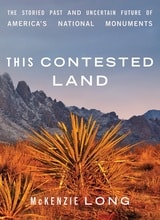
cover of This Contested Land: The Storied Past and Uncertain Future of America's National Monuments

This Contested Land

The Storied Past and Uncertain Future of America's National Monuments

McKenzie Long

University of Minnesota Press, 2022

One woman’s enlightening trek through the natural histories, cultural stories, and present perils of thirteen national monuments, from Maine to Hawaii—now available in paperback

This land is your land. When it comes to national monuments, the sentiment could hardly be more fraught. Gold Butte in Nevada, Organ Mountains–Desert Peaks in New Mexico, Katahdin Woods and Waters in Maine, Cascade–Siskiyou in Oregon and California: these are among the thirteen natural sites McKenzie Long visits in This Contested Land, an eye-opening exploration of the stories these national monuments tell, the passions they stir, and the controversies surrounding them today.


Starting amid the fragrant sagebrush and red dirt of Bears Ears National Monument on the eve of the Trump Administration’s decision to reduce the site by 85 percent, Long climbs sandstone cliffs, is awed by Ancestral Pueblo cliff dwellings and is intrigued by 4,000-year-old petroglyphs. She hikes through remote pink canyons recently removed from the boundary of Grand Staircase–Escalante, skis to a backcountry hut in Maine to view a truly dark night sky, snorkels in warm Hawaiian waters to plumb the meaning of marine preserves, volunteers near the most contaminated nuclear site in the United States, and witnesses firsthand the diverse forms of devotion evoked by the Rio Grande. In essays both contemplative and resonant, This Contested Land confronts an unjust past and imagines a collaborative future that bears witness to these regions’ enduring Indigenous connections. 


From hazardous climate change realities to volatile tensions between economic development and environmental conservation, practical and philosophical issues arise as Long seeks the complicated and often overlooked—or suppressed—stories of these incomparable places. Her journey, mindfully undertaken and movingly described, emphasizes in clear and urgent terms the unique significance of, and grave threats to, these contested lands.

[more]