Results by title
54 books match the query 'Psychiatry' and 3 start with t
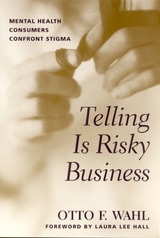
Telling is Risky Business
Mental Health Consumers Confront StigmaWahl, Otto F
Rutgers University Press, 1999
Individuals with a mental illnesses—such as schizophrenia, bipolar disorder, and depression—have a double burden, Otto Wahl writes. Not only must they cope with disabling disorders, but they also must contend with the negative attitudes of the public toward those disorders. To truly understand the full extent of this stigma, we need to hear from the consumers (the term used in this book for people with mental illness) themselves. Telling is Risky Business is the first book to examine what these people have to say about their own experiences of stigma.
The center of Wahl’s research was a nationwide survey in which mental health consumers across the United States were asked, both through questionnaires and interviews, to tell about their experiences of stigma and discrimination. The research comes to life as many of the over 1,300 respondents’ acute observations are reported directly, in their own words.
Telling is Risky Business vividly covers topics such as isolation, rejection, discouragement, and discrimination. Consumers also offer perceptive observations of how our society depicts people with mental illness. The book ends with suggestions for strategies and coping; an invaluable section on resources available for fighting stigma guarantees its place on many bookshelves. As Laura Lee Hall writes, “This book will likely open your eyes to a topic that you probably did not understand.”

The Trial of the Assassin Guiteau
Psychiatry and the Law in the Gilded AgeCharles E. Rosenberg
University of Chicago Press, 1968
Although the role of genetics in behavior was widely accepted, these psychiatrists fiercely debated whether heredity had predisposed Guiteau to assassinate Garfield. Rosenberg's account allows us to consider one of the opening rounds in the controversy over the criminal responsibility of the insane, a debate that still rages today.
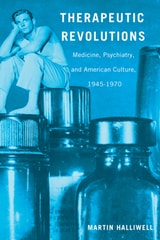
Therapeutic Revolutions
Medicine, Psychiatry, and American Culture, 1945-1970Halliwell, Martin
Rutgers University Press, 2014
Beginning with a discussion of the profound impact of World War II and the Cold War on mental health, Halliwell moves from the influence of work, family, and growing up in the Eisenhower years to the critique of institutional practice and the search for alternative therapeutic communities during the 1960s. Blending a discussion of such influential postwar thinkers as Erich Fromm, William Menninger, Erving Goffman, Erik Erikson, and Herbert Marcuse with perceptive readings of a range of cultural text that illuminate mental health issues--among them Spellbound, Shock Corridor, Revolutionary Road, and I Never Promised You a Rose Garden--this compelling study argues that the postwar therapeutic revolutions closely interlink contrasting discourses of authority and liberation.