Results by title
262 books match the query 'Public health' and 55 start with t
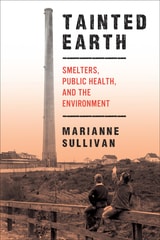
Tainted Earth
Smelters, Public Health, and the EnvironmentSullivan, Marianne
Rutgers University Press, 2014
Smelting is an industrial process involving the extraction of metal from ore. During this process, impurities in ore—including arsenic, lead, and cadmium—may be released from smoke stacks, contaminating air, water, and soil with toxic-heavy metals.
The problem of public health harm from smelter emissions received little official attention for much for the twentieth century. Though people living near smelters periodically complained that their health was impaired by both sulfur dioxide and heavy metals, for much of the century there was strong deference to industry claims that smelter operations were a nuisance and not a serious threat to health. It was only when the majority of children living near the El Paso, Texas, smelter were discovered to be lead-exposed in the early 1970s that systematic, independent investigation of exposure to heavy metals in smelting communities began. Following El Paso, an even more serious led poisoning epidemic was discovered around the Bunker Hill smelter in northern Idaho. In Tacoma, Washington, a copper smelter exposed children to arsenic—a carcinogenic threat.
Thoroughly grounded in extensive archival research, Tainted Earth traces the rise of public health concerns about nonferrous smelting in the western United States, focusing on three major facilities: Tacoma, Washington; El Paso, Texas; and Bunker Hill, Idaho. Marianne Sullivan documents the response from community residents, public health scientists, the industry, and the government to pollution from smelters as well as the long road to protecting public health and the environment. Placing the environmental and public health aspects of smelting in historical context, the book connects local incidents to national stories on the regulation of airborne toxic metals.
The nonferrous smelting industry has left a toxic legacy in the United States and around the world. Unless these toxic metals are cleaned up, they will persist in the environment and may sicken people—children in particular—for generations to come. The twentieth-century struggle to control smelter pollution shares many similarities with public health battles with such industries as tobacco and asbestos where industry supported science created doubt about harm, and reluctant government regulators did not take decisive action to protect the public’s health.
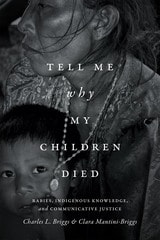
Tell Me Why My Children Died
Rabies, Indigenous Knowledge, and Communicative JusticeCharles L. Briggs and Clara Mantini-Briggs
Duke University Press, 2016

Testing Baby
The Transformation of Newborn Screening, Parenting, and PolicymakingGrob, Rachel
Rutgers University Press, 2011
Within forty-eight hours after birth, the heel of every baby in the United States has been pricked and the blood sent for compulsory screening to detect or rule out a large number of disorders. Newborn screening is expanding rapidly, fueled by the prospect of saving lives. Yet many lives are also changed by it in ways not yet recognized.
Testing Baby is the first book to draw on parents’ experiences with newborn screening in order to examine its far-reaching sociological consequences. Rachel Grob’s cautionary tale also explores the powerful ways that parents’ narratives have shaped this emotionally charged policy arena. Newborn screening occurs almost always without parents’ consent and often without their knowledge or understanding, yet it has the power to alter such things as family dynamics at the household level, the context of parenting, the way we manage disease identity, and how parents’ interests are understood and solicited in policy debates.
The ACA at 10 (Part One)
Jonathan Oberlander, special issue editor
Duke University Press, 2020
Contributors. Daniel Béland, Linda Blumberg, Andrea Louise Campbell, Sherry Glied, Sarah Gordon, Scott Greer, Colleen Grogan, Michael Gusmano, Allison Hoffman, Jon Holahan, Nicole Huberfeld, Lawrence Jacobs, Holly Jarman, David Jones, Timothy Stolzfus Jost, Katie Keith, Aryana Khalid, Larry Levitt, John McDonough, Stacey McMorrow, Suzanne Mettler, Jamila Michener, Jonathan Oberlander, Mark Peterson, Philip Rocco, Marilyn Tavenner, Frank Thompson, Carolyn Hughes Tuohy, Alex Waddan
The ACA at 10 (Part Two)
Jonathan Oberlander, special issue editor
Duke University Press, 2020
Contributors. John Benson, Robert Blendon, Lawrence Brown, Marc Cohen, Mary Findling, Erika Franklin Fowler, Austin Frakt, Anuj Gangopadhyaya, Bowen Garrett, Sarah Gollust, Simon Haeder, Paula Lantz, Adrianna McIntyre, Edward Miller, James Morone, Pamela Nadash, Jeff Niederdeppe, Sayeh Nikpay, Jonathan Oberlander, Eric Patashnik, India Pungarcher, Sara Rosenbaum, Eric Schneider, Michael Sparer, Joseph White, Susan Webb Yackee
The Ailing City
Health, Tuberculosis, and Culture in Buenos Aires, 1870–1950Diego Armus
Duke University Press, 2011
The Best Place
Addiction, Intervention, and Living and Dying Young in VancouverDanya Fast
Rutgers University Press, 2024
Winner of the CASCA Labrecque-Lee Book Prize
In both local and international imaginations, Vancouver, Canada, is often celebrated as one of the world’s most beautiful, cosmopolitan, and livable cities. Simultaneously, the city continues to be ground zero for successive waves of public health emergency and intervention, including a recent and unprecedented drug overdose crisis driven by the proliferation of illicitly manufactured fentanyl and related analogs in the local drug supply. In The Best Place: Addiction, Intervention, and Living and Dying Young in Vancouver, Danya Fast explores these politics of place from the perspectives of young people who use drugs. Those who are the subject of this book were in many ways relegated to the social, spatial, and economic margins of the city. Yet, they were also often at the very center of city life and state projects, including the project of protecting life in the context of the current overdose crisis.

The Body Soviet
Propaganda, Hygiene, and the Revolutionary StateTricia Starks
University of Wisconsin Press, 2008
Health, though essential to the revolutionary vision and crucial to Soviet plans for utopia, has been neglected by traditional histories caught up in Cold War debates. The Body Soviet recovers this significant aspect of Soviet thought by providing a cross-disciplinary, comparative history of Soviet health programs that draws upon rich sources of health care propaganda, including posters, plays, museum displays, films, and mock trials. The analysis of propaganda makes The Body Soviet more than an institutional history; it is also an insightful critique of the ideologies of the body fabricated by health organizations.
"A masterpiece that will thoroughly fascinate and delight readers. Starks's understanding of propaganda and hygiene in the early Soviet state is second to none. She tells the stories of Soviet efforts in this field with tremendous insight and ingenuity, providing a rich picture of Soviet life as it was actually lived."— Elizabeth Wood, author of From Baba to Comrade: Gender and Politics in Revolutionary Russia
The Burdens of Disease
Epidemics and Human Response in Western HistoryJ.N. Hays
Rutgers University Press, 2009
In this updated volume, with revisions and additions to the original content, including the evolution of drug-resistant diseases and expanded coverage of HIV/AIDS, along with recent data on mortality figures and other relevant statistics, J. N. Hays chronicles perceptions and responses to plague and pestilence over two thousand years of western history. Disease is framed as a multidimensional construct, situated at the intersection of history, politics, culture, and medicine, and rooted in mentalities and social relations as much as in biological conditions of pathology. This revised edition of The Burdens of Disease also studies the victims of epidemics, paying close attention to the relationships among poverty, power, and disease.
The Children in Child Health
Negotiating Young Lives and Health in New ZealandJulie Spray
Rutgers University Press, 2020
In the unique context of indigenous Māori and migrant Pacific children in postcolonial New Zealand, Julie Spray explores the intertwining issues of epidemic disease, malnutrition, stress, violence, self-harm, and death to address the problem of how scholars and policy-makers alike can recognize and respond to children as social actors in their health. The Children in Child Health innovatively combines perspectives from childhood studies, medical anthropology, and public health and policy together with evocative ethnography to show how a deep understanding of children’s worlds can change our approach to their care.
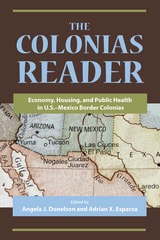
The Colonias Reader
Economy, Housing and Public Health in U.S.-Mexico Border ColoniasEdited by Angela J. Donelson and Adrian X. Esparza
University of Arizona Press, 2010
The Colonias Reader is the first book to present such a broad overview of these communities, offering a glimpse into life in the colonias and the circumstances that allow them to continue to exist—and even grow—in persistent poverty. The contributors document the depth of existing problems in each state and describe how government agencies, nongovernmental organizations, and community activists have mobilized resources to overcome obstacles to progress.
More than reporting problems and documenting programs, the book provides conceptual frameworks that tie poverty to institutional and class-based conflicts, and even challenges the very basis of colonia designations. Most of these contributions move beyond portraying border residents as hapless victims of discrimination and racism, showing instead their devotion to improving their own living conditions through grassroots organizing and community leadership.
These contributions show that, despite varying degrees of success, all colonia residents aspire to a livable wage, safe and decent housing, and basic health care. The Colonias Reader showcases many situations in which these people have organized to fulfill these ambitions and provides new insight into life along the border.
The Cultivation of Whiteness
Science, Health, and Racial Destiny in AustraliaWarwick Anderson
Duke University Press, 2006
“[Anderson] writes with passion, wit, and panache, and the principal virtues of The Cultivation of Whiteness are the old-fashioned ones of thoroughness, accuracy, and impeccable documentation. . . . [His] sensitive study is a model of how contentious historical issues can be confronted.”—W. F. Bynum, Times Literary Supplement
“One of the virtues of The Cultivation of Whiteness is that it brings together aspects of Australian life and history that are now more often separated—race and environment, blood and soil, medicine and geography, tropical science and urban health, biological thought and national policy, Aboriginality and immigration, the body and the mind. The result is a rich and subtle history of ideas that is both intellectual and organic, and that vividly evokes past states of mind and their lingering, haunting power.”—Tom Griffiths, Sydney Morning Herald
The Death Gap
How Inequality KillsDavid A. Ansell, MD
University of Chicago Press, 2017
While the contrasts and disparities among Chicago’s communities are particularly stark, the death gap is truly a nationwide epidemic—as Ansell shows, there is a thirty-five-year difference in life expectancy between the healthiest and wealthiest and the poorest and sickest American neighborhoods. If you are poor, where you live in America can dictate when you die. It doesn’t need to be this way; such divisions are not inevitable. Ansell calls out the social and cultural arguments that have been raised as ways of explaining or excusing these gaps, and he lays bare the structural violence—the racism, economic exploitation, and discrimination—that is really to blame. Inequality is a disease, Ansell argues, and we need to treat and eradicate it as we would any major illness. To do so, he outlines a vision that will provide the foundation for a healthier nation—for all.
Inequality is all around us, and often the distance between high and low life expectancy can be a matter of just a few blocks. But geography need not be destiny, urges Ansell. In The Death Gap he shows us how we can face this national health crisis head-on and take action against the circumstances that rob people of their dignity and their lives.
The Death Gap
How Inequality KillsDavid A. Ansell, MD
University of Chicago Press, 2021
While the contrasts and disparities among Chicago’s communities are particularly stark, the death gap is truly a nationwide epidemic—as Ansell shows, there is a thirty-five-year difference in life expectancy between the healthiest and wealthiest and the poorest and sickest American neighborhoods. If you are poor, where you live in America can dictate when you die. It doesn’t need to be this way; such divisions are not inevitable. Ansell calls out the social and cultural arguments that have been raised as ways of explaining or excusing these gaps, and he lays bare the structural violence—the racism, economic exploitation, and discrimination—that is really to blame. Inequality is a disease, Ansell argues, and we need to treat and eradicate it as we would any major illness. To do so, he outlines a vision that will provide the foundation for a healthier nation—for all.
As the COVID-19 mortality rates in underserved communities proved, inequality is all around us, and often the distance between high and low life expectancy can be a matter of just a few blocks. Updated with a new foreword by Chicago mayor Lori Lightfoot and an afterword by Ansell, The Death Gap speaks to the urgency to face this national health crisis head-on.
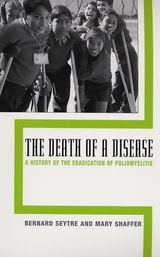
The Death of a Disease
A History of the Eradication of PoliomyelitisSeytre, Bernard
Rutgers University Press, 2005
In 1988, the World Health Organization launched a campaign for the global eradication of polio. Today, this goal is closer than ever. Fewer than 1,300 people were paralyzed from the disease in 2004, down from approximately 350,000 in 1988.
In The Death of a Disease, science writers Bernard Seytre and Mary Shaffer tell the dramatic story of this crippling virus that has evoked terror among parents and struck down healthy children for centuries. Beginning in ancient Egypt, the narrative explores the earliest stages of research, describes the wayward paths taken by a long line of scientists-each of whom made a vital contribution to understanding this enigmatic virus-and traces the development of the Salk and Sabin vaccines. The book also tracks the contemporary polio story, detailing the remaining obstacles as well as the medical, governmental, and international health efforts that are currently being focused on developing countries such as India, Pakistan, Nigeria, and Niger.
At a time when emerging diseases and the threat of bioterrorism are the focus of much media and public attention, this book tells the story of a crippling disease that is on the verge of disappearing. In the face of tremendous odds, the near-eradication of polio offers an inspiring story that is both encouraging and instructive to those at the center of the continued fight against communicable diseases.
The Devil's Fruit
Farmworkers, Health, and Environmental JusticeDvera I. Saxton
Rutgers University Press, 2021
The Door of Last Resort
Memoirs of a Nurse PractitionerWard, Frances
Rutgers University Press, 2013
Ward views nurse practitioners as important providers of primary health care (including the prevention of and attention to the root causes of ill health) in independent practice and as equal members of professional teams of physicians, registered nurses, and other health care personnel. She describes the education of nurse practitioners, their scope of practice, their abilities to prescribe medications and diagnostic tests, and their overall management of patients’ acute and chronic illnesses. Also explored are the battles that nurse practitioners have waged to win the right to practice—battles with physicians, health insurance companies, and even other nurses.
The Door of Last Resort, though informed by Ward’s experiences, is not a traditional memoir. Rather, it explores issues in primary health care delivery to poor, urban populations from the perspective of nurse practitioners and is intended to be their voice. In doing so, it investigates the factors affecting health care delivery in the United States that have remained obscure throughout the current national debate

The Experiment Must Continue
Medical Research and Ethics in East Africa, 1940–2014Melissa Graboyes
Ohio University Press, 2015
The Experiment Must Continue is a beautifully articulated ethnographic history of medical experimentation in East Africa from 1940 through 2014. In it, Melissa Graboyes combines her training in public health and in history to treat her subject with the dual sensitivities of a medical ethicist and a fine historian. She breathes life into the fascinating histories of research on human subjects, elucidating the hopes of the interventionists and the experiences of the putative beneficiaries.
Historical case studies highlight failed attempts to eliminate tropical diseases, while modern examples delve into ongoing malaria and HIV/AIDS research. Collectively, these show how East Africans have perceived research differently than researchers do and that the active participation of subjects led to the creation of a hybrid ethical form.
By writing an ethnography of the past and a history of the present, Graboyes casts medical experimentation in a new light, and makes the resounding case that we must readjust our dominant ideas of consent, participation, and exploitation. With global implications, this lively book is as relevant for scholars as it is for anyone invested in the place of medicine in society.
The Five Health Frontiers
A New Radical BlueprintChristopher Thomas
Pluto Press, 2022
Covid-19 has exposed the limits of a neoliberal public health orthodoxy. But instead of imagining radical change, the left is stuck in a rearguard action focused on defending the NHS from the wrecking ball of privatization.
Public health expert Christopher Thomas argues that we must emerge from Covid-19 on the offensive - with a bold, new vision for our health and care. He maps out five new frontiers for public health and imagines how we can move beyond safeguarding what we have to a radical expansion of the principles put forward by Aneurin Bevan, the founder of the NHS, over 70 years ago.
Beyond recalibrating our approach to healthcare services, his blueprint includes a fundamental redesign of our economy through Public Health Net Zero; a bold new universal public health service fit to address the real causes of ill health; and a major recalibration in the efforts against the epidemiological reality of an era of pandemics.

The Hand Book
Surviving in a Germ-Filled WorldMiryam Z. Wahrman
Brandeis University Press, 2016
The Health Care Safety Net in a Post-Reform World
Hall, Mark A
Rutgers University Press, 2012
The Health Care Safety Net in a Post-Reform World examines how national health care reform will impact safety net programs that serve low-income and uninsured patients. The “safety net” refers to the collection of hospitals, clinics, and doctors who treat disadvantaged people, including those without insurance, regardless of their ability to pay. Despite comprehensive national health care reform, over twenty million people will remain uninsured. And many of those who obtain insurance from reform will continue to face shortages of providers in their communities willing or able to serve them. As the demand for care grows with expanded insurance, so will the pressure on an overstretched safety net.
This book, with contributions from leading health care scholars, is the first comprehensive assessment of the safety net in over a decade. Rather than view health insurance and the health care safety net as alternatives to each other, it examines their potential to be complementary aspects of a broader effort to achieve equity and quality in health care access. It also considers whether the safety net can be improved and strengthened to a level that can provide truly universal access, both through expanded insurance and the creation of a well-integrated and reasonably supported network of direct health care access for the uninsured.
Seeing safety net institutions as key components of post-health care reform in the United States—as opposed to stop-gap measures or as part of the problem—is a bold idea. And as presented in this volume, it is an idea whose time has come.
The Health of the Commonwealth
A Brief History of Medicine, Public Health, and Disease in PennsylvaniaJames E. Higgins
Temple University Press, 2020
“The history of medicine in Pennsylvania is no less vital to understanding the state’s past than is its political or industrial history,” writes James Higgins in The Health of the Commonwealth, his overview of medicine and public health in the state. Covering the outbreak of yellow fever in 1793 through the 1976 Legionnaire’s Disease epidemic, and the challenges of the present day, he shows how Pennsylvania has played a central role in humanity’s understanding of—and progress against—disease.
Higgins provides close readings of specific medical advances—for instance, scientists at the University of Pittsburgh discovered the polio vaccine—and of disease outbreaks, like AIDS. He examines sanitation and water purification efforts, allopathic medicine and alternative therapies, and the building of the state’s tuberculosis sanitaria. Higgins also describes Native American and pre-modern European folk medicine, the rise of public health in the state, and women’s roles in both folk and scientific medicine.
The Health of the Commonwealth places Pennsylvania’s unique contribution to the history of public health and medicine in a larger narrative of health and disease throughout the United States and the world.
The Healthiest City
Milwaukee and the Politics of Health ReformJudith W. Leavitt
University of Wisconsin Press, 1996
Between 1850 and 1900, Milwaukee’s rapid population growth also gave rise to high death rates, infectious diseases, crowded housing, filthy streets, inadequate water supplies, and incredible stench. The Healthiest City shows how a coalition of reform groups brought about community education and municipal action to achieve for Milwaukee the title of “the healthiest city” by the 1930s. This highly praised book reminds us that cutting funds and regulations for preserving public health results in inconvenience, illness, and even death.
“A major work. . . . Leavitt focuses on three illustrative issues—smallpox, garbage, and milk, representing the larger areas of infectious disease, sanitation, and food control.”—Norman Gevitz, Journal of the American Medical Association
“Leavitt’s research provides additional evidence . . . that improvements in sanitation, living conditions, and diet contributed more to the overall decline in mortality rates than advances in medical practice. . . . A solid contribution to the history of urban reform politics and public health.”—Jo Ann Carrigan, Journal of American History
The Histories of HIVs
The Emergence of the Multiple Viruses That Caused the AIDS EpidemicsWilliam H. Schneider
Ohio University Press, 2021
This new collection of essays on HIV viruses spans disciplines to topple popular narratives about the origins of the AIDS pandemic and the impact of the disease on public health policy.
With a death toll in the tens of millions, the AIDS pandemic was one of the worst medical disasters of the past century. The disease was identified in 1981, at the height of miraculous postwar medical achievements, including effective antibiotics, breakthrough advances in heart surgery and transplantations, and cheap, safe vaccines—smallpox had been eradicated just a few years earlier. Arriving as they did during this era of confidence in modern medicine, the HIV epidemics shook the public’s faith in health science. Despite subsequent success in identifying, testing, and treating AIDS, the emergence of epidemics and outbreaks of Ebola, Zika, and the novel coronaviruses (SARS and COVID-19) are stark reminders that such confidence in modern medicine is not likely to be restored until the emergence of these viruses is better understood.
This collection combines the work of major social science and humanities scholars with that of virologists and epidemiologists to provide a broader understanding of the historical, social, and cultural circumstances that produced the pandemic. The authors argue that the emergence of the HIV viruses and their epidemic spread were not the result of a random mutation but rather broader new influences whose impact depended upon a combination of specific circumstances at different places and times. The viruses emerged and were transmitted according to population movement and urbanization, changes in sexual relations, new medical procedures, and war. In this way, the AIDS pandemic was not a chance natural occurrence, but a human-made disaster.
Essays by: Ernest M. Drucker, Tamara Giles-Vernick, Ch. Didier Gondola, Guillaume Lachenal, Amandine Lauro, Preston A. Marx, Stephanie Rupp, François Simon, Jorge Varanda
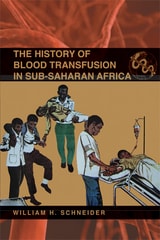
The History of Blood Transfusion in Sub-Saharan Africa
William H. Schneider
Ohio University Press, 2013
This first extensive study of the practice of blood transfusion in Africa traces the history of one of the most important therapies in modern medicine from the period of colonial rule to independence and the AIDS epidemic. The introduction of transfusion held great promise for improving health, but like most new medical practices, transfusion needed to be adapted to the needs of sub-Saharan Africa, for which there was no analogous treatment in traditional African medicine.
This otherwise beneficent medical procedure also created a “royal road” for microorganisms, and thus played a central part in the emergence of human immune viruses in epidemic form. As with more developed health care systems, blood transfusion practices in sub-Saharan Africa were incapable of detecting the emergence of HIV. As a result, given the wide use of transfusion, it became an important pathway for the initial spread of AIDS. Yet African health officials were not without means to understand and respond to the new danger, thanks to forty years of experience and a framework of appreciating long-standing health risks. The response to this risk, detailed in this book, yields important insight into the history of epidemics and HIV/AIDS.
Drawing on research from colonial-era governments, European Red Cross societies, independent African governments, and directly from health officers themselves, this book is the only historical study of the practice of blood transfusion in Africa.

The Medical Delivery Business
Health Reform, Childbirth, and the Economic OrderPerkins, Barbara Bridgman
Rutgers University Press, 2004
Americans at the end of the twentieth century worried that managed care had fundamentally transformed the character of medicine. In The Medical Delivery Business, Barbara Bridgman Perkins uses examples drawn from maternal and infant care to argue that the business approach in medicine is not a new development. Health care reformers throughout the century looked to industrial, corporate, and commercial enterprises as models for the institutions, specialties, and technological strategies that defined modern medicine.
In the case of perinatal care, the business model emphasized specialized over primary care, encouraged the use of surgical and technological procedures, and unnecessarily turned childbirth into an intensive care situation. Active management techniques, for example, encouraged obstetricians to accelerate labor with oxytocin to augment their productivity. Despite the achievements of the childbirth and women’s health movement in the 1970s, aggressive medical intervention has remained the birth experience for millions of American women (and their babies) every year.
The Medical Delivery Business challenges the conventional view that a dose of the market is good for medicine. While Perkins is sympathetic to the goals of progressive and feminist reformers, she questions whether their strategies will succeed in making medicine more equitable and effective. She argues that the medical care system itself needs to be fundamentally "re-formed," and the reforms must be based on democracy, caring, and social justice as well as economics.

The Medical Library Association Guide to Managing Health Care Libraries
Rosalind Farnam Dudden
American Library Association, 2011
The Nursing Clio Reader
Histories of Sex, Reproduction, and JusticeJacqueline D. The Nursing Clio Editorial Collective
Rutgers University Press, 2025
The Nursing Clio Reader answers that call, bringing together essays that examine reproductive health through historical research and personal experience. Featuring both new and classic pieces from the Nursing Clio blog, leading historians of reproductive health provide insights that connect past struggles with today’s ongoing battles over bodies, reproductive rights, and health care. This collection offers intimate, urgent scholarship that speaks to the present moment.
A powerful resource for classrooms and individual readers alike, The Nursing Clio Reader invites reflection on how the past informs current debates, urging us to engage deeply with the history of reproductive justice in a time of unprecedented change, underscoring that indeed "the personal is historical."
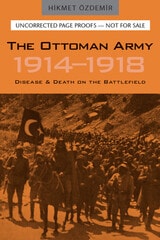
The Ottoman Army 1914 - 1918
Disease and Death on the BattlefieldHikmet Ozdemir
University of Utah Press, 2008
What kind of relationship exists between wars and epidemics? It is widely held that epidemics affected the outcomes of many wars and, until World War II, more victims of war died of disease than of battle wounds. Many disease vectors are present in times of conflict, including mass movements of people across borders and increased contact between persons of different geographic regions, yet disease is rarely treated in depth in histories of war.
Hikmet Özdemir’s The Ottoman Army, 1914–1918 provides extensive documentation of disease and death across the Ottoman Empire during World War I, when epidemic diseases annihilated armies and caused civilians to perish en masse. Drawing on hospital records and information on regional disease prevalence, Özdemir examines the effects that disease and epidemic had on the outcome of the war.
The information on disease mortality explains much that has never been properly understood about wartime events and government actions, events that only begin to make sense when the disease factor is considered. Rich in detail, this is an extremely valuable book that illuminates a facet of the war that has not been adequately considered until now.
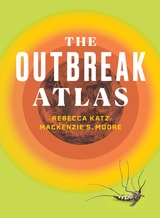
The Outbreak Atlas
Rebecca Katz and Mackenzi S. Moore
Vanderbilt University Press, 2024
For years the Georgetown University Center for Global Health Science and Security has curated an interactive online tool for professionals that identifies the activities involved across all phases of an outbreak. The Georgetown Outbreak Activity Library (GOAL) captures what needs to get done, when, and by whom. Now, in The Outbreak Atlas, Rebecca Katz and Mackenzie S. Moore have translated this complex material into a book designed for a public audience.
This book provides an overview of outbreak activities alongside compelling case studies and visuals to guide readers through the complexity involved in outbreak preparedness, response, and recovery. It lifts the curtain on the rationale and interconnectedness of outbreak responses across different fields and at various levels, presenting accessible information that ensures a shared understanding of the essential activities to control an outbreak.
The Pandemic Divide
How COVID Increased Inequality in AmericaGwendolyn L. Wright, Lucas Hubbard, and William A. Darrity, editors
Duke University Press, 2022
Contributors. Fenaba Addo, Steve Amendum, Leslie Babinski, Sandra Barnes, Mary T. Bassett, Keisha Bentley-Edwards, Kisha Daniels, William A. Darity Jr., Melania DiPietro, Jane Dokko, Fiona Greig, Adam Hollowell, Lucas Hubbard, Damon Jones, Steve Knotek, Arvind Krishnamurthy, Henry Clay McKoy Jr., N. Joyce Payne, Erica Phillips, Eugene Richardson, Paul Robbins, Jung Sakong, Marta Sánchez, Melissa Scott, Kristen Stephens, Joe Trotter, Chris Wheat, Gwendolyn L. Wright
The Politics of Disease Control
Sleeping Sickness in Eastern Africa, 1890–1920Mari K. Webel
Ohio University Press, 2019
A history of epidemic illness and political change, The Politics of Disease Control focuses on epidemics of sleeping sickness (human African trypanosomiasis) around Lake Victoria and Lake Tanganyika in the early twentieth century as well as the colonial public health programs designed to control them. Mari K. Webel prioritizes local histories of populations in the Great Lakes region to put the successes and failures of a widely used colonial public health intervention—the sleeping sickness camp—into dialogue with African strategies to mitigate illness and death in the past.
Webel draws case studies from colonial Burundi, Tanzania, and Uganda to frame her arguments within a zone of vigorous mobility and exchange in eastern Africa, where African states engaged with the Belgian, British, and German empires. Situating sleeping sickness control within African intellectual worlds and political dynamics, The Politics of Disease Control connects responses to sleeping sickness with experiences of historical epidemics such as plague, cholera, and smallpox, demonstrating important continuities before and after colonial incursion. African strategies to mitigate disease, Webel shows, fundamentally shaped colonial disease prevention programs in a crucial moment of political and social change.
The Politics of Potential
Global Health and Gendered Futures in South AfricaMichelle Pentecost
Rutgers University Press, 2024
The Politics of Public Health
Turshen, Meredeth
Rutgers University Press, 1989
The book is divided into four parts. Part 1 outlines current and alternative approaches to health, theories of disease causation, the policies and practices that follow from these theories, and issues of equity and access to health care. A chapter of women's health in three African countries illustrates these concepts. Part 2 describes limits to conventional public health, using case histories of plague control, dioxin decontamination, sanitary reform, and smallpox and malaria eradication. In Part 3, Turshen presents case histories of preventive medicine, nutrition and agribusiness, mental health, and AIDS in Africa to suggest new approaches based on an alternative model of social production. Part 4 looks to the future of public health. It examines basic issues in integrating public health research, training, and services, and concludes with an agenda for action.
The Politics of Public Health
Turshen, Meredeth
Rutgers University Press, 1989
The book is divided into four parts. Part 1 outlines current and alternative approaches to health, theories of disease causation, the policies and practices that follow from these theories, and issues of equity and access to health care. A chapter of women's health in three African countries illustrates these concepts. Part 2 describes limits to conventional public health, using case histories of plague control, dioxin decontamination, sanitary reform, and smallpox and malaria eradication. In Part 3, Turshen presents case histories of preventive medicine, nutrition and agribusiness, mental health, and AIDS in Africa to suggest new approaches based on an alternative model of social production. Part 4 looks to the future of public health. It examines basic issues in integrating public health research, training, and services, and concludes with an agenda for action.

The Pox of Liberty
How the Constitution Left Americans Rich, Free, and Prone to InfectionWerner Troesken
University of Chicago Press, 2015
Werner Troesken looks at the history of the United States with a focus on three diseases—smallpox, typhoid fever, and yellow fever—to show how constitutional rules and provisions that promoted individual liberty and economic prosperity also influenced, for good and for bad, the country’s ability to eradicate infectious disease. Ranging from federalism under the Commerce Clause to the Contract Clause and the Fourteenth Amendment, Troesken argues persuasively that many institutions intended to promote desirable political or economic outcomes also hindered the provision of public health. We are unhealthy, in other words, at least in part because our political and legal institutions function well. Offering a compelling new perspective, The Pox of Liberty challenges many traditional claims that infectious diseases are inexorable forces in human history, beyond the control of individual actors or the state, revealing them instead to be the result of public and private choices.
The Prescription-to-Prison Pipeline
The Medicalization and Criminalization of PainMichelle Smirnova
Duke University Press, 2023
The Province of Affliction
Illness and the Making of Early New EnglandBen Mutschler
University of Chicago Press, 2020
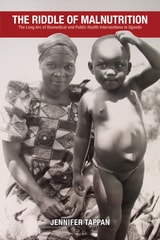
The Riddle of Malnutrition
The Long Arc of Biomedical and Public Health Interventions in UgandaJennifer Tappan
Ohio University Press, 2017
More than ten million children suffer from severe acute malnutrition globally each year. In Uganda, longstanding efforts to understand, treat, and then prevent the condition initially served to medicalize it, in the eyes of both biomedical personnel and Ugandans who brought their children to the hospital for treatment and care. Medicalization meant malnutrition came to be seen as a disease—as a medical emergency—not a preventable condition, further compromising nutritional health in Uganda.
Rather than rely on a foreign-led model, physicians in Uganda responded to this failure by developing a novel public health program known as Mwanamugimu. The new approach prioritized local expertise and empowering Ugandan women, blending biomedical knowledge with African sensibilities and cultural competencies.
In The Riddle of Malnutrition, Jennifer Tappan examines how over the course of half a century Mwanamugimu tackled the most fatal form of childhood malnutrition—kwashiorkor—and promoted nutritional health in the midst of postcolonial violence, political upheaval, and neoliberal resource constraints. She draws on a diverse array of sources to illuminate the interplay between colonialism, the production of scientific knowledge, and the delivery of health services in contemporary Africa.
The Sanitation of Brazil
Nation, State, and Public Health, 1889-1930Gilberto Hochman
University of Illinois Press, 2016

The Social Medicine Reader
Gail E. Henderson, Nancy M. P. King, Ronald P. Strauss, Sue E. Estroff, and Larry R. Churchill, eds.
Duke University Press, 1997
Based on more than a decade of teaching social medicine to first-year medical students at the pioneering Department of Social Medicine at the University of North Carolina, The Social Medicine Reader defines the meaning of the social medicine perspective and offers an approach for teaching it. Looking at medicine from a variety of perspectives, this anthology features fiction, medical reports, scholarly essays, poetry, case studies, and personal narratives by patients and doctors—all of which contribute to an understanding of how medicine and medical practice is profoundly influenced by social, cultural, political, and economic forces.
What happens when a person becomes a patient? How are illness and disability experienced? What causes disease? What can medicine do? What constitutes a doctor/patient relationship? What are the ethical obligations of a health care provider? These questions and many others are raised by The Social Medicine Reader, which is organized into sections that address how patients experience illness, cultural attitudes toward disease, social factors related to health problems, the socialization of physicians, the doctor/patient relationship, health care ethics and the provider’s role, medical care financing, rationing, and managed care.
The Social Medicine Reader, Volume I, Third Edition
Ethics and Cultures of BiomedicineJonathan Oberlander, Mara Buchbinder, Larry R. Churchill, Sue E. Estroff, Nancy M. King, Barry F. Saunders, Ronald P. Strauss, and Rebecca L. Walker, editors
Duke University Press, 2019
Volume 1, Ethics and Cultures of Biomedicine, contains essays, case studies, narratives, fiction, and poems that focus on the experiences of illness and of clinician-patient relationships. Among other topics the contributors examine the roles and training of professionals alongside the broader cultures of biomedicine; health care; experiences and decisions regarding death, dying, and struggling to live; and particular manifestations of injustice in the broader health system. The Reader is essential reading for all medical students, physicians, and health care providers.
The Social Medicine Reader, Volume II, Third Edition
Differences and Inequalities, Volume 2Jonathan Oberlander, Mara Buchbinder, Larry R. Churchill, Sue E. Estroff, Nancy M. King, Barry F. Saunders, Ronald P. Strauss, and Rebecca L. Walker, editors
Duke University Press, 2019
The Sounds of Furious Living
Everyday Unorthodoxies in an Era of AIDSMatthew Kelly
Rutgers University Press, 2024
Four decades have passed since reports of a mysterious “gay cancer” first appeared in US newspapers. In the ensuing years, the pandemic that would come to be called AIDS changed the world in innumerable ways. It also gave rise to one of the late twentieth century’s largest health-based empowerment movements. Scholars across diverse traditions have documented the rise of the AIDS activist movement, chronicling the impassioned echoes of protestors who took to the streets to demand “drugs into bodies.”
And yet not all activism creates echoes. Included among the ranks of 1980s and 1990s-era AIDS activists were individuals whose expressions of empowerment differed markedly from those demanding open access to mainstream pharmaceutical agents. Largely forgotten today, this activist tradition was comprised of individuals who embraced unorthodox approaches for conceptualizing and treating their condition. Rejecting biomedical expertise, they shared alternative clinical paradigms, created underground networks for distributing unorthodox nostrums, and endorsed etiological models that challenged the association between HIV and AIDS. The theatre of their protests was not the streets of New York City’s Greenwich Village but rather their bodies. And their language was not the riotous chants of public demonstration but the often-invisible embrace of contrarian systems for defining and treating their disease.
The Sounds of Furious Living seeks to understand the AIDS activist tradition, identifying the historical currents out of which it arose. Embracing a patient-centered, social historical lens, it traces historic shifts in popular understanding of health and perceptions of biomedicine through the nineteenth and twentieth centuries to explain the lasting appeal of unorthodox health activism into the modern era. In asking how unorthodox health activism flourished during the twentieth century’s last major pandemic, Kelly also seeks to inform our understanding of resistance to biomedical authority in the setting of the twenty-first century’s first major pandemic: COVID-19. As a deeply researched portrait of distrust and disenchantment, The Sounds of Furious Living helps explain the persistence of movements that challenge biomedicine’s authority well into a century marked by biomedical innovation, while simultaneously posing important questions regarding the meaning and metrics of patient empowerment in clinical practice.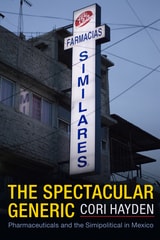
The Spectacular Generic
Pharmaceuticals and the Simipolitical in MexicoCori Hayden
Duke University Press, 2023
The UM-CIRHT Framework for Integrating Comprehensive Contraception and Abortion Care Competencies into Health Professions Education
Solomon W. Beza
Michigan Publishing Services, 2018
The framework is intended to provide guidance on how the programmatic and operational strategies for family planning and comprehensive abortion care could be extended in countries or institutions that seek to replicate the UM-CIRHT model in their settings. It may be adapted to the local context of individual countries and institutions.
This framework document is produced by UM-CIRHT with funding from an anonymous donor.
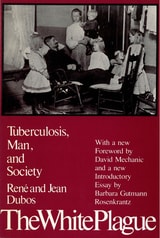
The White Plague
Tuberculosis, Man and SocietyDubos, Jean
Rutgers University Press, 1987
In The White Plague, René and Jean Dubos argue that the great increase of tuberculosis was intimately connected with the rise of an industrial, urbanized society and—a much more controversial idea when this book first appeared forty years ago—that the progress of medical science had very little to do with the marked decline in tuberculosis in the twentieth century.
The White Plague has long been regarded as a classic in the social and environmental history of disease. This reprint of the 1952 edition features new introductory writings by two distinguished practitioners of the sociology and history of medicine. David Mechanic's foreword describes the personal and intellectual experience that shaped René Dubos's view of tuberculosis. Barbara Gutmann Rosenkrantz's historical introduction reexamines The White Plague in light of recent work on the social history of tuberculosis. Her thought-provoking essay pays particular attention to the broader cultural and medical assumptions about sickness and sick people that inform a society’s approach to the conquest of disease.
Thinking About Dementia
Culture, Loss, and the Anthropology of SenilityLeibing, Annette
Rutgers University Press, 2006
Bringing together essays by nineteen respected scholars, this volume approaches dementia from a variety of angles, exploring its historical, psychological, and philosophical implications. The authors employ a cross-cultural perspective that is based on ethnographic fieldwork and focuses on questions of age, mind, voice, self, loss, temporality, memory, and affect.
Taken together, the essays make four important and interrelated contributions to our understanding of the mental status of the elderly. First, cross-cultural data show that the aging process, while biologically influenced, is also culturally constructed. Second, ethnographic reports raise questions about the diagnostic criteria used for defining the elderly as demented. Third, case studies show how a diagnosis affects a patient's treatment in both clinical and familial settings. Finally, the collection highlights the gap that separates current biological understandings of aging from its cultural meanings.
As Alzheimer's disease and other forms of dementia continue to command an ever-increasing amount of attention in medicine and psychology, this book will be essential reading for anthropologists, social scientists, and health care professionals.
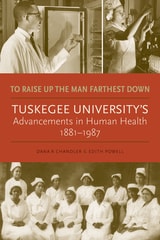
To Raise Up the Man Farthest Down
Tuskegee University’s Advancements in Human Health, 1881–1987Dana R. Chandler and Edith Powell
University of Alabama Press, 2018
An important historical account of Tuskegee University’s significant advances in health care, which affected millions of lives worldwide.
Alabama’s celebrated, historically black Tuskegee University is most commonly associated with its founding president, Booker T. Washington, the scientific innovator George Washington Carver, or the renowned Tuskegee Airmen. Although the university’s accomplishments and devotion to social issues are well known, its work in medical research and health care has received little acknowledgment. Tuskegee has been fulfilling Washington’s vision of “healthy minds and bodies” since its inception in 1881. In To Raise Up the Man Farthest Down, Dana R. Chandler and Edith Powell document Tuskegee University’s medical and public health history with rich archival data and never-before-published photographs. Chandler and Powell especially highlight the important but largely unsung role that Tuskegee University researchers played in the eradication of polio, and they add new dimension and context to the fascinating story of the HeLa cell line that has been brought to the public’s attention by popular media.
Tuskegee University was on the forefront in providing local farmers the benefits of agrarian research. The university helped create the massive Agricultural Extension System managed today by land grant universities throughout the United States. Tuskegee established the first baccalaureate nursing program in the state and was also home to Alabama’s first hospital for African Americans. Washington hired Alabama’s first female licensed physician as a resident physician at Tuskegee. Most notably, Tuskegee was the site of a remarkable development in American biochemistry history: its microbiology laboratory was the only one relied upon by the National Foundation for Infantile Paralysis (the organization known today as the March of Dimes) to produce the HeLa cell cultures employed in the national field trials for the Salk and Sabin polio vaccines. Chandler and Powell are also interested in correcting a long-held but false historical perception that Tuskegee University was the location for the shameful and infamous US Public Health Service study of untreated syphilis.
Meticulously researched, this book is filled with previously undocumented information taken directly from the vast Tuskegee University archives. Readers will gain a new appreciation for how Tuskegee’s people and institutions have influenced community health, food science, and national medical life throughout the twentieth century.