Results by title
753 books match the query 'Race' and 140 start with t
Taboo Subjects
Race, Sex, and PsychoanalysisGwen Bergner
University of Minnesota Press, 2005
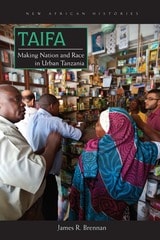
Taifa
Making Nation and Race in Urban TanzaniaJames R. Brennan
Ohio University Press, 2012
Taifa is a story of African intellectual agency, but it is also an account of how nation and race emerged out of the legal, social, and economic histories in one major city, Dar es Salaam. Nation and race—both translatable as taifa in Swahili—were not simply universal ideas brought to Africa by European colonizers, as previous studies assume. They were instead categories crafted by local African thinkers to make sense of deep inequalities, particularly those between local Africans and Indian immigrants. Taifa shows how nation and race became the key political categories to guide colonial and postcolonial life in this African city.
Using deeply researched archival and oral evidence, Taifa transforms our understanding of urban history and shows how concerns about access to credit and housing became intertwined with changing conceptions of nation and nationhood. Taifa gives equal attention to both Indians and Africans; in doing so, it demonstrates the significance of political and economic connections between coastal East Africa and India during the era of British colonialism, and illustrates how the project of racial nationalism largely severed these connections by the 1970s.
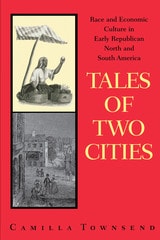
Tales of Two Cities
Race and Economic Culture in Early Republican North and South AmericaBy Camilla Townsend
University of Texas Press, 2000
With a common heritage as former colonies of Europe, why did the United States so outstrip Latin America in terms of economic development in the nineteenth century? In this innovative study, Camilla Townsend challenges the traditional view that North Americans succeeded because of better attitudes toward work—the Protestant work ethic—and argues instead that they prospered because of differences in attitudes towards workers that evolved in the colonial era.
Townsend builds her study around workers' lives in two very similar port cities in the 1820s and 1830s. Through the eyes of the young Frederick Douglass in Baltimore, Maryland, and an Indian woman named Ana Yagual in Guayaquil, Ecuador, she shows how differing attitudes towards race and class in North and South America affected local ways of doing business. This empirical research significantly clarifies the relationship between economic culture and racial identity and its long-term effects.
Teaching about Race and Racism in the College Classroom
Notes from a White ProfessorCyndi Kernahan
West Virginia University Press, 2019
Teaching about race and racism can be a difficult business. Students and instructors alike often struggle with strong emotions, and many people have robust preexisting beliefs about race. At the same time, this is a moment that demands a clear understanding of racism. It is important for students to learn how we got here and how racism is more than just individual acts of meanness. Students also need to understand that colorblindness is not an effective anti-racism strategy.
In this book, Cyndi Kernahan argues that you can be honest and unflinching in your teaching about racism while also providing a compassionate learning environment that allows for mistakes and avoids shaming students. She provides evidence for how learning works with respect to race and racism along with practical teaching strategies rooted in that evidence to help instructors feel more confident. She also differentiates between how white students and students of color are likely to experience the classroom, helping instructors provide a more effective learning experience for all students.
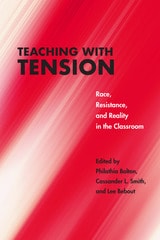
Teaching with Tension
Race, Resistance, and Reality in the ClassroomEdited by Philathia Bolton, Cassander L. Smith, and Lee Bebout
Northwestern University Press, 2019
Drawing together personal reflection, pedagogical strategies, and critical theory, Teaching with Tension offers concrete examinations that will foster student learning. The essays are organized into three thematic sections: "Teaching in Times and Places of Struggle" examines the dynamics of teaching race during the current moment, marked by neoconservative politics and twenty-first century freedom struggles. "Teaching in the Neoliberal University" focuses on how pressures and exigencies of neoliberalism (such as individualism, customer-service models of education, and online courses) impact the way in which race is taught and conceptualized in college classes. The final section, "Teaching How to Read Race and (Counter)Narratives," homes in on direct strategies used to historicize race in classrooms comprised of millennials who grapple with race neutral ideologies. Taken together, these sections and their constitutive essays offer rich and fruitful insight into the complex dynamics of contemporary race and ethnic studies education.
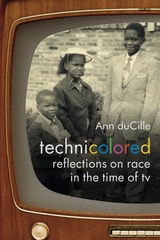
Technicolored
Reflections on Race in the Time of TVAnn duCille
Duke University Press, 2018
Terrifying Muslims
Race and Labor in the South Asian DiasporaJunaid Rana
Duke University Press, 2011
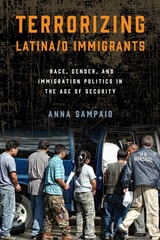
Terrorizing Latina/o Immigrants
Race, Gender, and Immigration Policy Post-9/11Anna Sampaio
Temple University Press, 2015
Immigration politics has been significantly altered by the advent of America’s war on terror and the proliferation of security measures. In her cogent study, Terrorizing Latina/o Immigrants, Anna Sampaio examines how these processes are racialized and gendered and how they impose inequitable burdens on Latina/o immigrants. She interrogates the rise of securitization, restrictive legislation, and the return of large-scale immigration raids and describes how these re-articulate and re-inscribe forms of racial and gender hierarchy.
Terrorizing Latina/o Immigrants demonstrates how the ascendance of America as a security state serves as a template to scrutinize, harass, and encumber immigrants while also reconfiguring citizenship. Sampaio uses intersectional analysis coupled with theoretical and empirical approaches to develop a critical framework for analyzing current immigration politics.
Sampaio provides a sustained and systematic examination of policy and enforcement shifts impacting Latinas/os. Her book concludes with an examination of immigration reform under the Obama administration, contrasting the promise of hope and change with the reality of increased detentions, deportations, and continued marginalization.
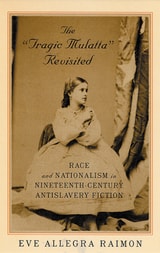
The 'Tragic Mulatta' Revisited
Race and Nationalism in Nineteenth-Century Antislavery FictionEve Allegra Raimon
Rutgers University Press, 2004
Since its inception, the United States has been intensely preoccupied with interracialism. The concept is embedded everywhere in our social and political fabric, including our sense of national identity. And yet, in both its quantitative and symbolic forms, interracialism remains an extremely elusive phenomenon, causing policy makers and census boards to wrangle over how to delineate it and, on an emblematic level, stirring intense emotions from fear to fascination.
In The “Tragic Mulatta” Revisited, Eve Allegra Raimon focuses on the mixed-race female slave in literature, arguing that this figure became a symbolic vehicle for explorations of race and nation—both of which were in crisis in the mid-nineteenth century. At this time, judicial, statutory, social, and scientific debates about the meaning of racial difference (and intermixture) coincided with disputes over frontier expansion, which were never merely about land acquisition but also literally about the “complexion” of that frontier. Embodying both northern and southern ideologies, the “amalgamated” mulatta, the author argues, can be viewed as quintessentially American, a precursor to contemporary motifs of “hybrid” and “mestizo” identities.
Where others have focused on the gendered and racially abject position of the “tragic mulatta,” Raimonreconsiders texts by such central antislavery writers as Lydia Maria Child, William Wells Brown, Harriet Beecher Stowe, and Harriet Wilson to suggest that the figure is more usefully examined as a way of understanding the volatile and shifting interface of race and national identity in the antebellum period.
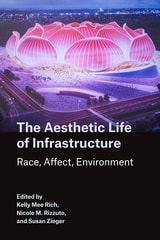
The Aesthetic Life of Infrastructure
Race, Affect, EnvironmentEdited by Kelly M. Rich, Nicole M. Rizzuto, and Susan Zieger
Northwestern University Press, 2023
A critical reading of the unstable structures that organize biological and social life
This timely and radically interdisciplinary volume uncovers the aesthetics and politics of infrastructure. From roads and bridges to harbors and canals, infrastructure is conventionally understood as the public works that allow for the circulation of capital. Yet this naturalized concept of infrastructure, driven by capital’s restless expansion, is haunted by imperial tendencies to occupy territory, extract resources, and organize life. Infrastructure thus undergirds the living nexus of modernity in an ongoing project of racialization, affective embodiment, and environmental praxis. Rather than merely making visible infrastructure’s modes of power, however, The Aesthetic Life of Infrastructure brings literary methods to bear on the interpretive terrain, reading infrastructural space and temporalities to show that their aesthetic and sensorial experience cannot be understood apart from histories of production and political economies.
Building on critical infrastructure studies in anthropology, geography, and media studies, this collection demonstrates the field’s vitality to scholars working across the humanities, including in literary, visual, and cultural studies. By querying the presumed invisibility of infrastructure’s hidden life, the volume’s contributors revitalize ongoing literary debates about reading surface and depth. How, they ask, might infrastructure and aesthetics then function as epistemic tools for rethinking each other? And what urgency do they acquire in light of current crises that bear on death, whether biological, social, or planetary?
The Aesthetics of Equity
Notes on Race, Space, Architecture, and MusicCraig L. Wilkins
University of Minnesota Press, 2007
Architecture is often thought to be a diary of a society, filled with symbolic representations of specific cultural moments. However, as Craig L. Wilkins observes, that diary includes far too few narratives of the diverse cultures in U.S. society. Wilkins states that the discipline of architecture has a resistance to African Americans at every level, from the startlingly small number of architecture students to the paltry number of registered architects in the United States today.
Working to understand how ideologies are formed, transmitted, and embedded in the built environment, Wilkins deconstructs how the marginalization of African Americans is authorized within the field of architecture. He then outlines how activist forms of expression shape and sustain communities, fashioning an architectural theory around the site of environmental conflict constructed by hip-hop culture.
Wilkins places his concerns in a historical context, and also offers practical solutions to address them. In doing so, he reveals new possibilities for an architecture that acknowledges its current shortcomings and replies to the needs of multicultural constituencies.
Craig L. Wilkins, a registered architect, teaches architecture and urban planning at the University of Michigan.
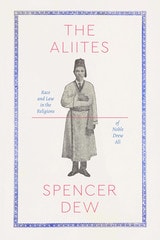
The Aliites
Race and Law in the Religions of Noble Drew AliSpencer Dew
University of Chicago Press, 2019
In The Aliites, Spencer Dew traces the history and impact of Ali’s radical fusion of law and faith. Dew uncovers the influence of Ali’s teachings, including the many movements they inspired. As Dew shows, Ali’s teachings demonstrate an implicit yet critical component of the American approach to law: that it should express our highest ideals for society, even if it is rarely perfect in practice. Examining this robustly creative yet largely overlooked lineage of African American religious thought, Dew provides a window onto religion, race, citizenship, and law in America.
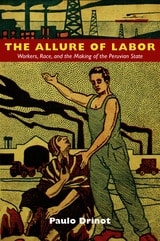
The Allure of Labor
Workers, Race, and the Making of the Peruvian StatePaulo Drinot
Duke University Press, 2011
Although the vast majority of laboring peoples in Peru were indigenous, in the minds of social reformers indigeneity was not commensurable with labor: Indians could not be workers and were therefore excluded from the labor policies enacted in the 1920s and 1930s and, more generally, from elite conceptions of industrial progress. Drinot shows how the incommensurability of indigeneity with labor was expressed in the 1920 constitution, in specific labor policies, and in the activities of state agencies created to oversee collective bargaining and provide workers with affordable housing, inexpensive food, and social insurance. He argues that the racialized assumptions of the modernizing Peruvian state are reflected in the enduring inequalities of present-day Peru.
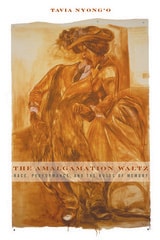
The Amalgamation Waltz
Race, Performance, and the Ruses of MemoryTavia Nyong’o
University of Minnesota Press, 2009
Does racial hybridity offer a future beyond racial difference?
At a time when the idea of a postracial society has entered public discourse, The Amalgamation Waltz investigates the practices that conjoined blackness and whiteness in the nineteenth and twentieth centuries. Scrutinizing widely diverse texts—archival, musical, visual, and theatrical—Tavia Nyong’o traces the genealogy of racial hybridity, analyzing how key events in the nineteenth century spawned a debate about interracialism that lives on today.
Deeply interested in how discussions of racial hybridity have portrayed the hybrid as the recurring hope for a distant raceless future, Nyong’o is concerned with the ways this discourse deploys the figure of the racial hybrid as an alibi for a nationalism that reinvents the racist logics it claims to have broken with. As Nyong’o demonstrates, the rise of a pervasive image of racially anomalous bodies responded to the appearance of an independent black public sphere and organized politics of black uplift. This newfound mobility was apprehended in the political imaginary as a bodily and sexual scandal, and the resultant amalgamation discourse, he argues, must be recognized as one of the earliest and most enduring national dialogues on sex and sexuality. Nyong’o tracks the emergence of the concept of the racial hybrid as an ideological modernization of the older concept of the mongrel and shows how this revision brought race-thinking in line with new understandings of sex and gender, providing a racial context for the shift toward modern heterosexuality, the discourse on which postracial metaphors so frequently rely. A timely rebuttal to our contemporary fascination with racial hybridity, The Amalgamation Waltz questions the vision of a national future without racial difference or conflict.
The Anarchy of Black Religion
A Mystic SongJ. Kameron Carter
Duke University Press, 2023
The Atlanta Youth Murders and the Politics of Race
Bernard Headley
Southern Illinois University Press, 1998
At least twenty-nine black children and young adults were murdered by an Atlanta serial killer between the summer of 1979 and the spring of 1981. Drawing national media attention, the “Atlanta tragedy,” as it became known, was immediately labeled a hate crime. However, when a young black man was arrested and convicted for the killings, public attention quickly shifted. Noted criminologist Bernard Headley was in Atlanta as the tragedy unfolded and provides here a thoughtful exploration of the social and political implications of the case both locally and nationally. Focusing on a singular historical event, Headley exposes broader tensions of race and class in contemporary America.
The Audacious Ministry of Zilpha Elaw
Race, Religion, and RebellionKimberly D. Blockett
Duke University Press, 2026
The Biopolitics of Feeling
Race, Sex, and Science in the Nineteenth CenturyKyla Schuller
Duke University Press, 2018
The Birth of Whiteness
Race and the Emergence of United States CinemaEdited by Daniel Leonard Bernardi
Rutgers University Press, 1996
As indelible components of the history of the United States, race and racism have permeated nearly all aspects of life: cultural, economic, political, and social. In this first anthology on race in early cinema, fourteen scholars examine the origins, dynamics, and ramifications of racism and Eurocentrism and the resistance to both during the early years of American motion pictures. Any discussion of racial themes and practices in any arena inevitably begins with the definition of race. Is race an innate and biologically determined "essence" or is it a culturally constructed category? Is the question irrelevant? Perhaps race exists as an ever-changing historical and social formation that, regardless of any standard definition, involves exploitation, degradation, and struggle. In his introduction, Daniel Bernardi writes that "early cinema has been a clear partner in the hegemonic struggle over the meaning of race" and that it was steadfastly aligned with a Eurocentric world view at the expense of those who didn't count as white.
The contributors to this work tackle these problems and address such subjects as biological determinism, miscegenation, Manifest Destiny, assimilation, and nativism and their impact on early cinema. Analyses of The Birth of a Nation, Romona, Nanook of the North and Madame Butterfly and the directorial styles of D. W. Griffith, Oscar Micheaux, and Edwin Porter are included in the volume.
The Black Laws
Race and the Legal Process in Early OhioStephen Middleton
Ohio University Press, 2005

The Black Mecca Blueprint
Race, Class, and Place in Atlanta, GeorgiaJonathan P. Grant
Temple University Press, 2027
Black people have been on a continual search for freedom. Since their arrival in the West as exploited sources of labor, through the great migrations out of and back to the U.S. South, to repatriation efforts to Africa and throughout the Diaspora, they have been longing for place and to find or create a Mecca.
The Black Mecca Blueprint examines the current Black Mecca, Atlanta, Georgia. Jonathan Grant explores the dynamism of Black life in a “Black city,” homing in on race, class, and place and all their inherent complexities. He analyzes the ways place and city spaces are negotiated through power and class struggles and how various spaces, such as the Atlanta University Center and its reputation as a beacon, are recreated.
Drawing on in-depth interviews, hip hop music, cultural podcasts, stand-up comedy, archival research, media, autoethnographic data, and historiography, The Black Mecca Blueprint captures the beauty and burden of Atlanta while creating a blueprint that can be used to help devise more democratic cities across the U.S. and around the world.

The Black Model Minority Student
African Immigrants and the Contradictions of Race in AmericaMercy Agyepong
University of Chicago Press, 2027
Explores the contradictory perceptions of African immigrant students in New York City and reveals how anti-Blackness persists even within predominantly Black and Brown schools.
African immigrant students are often celebrated in the United States as academically successful and culturally disciplined. But what happens when praise itself becomes part of a racial hierarchy? In The Black Model Minority Student, sociologist of education Mercy Agyepong traces the complex experiences of West African immigrant students attending public high schools in New York City.
Using ethnographic and interview data from predominantly Black and Brown schools in the Bronx, Agyepong shows that African immigrant students are often viewed through two competing yet coexisting narratives: as intellectually capable and hardworking, yet also as uncivilized or socially inferior. These perceptions are not incidental, but central to how anti-Blackness operates and how racial hierarchies are sustained in the United States. While the model minority stereotype shaped their experiences in Black and Brown high schools, West African immigrant students found that this seemingly favorable stereotype mattered less once they graduated and entered the white spaces of higher education and other social settings. At every step, African students—regardless of their national origins—were disadvantaged by racial stereotypes.
Theoretically grounded yet deeply human, The Black Model Minority Student offers an important new perspective on race, immigration, and education in contemporary America.
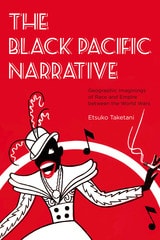
The Black Pacific Narrative
Geographic Imaginings of Race and Empire between the World WarsEtsuko Taketani
Dartmouth College Press, 2014
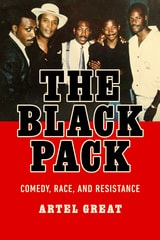
The Black Pack
Comedy, Race, and ResistanceArtel Great
Rutgers University Press, 2025
Working together as writers, directors, producers, actors, and consultants, the Black Pack created some of the most provocative and enduring Black films and television shows of the twentieth century, including classic productions like In Living Color, Coming to America, Hollywood Shuffle, and The Arsenio Hall Show. The Black Pack collective was armed with a signature comedic style which combined politically-Black satire with edgy social humor that entertained millions, shattered box-office records, and slyly critiqued America’s racial condition. Amid escalating social tensions in the 1980s, the Black Pack’s comedic output transformed anger into art, wielding the cloak of humor as a rebellious tool to confront unjust business practices in Hollywood and challenge racial narratives embedded in American culture. Their work empowered unapologetically Black voices and expanded creative possibilities for Black artists in the entertainment industry.
In The Black Pack, Artel Great delivers the most comprehensive analysis of this groundbreaking comedy collective, uncovering how the group’s socially and politically-charged humor defied systemic barriers to achieve unprecedented commercial success and establish a cultural legacy that continues to inspire media creators today and across new generations.
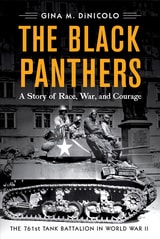
The Black Panthers
A Story of Race, War, and Courage—the 761st Tank Battalion in World War IIGina M. DiNicolo
Westholme Publishing, 2014
Known primarily for being the first African American armored unit to see combat in World War II and as future baseball star Jackie Robinson’s onetime outfit, the 761st Tank Battalion was forged in a devil’s cauldron of heat and prejudice at Camp Claiborne, Louisiana. Here, most viewed the tankers as tokens in a racial experiment, rather than as fellow American soldiers who would actually be deployed to fight a common enemy. Led by a small cadre of white and black officers, the 761st trained to the pinnacle of its craft. The Black Panthers, as they soon were called, proved their battle prowess against other units bound for combat on the parched Texas training fields. For this, they earned a coveted assignment to fight under General George S. Patton and go head-to-head with the best of Hitler’s arsenal. Moving to the front in November 1944, trial by fire soon shook the unit to its core. Ambushed by a veteran German force, the 761st suffered heavy casualties in the confusion as they cut their way out of the trap. But the men rallied to overcome self-doubt and vindicate their losses. Quickly battle hardened, the tankers saw intense combat through November and when Germany launched its last-ditch offensive through the Ardennes in December, the 761st fought side-by-side with Patton’s Third Army. Moving swiftly, the unit helped check the German advance, cut resupply routes to the forces surrounding beleaguered Bastogne, and drove the enemy back, recapturing towns crucial to the final defeat of Germany.
In The Black Panthers: A Story of Race, War, and Courage—the 761st Tank Battalion in World War II, historian Gina M. DiNicolo tells the full and unvarnished history of this important American fighting force. Relying on extensive archival research, including documents that had not been consulted in previous accounts, and interviews with surviving soldiers and family members, the author describes the unit’s training, deployment, combat, and individuals, such as Sgt. Ruben Rivers, one of only seven African American men awarded the Medal of Honor for World War II heroism. The professionalism, dedication, and courage of the 761st and other non-white units made clear that the strength of the American army in the future lay with integration—one of the enduring accomplishments of these servicemen.
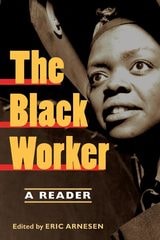
The Black Worker
Race, Labor, and Civil Rights Since EmancipationEdited by Eric Arnesen
University of Illinois Press, 2006
Uniting the latest scholarship on race, labor, and civil rights, The Black Worker aims to establish the richness of the African American working-class experience, and the indisputable role of black workers in shaping the politics and history of labor and race in the United States.
To capture the complexity of African Americans’ experiences in the workplace, this reader examines workers engaged in a wide array of jobs, including sharecropping, coal mining, domestic service, longshoring, automobile manufacturing, tobacco processing, railroading, prostitution, lumbering, and municipal employment. The essays’ subjects include black migration, strikebreaking, black conservatism, gender, and the multiple forms of employment discrimination in the South and North. Other contributions deal explicitly with state policy and black workers during the transition from slavery to freedom, World Wars I and II, and the 1960s.
The variety of challenges made by these workers, both quiet and overt, served as clear reminders to the supporters of white supremacy that, despite their best efforts through violence, fraud, and the law, as long as they insisted on racial inequality, the “race question” would never be fully resolved.
Contributors: Eric Arnesen, Beth Tompkins Bates, Cynthia M. Blair, Tera W. Hunter, William Powell Jones, Brian Kelly, Robert Korstad, Nelson Lichtenstein, Joseph A. McCartin, Steven A. Reich, Leslie A. Schwalm, Nan Elizabeth Woodruff
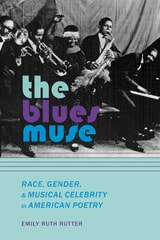
The Blues Muse
Race, Gender, and Musical Celebrity in American PoetryEmily Ruth Rutter
University of Alabama Press, 2018
A critical analysis of the poetic representations and legacies of five landmark blues artists
The Blues Muse: Race, Gender, and Musical Celebrity in American Poetry focuses on five key blues musicians and singers—Gertrude “Ma” Rainey, Bessie Smith, Billie Holiday, Robert Johnson, and Lead Belly—and traces the ways in which these artists and their personas have been invoked and developed throughout American poetry. This study spans nearly one hundred years of literary and musical history, from the New Negro Renaissance to the present.
Emily Ruth Rutter not only examines blues musicians as literary touchstones or poetic devices, but also investigates the relationship between poetic constructions of blues icons and shifting discourses of race and gender. Rutter’s nuanced analysis is clear, compelling, and rich in critical assessments of these writers’ portraits of the musical artists, attending to their strategies and oversights.
The Book Keeper
A Memoir of Race, Love, and LegacyJulia McKenzie Munemo
Ohio University Press, 2020
“A fiercely felt memoir about family shame and the transformative power of love even as it’s also an ongoing meditation on privilege and race in twenty-first-century America. This is a debut striking in its empathetic imagination, observational acuity, and emotional intelligence.” — Jim Shepard, author of Like You’d Understand, Anyway.
In a memoir that’s equal parts love story, investigation, and racial reckoning, Munemo unravels and interrogates her whiteness, a shocking secret, and her family’s history.
When interracial romance novels written by her long-dead father landed on Julia McKenzie Munemo’s kitchen table, she—a white woman—had been married to a black man for six years and their first son was a toddler. Out of shame about her father’s secret career as a writer of “slavery porn,” she hid the books from herself, and from her growing mixed-race family, for more than a decade. But then, with police shootings of African American men more and more in the public eye, she realized that understanding her own legacy was the only way to begin to understand her country.

The Book Smugglers
Partisans, Poets, and the Race to Save Jewish Treasures from the NazisDavid E. Fishman
University Press of New England, 2018
The Borderlands of Race
Mexican Segregation in a South Texas TownBy Jennifer R. Nájera
University of Texas Press, 2015
Throughout much of the twentieth century, Mexican Americans experienced segregation in many areas of public life, but the structure of Mexican segregation differed from the strict racial divides of the Jim Crow South. Factors such as higher socioeconomic status, lighter skin color, and Anglo cultural fluency allowed some Mexican Americans to gain limited access to the Anglo power structure. Paradoxically, however, this partial assimilation made full desegregation more difficult for the rest of the Mexican American community, which continued to experience informal segregation long after federal and state laws officially ended the practice.
In this historical ethnography, Jennifer R. Nájera offers a layered rendering and analysis of Mexican segregation in a South Texas community in the first half of the twentieth century. Using oral histories and local archives, she brings to life Mexican origin peoples’ experiences with segregation. Through their stories and supporting documentary evidence, Nájera shows how the ambiguous racial status of Mexican origin people allowed some of them to be exceptions to the rule of Anglo racial dominance. She demonstrates that while such exceptionality might suggest the permeability of the color line, in fact the selective and limited incorporation of Mexicans into Anglo society actually reinforced segregation by creating an illusion that the community had been integrated and no further changes were needed. Nájera also reveals how the actions of everyday people ultimately challenged racial/racist ideologies and created meaningful spaces for Mexicans in spheres historically dominated by Anglos.
The Borders of Dominicanidad
Race, Nation, and Archives of ContradictionLorgia García Peña
Duke University Press, 2016
The Boston Renaissance
Race, Space, and Economic Change in an American MetropolisBarry Bluestone
Russell Sage Foundation, 2000
The Burden of Over-representation
Race, Sport, and PhilosophyGrant Farred
Temple University Press, 2018
The Burden of Over-representation artfully explores three curious racial moments in sport: Jackie Robinson’s expletive at a Dodgers spring training game; the transformation of a formality into an event at the end of the 1995 rugby World Cup in South Africa; and a spectral moment at the 2010 FIFA World Cup. Grant Farred examines the connotations at play in these moments through the lenses of race, politics, memory, inheritance and conciliation, deploying a surprising cast of figures in Western thought, ranging from Jacques Derrida and Friedrich Nietzsche to Judith Butler, William Shakespeare, and Jesus-the-Christ. Farred makes connection and creates meaning through the forces at play and the representational burdens of team, country and race.
Farred considers Robinson’s profane comments at black Dodgers fans, a post-match exchange of “thank yous” on the rugby pitch between white South African captain François Pienaar and Nelson Mandela, and being “haunted” by the ghost of Derrida on the occasion of the first FIFA World Cup on African soil. In doing so, The Burden of Over-representation provides a passionate, insightful analysis of the social, political, racial, and cultural consequences of conciliation at key sporting events.
The Cattell Controversy
Race, Science, and IdeologyWilliam H. Tucker
University of Illinois Press, 2008
In addition to his mainstream research, Cattell had also authored a series of publications that posited evolutionary progress as the ultimate goal of human existence and argued that scientifically measurable criteria should be used to distinguish "successful" from "failing" racial groups so that the latter might be gradually "phased out" by non-violent methods such as regulation of birth control. Derived from science, Cattell's evolutionary philosophy was intended to be the basis of a full-blown religion. Although the earliest of these works had been published in the 1930s, near the end of an era in which eugenically based policies for human improvement were much more acceptable, Cattell promoted similar ideas well into the 1980s and '90s.
The Cattell Controversy describes Cattell's socio-religious beliefs in detail and analyzes their relationship to his scientific contributions. William H. Tucker discusses the controversy that arose within the field in response to the award's postponement, after which Cattell withdrew his name from consideration for the award but insisted that his position had been distorted by taking statements out of context. Reflecting on these events, Tucker concludes with a discussion of the complex question of whether and how a scientist's ideological views should ever be a relevant factor in determining the value of his or her contributions to the field.
The Changing Terrain of Race and Ethnicity
Maria Krysan
Russell Sage Foundation, 2004
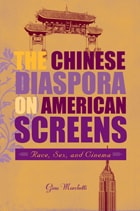
The Chinese Diaspora on American Screens
Race, Sex, and CinemaGina Marchetti
Temple University Press, 2012
The Chinese Diaspora on American Screens looks at the way in which issues of race and sexuality have become central concerns in cinema generated by and about Chinese communities in America after the mid-1990s. This companion volume to Marchetti's From Tian'anmen to Times Square looks specifically at the Chinese diaspora in relation to ethnic, racial, gender, and sexual identity as depicted in the cinema.
Examining films from the United States and Canada, as well as transnational co-productions, The Chinese Diaspora on American Screens includes analyses of films such as The Wedding Banquet and Double Happiness in addition to interviews with celebrated filmmakers such as Wayne Wang.
Marchetti also reflects on how Chinese identity is presented in a multitude of media forms, including commercial cinema, documentaries, experimental films, and hybrid digital media to offer a textured look at representations of the Chinese diasporic experience after Tian'anmen.
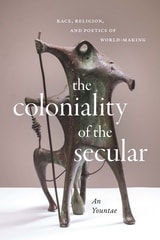
The Coloniality of the Secular
Race, Religion, and Poetics of World-MakingAn Yountae
Duke University Press, 2024
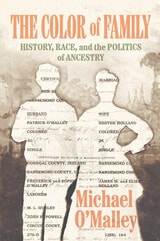
The Color of Family
History, Race, and the Politics of AncestryMichael O'Malley
University of Chicago Press, 2024
A zealous eugenicist ran Virginia’s Bureau of Vital Statistics in the first half of the twentieth century, misusing his position to reclassify people he suspected of hiding their “true” race. But in addition to being blinded by his prejudices, he and his predecessors were operating more by instinct than by science. Their whole dubious enterprise was subject not just to changing concepts of race but outright error, propagated across generations.
This is how Michael O’Malley, a descendant of a Philadelphia Irish American family, came to have “colored” ancestors in Virginia. In The Color of Family, O’Malley teases out the various changes made to citizens’ names and relationships over the years, and how they affected families as they navigated what it meant to be “white,” “colored,” “mixed race,” and more. In the process, he delves into the interplay of genealogy and history, exploring how the documents that establish identity came about, and how private companies like Ancestry.com increasingly supplant state and federal authorities—and not for the better.
Combining the history of O’Malley’s own family with the broader history of racial classification, The Color of Family is an accessible and lively look at the ever-shifting and often poisoned racial dynamics of the United States.
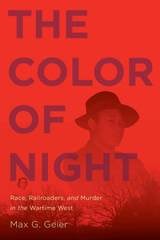
The Color of Night
Race, Railroaders, and Murder in the Wartime WestMax Geier
Oregon State University Press, 2015
In this deeply researched and detailed account, Geier explores how race, gender, and class affected the attitudes of local town-folk, law officers, and courtroom jurors toward Black trainmen on the West Coast, at a time when militarization skewed perceptions of virtue, status, and authority. He delves into the working conditions and experiences of unionized Black trainmen in their “home and away” lives in Los Angeles and Portland, while illuminating the different ways that they, and other residents of Oregon and southern California, responded to news of “Oregon’s murdered war bride.” Reporters, civil rights activists, and curiosity seekers transformed the trial and appeals process into a public melodrama.
The investigation, trial, and conviction of Robert Folkes galvanized civil rights activists, labor organizers, and community leaders into challenging the flawed judicial process and ultimately the death penalty in Oregon, serving as a catalyst for civil rights activism that bridged rural and urban divides. The Color of Night will appeal to “true crime” aficionados, and to anyone interested in the history of race and labor relations, working conditions, community priorities, and attitudes toward the death penalty in the first half of the 20th century.
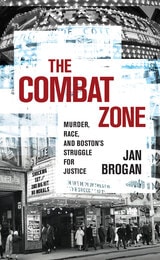
The Combat Zone
Murder, Race, and Boston's Struggle for JusticeJan Brogan
University of Massachusetts Press, 2021
At the end of the 1976 football season, more than forty Harvard athletes went to Boston's Combat Zone to celebrate. In the city's adult entertainment district, drugs and prostitution ran rampant, violent crime was commonplace, and corrupt police turned the other way. At the end of the night, Italian American star athlete Andy Puopolo, raised in the city's North End, was murdered in a stabbing. Three African American men were accused of the crime. His murder made national news and led to the eventual demise of the city's red-light district.
Starting with this brutal murder, The Combat Zone tells the story of the Puopolo family's struggle with both a devastating loss and a criminal justice system that produced two trials with opposing verdicts, all within the context of a racially divided Boston. Brogan traces the contentious relationship between Boston’s segregated neighborhoods during the busing crisis; shines a light on a court system that allowed lawyers to strike potential jurors based purely on their racial or ethnic identity; and lays bare the deep-seated corruption within the police department and throughout the Combat Zone. What emerges is a fascinating snapshot of the city at a transitional moment in its recent past.
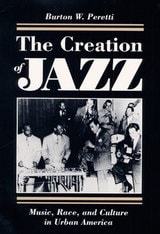
The Creation of Jazz
Music, Race, and Culture in Urban AmericaBurton W. Peretti
University of Illinois Press, 1992
The story of jazz is more than a history of the music. The racial and cultural dynamics of American cities created the music, life, and business that was jazz.
Burton W. Peretti's classic study charts the life of jazz culture from its origins in the jook joints of sharecroppers and the streets and dance halls of 1890s New Orleans to the eve of bebop and World War II. As Perett shows, jazz was the epic story of players who transitioned from childhood spasm bands to Carnegie Hall and worldwide touring and fame. It became the music of the Twenties, a decade of Prohibition, of adolescent discontent, of Harlem pride, and of Americans hoping to preserve cultural traditions in an urban, commercial age. Finally, jazz was where black and white musicians performed together, as uneasy partners, in the big bands of Artie Shaw and Benny Goodman.
Drawing on archives and the firsthand testimony of more than seventy musicians and singers (among them Benny Carter, Bud Freeman, Kid Ory, and Mary Lou Williams), The Creation of Jazz offers a comprehensive analysis of the role of early jazz in American social history.
The Creative Underclass
Youth, Race, and the Gentrifying CityTyler Denmead
Duke University Press, 2019
The Cultural Politics of Slam Poetry
Race, Identity, and the Performance of Popular Verse in AmericaSusan B. A. Somers-Willett
University of Michigan Press, 2010
"For a lucid and thorough 'real-world' analysis of the movement from the ground-up--including its history, aesthetics, and culture, there is surely no better place to start than Somers-Willett's trailblazing book."
--- Jerome Sala, Pleiades
"Finally, a clear, accurate, and thoroughly researched examination of slam poetry, a movement begun in 1984 by a mixed bag of nobody poets in Chicago. At conception, slam poetry espoused universal humanistic ideals and a broad spectrum of participants, and especially welcome is the book's analysis of how commercial marketing forces succeeded in narrowing public perception of slam to the factionalized politics of race and identity. The author's knowledge of American slam at the national level is solid and more authentic than many of the slammers who claim to be."
---Marc Kelly Smith, founder/creator of the International Poetry Slam movement
The cultural phenomenon known as slam poetry was born some twenty years ago in white working-class Chicago barrooms. Since then, the raucous competitions have spread internationally, launching a number of annual tournaments, inspiring a generation of young poets, and spawning a commercial empire in which poetry and hip-hop merge.
The Cultural Politics of Slam Poetry is the first critical book to take an in-depth look at slam, shedding light on the relationships that slam poets build with their audiences through race and identity performance and revealing how poets come to celebrate (and at times exploit) the politics of difference in American culture.
With a special focus on African American poets, Susan B. A. Somers-Willett explores the pros and cons of identity representation in the commercial arena of spoken word poetry and, in doing so, situates slam within a history of verse performance, from blackface minstrelsy to Def Poetry. What's revealed is a race-based dynamic of authenticity lying at the heart of American culture. Rather than being mere reflections of culture, Somers-Willett argues, slams are culture---sites where identities and political values get publicly refigured and exchanged between poets and audiences.
Susan B. A. Somers-Willett is a decade-long veteran of slam and teaches creative writing and poetics as an Assistant Professor of English at Montclair State University. She is the author of two books of poetry, Quiver and Roam. Visit the author's website at: http://www.susansw.com/.
Photo by Jennifer Lacy.
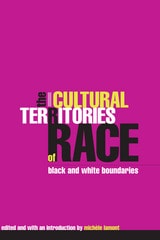
The Cultural Territories of Race
Black and White BoundariesEdited by Michèle Lamont
University of Chicago Press, 1999
These essays examine the cultural territories of race through topics such as blacks' strategies for dealing with racism, public categories for definition of race, and definitions of rules for cultural memberships. Empirically grounded, these studies analyze divisions among blacks according to their relationships with whites or with alternative black culture; differences among whites regarding their attitudes toward blacks; and differences both among blacks and between blacks and whites, in their cultural understandings of various aspects of social life ranging from material success to marital life and to ideas about feminism. The essays teach us about the largely underexamined cultural universes of black executives, upwardly mobile college students, fast-food industry workers, so-called deadbeat dads, and proponents of Afrocentric curricula.
The Cultural Territories of Race makes an important contribution to current policy debates by amplifying muted voices that have too often been ignored by other social scientists.
Contributors are: Elijah Anderson, Amy Binder, Bethany Bryson, Michael C. Dawson, Catherine Ellis, Herbert J. Gans, Jennifer L. Hochschild, Michèle Lamont, Jane J. Mansbridge, Katherine S. Newman, Maureen R. Waller, Pamela Barnhouse Walters, Mary C. Waters, Julia Wrigley, Alford A. Young Jr.
The Declining Significance of Race
Blacks and Changing American InstitutionsWilliam Julius Wilson
University of Chicago Press, 1980
"Wilson has written a profound and provocative book that is destined to become a classic in the field. He has articulated the issues with which future researchers will have to deal. Truly, he has made a contribution to social science."—Wilson Record, American Journal of Sociology
"The intellectual strength of this book lies in his capacity to integrate disparate findings from historical studies, social theory and research on contemporary trends into a complex and original synthesis that challenges widespread assumptions about the cause of black disadvantage and the way to remove it."—Paul Starr, New York Times Book Review
This is a short but important book. . . . Wilson presents a cogent and convincing interpretation of how the changing political and economic structure of the United States profoundly affected the position of black Americans."—Pierre van den Berghe, Sociology and Social Research
"This publication is easily one of the most erudite and sober diagnoses of the American black situation. Students of race relations and anybody in a policy-making position cannot afford to bypass this study."—Ernest Manheim, Sociology
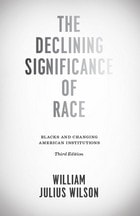
The Declining Significance of Race
Blacks and Changing American Institutions, Third EditionWilliam Julius Wilson
University of Chicago Press, 2012
When first published in 1980, The Declining Significance of Race immediately sparked controversy with its contentious thesis that race was becoming less of a deciding factor in the life chances of black Americans than class. This new edition of the seminal book includes a new afterword in which William Julius Wilson not only reflects on the debate surrounding the book, but also presents a provocative discussion of race, class, and social policy.
“The intellectual strength of this book lies in his capacity to integrate disparate findings from historical studies, social theory and research on contemporary trends into a complex and original synthesis that challenges widespread assumptions about the cause of black disadvantage and the way to remove it.”—Paul Starr, New York Times Book Review
“This publication is easily one of the most erudite and sober diagnoses of the American black situation. Students of race relations and anybody in a policy-making position cannot afford to bypass this study.”—Ernest Manheim, Sociology
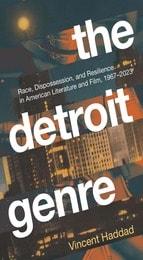
The Detroit Genre
Race, Dispossession, and Resilience in American Literature and Film, 1967-2023Vincent Haddad
Lever Press, 2024
The book first establishes the concept of the “Detroit genre” that emerged in late 1960s and traces the tropes of this white-centric narrative genre in popular culture, touching on key texts including Blue Collar, Robocop, The Crow, It Follows, and Barbarian. The second part shows how Black writers, including Alice Randall, adrienne maree brown, Stephen Mack Jones, and Angela Flournoy, reclaimed and revised the Detroit genre by un-fixing Detroit narratives of dispossession, criminality, and industrial and social failure through formal experimentations on genre itself.
Where Detroit has typically been painted in the news as one of three things—the center of the automotive industry; crime-ridden and in ruins; or as a “blank canvas” with limitless potential of entrepreneurship—Vincent Haddad shows that the Detroit genre in literature and film can be far more powerful than news media in narrating Black dispossession as a pragmatic, even liberal consensus. The texts studied here condition forgetfulness about Detroit’s history or expose it to a full reckoning, direct attention toward or away from the city’s agents of injustice, fetishize resilience or model resistance, and foreclose or imagine a future of Black liberation. Appealing to scholars of popular literature, media, race, and American studies, The Detroit Genre is an accessible and engaging study of the city’s influence on a wide array of genres in pop culture.
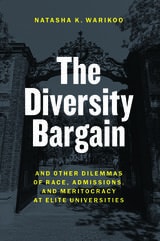
The Diversity Bargain
And Other Dilemmas of Race, Admissions, and Meritocracy at Elite UniversitiesNatasha Warikoo
University of Chicago Press, 2016
What Warikoo uncovers—talking with both white students and students of color at Harvard, Brown, and Oxford—is absolutely illuminating; and some of it is positively shocking. As she shows, many elite white students understand the value of diversity abstractly, but they ignore the real problems that racial inequality causes and that diversity programs are meant to solve. They stand in fear of being labeled a racist, but they are quick to call foul should a diversity program appear at all to hamper their own chances for advancement. The most troubling result of this ambivalence is what she calls the “diversity bargain,” in which white students reluctantly agree with affirmative action as long as it benefits them by providing a diverse learning environment—racial diversity, in this way, is a commodity, a selling point on a brochure. And as Warikoo shows, universities play a big part in creating these situations. The way they talk about race on campus and the kinds of diversity programs they offer have a huge impact on student attitudes, shaping them either toward ambivalence or, in better cases, toward more productive and considerate understandings of racial difference.
Ultimately, this book demonstrates just how slippery the notions of race, merit, and privilege can be. In doing so, it asks important questions not just about college admissions but what the elite students who have succeeded at it—who will be the world’s future leaders—will do with the social inequalities of the wider world.
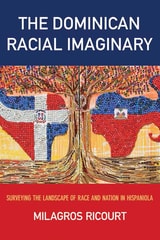
The Dominican Racial Imaginary
Surveying the Landscape of Race and Nation in HispaniolaRicourt, Milagros
Rutgers University Press, 2016
This book begins with a simple question: why do so many Dominicans deny the African components of their DNA, culture, and history?
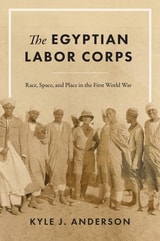
The Egyptian Labor Corps
Race, Space, and Place in the First World WarKyle J. Anderson
University of Texas Press, 2021
During World War I, the British Empire enlisted half a million young men, predominantly from the countryside of Egypt, in the Egyptian Labor Corps (ELC) and put them to work handling military logistics in Europe and the Middle East. British authorities reneged on their promise not to draw Egyptians into the war, and, as Kyle Anderson shows, the ELC was seen by many in Egypt as a form of slavery. The Egyptian Labor Corps tells the forgotten story of these young men, culminating in the essential part they came to play in the 1919 Egyptian Revolution.
Combining sources from archives in four countries, Anderson explores Britain’s role in Egypt during this period and how the ELC came to be, as well as the experiences and hardships these men endured. As he examines the ways they coped—through music, theater, drugs, religion, strikes, and mutiny—he illustrates how Egyptian nationalists, seeing their countrymen in a state akin to slavery, began to grasp that they had been racialized as “people of color.” Documenting the history of the ELC and its work during the First World War, The Egyptian Labor Corps also provides a fascinating reinterpretation of the 1919 revolution through the lens of critical race theory.