Results by title
61 books match the query 'Readers' and 4 start with t
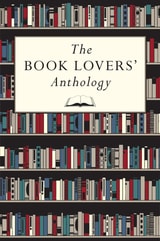
The Book Lovers' Anthology
A Compendium of Writing about Books, Readers and LibrariesEdited by the Bodleian Library
Bodleian Library Publishing, 2014
“Much reading is like much eating, wholly useless without digestion.”—Robert South
“If I had read as much as other men, I should have been as ignorant as they.” —Thomas Hobbes
Can books corrupt? Do badly written books sharpen or dull the minds of their readers? Ought we to take seriously the old saw that excessive reading can damage one’s sight? The Book Lovers’ Anthology offers answers to these questions and many more with a remarkable collection of reflections on books, readers, and libraries— by writers whose books are among the world’s best known and best loved.
Throughout the centuries, books have been a source of fascination— and sometimes frustration—for writers. Between the covers of the Anthology are excerpts from the novels of Jane Austen, George Eliot, and Jonathan Swift, among many others, all of whom paused in their fiction to extol the virtues of the written page. Those who are taken with the smell of books will find a like mind in Charles Dickens, who waxed poetic about the “pleasant smell of paper freshly pressed.” Very avid readers might even nod in knowing agreement with John Donne, who declared, “I shall die reading.” Other poets whose musings on libraries or books are excerpted for the Anthology include Shakespeare, Wordsworth, Milton, and Chaucer. These writings are interspersed by the meditations of essayists and diarists of centuries past—among them, Samuel Johnson, James Boswell, John Ruskin, and Michel de Montaigne.
With contributions from major writers across ages and genres, this is an essential anthology for which any bibliophile will want to find space on the shelf.
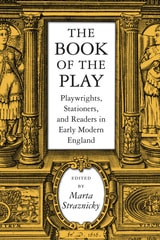
The Book of the Play
Playwrights, Stationers, and Readers in Early Modern EnglandMarta Straznicky
University of Massachusetts Press, 2006
The Book of the Play is a collection of essays that examines early modern drama in the context of book history. Focusing on the publication, marketing, and readership of plays opens fresh perspectives on the relationship between the cultures of print and performance and more broadly between drama and the public sphere. Marta Straznicky's introduction offers a survey of approaches to the history of play reading in this period, and the collection as a whole consolidates recent work in textual, bibliographic, and cultural studies of printed drama.
Individually, the essays advance our understanding of play reading as a practice with distinct material forms, discourses, social settings, and institutional affiliation. Part One, “Real and Imagined Communities,” includes four essays on play-reading communities and the terms in which they are distinguished from the reading public at large. Cyndia Clegg surveys the construction of readers in prefaces to published plays; Lucy Munro traces three separate readings of a single play, Edward Sharpham's The Fleer; Marta Straznicky studies women as readers of printed drama; and Elizabeth Sauer describes how play reading was mobilized for political purposes in the period of the Civil War.
In Part Two, “Play Reading and the Book Trade,” five essays consider the impact of play reading on the public sphere through the lens of publishing practices. Zachary Lesser offers a revisionist account of black-letter typeface and the extent to which it may be understood as an index of popular culture; Alan Farmer examines how the emerging news trade of the 1620s and 1630s affected the marketing of printed drama; Peter Berek traces the use of generic terms on title pages of plays to reveal their intersection with the broader culture of reading; Lauren Shohet demonstrates that the Stuart masque had a parallel existence in the culture of print; and Douglas Brooks traces the impact print had on eclipsing performance as the medium in which the dramatist could legitimately lay claim to having authored his text.
The individual essays focus on selected communities of readers, publication histories, and ideologies and practices of reading; the collection as a whole demonstrates the importance of textual production and reception to understanding the place of drama in the early modern public sphere.
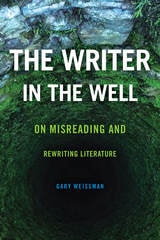
The Writer in the Well
On Misreading and Rewriting LiteratureGary Weissman
The Ohio State University Press, 2016
Rethinking the methods and goals of literary analysis, Weissman’s study redefines the nature of authorial intention and reconceives literary interpretation as a writing-based practice. By integrating writing pedagogy with older and newer schools of thought—from psychoanalytic, reader-response, and poststructuralist theories to rhetorical narrative theory and cognitive literary studies—and bridging the fields of literary studies, composition and rhetoric, and creative writing, The Writer in the Well argues that the richest understanding of a literary work lies in probing how it has been misinterpreted and reconceived and offers a new “writer-response theory.”
This highly accessible and thought-provoking book, which includes the full text of Sher’s “The Man in the Well,” is designed to engage scholars, teachers, students, and avid readers of literature.
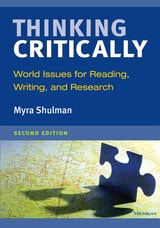
Thinking Critically, Second Edition
World Issues for Reading, Writing, and ResearchMyra Shulman
University of Michigan Press, 2014
Just like its predecessor, Thinking Critically helps students improve reading, writing, and research skills while exploring and analyzing major global issues. Although many of the same topics are explored in this second edition—world hunger, global health, gender equality, regional conflict, cultural heritage, and immigration policies—all 31 authentic readings in the second edition are new. New topics included in this edition are cybersecurity, climate change, education reform, leadership, and human rights.
Each chapter contains two or three readings (from print and online news sources, journals, and blogs) designed to raise rather than provide answers; a vocabulary review and discussion questions for each reading; a reaction writing task; a question on the topic to research; a writing assignment for a specific academic or business genre (with models in an appendix); speaking activities (oral presentation, debate, or role-play); and a Thinking about It task. The Thinking about It task calls on students’ ability to evaluate a complex issue with objectivity and to propose a realistic approach, making this textbook good preparation for academic courses that require critical-thinking skills to express opinions both orally and in writing.
Several new academic/business written genres (abstract, fact sheet, briefing paper, report on a survey) have also been added.