Results by title
57 books match the query 'Realism in literature' and 11 start with t
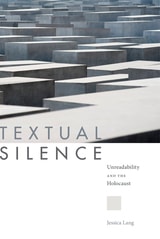
Textual Silence
Unreadability and the HolocaustLang, Jessica
Rutgers University Press, 2017
Holocaust texts, which encompass works as diverse as memoirs, novels, poems, and diaries, are traditionally characterized by silences the authors place throughout the text, both deliberately and unconsciously. While a reader may have the desire and will to comprehend the Holocaust, the presence of “textual silence” is a force that removes the experience of genocide from the reader’s analysis and imaginative recourse. Lang defines silences as omissions that take many forms, including the use of italics and quotation marks, ellipses and blank pages in poetry, and the presence of unreliable narrators in fiction. While this limits the reader’s ability to read in any conventional sense, these silences are not flaws. They are instead a critical presence that forces readers to acknowledge how words and meaning can diverge in the face of events as unimaginable as those of the Holocaust.
The Afterlife of Sympathy
Reading American Literary Realism in the Wake of "Uncle Tom’s Cabin"Faye Halpern
University of Massachusetts Press, 2024
Literary realism rose to prominence in postbellum America with what the realists heralded as artful and accurate depictions of the world. Realism is thought to have replaced sentimentality—an earlier mode of writing the realists disparaged, which has often been seen as antithetical to realism. Literary scholar Faye Halpern challenges this apparent binary by uncovering how and why William Dean Howells, Mark Twain, Henry James, Constance Fenimore Woolson, and Charles Chesnutt incorporated sentimental elements into their most famous works.
With its distinctively narratological approach, The Afterlife of Sympathy offers a more rhetorical way to understand sentimentality and assess the ethical complexity of sympathy. Halpern demonstrates how sentimentality enables authors to form intimate relationships between their characters and readers to supplement the critical distance that realist writers otherwise celebrate and that has remained a key value in literary studies today. In reassessing American literary realism, Halpern seeks not only to understand why these writers adopted sentimental techniques but to provide insight into contemporary arguments in literary studies about critical distance and sympathetic identification.
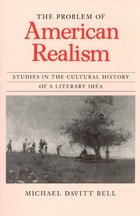
The Problem of American Realism
Studies in the Cultural History of a Literary IdeaMichael Davitt Bell
University of Chicago Press, 1993
In chapters on William Dean Howells, Frank Norris, Mark Twain, Henry James, Stephen Crane, Theodore Dreiser, and Sarah Orne Jewett, Bell examines the effects that ideas about realism and naturalism had on writers. He demonstrates that, for many of them, claiming to be a realist or a naturalist was a way to provide assurance that one was a "real" man rather than an "effeminate" artist.
The Realistic Imagination
English Fiction from Frankenstein to Lady ChatterlyGeorge Levine
University of Chicago Press, 1983

The Reframing of Realism
Galdós & the Discourses of the 19th-Century Spanish NovelHazel Gold
Duke University Press, 1993
A close look at Galdós's novels reveals the artist at pains to contain and interpret what he perceived to be the distinctive and often disheartening experience of bourgeois liberalism of his day. At the same time, he can be seen here undermining or negating the accepted conventions of realist fiction. Looking beyond text to context, Gold examines the ways in which Galdós's work itself has been framed by readers and critics in accordance with changing allegiances to contemporary literary theory and the canon.
The highly ambiguous status of the frame in Galdós's fictions confirms the author's own signal position as a writer poised at the limits between realism and modernity. Gold's work will command the interest of students of Spanish and comparative literature, narrative theory, and the novel, as well as all those for whom realism and representation are at issue.
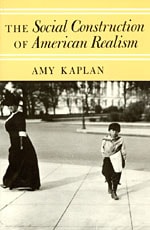
The Social Construction of American Realism
Amy Kaplan
University of Chicago Press, 1988
"[Kaplan] offers some enthralling readings of major novels by Howells, Wharton, and Dreiser. It is a book which should be read by anyone interested in the American novel."—Tony Tanner, Modern Language Review
"Kaplan has made an important contribution to our understanding of American realism. This is a book that deserves wide attention."—June Howard, American Literature
The Story of Fictional Truth
Realism from the Death to the Rise of the NovelPaul Dawson
The Ohio State University Press, 2023
The Subject of Modernism
Narrative Alterations in the Fiction of Eliot, Conrad, Woolf, and JoyceTony E. Jackson
University of Michigan Press, 1994
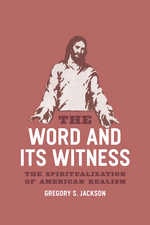
The Word and Its Witness
The Spiritualization of American RealismGregory S. Jackson
University of Chicago Press, 2009
Jackson shows how the homiletic tradition in Protestant sermons provided a foundation for the development of visual and literary realism. Evangelical preachers and writers used vivid language grounded in everyday life to translate abstract concepts like hell into concrete reality—a key influence on realist authors that brought about the more secular forms of the movement we know today. This emphasis on the sensuous also paved the way for Protestantism’s embrace of new media, evident in the photographs of Jacob Riis as well as the video game Left Behind: Eternal Forces.
With its remarkable scope and timely insights into the interplay between religion, secularism, and politics, The Word and Its Witness will transform the way we understand American realism and American religion.
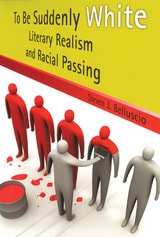
To Be Suddenly White
Literary Realism and Racial PassingSteven J. Belluscio
University of Missouri Press, 2006
To Be Suddenly White offers new readings of traditional passing narratives from the African American literary tradition, such as James Weldon Johnson’s The Autobiography of an Ex-Coloured Man, Nella Larsen’s Passing, and George Schuyler’s Black No More. It is also the first full-length work to consider a number of Jewish American and Italian American prose texts, such as Mary Antin’s The Promised Land, Anzia Yezierska’s Bread Givers, and Guido d’Agostino’s Olives on the Apple Tree, as racial passing narratives in their own right. Belluscio also demonstrates the contradictions that result from the passing narrative’s exploration of racial subjectivity, racial difference, and race itself.
When they are seen in comparison, ideological differences begin to emerge between African American passing narratives and “white ethnic” (Jewish American and Italian American) passing narratives. According to Belluscio, the former are more likely to engage in a direct critique of ideas of race, while the latter have a tendency to become more simplistic acculturation narratives in which a character moves from a position of ethnic difference to one of full American identity.
The desire “to be suddenly white” serves as a continual point of reference for Belluscio, enabling him to analyze how writers, even when overtly aware of the problematic nature of race (especially African American writers), are also aware of the conditions it creates, the transformations it provokes, and the consequences of both. Byexamining the content and context of these works, Belluscio elucidates their engagement with discourses of racial and ethnic differences, assimilation, passing, and identity, an approach that has profound implications for the understanding of American literary history.
Traces of Gold
California's Natural Resources and the Claim to Realism in Western American LiteratureNicolas Witschi
University of Alabama Press, 2001
Artfully demonstrates the linkage of American literary realism to the texts, myths, and resources of the American West
From Gold Rush romances to cowboy Westerns, from hard-boiled detective thrillers to nature writing, the American West has long been known mainly through hackneyed representations in popular genres. But a close look at the literary history of the West reveals a number of writers who claim that their works represent the “real” West. As Nicolas Witschi shows, writers as varied as Bret Harte, John Muir, Frank Norris, Mary Austin, and Raymond Chandler have used claims of textual realism to engage, replicate, or challenge commonly held assumptions about the West, while historically acknowledged realists like William Dean Howells and Mark Twain have often relied on genre-derived impressions about the region.
The familiar association of the West with nature and the “great outdoors” implies that life in the West affords an unambiguous relationship with an unalloyed, non-human, real nature. But through a combination of textual scholarship, genre criticism, and materialist cultural studies, Witschi complicates this notion of wide-open spaces and unfettered opportunity. The West has been the primary source of raw materials for American industrial and economic expansion, especially between the California Gold Rush and World War II, and Witschi argues that the writers he examines exist within the intersections of cultural and material modes of production. Realistic depictions of Western nature, he concludes, must rely on the representation of the extraction of material resources like minerals, water, and oil.
With its forays into ecocriticism and cultural studies, Traces of Gold will appeal to students and scholars of American literature, American studies, and western history.