Results by title
160 books match the query 'Reflections' and 29 start with t
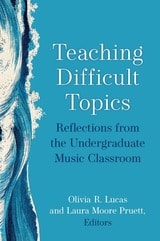
Teaching Difficult Topics
Reflections from the Undergraduate Music ClassroomOlivia R. Lucas and Laura Moore Pruett
University of Michigan Press, 2024
The teaching reflections in Teaching Difficult Topics examine difficult themes that fall into three primary categories: subjects that instructors sense to be controversial or emotionally challenging to discuss, those that derive from or intersect with real-world events that are difficult to process, and bigger-picture discussions of how music studies often focuses on dominant narratives while overlooking other perspectives. Some chapters offer practical guidance, lesson plans, and teaching materials to enable instructors to build discussions of race, gender, sexuality, and traumatic histories into their own classrooms; others take a more global view, reflecting on the importance and relevance of teaching these difficult topics and on how to respond in the music classroom when external events disrupt daily life.
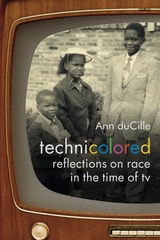
Technicolored
Reflections on Race in the Time of TVAnn duCille
Duke University Press, 2018
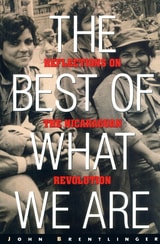
The Best of What We Are
Reflections on the Nicaraguan RevolutionJohn Brentlinger
University of Massachusetts Press, 1995
The Sandinista revolution in Nicaragua inspired many North Americans, including the author of this moving and informative book. John Brentlinger made six trips to Nicaragua, both before and after the defeat of the Sandinista Party. Combining the insights of a philosopher with the experiences of a participant-observer, he interprets the Sandinista period as a people’s struggle for self-realization in work, culture, politics, and community.
The book alternates between journal and essay chapters, weaving descriptions of personal experiences together with interviews and analysis. Whether telling the story of the last day of a young teacher’s life, describing new forms of poetry and art, examining representations of Nicaragua in the U.S. media, or discussing the government’s success and failures, Brentlinger vividly captures the spirit and enduring significance of the Sandinista revolution.
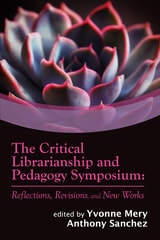
The Critical Librarianship and Pedagogy Symposium
Reflections, Revisions, and New WorksYvonne Mery
Assoc of College & Research Libraries, 2023
The Critical Librarianship and Pedagogy Symposium: Reflections, Revisions, and New Works collects expanded and updated presentations given at the Critical Librarianship and Pedagogy Symposium (CLAPS) held biennially at the University of Arizona Libraries. This anthology provides a toolkit for critical library pedagogy that recognizes how knowledge is created within historical and deeply politicized contexts. Authors working in library or disciplinary teaching fields explore intersections between information literacy and critical pedagogy and provide current thinking, assessment, and reflection on their practices of teaching students how to recognize and critique the oppressive power structures inherent in educational systems. The work done by librarians is analyzed to reveal the socioeconomic frameworks that drive the costs of our labor.
Divided into five parts—Critical Pedagogies in the Classroom, Feminist Library Practices, The Labor of Librarianship, Practices of Care, and Community Archives—chapters include explorations of the advent of neoliberalism in higher education, social justice, white fragility, supporting neurodivergence in education, and disability-rights activism. They use lenses such as queer, intersectional, feminist, and critical race theory to examine subjects, and include practices for sustainable teaching, facilitating dialogue in the classroom, and using tools such as user experience or empathic design. The Critical Librarianship and Pedagogy Symposium offers ways to incorporate critical pedagogy theory into your own practices as educators, both within the library and in higher education in general.
The Critical Limits of Embodiment
Reflections on Disability Criticism, Volume 13Carol A. Breckenridge and Candace Vogler, eds.
Duke University Press, 0
The articles in this collection build on recent work in the larger arena of disability studies and address such subjects as the hegemony of the concept of normalcy, the idea of the able body, and the constitutive place of disability in ethics, liberalism, and capitalism. The Critical Limits of Embodiment examines the commonsense foundations of disability studies, which tend to universalize Western norms and assumptions in which the normal is foregrounded and the able body forms the basis for the universal liberal subject. The broad geographic scope of these essays constitutes one of their greatest contributions to the field. In order to query the body-related universalisms of Western thought, the issue seeks to be self-conscious about cultural locations.
The volume examines the figure of the disabled in the cultural imaginaries of a variety of historical, cultural, and disciplinary contexts including literature, anthropology, philosophy, and art history.
Contributors. Renu Addlakha, Carol A. Breckenridge, Veena Das, Faye Ginsburg, Wu Hung, Eva Kittay, Celeste Langan, David Mitchell, Rayna Rapp, Susan Schweik, Sharon Snyder, Candace Vogler, Hank Vogler
The Dark Eclipse
Reflections on Suicide and AbsenceA.W. Barnes
Bucknell University Press, 2019
Published by Bucknell University Press. Distributed worldwide by Rutgers University Press.
The Death and Life of Drama
Reflections on Writing and Human NatureBy Lance Lee
University of Texas Press, 2005
What makes a film "work," so that audiences come away from the viewing experience refreshed and even transformed in the way they understand themselves and the world around them? In The Death and Life of Drama, veteran screenwriter and screenwriting teacher Lance Lee tackles this question in a series of personal essays that thoroughly analyze drama's role in our society, as well as the elements that structure all drama, from the plays of ancient Athens to today's most popular movies.
Using examples from well-known classical era and recent films, Lee investigates how writers handle dramatic elements such as time, emotion, morality, and character growth to demonstrate why some films work while others do not. He seeks to define precisely what "action" is and how the writer and the viewer understand dramatic reality. He looks at various kinds of time in drama, explores dramatic context from Athens to the present, and examines the concept of comedy. Lee also proposes a novel "five act" structure for drama that takes account of the characters' past and future outside the "beginning, middle, and end" of the story. Deftly balancing philosophical issues and practical concerns, The Death and Life of Drama offers a rich understanding of the principles of successful dramatic writing for screenwriters and indeed everyone who enjoys movies and wants to know why some films have such enduring appeal for so many people.
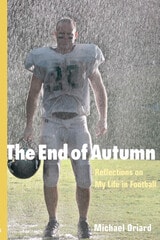
The End of Autumn
Reflections on My Life in FootballMichael Oriard
University of Illinois Press, 2009
After graduating, he signed with the Kansas City Chiefs and head coach Hank Stram. There he learned what it meant to be "owned." He rediscovered the game as it was played by grown men with families who were still treated like children and who dreaded nothing more than the end of their football careers. And without their fully realizing the consequences, every hard tackle inflicted its injury, some gradually growing into chronic conditions, some suddenly cutting a player's career short and ushering him off the field to be soon forgotten.
In this thoughtful narrative, Oriard describes the dreams of glory, the game day anxieties, the brutal training camps and harsh practices, his starry-eyed experience at Notre Dame, and the cold-blooded business of professional football. Told from the inside, the book leaves aside the hype and the pathos of the game to present a direct and honest account of the personal rewards but also the costs players paid to make others rich and entertained.
Originally published in 1982, The End of Autumn recounts the experiences of an ordinary player in a bygone era--before ESPN, before the Bowl Championship Series, before free agency and million-dollar salaries for NFL players. In a new afterword, Oriard reflects on the process of writing the book and how the game has changed in the thirty years since his "retirement" from football at the age of twenty-six.
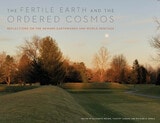
The Fertile Earth and the Ordered Cosmos
Reflections on the Newark Earthworks and World HeritageEdited by M. Elizabeth Weiser, Timothy R. W. Jordan, and Richard D. Shiels
The Ohio State University Press, 2023
The lush photos and wide-ranging essays of The Fertile Earth and the Ordered Cosmos honor this significance, not only to the global community but to local individuals and scholars who have developed intimate connections to the Earthworks. In sharing their experiences with this ancient site, public historians, archaeologists, physicists, architects, and others—including local and Indigenous voices—continue the work of nearly two hundred years of citizen efforts to protect and make accessible the Newark Earthworks after centuries of stewardship by Indigenous people. The resulting volume serves as a rich primer on the site for those unfamiliar with its history and a beautifully produced tribute for those who are already acquainted with its wonders.
The Humble Story of Don Quixote
Reflections on the Birth of the Modern NovelCesáreo Bandera
Catholic University of America Press, 2006
The Last Phonological Rule
Reflections on Constraints and DerivationsEdited by John A. Goldsmith
University of Chicago Press, 1993
In this provocative book, leading linguists and computer scientists consider the challenges that computational innovations pose to current rule-based phonological theories and speculate about the advantages of phonological models based on artificial neural networks and other computer designs. The authors offer new conceptions of phonological theory for the 1990s, the most radical of which proposes that phonological processes cannot be characterized by rules at all, but arise from the dynamics of a system of phonological representations in a high-dimensional vector space of the sort that a neural network embodies. This new view of phonology is becoming increasingly attractive to linguists and others in the cognitive sciences because it answers some difficult questions about learning while drawing on recent results in philosophy, psychology, artificial intelligence, and neuroscience.
The contributors are John A. Goldsmith, Larry M. Hyman, George Lakoff, K. P. Mohanan, David S. Touretzky, and Deirdre W. Wheeler.
The Last Walk
Reflections on Our Pets at the End of Their LivesJessica Pierce
University of Chicago Press, 2012
The product of a lifetime of loving pets, studying philosophy, and collaborating with scientists at the forefront of the study of animal behavior and cognition, The Last Walk asks—and answers—the toughest questions pet owners face. The result is informative, moving, and consoling in equal parts; no pet lover should miss it.
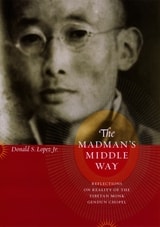
The Madman's Middle Way
Reflections on Reality of the Tibetan Monk Gendun ChopelDonald S. Lopez Jr.
University of Chicago Press, 2005
The Madman’s Middle Way presents the first English translation of this major Tibetan Buddhist work, accompanied by an essay on Gendun Chopel’s life liberally interspersed with passages from his writings. Donald S. Lopez Jr. also provides a commentary that sheds light on the doctrinal context of the Adornment and summarizes its key arguments. Ultimately, Lopez examines the long-standing debate over whether Gendun Chopel in fact is the author of the Adornment; the heated critical response to the work by Tibetan monks of the Dalai Lama’s sect; and what the Adornment tells us about Tibetan Buddhism’s encounter with modernity. The result is an insightful glimpse into a provocative and enigmatic workthatwill be of great interest to anyone seriously interested in Buddhism or Asian religions.
The Microscope and the Eye
A History of Reflections, 1740-1870Jutta Schickore
University of Chicago Press, 2007
Concentrating on Great Britain and the German lands—home to the period’s most significant developments in microscopy—The Microscope and the Eye examines debates about such subjects as the legitimacy of human trespassing on the microcosm and the nature of light. Schickore also explores the microscope’s role in investigations of the finer structure of the eye and the workings of nerve fibers and the microscopists’ reflections on vision, illusion, artifacts, and the merits of instruments. Fully considering the epistemological, metaphysical, and methodological implications of this centuries-old relationship, The Microscope and the Eye will be an important contribution to the history of the life sciences, vision studies, and scientific methodology.
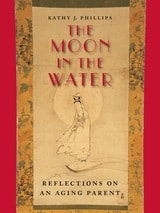
The Moon in the Water
Reflections on an Aging ParentKathy J. Phillips
Vanderbilt University Press, 2008
In a series of moving vignettes, the author begins by describing a particular representation of Water-Moon Kuan Yin, a Buddhist teacher and goddess associated with compassion, who often sits on a precarious overhang or floats on a flimsy petal. Then Kuan Yin steps out of the frame to join the author in the mundane challenges of caring for her father-transferring his health insurance, struggling with a wheelchair van, managing adult diapers, or playing in the fictions of dementia. From perplexed to poignant to funny, the vignettes record the working-class English of a fading but still wise dad, and they find other human versions of Kuan Yin in a doctor who will still make house calls or kind strangers in the street.
The book includes ten illustrations: both classical representations of Kuan Yin and also the author's own drawings, which adapt Kuan Yin in an act of practical spirituality, reading art through life and life through art. Each vignette invites the harried caregiver to take a deep breath and meditate on the trials and joys of caring for an aging parent.

The Mystery We Live
Reflections on Culture, Ethical Life, and the Transcendent with Gabriel MarcelBrendan Sweetman
St. Augustine's Press, 2026
The Seasons Of Fire
Reflections On Fire In The WestDavid J. Strohmaier
University of Nevada Press, 2001
Fire is a fearsome constant in the America West. As the author David J. Strohmaier notes, "Whether we have tended a campfire along Oregon's Deschutes River in March, engaged the advancing front of a Great Basin wildfire in the torrid heat of August, or watched fire settle into the subdued, smoldering leaf piles of October, all of our lives, to one degree or another, are bracketed by fire." In The Seasons of Fire, Strohmaier effectively blends nature writing, personal essay, and philosophical analysis as he deliberately crosses disciplinary boundaries. He discusses the "moral" dimensions of fire—not only whether fires are good, bad, or indifferent phenomena, but also how fire, more generally understood, shapes meaning for human life. The consequences of discussing the moral side of fire speak directly to the contours of the human soul, and to our sense of our place on the land. Strohmaier, a long-term firefighter himself, includes accurate and sometimes gut-wrenching descriptions of the firefighter's experience.
The Second Wave
Reflections on the Pandemic through Photography, Performance and Public CultureRustom Bharucha
Seagull Books, 2022
Focusing on the second wave of the Covid-19 pandemic in India between April and December 2021, Rustom Bharucha’s timely essay reflects on four interconnected realities that haunted this ongoing crisis—death, grief, mourning, and extinction. How do we cope with multiple deaths and the dislocation of rituals when the act of mourning is either postponed or denied? What roles do political surveillance, censorship, the regulation of lockdowns, and the sheer indifference to the lives of people play in the containment of civil liberties? Through vivid examples of photography, theater, dance, visual arts, and the cultures of everyday life, this meditative essay illuminates both the horror of the pandemic as well as its unexpected intimacies and revelations of shared suffering. Against the destruction of nature and the disrespect for the nonhuman, The Second Wave offers lessons in resilience through its reflections on the ethos of waiting and the need to re-envision breath as a vital resource of self-renewal and resistance.
The Stages of Memory
Reflections on Memorial Art, Loss, and the Spaces BetweenJames E. Young
University of Massachusetts Press, 2016
Winner of the 2017 National Council on Public History Book Award
From around the world, whether for New York City's 9/11 Memorial, at exhibits devoted to the arts of Holocaust memory, or throughout Norway's memorial process for the murders at Utøya, James E. Young has been called on to help guide the grief stricken and survivors in how to mark their losses. This poignant, beautifully written collection of essays offers personal and professional considerations of what Young calls the “stages of memory,” acts of commemoration that include spontaneous memorials of flowers and candles as well as permanent structures integrated into sites of tragedy. As he traces an arc of memorial forms that spans continents and decades, Young returns to the questions that preoccupy survivors, architects, artists, and writers: How to articulate a void without filling it in? How to formalize irreparable loss without seeming to repair it?
Richly illustrated, the volume is essential reading for those engaged in the processes of public memory and commemoration and for readers concerned about how we remember terrible losses.
The Stamp of Class
Reflections on Poetry and Social ClassGary Lenhart
University of Michigan Press, 2005
-Lorenzo Thomas
The Stamp of Class explores the nature of reading poetry in the context of class and its themes and sheds new light on how this important yet little-heralded subject affects the poet's life and work.
While numerous works have taken up the question of race and gender as they relate to literary creation, this is the first book of its kind to probe the interplay between class and American poetry. Author Gary Lenhart considers poetry and class across a wide variety of time periods and poetic trends and reflects on a range of influential poets from the eighteenth to the twenty-first centuries.
The essays in The Stamp of Class deal with the question of class as reflected in the works of Tracie Morris, Tillie Olsen, Melvin Tolson, William Carlos Williams, Walt Whitman, and others. The work is rooted in the author's own experiences as a working-class poet and teacher and is the result of more than a decade of exploration.
Poet and scholar Gary Lenhart is Lecturer in English at Dartmouth College in Hanover, New Hampshire. His most recent books of poetry are Father and Son Night, Light Heart, and One at a Time. His essays and reviews have appeared in numerous magazines and journals, including the American Poetry Review, American Book Review, and Exquisite Corpse.
The Struggle For Meaning
Reflections on Philosophy, Culture, and Democracy in AfricaPaulin J. Hountondji
Ohio University Press, 2002
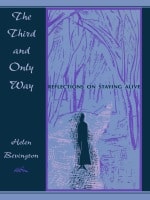
The Third and Only Way
Reflections on Staying AliveHelen Bevington
Duke University Press, 1996
The unique Bevington way of autobiography recreates lessons and insights of other lives, historical figures, and compelling incidents, and combines them in a narrative that follows the emotional currents of her life. Evoking a wide range of historical and literary figures, including Chekhov, Marcus Aurelius, Flannery O’Connor, Simone de Beauvoir, Thoreau, Beatrix Potter, Sappho, Yeats, Alexander the Great, Montaigne, Saint Cecilia, Virginia Woolf, Liv Ullmann, and many others, Bevington finds in these lives a path that has guided her search away from solitude. Through her reflections on the ten years that followed her son’s death, we become aware of how far she has traveled, how the search has brightened, how she has eloquently evolved into old age. In the end she is sitting, like the Buddha, under her own fig tree, waiting not for death but for further illumination.
An original contemplation of the universal dilemmas and tragedies of existence, The Third and Only Way is at once warm, funny, and inspiring—full of learning and wisdom.
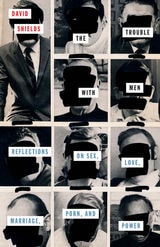
The Trouble with Men
Reflections on Sex, Love, Marriage, Porn, and PowerDavid Shields
The Ohio State University Press, 2019
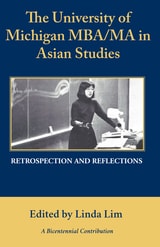
The University of Michigan MBA/MA in Asian Studies Retrospection and Reflections
A Bicentennial ContributionLinda Lim
Michigan Publishing Services, 2020
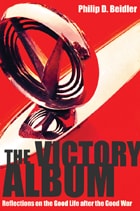
The Victory Album
Reflections on the Good Life after the Good WarPhilip D. Beidler
University of Alabama Press, 2010
The Western Illusion of Human Nature
With Reflections on the Long History of Hierarchy, Equality and the Sublimation of Anarchy in the West, and Comparative Notes on Other Conceptions of the Human ConditionMarshall Sahlins
Prickly Paradigm Press, 2008

Theories and Narratives
Reflections on the Philosophy of HistoryAlex Callinicos
Duke University Press, 1995
Pursuing this objective, Alex Callinicos critically confronts a number of leading attempts to reconceptualize the meaning of history, including Francis Fukuyama’s rehabilitation of Hegel’s philosophy of history and the postmodernist efforts of Hayden White and others to deny the existence of a past independent of our representations of it. In these cases philosophical arguments are pursued in tandem with discussions of historical interpretations or, respectively, Stalinism and the Holocaust. Leading theories of history—Marx’s and Weber’s—are then examined in the context of recent work by writers such as Michael Mann, W. G. Runciman, and Robert Brenner
Finally, the politics of historical theory is explored in a discussion of Marxism’s claims to be a universal theory of human progress. Contradicting current fashion, Callinicos rebuts the claims made by many postmodernists that Marxism is inherently Eurocentric in both its conceptual structures and its political practice. Marx’s project of human emancipation, he concludes, still define our political horizons.
Theories and Narratives will interest all readers for whom the role of history in the understanding of contemporary civilizations is an essential issue.
There Was an Old Woman
Reflections on These Strange, Surprising, Shining YearsAndrea Carlisle
Oregon State University Press, 2023
In these personal essays, Carlisle looks for new ways to bring herself more fully to this time of life, such as daily walks with other women and connecting to the natural world that surrounds her houseboat on an Oregon river at the foot of a forest. She writes about experiences shared with many, if not most, older women: wondering at her body’s transformation, discovering new talents, caregiving, facing loss, tuning in to life patterns and drawing strength through understanding them, letting go (or not) of pieces of the past, and facing other changes large and small. Those curious about, approaching, or living in old age will find wisdom and insight in her unique perspective.
In a voice that rings with clarity, humor, humility, Carlisle shows us that Old Age is not another country where we can expect to find The Old Woman grimly waiting, but is instead an expansion of the borders in the country we’re most familiar with: ourselves.
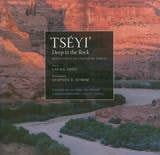
Tséyi' / Deep in the Rock
Reflections on Canyon de ChellyText by Laura Tohe; photographs by Stephen E. Strom
University of Arizona Press, 2005
Diné poet Laura Tohe draws deeply on her heritage to create lyrical writings that are rooted in the canyon but universal in spirit, while photographer Stephen Strom captures images that reveal the very soul of this ancient place. Tohe’s words take readers on a journey from the canyon rim down sheer sandstone walls to its rich bottomlands; from the memory of Kit Carson’s rifle shots and the forced march of the Navajo people to the longings of modern lovers. Her poems view the land through Diné eyes, blending history, tradition, and personal reflection while remaining grounded in Strom’s delicate yet striking images. These photographs are not typical of most southwestern landscapes. Strom’s eye for the subtleties and mysticism of the canyon creates powerful images that linger in the mind long after the pages are turned, compelling us to look at the earth in new ways.
Tséyi' / Deep in the Rock is a unique evocation of Canyon de Chelly and the people whose lives and spirits are connected to it. It is a collaboration that conjures the power of stories and images, inviting us to enter a world of harmony and be touched by its singularly haunting beauty.