Results by title
167 books match the query 'Reform' and 29 start with t

Tanu Rabbanan - Our Rabbis Taught
Joseph B. Glaser
Central Conference of American Rabbis, 1990
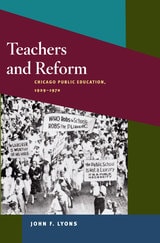
Teachers and Reform
Chicago Public Education, 1929-70John F. Lyons
University of Illinois Press, 2007
Examining teachers' unions and public education from the bottom up, Lyons shows how the CTU and its members sought rigorous reforms. A combination of political action, public relations campaigns, and community alliances helped the CTU to achieve better salaries and benefits, increased school budgets, reformed curricula, and greater equality for women within the public education system. But its agenda was also constrained by internal divisions over race and gender and by ongoing external disputes with the school administration, politicians, and business and civic organizations.
Detailed and informed by rich interviews, Teachers and Reform: Chicago Public Education, 1929-1970 tells the story of how committed union members effected changes to public education and to local politics that still benefit Chicago teachers, students, and the city today.
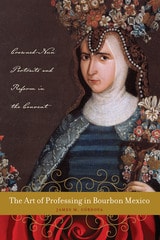
The Art of Professing in Bourbon Mexico
Crowned-Nun Portraits and Reform in the ConventBy James M. Córdova
University of Texas Press, 2014
In the eighteenth century, New Spaniards (colonial Mexicans) so lauded their nuns that they developed a local tradition of visually opulent portraits, called monjas coronadas or “crowned nuns,” that picture their subjects in regal trappings at the moment of their religious profession and in death. This study identifies these portraits as markers of a vibrant and changing society that fused together indigenous and Euro-Christian traditions and ritual practices to construct a new and complex religious identity that was unique to New Spain.
To discover why crowned-nun portraits, and especially the profession portrait, were in such demand in New Spain, this book offers a pioneering interpretation of these works as significant visual contributions to a local counter-colonial discourse. James M. Córdova demonstrates that the portraits were a response to the Spanish crown’s project to modify and modernize colonial society—a series of reforms instituted by the Bourbon monarchs that threatened many nuns’ religious identities in New Spain. His analysis of the portraits’ rhetorical devices, which visually combined Euro-Christian and Mesoamerican notions of the sacred, shows how they promoted local religious and cultural values as well as client-patron relations, all of which were under scrutiny by the colonial Church. Combining visual evidence from images of the “crowned nun” with a discussion of the nuns’ actual roles in society, Córdova reveals that nuns found their greatest agency as Christ’s brides, a title through which they could, and did, challenge the Church’s authority when they found it intolerable.
The Church, the Councils, and Reform
The Legacy of the Fifteenth CenturyGerald Christianson
Catholic University of America Press, 2008
The Distributional Aspects of Social Security and Social Security Reform
Edited by Martin Feldstein and Jeffrey B. Liebman
University of Chicago Press, 2002
As this volume suggests, the distributional consequences of these proposals are substantially different and may disproportionately affect those groups who depend on social security to avoid poverty in old age. Together, these studies persuasively show that appropriately designed investment-based social security reforms can effectively reduce the long-term burden of an aging society on future taxpayers, increase the expected future income of retirees, and mitigate poverty rates among the elderly.
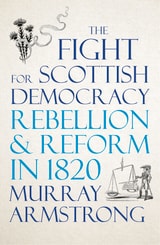
The Fight for Scottish Democracy
Rebellion and Reform in 1820Murray Armstrong
Pluto Press, 2020
This 'Radical War' was the culmination of five years of unsuccessful mass petitioning of Westminster by working people in Scotland and England. The contempt and intransigence of the Tory government forced an escalation in tactics, and on Easter Monday of 1820, the call for a general strike was answered throughout the western counties of Scotland. Their demands were threefold: the vote for all men, annual parliaments and equal constituencies. Coupled with an armed rebellion, the strike was met by the full military might of the British state; hundreds were arrested and imprisoned without trial, while hundreds more fled the country.
This Scottish general strike and insurrection is a little-known chapter of British history and yet remains an immensely important one in the long fight for democracy. In The Fight for Scottish Democracy, Murray Armstrong brings these events dramatically to life.
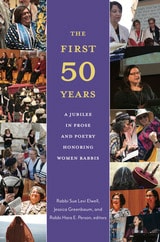
The First Fifty Years
A Jubilee in Prose and Poetry Honoring Women RabbisRabbi Sue Levi Elwell, Jessica Greenbaum, Rabbi Hara E. Person
Central Conference of American Rabbis, 2023
The ordination of Rabbi Sally J. Priesand in 1972 was a watershed moment in Jewish history. In The First Fifty Years, contributors from across the Jewish and gender spectrums reflect on the meaning of this moment and the ensuing decades, both personally and for the Jewish community. In short pieces of new prose, authors—many of them pioneering rabbis—share stories, insights, analysis, and celebrations of women in the rabbinate. These are intertwined with a wealth of poetry that poignantly captures the spirit of this anniversary. The volume is a deep, heartfelt tribute to women rabbis and their indelible impact on all of us.

The Islamic Utopia
The Illusion of Reform in Saudi ArabiaAndrew Hammond
Pluto Press, 2012
Will Saudi Arabia join the democratic wave in the Middle East? The uprisings and revolutions of 2011 do not, yet, seem to have affected the stability of the House of Saud, which remains secretive, highly repressive and propped up by the West.
The Islamic Utopia uses a range of sources including first-hand reporting and recently released WikiLeaks documents to examine Saudi Arabia in the decade after the 9/11 attacks, when King Abdullah’s 'reform' agenda took centre stage in public debate. It considers Saudi claims of 'exemption' from the democratic demands of the Arab Spring.
Andrew Hammond argues that for too long Western media and governments have accepted Saudi leaders' claims to be a buttress against jihadist Islam and that a new policy is needed towards the House of Saud.
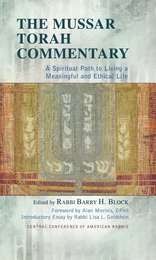
The Mussar Torah Commentary
A Spiritual Path to Living a Meaningful and Ethical LifeRabbi Barry H. Block
Central Conference of American Rabbis, 2020
This Mussar-based commentary is a vital resource for Torah study, offering a thoughtful analysis of each of the 54 weekly parashot. Each essay in this anthology brings a parashah into juxtaposition with one of the Mussar middot (character traits as described within the Jewish school of ethics called Mussar), thereby providing an applied lens of Mussar teachings that helps us to delve deeper into our tradition with increased mindfulness and intention.
The Open Door
A Passover HaggadahRabbi Sue Levi Elwell
Central Conference of American Rabbis, 2002
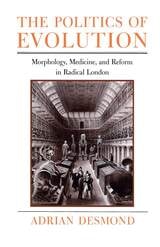
The Politics of Evolution
Morphology, Medicine, and Reform in Radical LondonAdrian Desmond
University of Chicago Press, 1990
"The Politics of Evolution is intellectual dynamite, and certainly one of the most important books in the history of science published during the past decade."—Jim Secord, Times Literary Supplement
"One of those rare books that not only stakes out new territory but demands a radical overhaul of conventional wisdom."—John Hedley Brooke, Times Higher Education Supplement
The Renewal of the Kibbutz
From Reform to TransformationRussell, Raymond
Rutgers University Press, 2015
This book explores the waves of reforms since 1990. Looking through the lens of organizational theories that predict how open or closed a group will be to change, the authors find that less successful kibbutzim were most receptive to reform, and reforms then spread through imitation from the economically weaker kibbutzim to the strong.
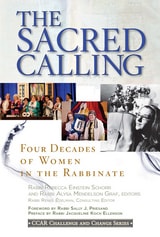
The Sacred Calling
Four Decades of Women in the RabbinateRabbi Rebecca Einstein Schorr and Rabbi Alysa Mendelson Graf
Central Conference of American Rabbis, 2016
Winner of the 2016 National Jewish Book Award in Women's Studies, this pioneering anthology paints an illuminating and necessary picture of the past while laying the groundwork for important work yet to be done.
Women have been rabbis for over forty years. No longer are women rabbis a unique phenomenon, rather they are part of the fabric of Jewish life. In this anthology, rabbis and scholars from across the Jewish world reflect back on the historic significance of women in the rabbinate and explore issues related to both the professional and personal lives of female rabbis. This collection examines the ways in which the reality of women in the rabbinate has impacted all aspects of Jewish life, including congregational culture, liturgical development, life cycle ritual, the Jewish healing movement, spirituality, theology, and more.
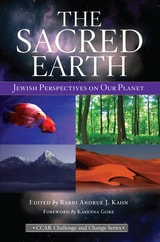
The Sacred Earth
Jewish Perspectives on Our PlanetRabbi Andrue J. Kahn
Central Conference of American Rabbis, 2023
The Torah begins by setting forth the heavens and the Earth as God’s creation, impelling humanity to steward our planet for its own sake and for its ability to nurture our lives. Yet the human-Divine-environment relationship seems to be in perpetual crisis. The Sacred Earth is a contemporary Jewish response to the looming threat of climate change, the widespread desire for experiential spirituality rooted in nature, and the continually changing relationship between humanity, nature, technology, and the Divine. The leading thinkers in this collection reflect on human vulnerability in the face of forces of nature, examine conceptions of our place in cosmology, and grapple with environmental destruction. Ultimately, with hope, they creatively explore ways to redeem this sacred Earth.
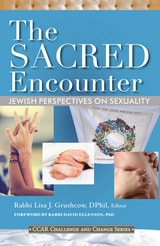
The Sacred Encounter
Jewish Perspectives on SexualityRabbi Lisa Grushcow, Dphil
Central Conference of American Rabbis, 2014
This wide-ranging anthology takes a close look at the breadth of human sexuality from a Jewish perspective. The essays begin with a look at biblical and rabbinic views on sexuality and then proceed to explorations of sexuality at different moments in the life cycle, sexuality and the marital model, diverse expressions of sexuality, examples of sexuality education, the nexus of sexuality and theology, and the challenges of contemporary sexual ethics. The Sacred Encounter is a thought-provoking and important Jewish resource. Perfect for personal study or for high school or adult classes.
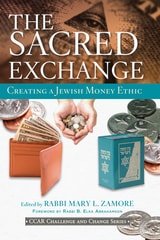
The Sacred Exchange
Creating a Jewish Money EthicRabbi Mary L. Zamore
Central Conference of American Rabbis, 2019
Part of the CCAR Press Challenge and Change series, this anthology creates a rich and varied discussion about the ethics of money. Our use of and relationship with money must reflect our religious values--this book aims to start a comprehensive conversation about how Judaism can guide us in this multi-faceted relationship.
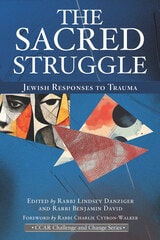
The Sacred Struggle
Jewish Responses to TraumaRabbi Lindsey Danziger and Rabbi Benjamin David
Central Conference of American Rabbis, 2025
much more.
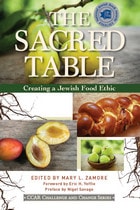
The Sacred Table
Creating a Jewish Food EthicRabbi Mary L. Zamore
Central Conference of American Rabbis, 2011
The Sacred Table: Creating a Jewish Food Ethic is an anthology of diverse essays on Jewish dietary practices. This volume presents the challenge of navigating through choices about eating, while seeking to create a rich dialogue about the intersection of Judaism and food. The definition of Kashrut, the historic Jewish approach to eating, is explored, broadened and, in some cases, argued with, in these essays. Kashrut is viewed not only as a ritual practice, but also as a multifaceted Jewish relationship with food and its production, integrating values such as ethics, community, and spirituality into our dietary practice.
The questions considered in The Sacred Table are broad reaching. Does Kashrut represent a facade of religiosity, hiding immorality and abuse, or is it, in its purest form, a summons to raise the ethical standards of food production? How does Kashrut enrich spiritual practice by teaching intentionality and gratitude? Can paying attention to our own eating practices raise our awareness of the hungry? Can Kashrut inspire us to eat healthfully? Can these laws draw us around the same table, thus creating community? In exploring the complexities of these questions, this book includes topics such as agricultural workers' rights, animal rights, food production, the environment, personal health, the spirituality of eating and fasting, and the challenges of eating together.
The Sacred Table celebrates the ideology of educated choice. The essays present a diverse range of voices, opinions, and options, highlighting the Jewish values that shape our food ethics. Whether for the individual, family, or community, this book supplies the basic how-tos of creating a meaningful Jewish food ethic and incorporating these choices into our personal and communal religious practices. These resources will be helpful if we are new to these ideas or if we are teaching or counseling others. Picture a beautiful buffet of choices from which you can shape your personal Kashrut. Read, educate yourself, build on those practices that you already follow, and eat well.
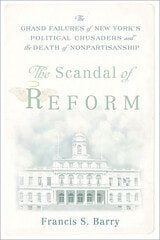
The Scandal of Reform
The Grand Failures of New York's Political Crusaders and the Death of NonpartisanshipBarry, Francis S
Rutgers University Press, 2009
The Scandal of Reform pulls the curtain back on New York's reformers past and present, revealing the bonds they have always shared with the bosses they disdain, the policy failures they still refuse to recognize, and the transition they have made from nonpartisan outsiders to ideological insiders.
Francis S. Barry examines the evolution of political reform from the frontlines of New York City's recent reform wars. He offers an insider's account and analysis of the controversial 2003 referendum debate on nonpartisan elections, and he challenges reformersùand members of both partiesùto reconsider their faith in reforms that are no longer serving the public interest.

The Social Gospel
Religion and Reform in Changing AmericaRonald White
Temple University Press, 1975
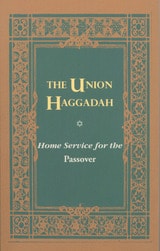
The Union Haggadah
Home Service for the PassoverCentral Conference of American Rabbis
Central Conference of American Rabbis, 1923
A reprint of the historic Reform Haggadah originally published in 1923. In addition to the complete Passover home service, this edition includes an extensive section of essays on Passover in history, literature, and art. An important document of American Reform Jewish history. Illustrated.

The United States Response to Turkish Nationalism and Reform, 1914-1939
Roger R. Trask
University of Minnesota Press, 1971
The United States Response to Turkish Nationalism and Reform, 1914-1939 was first published in 1971. Minnesota Archive Editions uses digital technology to make long unavailable books once again accessible, and are published unaltered from the original University of Minnesota Press editions.
The history of Turkish-American relations in the early years of the twentieth century, before World War II, forms a significant part of the background necessary to an understanding of the present political importance to America of the Middle East. This book, after a brief introduction covering the period before 1914, analyzes in detail the course of relations between Turkey and the United States from the beginning of World War I to the start of World War II.
The period which Professor Trask covers in this study was a critical time in both nations' histories. The relations between the two countries varied from cool neutrality (1914) to a rupture of formal ties (1917) to rapprochement (by 1939). Conditions affective Turkish-American contacts included two world wars, a major world depression, and, especially, a Turkish nationalist revolution under the leadership of Kemal Ataturk. Professor Trask analyzes the process of American accommodation to this revolution, with emphasis on diplomatic, political, economic, social, and cultural ties, and points out the implications for the balance of power during World War II and the cold war.
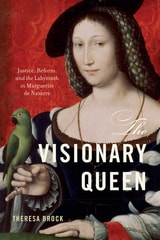
The Visionary Queen
Justice, Reform, and the Labyrinth in Marguerite de NavarreTheresa Brock
University of Delaware Press, 2024
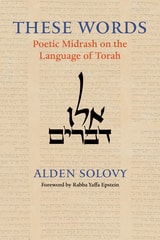
These Words
Poetic Midrash on the Language of TorahAlden Solovy
Central Conference of American Rabbis, 2023
In These Words, liturgist Alden Solovy distills the Torah into its very essence: the individual words it contains. Echoing the midrash that the Torah has seventy faces, Solovy selects seventy of its Hebrew words that are pregnant with meaning. For each word, he delves into the etymology, translation, and usage, providing deeper insights into familiar texts. Then Solovy presents a beautiful poem—what he calls “poetic midrash”—inspired by and interpreting each word. From b’reishit (“in beginning”) to shamayim (“heavens”) to zachor (“remember”), These Words will change the way you look at the language of the Torah.
This Grateful Heart
Psalms and Prayers for a New DayAlden Solovy
Central Conference of American Rabbis, 2017
This Grateful Heart offers an anthology of modern day psalms and prayers to lift us up, inspire our days, and mark our milestones. Written by Jewish poet and liturgist Alden Solovy, the collection provides nearly 100 readings, spanning topics from the simple delights of daily living to the complexities of grief; from the celebration of major turning points like bar and bat mitzvah to the more solemn commemoration of lost lives and ended relationships; and from the awe-filled moments of the High Holy Days to the observance of secular holidays. For clergy, this collection offers supplementary material for use in services and life cycle rituals; for the individual, this collection can serve as a way to give voice to the joys and sorrows of everyday life.
This Joyous Soul
A New Voice for Ancient YearningsAlden Solovy
Central Conference of American Rabbis, 2019
Like its predecessor, This Grateful Heart, this volume of creative liturgy opens a door into the transformative power of prayer. Structured to reflect the morning service found within Mishkan T'filah, this collection invites a deeply personal prayer experience that will strengthen our connection to Judaism and to the Reform siddur.
To You I Call
Psalms Throughout Our LivesRabbi Jade Sank Ross
Central Conference of American Rabbis, 2024
Today's Reform Responsa - PDF Electronic Version
Rabbi Solomon B. Freehof
Central Conference of American Rabbis, 1990
The questions dealt with in this collection of Responsa from 1990 include: Can the Shofar be blown on Shabbat? Can you say kaddish when worshiping alone? Can a Jew join a Unitarian Church? Is abortion warranted in the case of mother who contracted German measles? What to do when the deceased has specified that there be no funeral and no mourning? Is it acceptable to get married with a borrowed ring? Can unpaid synagogue pledges be taken to civil court? Is there any Jewish objection to the choice to bottlefeed and not breastfeed?
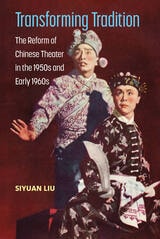
Transforming Tradition
The Reform of Chinese Theater in the 1950s and Early 1960sSiyuan Liu
University of Michigan Press, 2021
Shortly after the establishment of the People’s Republic of China in 1949, the PRC launched a reform campaign that targeted traditional song and dance theater encompassing more than a hundred genres, collectively known as xiqu. Reformers censored or revised xiqu plays and techniques; reorganized star-based private troupes; reassigned the power to create plays from star actors to the newly created functions of playwright, director, and composer; and eliminated market-oriented functionaries such as agents. While the repertoire censorship ended in the 1980s, major reform elements have remained: many traditional scripts (or parts of them) are no longer in performance; actors whose physical memory of repertoire and acting techniques had been the center of play creation, have been superseded by directors, playwrights, and composers. The net result is significantly diminished repertoires and performance techniques, and the absence of star actors capable of creating their own performance styles through new signature plays that had traditionally been one of the hallmarks of a performance school. Transforming Tradition offers a systematic study of the effects of the comprehensive reform of traditional theater conducted in the 1950s and ’60s, and is based on a decade’s worth of exhaustive research of official archival documents, wide-ranging interviews, and contemporaneous publications, most of which have never previously been referenced in scholarly research.