Results by title
145 books match the query 'Refugees' and 22 start with t
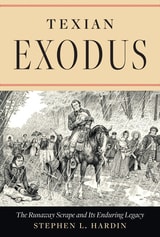
Texian Exodus
The Runaway Scrape and Its Enduring LegacyStephen L. Hardin
University of Texas Press, 2024
2026 Alamo Historical Society Book Award
A narrative account of the evacuation of the Texians in 1836, which was redeemed by the defeat of the Mexican army and the creation of the Republic of Texas.
Two events in Texas history shine so brightly that they can be almost blinding: the stand at the Alamo and the redemption at San Jacinto, where General Sam Houston’s volunteers won the decisive battle of the Texas Revolution. But these milestones came amid a less obviously heroic episode now studiously forgotten—the refugee crisis known as the Runaway Scrape.
Propulsive, lyrical, and richly illustrated, Texian Exodus transports us to the frigid, sodden spring of 1836, when thousands of Texians—Anglo-American settlers—fled eastward for the United States in fear of Antonio López de Santa Anna’s advancing Mexican army. Leading Texas historian Stephen L. Hardin draws on the accounts of the Runaways themselves to relate a tale of high stakes and great sorrow. While Houston tried to build a force that could defeat Santa Anna, the evacuees suffered incalculable pain and suffering. Yet dignity and community were not among the losses. If many of the stories are indeed tragic, the experience as a whole was no tragedy; survivors regarded the Runaway Scrape as their finest hour, an ordeal met with cooperation and courage. For Hardin, such qualities still define the Texas character. That it was forged in retreat as well as in battle makes the Runaway Scrape essential Texas history.
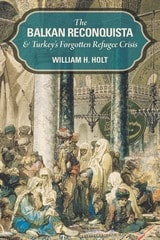
The Balkan Reconquista and Turkey's Forgotten Refugee Crisis
William H. Holt
University of Utah Press, 2019
In this book, William H. Holt tells the story of a people and moment in time that has largely been neglected in modern Turkish and Balkan memory. Holt uncovers the reasons for this mass forgetting, finding context both within the development of the modern Turkish state and the workings of collective memory. Bringing together a wide array of eyewitness accounts, the book provides unprecedented detail on the plight of the Muslim refugees in their flight from Bulgaria, in Istanbul, and in their resettlement in Anatolia. In crisp, clear, and engaging prose, Holt offers an insightful analysis of human suffering and social memory.
The Borders of "Europe"
Autonomy of Migration, Tactics of BorderingNicholas De Genova, editor
Duke University Press, 2017
Contributors. Ruben Andersson, Nicholas De Genova, Dace Dzenovska, Evelina Gambino, Glenda Garelli, Charles Heller, Clara Lecadet, Souad Osseiran, Lorenzo Pezzani, Fiorenza Picozza, Stephan Scheel, Maurice Stierl, Laia Soto Bermant, Martina Tazzioli
The Borders of America
Migration, Control, and Resistance Across Latin America and the CaribbeanSoledad Álvarez Velasco, Nicholas De Genova, Gustavo Dias, and Eduardo Domenech, editors
Duke University Press, 2026
Contributors. Soledad Álvarez Velasco, Tanya Basok, Janneth Clavijo, Nicholas De Genova, Gustavo Dias, Eduardo Domenech, Roberto Dufraix-Tapia, Jonathan Echeverri Zuluaga, Valentina Glockner Fagetti, Luin Goldring, Patricia Landolt, Carolina Moulin, Margarita Luz Núñez Chaim, Juan Ordóñez, Daniel Quinteros, Romina Ramos, Martha Rojas-Wiesner, Fabio Santos, Amarela Varela-Huerta, and Laura Velasco Ortiz
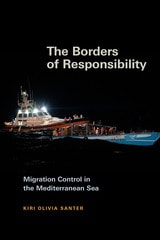
The Borders of Responsibility
Migration Control in the Mediterranean SeaKiri Olivia Santer
Duke University Press, 2026
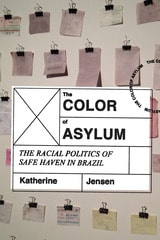
The Color of Asylum
The Racial Politics of Safe Haven in BrazilKatherine Jensen
University of Chicago Press, 2023
In 2013, as Syrians desperate to escape a brutal war fled the country, Brazil took the remarkable step of instituting an open-door policy for all Syrian refugees. Why did Brazil—in contrast to much of the international community—offer asylum to any Syrian who would come? And how do Syrians differ from other refugee populations seeking status in Brazil?
In The Color of Asylum, Katherine Jensen offers an ethnographic look at the process of asylum seeking in Brazil, uncovering the different ways asylum seekers are treated and the racial logic behind their treatment. She focuses on two of the largest and most successful groups of asylum seekers: Syrian and Congolese refugees. While the groups obtain asylum status in Brazil at roughly equivalent rates, their journey to that status could not be more different, with Congolese refugees enduring significantly greater difficulties at each stage, from arrival through to their treatment by Brazilian officials. As Jensen shows, Syrians, meanwhile, receive better treatment because the Brazilian state recognizes them as white, in a nation that has historically privileged white immigration. Ultimately, however, Jensen reaches an unexpected conclusion: Regardless of their country of origin, even migrants who do secure asylum status find their lives remain extremely difficult, marked by struggle and discrimination.
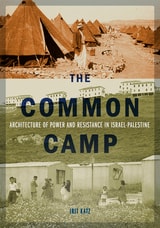
The Common Camp
Architecture of Power and Resistance in Israel–PalestineIrit Katz
University of Minnesota Press, 2022
Seeing the camp as a persistent political instrument in Israel–Palestine and beyond
The Common Camp underscores the role of the camp as a spatial instrument employed for reshaping, controlling, and struggling over specific territories and populations. Focusing on the geopolitical complexity of Israel–Palestine and the dramatic changes it has experienced during the past century, this book explores the region’s extensive networks of camps and their existence as both a tool of colonial power and a makeshift space of resistance.
Examining various forms of camps devised by and for Zionist settlers, Palestinian refugees, asylum seekers, and other groups, Irit Katz demonstrates how the camp serves as a common thread in shaping lands and lives of subjects from across the political spectrum. Analyzing the architectural and political evolution of the camp as a modern instrument engaged by colonial and national powers (as well as those opposing them), Katz offers a unique perspective on the dynamics of Israel–Palestine, highlighting how spatial transience has become permanent in the ongoing story of this contested territory.
The Common Camp presents a novel approach to the concept of the camp, detailing its varied history as an apparatus used for population containment and territorial expansion as well as a space of everyday life and subversive political action. Bringing together a broad range of historical and ethnographic materials within the context of this singular yet versatile entity, the book locates the camp at the core of modern societies and how they change and transform.
The Construction of Minorities
Cases for Comparison Across Time and Around the WorldAndre Burguiere and Raymond Grew, Editors
University of Michigan Press, 2001
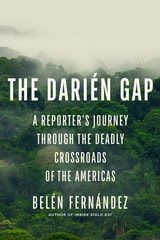
The Darién Gap
A Reporter's Journey through the Deadly Crossroads of the AmericasBelén Fernández
Rutgers University Press, 2025
The narrow Darién Gap, the only land bridge connecting South and Central America, encompasses a spectacularly hostile jungle, covered in steep mountains, dense rainforests, and flood-prone marshes. Known in Spanish as el infierno verde, or “the green hell,” it is one of the most inhospitable places in the world. Its terrain is too treacherous for roads, yet hundreds of thousands of refuge seekers contend with its horrors every year in the hopes of reaching the United States, still some three thousand miles away. And of the countless who set out for the border, an untold number never arrive.
In this book, journalist Belén Fernández travels through the Darién Gap to report on the dehumanizing and deadly stretch of land that has become a mass graveyard for migrants. Fernández’s journey brings her into contact with refuge seekers, people smugglers, law enforcement officials, and many more whose stories bring life to a place overwhelmingly associated with death. Combining history, on-the-ground reporting, travelogue, memoir, and searing politico-economic analysis, she shines light on a largely made-in-the-USA crisis that has come to define our modern era.
Engrossing and heartrending, The Darién Gap is a poignant and compassionate indictment of structural inequality and institutionalized inhumanity in a world where the have-nots must risk death for a chance at a better life—or any life at all.
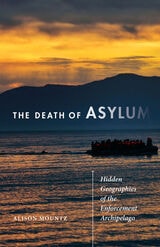
The Death of Asylum
Hidden Geographies of the Enforcement ArchipelagoAlison Mountz
University of Minnesota Press, 2020
Investigating the global system of detention centers that imprison asylum seekers and conceal persistent human rights violations
Remote detention centers confine tens of thousands of refugees, asylum seekers, and undocumented immigrants around the world, operating in a legal gray area that hides terrible human rights abuses from the international community. Built to temporarily house eight hundred migrants in transit, the immigrant “reception center” on the Italian island of Lampedusa has held thousands of North African refugees under inhumane conditions for weeks on end. Australia’s use of Christmas Island as a detention center for asylum seekers has enabled successive governments to imprison migrants from Asia and Africa, including the Sudanese human rights activist Abdul Aziz Muhamat, held there for five years.
In The Death of Asylum, Alison Mountz traces the global chain of remote sites used by states of the Global North to confine migrants fleeing violence and poverty, using cruel measures that, if unchecked, will lead to the death of asylum as an ethical ideal. Through unprecedented access to offshore detention centers and immigrant-processing facilities, Mountz illustrates how authorities in the United States, the European Union, and Australia have created a new and shadowy geopolitical formation allowing them to externalize their borders to distant islands where harsh treatment and deadly force deprive migrants of basic human rights.
Mountz details how states use the geographic inaccessibility of places like Christmas Island, almost a thousand miles off the Australian mainland, to isolate asylum seekers far from the scrutiny of humanitarian NGOs, human rights groups, journalists, and their own citizens. By focusing on borderlands and spaces of transit between regions, The Death of Asylum shows how remote detention centers effectively curtail the basic human right to seek asylum, forcing refugees to take more dangerous risks to escape war, famine, and oppression.

The Exile Mission
The Polish Political Diaspora and Polish Americans, 1939–1956Anna D. Jaroszynska-Kirchmann
Ohio University Press, 2009
At midcentury, two distinct Polish immigrant groups—those Polish Americans who were descendants of economic immigrants from the turn of the twentieth century and the Polish political refugees who chose exile after World War II and the communist takeover in Poland—faced an uneasy challenge to reconcile their concepts of responsibility toward the homeland.
The new arrivals did not consider themselves simply as immigrants, but rather as members of the special category of political refugees. They defined their identity within the framework of the exile mission, an unwritten set of beliefs, goals, and responsibilities, placing patriotic work for Poland at the center of Polish immigrant duties.
In The Exile Mission, an intriguing look at the interplay between the established Polish community and the refugee community, Anna Jaroszyńska–Kirchmann presents a tale of Polish Americans and Polish refugees who, like postwar Polish exile communities all over the world, worked out their own ways to implement the mission’s main goals. Between the outbreak of World War II and 1956, as Professor Jaroszyńska–Kirchmann demonstrates, the exile mission in its most intense form remained at the core of relationships between these two groups.
The Exile Mission is a compelling analysis of the vigorous debate about ethnic identity and immigrant responsibility toward the homeland. It is the first full–length examination of the construction and impact of the exile mission on the interactions between political refugees and established ethnic communities.
The Gift of Freedom
War, Debt, and Other Refugee PassagesMimi Thi Nguyen
Duke University Press, 2012
The Michigan Guidelines on the International Protection of Refugees
James C. Hathaway
Michigan Publishing Services, 2019
The Guidelines address five of the most difficult issues of refugee status: what is the meaning of a “well-founded fear”; when may refugee status be denied on grounds of an “internal protection alternative”; how is the causal connection to a Convention ground to be assessed; when is a risk fairly said to be for reasons of “political opinion”; and under what circumstances are persons believed to have violated rules of international criminal law to be excluded from refugee status? Additionally, this volume also addresses three critical aspects of refugee rights – when may a refugee be required to seek protection in a country not of his or her choosing; to what extent is a refugee entitled to undertake employment or other economic activity; and what is the scope of a refugee’s right to freedom of movement, both between states and within the asylum country?
The Modern Israeli and Palestinian Diasporas
A Comparative ApproachEdited by Nahum Karlinsky
University of Texas Press, 2024
A comparative study of contemporary Israeli and Palestinian diasporas.
Exilic and diasporic experience have become ubiquitous in recent decades. Jews, lacking a homeland, spread to various parts of the world, making the Jewish diaspora paradigmatic. But after the establishment of Israel in 1948, a different kind of diaspora emerged, as more than a tenth of Israeli citizens have chosen to leave their newly established state and resettle. Meanwhile, about half of all Palestinians, including Palestinian citizens of Israel, now reside in exile, predominantly as a result of the ongoing Palestinian-Israeli conflict.
Recognizing that Israeli-Jewish and Palestinian-Arab societies coexist and are engaged in constant relations, Nahum Karlinsky has assembled an impressive array of contributors to explore these diasporas alongside one another and in dialogue with other diasporic communities. The collected essays cover such topics as Palestinian exiles and diasporas, the demographics of today’s Israeli diaspora, immigrant enterprises, transnationalism and development, the unique place of Israeli Jews in the United States, the literature of Palestinian transnationals, and the emergence of Berlin as a queer Israeli-Jewish immigrant enclave.The Modern Israeli and Palestinian Diasporas challenges and reimagines the very notion of a homeland.

The New Refugees
Crime and Forced Displacement in Latin AmericaEdited by David James Cantor and Nicolás Rodríguez Serna
University of London Press, 2016
In Latin America, recent years have seen an unprecedented rise in the number of people forced to flee from their homes due to the activities of organized criminal groups. What are the reasons behind this emerging crisis of forced displacement in the Americas? Who are these criminal groups and how do they operate in Central America, Mexico and Colombia? Who are the victims and how can their needs be met in these violent and insecure contexts? Can law and policy offer a humanitarian response to this crisis? As the first book to deal with this rapidly evolving phenomenon, this innovative collection offers a range of fresh perspectives from leading experts working across Latin America.

The Palestinian Refugee Problem
The Search for a ResolutionEdited by Rex Brynen and Roula El-Rifai
Pluto Press, 2013
In this unique volume, leading analysts – many of whom have been actively involved in past negotiations on this issue – provide an overview of the key dimensions of the Palestinian refugee problem. Mindful of the sensitive and contested nature of the subject, none offers a single solution. Instead, each contribution summarises and synthesises the existing scholarly and governmental work on the topic.
Each paper develops an array of policy options for resolving various aspects of the refugee issue, written in such a way as to provide a broad menu of choices rather than a single narrow set of recommendations.
No other work on the Palestinian refugee issue has undertaken such a task. The Palestinian Refugee Problem: The Search for a Resolution is likely to be a pre-eminent reference and analytical work on the topic for many years to come.
The Politics of Denial
Israel and the Palestinian Refugee ProblemNur Masalha
Pluto Press, 2003
The 1948 war ended in the expulsion of hundreds of thousands of Palestinians from their villages and homes. Israeli settlers moved in to occupy their land and the Palestinian refugees found themselves in refugee camps, or in neighbouring Arab countries. Today there are nearly four million Palestinian refugees -- and they want the right to go home. Their problem is the greatest and most enduring refugee problem in the world.
Since 1948 Israeli refugee policy has become a classic case of denial: the denial that Zionist "transfer committees" had operated between 1937 and 1948; denial of any wrong-doing or any historical injustice; denial of the "right of return"; denial of restitution of property and compensation; and indeed denial of any moral responsibility or culpability for the creation of the refugee problem.
The aim of this book is to analyze Israeli policies towards the Palestinian refugees as they evolved from the 1948 catastrophe (or nakba) to the present. It is the first volume to look in detail at Israeli law and policy surrounding the refugee question. Drawing on extensive primary sources and previously classified archive material, Masalha discusses the 1948 exodus; Israeli resettlement schemes since 1948; Israeli approaches to compensation and restitution of property; Israeli refugee policies towards the internally displaced (‘present absentees’); and Israeli refugee policies during the Madrid and Oslo negotiations.
Masalha asks what rights Palestinians possess under international law? How can a refugee population be compensated, and will they ever be able to return to their homes? Masalha questions the official Israeli position that the only solution to the problem is resettlement of the refugees in Arab states or elsewhere. This book is a valuable resource for anyone interested in the subject that lies at the heart of the ongoing conflict in the Middle East.
The Sky Is Incomplete
Travel Chronicles in PalestineIrmgard Emmelhainz
Vanderbilt University Press, 2023
In order to render the issue of representation, of speaking on behalf of the Palestinian ordeal in all its complexity, The Sky Is Incomplete is composed as a collage, gathering diary entries, letters, experimental passages, script, poetry, art criticism, political analysis, and other genres to convey an opaque view of the Palestine Question. Beyond representation in the sense of giving testimony or speaking on behalf of the Palestinians, however, the author’s parting point is relational: The Sky Is Incomplete is about encounters—with friends, mentors, interlocutors, lovers, children, activists, and soldiers (Israeli and Palestinian).
The Unwanted
European Refugees From 1St World WarMichael Marrus
Temple University Press, 2001
The Uprooted
The Refugee in World HistoryAndreas Kossert
Rutgers University Press, 2027
In his new book, Andreas Kossert—the renowned expert on emigration and expulsion in the twentieth century and author of the bestselling Cold Home—places the early twenty-first-century refugee movement in a wider historical context. Movingly told and interwoven with personal accounts, The Uprooted: The Refugee in World History reveals the existential experiences of uprootedness and hostility that go hand in hand with losing one's homeland and explains why refugees and displaced persons have always found it so difficult to settle into a new country. Whether they have come from East Prussia, Syria, or India, refugees are agents of world history—and with this book Kossert gives them a voice.
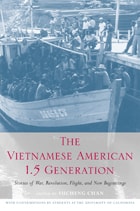
The Vietnamese American 1.5 Generation
Stories of War, Revolution, Flight and New Beginningsedited by Sucheng Chan
Temple University Press, 2006

Transit Communities and Impact of Migration
Hungary, 2017-2020Beatrix Futak-Campbell
Central European University Press, 0
The impact of the passage of war refugees on the lives and minds of local residents and officials is the subject of this study. Between 2017 and 2020, Beatrix Futak-Campbell conducted interviews with over fifty people who live and work near the Hungarian-Serbian border. This area was exposed to the unprecedented stream of refugees, most of them seeking safety from the Syrian civil war. The Hungarian government’s hostility to migrants has been widely criticized, and news coverage has tended to reiterate unhelpful characterisations of Hungarian citizens as being anti-migrant, anti-Muslim and racist.
The situation is, however, more nuanced. There is a substantial difference between the border police, local communities, and organizations, on the one hand, and national politicians and the international media perception of the refugee ‘crisis’, on the other. Those living and working with migrants at the border were caught between the domestic political situation, the plight of the refugees and the international support the latter receive, and the exigencies of their own livelihoods. This book explores these communities and their own security concerns.