Results by title
201 books match the query 'Regional Studies' and 33 start with t
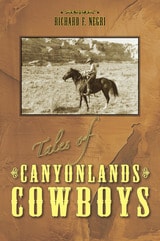
Tales of Canyonlands Cowboys
Richard Negri
Utah State University Press, 1997
Before Canyonlands was a national park, before tourists discovered the wildness and wonder of the Maze and the Land of Standing Rocks, before the San Rafael Desert became a hive of the mineral exploration, the lands west of the Colorado and Green Rivers to the San Rafael Swell and from the Book Cliffs and San Rafael River south to the dirty Devil River and the Henry Mountains were pastures for the stock of hardscrabble cowboys and sheep ranchers.
Often based in the nearby villages of Green River or Hanksville, sometimes residing on remote ranches, such as the famous Robbers Roost Ranch or the Chaffin Ranch at the mouth of the San Rafael, the cowboys and ranchers spent much of their time camped out on the range with their stock. They herded under the Ledge, along the river south across Elaterite Basin, Ernie Country, and Waterhole Flat, and above on the flats, mesas, and head canyons running from the west.
They named many of the places, opened many of the trails, and were there to meet and guide the first petroleum explorers, archaeologists, and tourists. And they bristled at government management of the public lands, which they had grown accustomed to considering their own.
Richard Negri interviewed members of the last generation of those cowboys for stories of their early days in canyon country. Their tales provide an oral history of the first non-Indians to roam and reside in the Maze District of Canyonlands National Park and much of the surrounding wild and remote country.
Teller Tales
HistoriesJo Carson
Ohio University Press, 2007
“All my work fits in my mouth,” Jo Carson says. “I write performance material no matter what else the pieces get called, and whether they are for my voice or other characters’ voices … they are first to be spoken aloud.” Following an oral tradition that has strong roots in her native Tennessee, the author of Teller Tales invites the reader to participate in events in a way that no conventional history book can.
Both stories in this book are set in East Tennessee in the mid-eighteenth century and share certain characters. The first narrative, “What Sweet Lips Can Do,” recounts the story of the Overmountain Men and the battle of King’s Mountain, a tide-turning battle in the American Revolution. “Men of Their Time” is an exploration of white-Cherokee relationships from early contact through the time of the Revolution.
Although not well known to the outside world, the stories recounted in Teller Tales are cornerstones in the heritage of the Appalachian region and of American history. In ways that will appeal to young and old alike, Jo Carson’s irreverent telling will broaden the audience and the understanding for the stories of native Americans, settlers, explorers, and revolutionaries of early America.
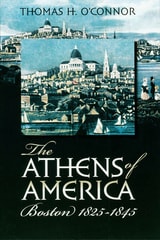
The Athens of America
Boston, 1825-1845Thomas H. O'Connor
University of Massachusetts Press, 2006
Many people are generally familiar with the fact that Boston was once known as “the Athens of America.” Very few, however, are clear about exactly why, except for their recollections of the famous writers and poets who gave the city a reputation for literature and learning.
In this book, historian Thomas H. O'Connor sets the matter straight by showing that Boston's eminence during the first half of the nineteenth century was the result of a much broader community effort. After the nation emerged from its successful struggle for independence, most Bostonians visualized their city not only as the Cradle of Liberty, but also as the new world's Cradle of Civilization.
According to O'Connor, a leadership elite, composed of men of prominent family background, Unitarian beliefs, liberal education, and managerial experience in a variety of enterprises, used their personal talents and substantial financial resources to promote the cultural, intellectual, and humanitarian interests of Boston to the point where it would be the envy of the nation. Not only did writers, scholars, and philosophers see themselves as part of this process, but so did physicians and lawyers, ministers and teachers, merchants and businessmen, mechanics and artisans, all involved in creating a well-ordered city whose citizens would be committed to the ideals of social progress and personal perfectibility.
To accomplish their noble vision, leading members of the Boston community joined in programs designed to cleanse the old town of what they felt were generations of accumulated social stains and human failures, and then to create new programs and more efficient institutions that would raise the cultural and intellectual standards of all its citizens. Like ancient Athens, Boston would be a city of great statesmen, wealthy patrons, inspiring artists, and profound thinkers, headed by members of the “happy and respectable classes” who would assume responsibility for the safety, welfare, and education of the “less prosperous portions of the community.”
Designed for the general reader and the historical enthusiast, The Athens of America is an interpretive synthesis that explores the numerous secondary sources that have concentrated on individual subjects and personalities, and draws their various conclusions into a single comprehensive narrative.
The Balkans
Mission PossibleMaria Todorova
Central European University Press, 2026
The Cultural State of Contemporary Taiwan, Volume 17
Christopher Lupke, ed.
Duke University Press, 0
The seven essays in this issue represent a broad spectrum of academic approaches that include sociology, anthropology, legal studies, film studies, literary studies, and cultural theory. One essay investigates Taiwanese who have relocated to Shanghai in search of a secure economic future. Another uses psychoanalysis to examine potentially fascist representations of Taiwan in Japanese manga. The third essay addresses the legal status of women in Taiwan in various marital situations and historical periods. The fourth discusses literary representations of the juancun, or soldiers’ villages, which were common enclaves for retired military personnel and their families. Also featured in this issue are explorations of literary portrayals of the aftermath of the February 28, 1947, massacre and resulting White Terror events, as well as a consideration of the philanthropy practiced by the massive Ciji corporation, which holds more power in the world than Taiwan’s recognized government. The final essay offers a careful study of the films of Cai Mingliang and Chen Guofu and focuses on the way that contemporary Taiwanese cinema handles questions of consumer society, urban alienation, and sexual and emotional relationships.

The Enormous Vogue of Things Mexican
Cultural Relations between the United States and Mexico, 1920-1935Helen Delpar
University of Alabama Press, 1995
A landmark study of cultural exchange across the U.S.-Mexico border.
The Enormous Vogue of Things Mexican: Cultural Relations between the United States and Mexico, 1920–1935 explores a remarkable period when Mexico captured the imagination of the United States and became a powerful source of artistic, intellectual, and cultural inspiration. Historian Helen Delpar examines the flourishing exchange between the two nations during the interwar years, revealing how artists, writers, educators, political activists, archaeologists, and travelers helped forge unprecedented connections across the border.
In the decades following the Mexican Revolution, Americans increasingly looked to Mexico as a place of cultural authenticity, creative innovation, and social experimentation. Mexican art, music, literature, archaeology, and revolutionary ideals attracted widespread attention in the United States, while Mexican intellectuals and artists actively engaged with audiences north of the border. Delpar traces the individuals, institutions, and cultural movements that fueled this phenomenon, demonstrating how a growing fascination with Mexico reshaped American perceptions of its southern neighbor.
The book examines the rise of the celebrated Mexican mural movement, expanding interest in Indigenous cultures, and the influence of Mexican themes on American literature, visual arts, music, and education. It also explores the political and social forces that encouraged cultural exchange, including enthusiasm among American liberals for the Mexican Revolution and broader movements toward cultural nationalism in both countries.
By focusing on cultural relationships rather than diplomatic or economic ties, Delpar offers a fresh perspective on the history of U.S.-Mexican relations. Richly researched and engagingly written, The Enormous Vogue of Things Mexican remains an essential work for readers interested in cultural history, Latin American studies, art history, borderlands studies, and the evolving relationship between two neighboring nations whose histories have long been intertwined.

The Food We Eat, the Stories We Tell
Contemporary Appalachian TablesElizabeth S. D. Engelhardt
Ohio University Press, 2019
Blue Ridge tacos, kimchi with soup beans and cornbread, family stories hiding in cookbook marginalia, African American mountain gardens—this wide-ranging anthology considers all these and more. Diverse contributors show us that contemporary Appalachian tables and the stories they hold offer new ways into understanding past, present, and future American food practices. The poets, scholars, fiction writers, journalists, and food professionals in these pages show us that what we eat gives a beautifully full picture of Appalachia, where it’s been, and where it’s going.
Contributors: Courtney Balestier, Jessie Blackburn, Karida L. Brown, Danille Elise Christensen, Annette Saunooke Clapsaddle, Michael Croley, Elizabeth S. D. Engelhardt, Robert Gipe, Suronda Gonzalez, Emily Hilliard, Rebecca Gayle Howell, Abigail Huggins, Erica Abrams Locklear, Ronni Lundy, George Ella Lyon, Jeff Mann, Daniel S. Margolies, William Schumann, Lora E. Smith, Emily Wallace, Crystal Wilkinson
The Founding of Alabama
Background and Formative Period in the Great Bend and Madison CountyFrances Cabaniss Roberts, edited and introduced by Thomas Reidy
University of Alabama Press, 2020
The most thorough history of Alabama’s Madison County region, widely available for the first time
The 1956 dissertation by Frances Cabaniss Roberts is a classic text on Alabama history that continues to be cited by southern historians. Roberts was the first woman to earn a PhD from the University of Alabama’s history department. In the 1950s, she was the only full-time faculty member at what is now the University of Alabama in Huntsville, where she was appointed chair of the history department in 1966.
Roberts’s dissertation, “Background and Formative Period in the Great Bend and Madison County,” remains the most thorough history of the region yet produced. While certainly a product of its era, Roberts work is visionary in its own way and offers a useful look at Alabama’s rise to statehood. Thomas Reidy, editor of this edition, has kept Roberts’s words intact except for correction of minor typographical errors and helpful additions to the notes and citations. His introduction describes both the value of Roberts’s decades of service to UAH and the importance of her dissertation over time. While highlighting the great intrinsic value of Roberts’s research and writing, Reidy also notes its significance in demonstrating how the practice of history—its methods, priorities, and values—has evolved over the intervening decades.
In her examination of Madison County, Roberts spotlights exemplars of civic performance and good community behavior, giving readers one of the earliest accountings of the antebellum southern middle class. Unlike many historians of her time, Roberts displays an interest in both the “common folks” and leaders who built the region—rural and urban—and created the institutions that shaped Madison County. She examines the contributions of merchants, shopkeepers, lawyers, doctors, architects, craftsmen, planters, farmers, elected and appointed officials, board members, and entrepreneurs.

The Jersey Shore
The Past, Present & Future of a National TreasureMazzagetti, Dominick
Rutgers University Press, 2018
Divided into chronological and thematic sections, this book will attract general readers interested in the history of the Shore: how it appeared to early European explorers; how the earliest settlers came to the beaches for the whaling trade; the first attractions for tourists in the nineteenth century; and how the coming of railroads, and ultimately automobiles, transformed the Shore into a major vacation destination over a century later. Mazzagetti also explores how the impact of changing national mores on development, race relations, and the environment, impacted the Shore in recent decades and will into the future. Ultimately, this book is an enthusiastic and comprehensive portrait by a native son, whose passion for the region is shared by millions of beachgoers throughout the Northeast.
The Lobster Gangs of Maine
James M. Acheson
University Press of New England, 1988
The Meaning of Liberalism - East and West
Zdenek Suda
Central European University Press, 1999
The Meaning of Liberalism provides a new perspective on the continuing debate about how liberalism should be defined and what it means in countries with an established parliamentary system, particularly in the new democracies of Central and Eastern Europe.
The key question this book addresses is: will the specific experience of communism and its aftermath give birth to a new distinct current of liberal thought, or will it simply enlarge the scope of the Western liberal debate? The authors argue that liberalism cannot be reduced merely to private property and market prices, but needs a very complex set of institutions and corresponding law.
Contributors come from both sides of the former Iron Curtain and they highlight the richness and diversity of liberalism and discuss different perceptions of liberal thinking in the East and West in the post-modern world.
The Most They Ever Had
Rick Bragg
University of Alabama Press, 2011
The New Decentralists
The Back-to-the-Land Movement and the Politics of Localism in Appalachia, 1968-2000Jinny A Turman
West Virginia University Press, 2026
How some “back-to-the-landers” fled alienating urban, bureaucratic places for rural Appalachia in pursuit of self-reliance, liberation, and community, only to later find themselves vulnerable to a rising tide of national conservatism that minted new political elites on the state and local level at odds with their progressive social ideas and environmental values.
The Open Veins of the Postcolonial
Afrodescendants and RacismsEdited by Inocência Mata and Iolanda Évora
Tagus Press, 2022

The Ozarks
An American Survival of Primitive SocietyVance Randolph
University of Arkansas Press, 2017
The Poorhouse
Subsidized Housing in ChicagoDevereux Bowly Jr.
Southern Illinois University Press, 2012
Chicago seems an ideal environment for public housing because of the city’s relatively young age among major cities and well-deserved reputation for technology, innovation, and architecture. Yet The Poorhouse: Subsidized Housing in Chicago shows that the city’s experience on the whole has been a negative one, raising serious questions about the nature of subsidized housing and whether we should have it and, if so, in what form.
Bowly, a native of the city, provides a detailed examination of subsidized housing in the nation’s third-largest city. Now in its second edition, The Poorhouse looks at the history of public housing and subsidized housing in Chicago from 1895 to the present day. Five new chapters that cover the decline and federal takeover of the Chicago Housing Authority, and its more recent “transformation,” which involved the demolition of the CHA family high-rise buildings and in some cases their replacement with low-risemixed income housing on the same sites. Fifty new photos supplement this edition.
Certificate of Excellence from the Illinois State Historical Society, 2013
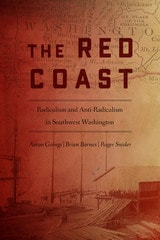
The Red Coast
Radicalism and Anti-Radicalism in Southwest WashingtonAaron Goings
Oregon State University Press, 2019
With a focus on socialists, militant unionists, Wobblies, "Red" Finns, and Communists, The Red Coast covers the people, places, and events that made history-well-known events like the 1919 Armistice Day Tragedy in Centralia and the murders of labor activists William McKay and Laura Law in Aberdeen as well as lesser-known events that have been lost to posterity until now.
The Red Coast also delves deep into the lives and work of the region's anti-radical forces, examining the collective efforts of employers, news editors, and vigilantes to combat working-class organization. Topics include the Wobblies, the labor wars of the 1910s and 1930s, and the lumber and maritime industries. Labor historians, scholars, and general readers with interest in the working-class history of the Pacific Northwest will welcome this comprehensive and accessible account.
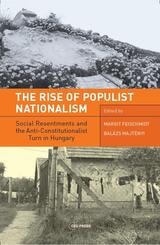
The Rise of Populist Nationalism
Social Resentments and Capturing the Constitution in HungaryBalázs Majtényi
Central European University Press, 2020
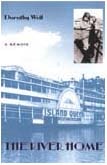
The River Home
A MemoirDorothy Weil
Ohio University Press, 2001
The death of her father begins Dorothy Weil’s search for what causes the family’s “spinning of in all directions like the pieces of Chaos.” She embarks on a river odyssey, traveling the Ohio, Missouri, and Mississippi Rivers by steamboat, towboat, and even an old-fashioned flatboat. The river brings her family back, as she records the stories of her fellow “river rats”: steamboat veterans, deckhands, captains, and cooks.
The River Home takes the reader into a world few ever glimpse, that of America’s riverboats. In the fast-paced narrative, with incisive characterizations and dialogue, the author introduces us to this vivid milieu and a gallery of fascinating people. We meet her father, a “wild river man from the Kentucky hills,” her mother, “a proper girl from a Cincinnati Dutch clan,” and her brother, a fourth-generation river man, as well as the artists and academics she meets in her adult life.
Weil’s voice is clear and wry, as well as poetic, bringing out both the sadness and joys of a family torn by mismatched backgrounds. Her themes speak to all: the confusion brought by family conflict, the strength of family love no matter how troubled the relationships, the mortality we all face, the importance of where we come from and where we go.
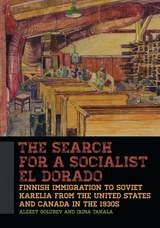
The Search for a Socialist El Dorado
Finnish Immigration to Soviet Karelia from the United States and Canada in the 1930sAlexey Golubev and Irina Takala
Michigan State University Press, 2014
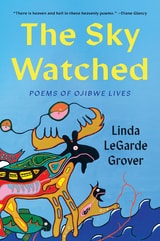
The Sky Watched
Poems of Ojibwe LivesLinda LeGarde Grover
University of Minnesota Press, 2022
A collective memoir in poetry of an Ojibwe family and tribal community, from creation myth to this day, updated with new poems
Reaching from the moment of creation to the cry of a newborn, The Sky Watched gives poetic voice to Ojibwe family life. In English and Ojibwe, those assembled here—voices of history, of memory and experience, of children and elders, Indian boarding school students, tribal storytellers, and the Manidoog, the unseen beings who surround our lives—come together to create a collective memoir in poetry as expansive and particular as the starry sky.
This world unfolds in the manner of traditional Ojibwe storytelling, shaped by the seasons and the stages of life, marking the significance of the number four in the Ojibwe worldview. Summoning spiritual and natural lore, award-winning poet and scholar Linda LeGarde Grover follows the story of a family, a tribe, and a people through historical ruptures and through intimate troubles and joys—from the sundering of Ojibwe people from their land and culture to singular horrors like the massacre at Wounded Knee to personal trauma suffered at Indian boarding schools. Threaded throughout are the tribal traditions and knowledge that sustain a family and a people through hardship and turmoil, passed from generation to generation, coming together in the manifold power and beauty of the poet’s voice.
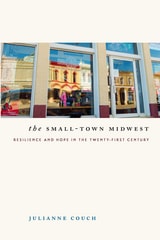
The Small-Town Midwest
Resilience and Hope in the Twenty-First CenturyJulianne Couch
University of Iowa Press, 2016
The people featured live—by choice or circumstances—in one of nine small communities in five states in the Midwest and Great Plains: Iowa, Kansas, Missouri, Nebraska, and Wyoming. Daily they witness people moving out, heading to more urban areas, small businesses closing down, connected infrastructure drying up, entrepreneurs becoming discouraged, and more people thinking about leaving. This is the story we hear in the news, the story told by abandoned farms, consolidated schools, and boarded-up Main Streets.
But it’s not the whole story. As Couch found in her travels throughout the Midwest, many people long to return to these towns, places where they may have deep family roots or where they can enjoy short commutes, familiar neighbors, and proximity to rural and wild places. And many of the residents of small midwestern towns are not just accepting the trend toward urbanization with a sigh. They are betting that the tide of rural population loss can’t go out forever, and they’re backing those bets with creatively repurposed schools, entrepreneurial innovation, and community commitment. From Bellevue, Iowa, to Centennial, Wyoming, the region’s small-town residents remain both hopeful and resilient.
The Sonoran Desert
Its Geography, Economy, and PeopleRoger Dunbier
University of Arizona Press, 1968
Although the significance of geographic regionalism is implicit throughout this study, no attempt is made to show any overriding unity at work, geographical or otherwise, welding together a "desert region." Instead the desert acts as a stage for social drama in which drought and extreme heat provide the essential backcloth. The scarcity of water and man's inability to grow crops without irrigation have not, indeed, changed with time, and only constant reference to this immutable factor can give meaning to the evolution of human activities within the desert.

The Tangled Roots of Feminism, Environmentalism, and Appalachian Literature
Elizabeth S. D. Engelhardt
Ohio University Press, 2003
Contemporaries were shocked when author Mary Noailles Murfree revealed she was a woman, but modern readers may be more surprised by her cogent discussion of community responses to unwanted development. Effie Waller Smith, an African American woman writing of her love for the Appalachian mountains, wove discussions of women's rights, racial tension, and cultural difference into her Appalachian poetry. Grace MacGowan Cooke participated in avant-garde writers' colonies with the era's literary lights and applied their progressive ideals to her fiction about the Appalachia of her youth. Emma Bell Miles, witness to poverty, industrialization, and violence against women, wrote poignant and insightful critiques of her Appalachian home.
In The Tangled Roots of Feminism, Environmentalism, and Appalachian Literature Elizabeth Engelhardt finds in all four women's writings the origins of what we recognize today as ecological feminism—a wide-reaching philosophy that values the connections between humans and nonhumans and works for social and environmental justice.
People and the land in Appalachia were also the subject of women authors with radically different approaches to mountains and their residents. Authors with progressive ideas about women's rights did not always respect the Appalachian places they were writing about or apply their ideas to all of the women in those places—but they did create hundreds of short stories, novels, letters, diaries, photographs, sketches, and poems about the mountains.
While The Tangled Roots of Feminism, Environmentalism, and Appalachian Literature ascribes much that is noble to the beginnings of the ecological feminism movement as it developed in Appalachia, it is also unyielding in its assessment of the literatures of the voyeur, tourist, and social crusader who supported status quo systems of oppression in Appalachia.
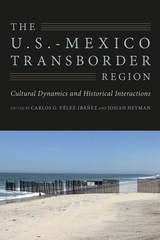
The U.S.-Mexico Transborder Region
Cultural Dynamics and Historical InteractionsEdited by Carlos G. Vélez-Ibáñez and Josiah Heyman
University of Arizona Press, 2017
The U.S.-Mexico Transborder Region presents advanced anthropological theorizing of culture in an important regional setting. Not a static entity, the transborder region is peopled by ever-changing groups who face the challenges of social inequality: political enforcement of privilege, economic subordination of indigenous communities, and organized resistance to domination.
The book, influenced by the work of Eric Wolf and senior editor Carlos G. Vélez-Ibáñez, centers on the greater Mexican North/U.S. Southwest, although the geographic range extends farther. This tradition, like other transborder approaches, attends to complex and fluid cultural and linguistic processes, going beyond the classical modern anthropological vision of one people, one culture, one language. With respect to recent approaches, however, it is more deeply social, focusing on vertical relations of power and horizontal bonds of mutuality.
Vélez-Ibáñez and Heyman envision this region as involving diverse and unequal social groups in dynamic motion over thousands of years. Thus the historical interaction of the U.S.-Mexico border, however massively unequal and powerful, is only the most recent manifestation of this longer history and common ecology. Contributors emphasize the dynamic “transborder” quality—conflicts, resistance, slanting, displacements, and persistence—in order to combine a critical perspective on unequal power relations with a questioning perspective on claims to bounded simplicity and perfection.
The book is notable for its high degree of connection across the various chapters, strengthened by internal syntheses from notable border scholars, including Robert R. Alvarez and Alejandro Lugo. In the final section, Judith Freidenberg draws general lessons from particular case studies, summarizing that “access to valued scarce resources prompts the erection of human differences that get solidified into borders,” dividing and limiting, engendering vulnerabilities and marginalizing some people.
At a time when understanding the U.S.-Mexico border is more important than ever, this volume offers a critical anthropological and historical approach to working in transborder regions.
Contributors:
Amado Alarcón
Robert R. Álvarez
Miguel Díaz-Barriga
Margaret E. Dorsey
Judith Freidenberg
Ruth Gomberg-Muñoz
James Greenberg
Josiah Heyman
Jane H. Hill
Sarah Horton
Alejandro Lugo
Luminiţa-Anda Mandache
Corina Marrufo
Guillermina Gina Núñez-Mchiri
Anna Ochoa O’Leary
Luis F. B. Plascencia
Lucero Radonic
Diana Riviera
Thomas E. Sheridan
Kathleen Staudt
Carlos G. Vélez-Ibáñez

The Victoria History of Essex
Harwich, Dovercourt and Parkeston in the 19th CenturyAndrew Senter Andrew Morrell
University of London Press, 2019
The Victoria History of Hampshire
Cliddesden, Hatch and Farleigh WallopAlison Deveson and Sue Lane
University of London Press, 2018
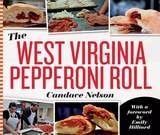
The West Virginia Pepperoni Roll
Candace Nelson
West Virginia University Press, 2017
This spicy snack soon found its way out of the mines and into bakeries, bread companies, restaurants, and event venues around the state, often with additional ingredients like cheese, red sauce, or peppers.
As the pepperoni roll’s reputation moves beyond the borders of West Virginia, this food continues to embody the culinary culture of its home state. It is now found at the center of bake-offs, eating contests, festivals, as a gourmet item on local menus, and even on a bill in the state’s legislature.
The West Virginia Pepperoni Roll is a comprehensive history of the unofficial state food of West Virginia. With over 100 photographs and countless recipes and recollections, it tells the story of the immigrants, business owners, laborers, and citizens who have developed and devoured this simple yet practical food since its invention.
Theoretical Approaches to the Archaeology of Ancient Greece
Manipulating Material CultureLisa C. Nevett, Editor
University of Michigan Press, 2017
An introductory section exploring the emergence and growth of theoretical approaches is followed by examinations of the potential insights these approaches provide. The authors probe some of the meanings attached to ancient objects, townscapes, and cemeteries, for those who created, and used, or inhabited them.
The range of contexts stretches from the early Greek communities during the eighth and seventh centuries BCE, through Athens between the eighth and fifth centuries BCE, and on into present day Turkey and the Levant during the third and second centuries BCE. The authors examine a range of practices, from the creation of individual items such as ceramic vessels and figurines, through to the construction of civic buildings, monuments, and cemeteries. At the same time they interrogate a range of spheres, from craft production, through civic and religious practices, to funerary ritual.

Thinking Outside the Girl Box
Teaming Up with Resilient Youth in AppalachiaLinda Spatig
Ohio University Press, 2014
Thinking Outside the Girl Box is a true story about a remarkable youth development program in rural West Virginia. Based on years of research with adolescent girls—and adults who devoted their lives to working with them—Thinking Outside the Girl Box reveals what is possible when young people are challenged to build on their strengths, speak and be heard, and engage critically with their world.
Based on twelve years of field research, the book traces the life of the Lincoln County Girls’ Resiliency Program (GRP), a grassroots, community nonprofit aimed at helping girls identify strengths, become active decision makers, and advocate for social change. In the late 1990s and early 2000s, the GRP flourished. Its accomplishments were remarkable: girls recorded their own CDs, published poetry, conducted action research, opened a coffeehouse, performed an original play, and held political rallies at West Virginia’s State Capitol. The organization won national awards, and funding flowed in. Today, in 2013, the programming and organization are virtually nonexistent.
Thinking Outside the Girl Box raises pointed questions about how to define effectiveness and success in community-based programs and provides practical insights for anyone working with youth. Written in an accessible, engaging style and drawing on collaborative ethnographic research that the girls themselves helped conduct, the book tells the story of an innovative program determined to challenge the small, disempowering “boxes” girls and women are so often expected to live in.
Tripping on the Color Line
Black-White Multiracial Families in a Racially Divided WorldDalmage, Heather M
Rutgers University Press, 2000
At the turn of the twentieth century W.E.B. DuBois predicted that the central problem facing the United States in the new century would be that of the “color line.” Now, at the beginning of a new century, we find many people straddling the color line. These people come from the growing number of multiracial families in America, families who search for places of comfort and familiarity in a racially polarized society whose educational system, places of worship, and neighborhoods continue to suffer a de facto segregation. This group has provoked an ever-widening debate and an upheaval in traditional racial thinking in the United States.
Through in-depth interviews with individuals from black–white multiracial families, and insightful sociological analysis, Heather M. Dalmage examines the challenges faced by people living in such families and explores how their experiences demonstrate the need for rethinking race in America. She examines the lived reality of race in the ways multiracial family members construct and describe their own identities and sense of community and politics. She shows how people whose own very lives complicate the idea of the color line must continually negotiate and contest it in order not to reproduce it. Their lack of language to describe their multiracial existence, along with their experience of coping with racial ambiguity and with institutional demands to conform to a racially divided, racist system is the central theme of Tripping on the Color Line. By connecting the stories to specific issues, such as census categories, transracial adoption, intermarriage, as well as the many social responses to violations of the color line, Dalmage raises the debate to a broad discussion on racial essentialism and social justice.
Exploring the dynamic of race as it pervades the lives of those close to the color line, Dalmage argues that the struggle for racial justice must include an understanding that race is a complex construct that is constantly shifting, and is something we do rather than something we simply are.
Tripping on the Color Line
Black-White Multiracial Families in a Racially Divided WorldDalmage, Heather M
Rutgers University Press, 2000
At the turn of the twentieth century W.E.B. DuBois predicted that the central problem facing the United States in the new century would be that of the “color line.” Now, at the beginning of a new century, we find many people straddling the color line. These people come from the growing number of multiracial families in America, families who search for places of comfort and familiarity in a racially polarized society whose educational system, places of worship, and neighborhoods continue to suffer a de facto segregation. This group has provoked an ever-widening debate and an upheaval in traditional racial thinking in the United States.
Through in-depth interviews with individuals from black–white multiracial families, and insightful sociological analysis, Heather M. Dalmage examines the challenges faced by people living in such families and explores how their experiences demonstrate the need for rethinking race in America. She examines the lived reality of race in the ways multiracial family members construct and describe their own identities and sense of community and politics. She shows how people whose own very lives complicate the idea of the color line must continually negotiate and contest it in order not to reproduce it. Their lack of language to describe their multiracial existence, along with their experience of coping with racial ambiguity and with institutional demands to conform to a racially divided, racist system is the central theme of Tripping on the Color Line. By connecting the stories to specific issues, such as census categories, transracial adoption, intermarriage, as well as the many social responses to violations of the color line, Dalmage raises the debate to a broad discussion on racial essentialism and social justice.
Exploring the dynamic of race as it pervades the lives of those close to the color line, Dalmage argues that the struggle for racial justice must include an understanding that race is a complex construct that is constantly shifting, and is something we do rather than something we simply are.

Twin Cities Sports
Games for All SeasonsSheldon Anderson
University of Arkansas Press, 2020