79 books match the query 'Religion and science' and 17 start with t
cover of Technology and Religion: Remaining Human Co-created World

Technology and Religion

Remaining Human Co-created World

Noreen Herzfeld

Templeton Press, 2009

Technology is changing all the time, but does it also have the ability to change us and the way we approach religion and spirituality? In Technology and Religion: Remaining Human in a Co-created World, Noreen Herzfeld examines this and other provocative questions as she provides an accessible and fascinating overview of the relationship between religion and the ever-broadening world of technology.

In order to consider fully a topic as wide as technology, Herzfeld approaches the field from three different angles: technologies of the human body—such as genetic engineering, stem cells, cloning, pharmaceutical technologies, mechanical enhancement and cyborgs; technologies of the human mind—like human and artificial intelligence, virtual reality and cyberspace; and technologies of the external environment—such as nanotechnology, genetically modified crops and new agricultural technologies, and energy technology. She takes a similarly broad approach to the field of religion, focusing on how these issues interface with the three Abrahamic traditions of Christianity, Islam, and Judaism. Throughout, readers will find nuanced examinations of the moral and ethical issues surrounding new technologies from the perspectives of these faith traditions.

The result is a multifaceted look at the ongoing dialogue between these two subjects that are not commonly associated with one another. This volume is the third title published in the new Templeton Science and Religion Series.
 

[more]
cover of The Big Questions in Science and Religion

The Big Questions in Science and Religion

Keith Ward

Templeton Press, 2008

Can religious beliefs survive in the scientific age? Are they resoundingly outdated? Or, is there something in them of great importance, even if the way they are expressed will have to change given new scientific context? These questions are among those at the core of the science-religion dialogue.

In The Big Questions in Science and Religion, Keith Ward, an Anglican priest who was once an atheist, offers compelling insights into the often contentious relationship between diverse religious views and new scientific knowledge. He identifies ten basic questions about the nature of the universe and human life. Among these are:

•Does the universe have a goal or purpose?
•Do the laws of nature exclude miracles?
•Can science provide a wholly naturalistic explanation for moral and religious beliefs?
•Has science made belief in God obsolete? Are there any good science-based arguments for God?

With his expertise in the study of world religions, Ward considers concepts from Buddhism, Confucianism, Taoism, Islam, Hinduism, Judaism, and Christianity, while featuring the speculations of cosmologists, physicians, mathematicians, and philosophers. In addition, Ward examines the implications of ancient laws and modern theories and evaluates the role of religious experience as evidence of a nonphysical reality.

Writing with enthusiasm, passion, and clarity, Keith Ward conveys the depth, difficulty, intellectual excitement, and importance of the greatest intellectual and existential questions of the modern scientific age.

[more]
cover of The Christian Philosopher

The Christian Philosopher

Cotton MatherEdited, with an Introduction and Notes, by Winton U. Solberg

University of Illinois Press, 1994

 
Published in 1721 by the prominent Puritan clergyman Cotton Mather, The Christian Philosopher was the first comprehensive book on science to be written by an American.  Building on natural theology, Mather demonstrated the harmony between religion and the new science associated with Sir Isaac Newton. His survey of all the known sciences from astronomy and physics to human anatomy presented evidence that both celestial and terrestrial phenomema imply an intelligent designer.
 
Winton Solberg's introduction places Mather's treatise in its widest historical context. In addition to tracing the origins and sources of Mather's work, Solberg analyzes the book's contents, its reception, and its significance in American intellectual and cultural history. This edition affirms Mather's importance to American thought as a deeply religious intellectual who introduced the Enlightenment to America.
 
[more]
cover of The Enlightened Gene: Biology, Buddhism, and the Convergence that Explains the World

The Enlightened Gene

Biology, Buddhism, and the Convergence that Explains the World

Arri Eisen and Yungdrung Konchok

University Press of New England, 2017
Eight years ago, in an unprecedented intellectual endeavor, the Dalai Lama invited Emory University to integrate modern science into the education of the thousands of Tibetan Buddhist monks and nuns in exile in India. This project, the Emory Tibet Science Initiative, became the first major change in the monastic curriculum in six centuries. Eight years in, the results are transformative. The singular backdrop of teaching science to Tibetan Buddhist monks and nuns offered provocative insights into how science and religion can work together to enrich each other, as well as to shed light on life and what it means to be a thinking, biological human. In The Enlightened Gene, Emory University Professor Dr. Arri Eisen, together with monk Geshe Yungdrung Konchok explore the striking ways in which the integration of Buddhism with cutting-edge discoveries in the biological sciences can change our understanding of life and how we live it. What this book discovers along the way will fundamentally change the way you think. Are humans inherently good? Where does compassion come from? Is death essential for life? Is experience inherited? These questions have occupied philosophers, religious thinkers and scientists since the dawn of civilization, but in today’s political discourse, much of the dialogue surrounding them and larger issues—such as climate change, abortion, genetically modified organisms, and evolution—are often framed as a dichotomy of science versus spirituality. Strikingly, many of new biological discoveries—such as the millions of microbes that we now know live together as part of each of us, the connections between those microbes and our immune systems, the nature of our genomes and how they respond to the environment, and how this response might be passed to future generations—can actually be read as moving science closer to spiritual concepts, rather than further away. The Enlightened Gene opens up and lays a foundation for serious conversations, integrating science and spirit in tackling life’s big questions. Each chapter integrates Buddhism and biology and uses striking examples of how doing so changes our understanding of life and how we lead it.
[more]
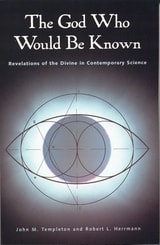
cover of The God Who Would Be Known: Revelations Of Divine Contemporary Science

The God Who Would Be Known

Revelations Of Divine Contemporary Science

John Marks Templeton

Templeton Press, 1998

Until recently, science’s ability to describe and define our universe threatened to make religion obsolete. But the well-received hardcover edition of this book demonstrated that, increasingly, God is being revealed through science.
Now available in paperback, this positive work is for all who ponder the mystery and wonder of our universe—and the God who plans and oversees it. Probing the philosophical and theological impact of scientific discoveries, the authors urge us to adopt an analytical and open posture toward both science and religion. In the spirit of Sir Francis Bacon, this fascinating exploration shows us how “the book of God’s works” (natural science) can tell us a great deal about “the book of God’s words” (Scripture).
“We began this book with the idea that the God who has made this awesome and wonderful universe is utterly beyond our capacity to measure and yet is also the God who would be known. He has placed remarkable signs in the heavens, on Earth, and in ourselves: signals of transcendence. We conclude that this universe is here by divine plan, and that science itself, for decades a bastion of unbelief, has once again become the source of humankind’s assurance of intimate divine concern in its affairs.”
—from the authors

[more]
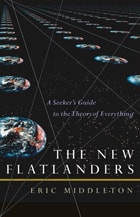
cover of The New Flatlanders: A Seeker's Guide to the Theory of Everything

The New Flatlanders

A Seeker's Guide to the Theory of Everything

Eric Middleton

Templeton Press, 2007

In The New Flatlanders, teacher, scientist, and chaplain Eric Middleton challenges traditional ways of looking at reality by engaging readers in a "voyage of discovery starting with questions." The book engagingly begins with a discussion group embarking on an exploratory conversation about the nature of the universe and the place of human beings in it. Daunting questions emerge, such as "How can there possibly be a tear or hole in three-dimensional space? And if there is a hole, can something fall through it? Where would it fall to?" In short order, students and teacher are on a quest to develop a "working theory of everything" that takes them from stone circles to quarks, superstrings, quantum theory, the anthropic principle, evolution, consciousness, miracles, chaos, and the spiritual universe.

The key to exploring these questions is finding a language with which to talk about the awe and wonder of today's science alongside the joy of experiencing the spiritual. This is done by interweaving into the discussions the philosophy of "Flatland," a nonreligious entry point to Jesus posited by nineteenth-century clergyman and educator Edwin A. Abbott in his classic parable Flatland: A Romance of Many Dimensions.
[more]
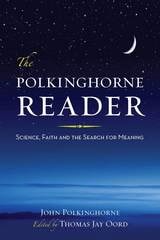
cover of The Polkinghorne Reader: Science, Faith, and the Search for Meaning

The Polkinghorne Reader

Science, Faith, and the Search for Meaning

John C. Polkinghorne

Templeton Press, 2010

The Revd. Dr. John Polkinghorne is a world-renowned authority in the field of science and religion. His numerous books in this area, written over the past three decades, have been hugely influential. The Polkinghorne Reader brings together key extracts from his writings on core issues such as the nature of science, the physical world, human nature, love, theology, creation, providence, prayer and miracle, time, evil, Jesus, the resurrection, the Trinity, eschatology, and world faiths.
Ideal for readers who are new to Polkinghorne or who are just beginning to explore the interplay between science and religion, this collection will also be welcomed by all who have read his earlier works but would like one handy resource that presents the major facets of his thought in an accessible and systematic fashion.
[more]
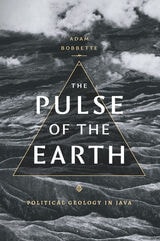
cover of The Pulse of the Earth: Political Geology in Java

The Pulse of the Earth

Political Geology in Java

Adam Bobbette

Duke University Press, 2023
In The Pulse of the Earth Adam Bobbette tells the story of how modern theories of the earth emerged from the slopes of Indonesia’s volcanoes. Beginning in the late nineteenth century, scientists became concerned with protecting the colonial plantation economy from the unpredictable bursts and shudders of volcanoes. Bobbette follows Javanese knowledge traditions, colonial geologists, volcanologists, mystics, Theosophists, orientalists, and revolutionaries to show how the earth sciences originate from a fusion of Western and non-Western cosmology, theology, anthropology, and geology. Drawing on archival research, interviews, and fieldwork at Javanese volcanoes and in scientific observatories, he explores how Indonesian Islam shaped the theory of plate tectonics, how Dutch colonial volcanologists learned to see the earth in new ways from Javanese spiritual traditions, and how new scientific technologies radically recast notions of the human body, distance, and the earth. In this way, Bobbette decenters the significance of Western scientists to expand our understanding of the evolution of planetary thought and rethinks the politics of geological knowledge.
[more]
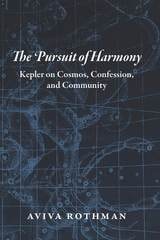
cover of The Pursuit of Harmony: Kepler on Cosmos, Confession, and Community

The Pursuit of Harmony

Kepler on Cosmos, Confession, and Community

Aviva Rothman

University of Chicago Press, 2017

A committed Lutheran excommunicated from his own church, a friend to Catholics and Calvinists alike, a layman who called himself a “priest of God,” a Copernican in a world where Ptolemy still reigned, a man who argued at the same time for the superiority of one truth and the need for many truths to coexist—German astronomer Johannes Kepler was, to say the least, a complicated figure. With The Pursuit of Harmony, Aviva Rothman offers a new view of him and his achievements, one that presents them as a story of Kepler’s attempts to bring different, even opposing ideas and circumstances into harmony.
 
Harmony, Rothman shows, was both the intellectual bedrock for and the primary goal of Kepler’s disparate endeavors. But it was also an elusive goal amid the deteriorating conditions of his world, as the political order crumbled and religious war raged. In the face of that devastation, Kepler’s hopes for his theories changed: whereas he had originally looked for a unifying approach to truth, he began instead to emphasize harmony as the peaceful coexistence of different views, one that could be fueled by the fundamentally nonpartisan discipline of mathematics. 
 
[more]
cover of The Science of Sympathy: Morality, Evolution, and Victorian Civilization

The Science of Sympathy

Morality, Evolution, and Victorian Civilization

Rob Boddice

University of Illinois Press, 2016
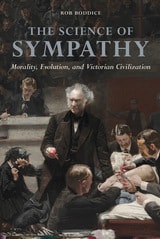
In his Descent of Man, Charles Darwin placed sympathy at the crux of morality in a civilized human society. His idea buttressed the belief that white, upper-class, educated men deserved their sense of superiority by virtue of good breeding. It also implied that societal progress could be steered by envisioning a new blueprint for sympathy that redefined moral actions carried out in sympathy's name. Rob Boddice joins a daring intellectual history of sympathy to a portrait of how the first Darwinists defined and employed it. As Boddice shows, their interpretations of Darwin's ideas sparked a cacophonous discourse intent on displacing previous notions of sympathy. Scientific and medical progress demanded that "cruel" practices like vivisection and compulsory vaccination be seen as moral for their ultimate goal of alleviating suffering. Some even saw the so-called unfit--natural targets of sympathy--as a danger to society and encouraged procreation by the "fit" alone. Right or wrong, these early Darwinists formed a moral economy that acted on a new system of ethics, reconceptualized obligations, and executed new duties. Boddice persuasively argues that the bizarre, even dangerous formulations of sympathy they invented influence society and civilization in the present day.
[more]
cover of The Templeton Science and Religion Reader

The Templeton Science and Religion Reader

J. Wetzel van Huysssteen

Templeton Press, 2012
Our attempts to understand the world around us are greatly advanced by scientific research, which holds nearly unlimited potential to address our questions of what? and how? Some scientific fields, however, seem to take a hands-off approach to the big question of why? Why does the universe work the way it does? Why do our brains make us think certain thoughts or feel certain sensations? Why did we evolve the way we did? Some fundamental scientific understanding is necessary before one can venture too deeply into these types of inquiries, which almost inevitably involve larger philosophical and theological implications. The Templeton Science and Religion Reader invites readers to explore some of these fascinating questions and offers them the kind of knowledge they’ll need in order to seriously consider possible answers.
 
In the Templeton Science and Religion Series, scientific experts from a wide range of fields have distilled their experience and knowledge into brief tours of their respective specialties. The series was launched in 2008 with the publication of the inaugural volume, Medicine, Religion, and Health. Since that time, the series editors J. Wentzel van Huyssteen and Khalil Chamcham have expanded it to nine titles covering everything from paleontology to neuroscience to technology. Now, in The Templeton Science and Religion Reader, the editors have gathered together the very best chapters from these volumes into a single edited collection.
 
These chapters presuppose no scientific background and are designed to be accessible to the general reader. Each section may have a different focus—a quantum, a star in a galaxy, a bee, or the seat of human intelligence, which some may call the soul—but the editors have done a great service to the reader by juxtaposing these subjects in a way that suggests how each one relates to other entities, including both its own kind and the wider global environment. The end result is a truly cohesive collection that will both broaden and deepen our understanding of these interconnected relations and, in turn, the world around us.
 
Contributors include Denis R. Alexander, Justin L. Barrett, R. J. Berry, Warren S. Brown, Noreen Herzfeld, Malcom Jeeves, Harold G. Koenig, Javier Leach, Joseph Silk, and Ian Tattersall.
[more]
cover of The Territories of Science and Religion

The Territories of Science and Religion

Peter Harrison

University of Chicago Press, 2015

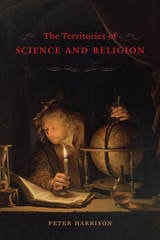
The conflict between science and religion seems indelible, even eternal. Surely two such divergent views of the universe have always been in fierce opposition? Actually, that’s not the case, says Peter Harrison: our very concepts of science and religion are relatively recent, emerging only in the past three hundred years, and it is those very categories, rather than their underlying concepts, that constrain our understanding of how the formal study of nature relates to the religious life.

In The Territories of Science and Religion, Harrison dismantles what we think we know about the two categories, then puts it all back together again in a provocative, productive new way. By tracing the history of these concepts for the first time in parallel, he illuminates alternative boundaries and little-known relations between them—thereby making it possible for us to learn from their true history, and see other possible ways that scientific study and the religious life might relate to, influence, and mutually enrich each other.
A tour de force by a distinguished scholar working at the height of his powers, The Territories of Science and Religion promises to forever alter the way we think about these fundamental pillars of human life and experience.

[more]
cover of The Village Enlightenment in America: Popular Religion and Science in the Nineteenth Century

The Village Enlightenment in America

Popular Religion and Science in the Nineteenth Century

Craig James Hazen

University of Illinois Press, 2000

The Village Enlightenment in America focuses on three nineteenth-century spiritual activists who epitomized the marriage of science and religion fostered in antebellum, pre-Darwinian America by the American Enlightenment.
 
A theologian, writer, and apologist for the nascent Mormon movement, as well as an amateur scientist, Orson Pratt wrote Key to the Universe, or a New Theory of Its Mechanism, to establish a scientific base for the Church of Jesus Christ of Latter-day Saints. Robert Hare, an inventor and ardent convert to spiritualism, used his scientific expertise to lend credence to the spiritualist movement. Phineas Parkhurst Quimby, generally considered the initiator of the American mind-cure movement, developed an overtly religious concept of science and used it to justify his system of theology.
 
Pratt, Hare, and Quimby all employed a potent combination of popular science and Baconianism to legitimate their new religious ideas. Using the same terms--matter, ether, magnetic force--to account for the behavior of particles, planetary rotation, and the influence of the Holy Ghost, these agents of the Enlightenment constructed complex systems intended to demonstrate a fundamental harmony between the physical and the metaphysical.
 
Through the lives and work of these three influential men, The Village Enlightenment in America opens a window to a time when science and religion, instead of seeming fundamentally at odds with each other, appeared entirely reconcilable.
 
[more]
cover of Things a Computer Scientist Rarely Talks About

Things a Computer Scientist Rarely Talks About

Donald E. Knuth

CSLI, 2003

How does a computer scientist understand infinity? What can probability theory teach us about free will? Can mathematical notions be used to enhance one's personal understanding of the Bible?

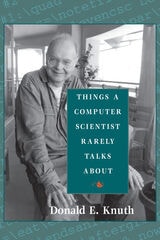
Perhaps no one is more qualified to address these questions than Donald E. Knuth, whose massive contributions to computing have led others to nickname him "The Father of Computer Science"—and whose religious faith led him to understand a fascinating analysis of the Bible called the 3:16 project. In this series of six spirited, informal lectures, Knuth explores the relationships between his vocation and his faith, revealing the unique perspective that his work with computing has lent to his understanding of God.

His starting point is the 3:16 project, an application of mathematical "random sampling" to the books of the Bible. The first lectures tell the story of the project's conception and execution, exploring its many dimensions of language translation, aesthetics, and theological history. Along the way, Knuth explains the many insights he gained from such interdisciplinary work. These theological musings culminate in a surprising final lecture tackling the ideas of infinity, free will, and some of the other big questions that lie at the juncture of theology and computation.

Things a Computer Scientist Rarely Talks About, with its charming and user-friendly format—each lecture ends with a question and answer exchange, and the book itself contains more than 100 illustrations—is a readable and intriguing approach to a crucial topic, certain to edify both those who are serious and curious about their faiths and those who look at the science of computation and wonder what it might teach them about their spiritual world.

Includes "Creativity, Spirituality, and Computer Science," a panel discussion featuring Harry Lewis, Guy L. Steele, Jr., Manuela Veloso, Donald E. Knuth, and Mitch Kapor.
[more]
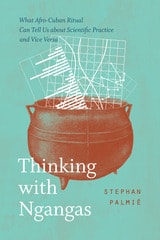
cover of Thinking with Ngangas: What Afro-Cuban Ritual Can Tell Us about Scientific Practice and Vice Versa

Thinking with Ngangas

What Afro-Cuban Ritual Can Tell Us about Scientific Practice and Vice Versa

Stephan Palmié

University of Chicago Press, 2023

A comparative investigation of Afro-Cuban ritual and Western science that aims to challenge the rationality of Western expert practices.
 
Inspired by the exercises of Father Lafitau, an eighteenth-century Jesuit priest and protoethnographer who compared the lives of the Iroquois to those of the ancient Greeks, Stephan Palmié embarks on a series of unusual comparative investigations of Afro-Cuban ritual and Western science. What do organ transplants have to do with ngangas, a complex assemblage of mineral, animal, and vegetal materials, including human remains, that serve as the embodiment of the spirits of the dead? How do genomics and “ancestry projects” converge with divination and oracular systems? What does it mean that Black Cubans in the United States took advantage of Edisonian technology to project the disembodied voice of a mystical entity named ecué onto the streets of Philadelphia? Can we consider Afro-Cuban spirit possession as a form of historical knowledge production?
 
By writing about Afro-Cuban ritual in relation to Western scientific practice, and vice versa, Palmié hopes to challenge the rationality of Western expert practices, revealing the logic that brings together enchantment and experiment.
[more]
cover of Time & Eternity: The Question of Time in Church, Science and Theology

Time & Eternity

The Question of Time in Church, Science and Theology

Antje Jackelen

Templeton Press, 2005

What is time? Is there a link between objective knowledge about time and subjective experience of time? And what is eternity? Does religion have the answer? Does science?

Internationally known scholar Antje Jackelén investigates the problem and concept of time. Her study draws on her experiences in the Continental-European science and religion dialogue, with a particular focus on the German, Scandinavian, and Anglo-American dialogues. Her analysis of the subject includes:
 
•The notion of time and eternity as it is narrated through Christian hymn books stemming from Germany, Sweden, and the English-speaking world, with insights into changes of the concept and understanding of time in Christian spirituality over the past few decades
•Theological approaches to time and eternity, as well as a look at Trinitarian theology and its relation to time
•The discussion of scientific theories of time, including Newtonian, relativistic, quantum, and chaos theories
•The formulation of a "theology of time," a theological-mathematical model incorporating relational thinking oriented toward the future, the doctrine of trinity, and the notion of eschatology
 

[more]
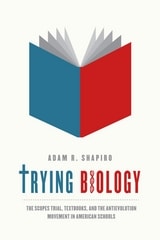
cover of Trying Biology: The Scopes Trial, Textbooks, and the Antievolution Movement in American Schools

Trying Biology

The Scopes Trial, Textbooks, and the Antievolution Movement in American Schools

Adam R. Shapiro

University of Chicago Press, 2013

In Trying Biology, Adam R. Shapiro convincingly dispels many conventional assumptions about the 1925 Scopes “monkey” trial. Most view it as an event driven primarily by a conflict between science and religion. Countering this, Shapiro shows the importance of timing: the Scopes trial occurred at a crucial moment in the history of biology textbook publishing, education reform in Tennessee, and progressive school reform across the country. He places the trial in this broad context—alongside American Protestant antievolution sentiment—and in doing so sheds new light on the trial and the historical relationship of science and religion in America.
           
For the first time we see how religious objections to evolution became a prevailing concern to the American textbook industry even before the Scopes trial began. Shapiro explores both the development of biology textbooks leading up to the trial and the ways in which the textbook industry created new books and presented them as “responses” to the trial. Today, the controversy continues over textbook warning labels, making Shapiro’s study—particularly as it plays out in one of America’s most famous trials—an original contribution to a timely discussion.
[more]