Results by title
164 books match the query 'Revolution' and 20 start with t
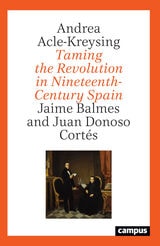
Taming the Revolution
Andrea Acle-Kreysing
Campus Verlag, 2022
Jaime Balmes and Juan Donoso Cortés–the two most important conservative thinkers in nineteenth-century Spain–actively sought to preserve the centrality of church and monarchy in the wake of the rise of liberalism, while at the same time discrediting the stereotypical view of Spain as a backward and isolated country. Although they pursued a similar goal, their positions differed: while Balmes’ works anticipated a socially oriented Catholicism, Donoso presented Christianity as the supreme social good, incompatible with modern liberalism. In Taming the Revolution, Andrea Acle-Kreysing highlights the unresolved tensions in their works, escaping the dualistic interpretations of this period that defines tradition from modernity. This work endeavors to show how Spanish political thought was a compelling variation–rather than an aberration–of contemporary European debates.

The Beautiful Cure
The Revolution in Immunology and What It Means for Your HealthDaniel M. Davis
University of Chicago Press, 2018
The immune system holds the key to human health. In The Beautiful Cure, leading immunologist Daniel M. Davis describes how the scientific quest to understand how the immune system works—and how it is affected by stress, sleep, age, and our state of mind—is now unlocking a revolutionary new approach to medicine and well-being.
The body’s ability to fight disease and heal itself is one of the great mysteries and marvels of nature. But in recent years, painstaking research has resulted in major advances in our grasp of this breathtakingly beautiful inner world: a vast and intricate network of specialist cells, regulatory proteins, and dedicated genes that are continually protecting our bodies. Far more powerful than any medicine ever invented, the immune system plays a crucial role in our daily lives. We have found ways to harness these natural defenses to create breakthrough drugs and so-called immunotherapies that help us fight cancer, diabetes, arthritis, and many age-related diseases, and we are starting to understand whether activities such as mindfulness might play a role in enhancing our physical resilience.
Written by a researcher at the forefront of this adventure, The Beautiful Cure tells a dramatic story of scientific detective work and discovery, of puzzles solved and mysteries that linger, of lives sacrificed and saved. With expertise and eloquence, Davis introduces us to this revelatory new understanding of the human body and what it takes to be healthy.
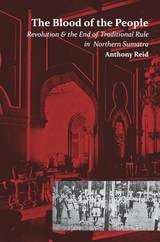
The Blood of the People
Revolution and the End of Traditional Rule in Northern SumatraAnthony Reid
National University of Singapore Press, 2014
The events in northern Sumatra were among the most dramatic episodes of Indonesia’s national revolution, and brought about more profound changes even than in Java, from where the revolution is normally viewed. Some ethnic groups saw the revolution as a popular, peasant-supported movement that liberated them from foreign rule. Others, though, felt victimised by a radical, levelling agenda imposed by outsiders. Java, with a relatively homogeneous population, passed through the revolution without significant social change. The ethnic complexity of Sumatra, in contrast, meant that the revolution demanded an altogether new “Indonesian” identity to override the competing ethnic categories of the past.

The Fevered Novel from Balzac to Bernanos
Frenetic Catholicism in Crisis, Delirium and RevolutionFrancesco Manzini
University of London Press, 2010
The Gods of Revolution
Christopher Dawson
Catholic University of America Press, 2015
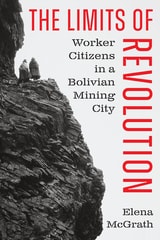
The Limits of Revolution
Worker Citizens in a Bolivian Mining CityElena McGrath
University of Texas Press, 2026
The role of Bolivian mining families in revolution and politics.
In 1952, Bolivia’s Revolutionary Nationalist Movement (MNR) swept into power, promising collective prosperity through class-based nationalism. The heroic symbol of the movement was the worker citizen—the formerly indigenous miner who would fuel economic development in a nationalized mining economy.
The Limits of Revolution explores this history from the worker barrios of the copper mining city of Corocoro. As the state walked back its promises of worker political power at the national level, mining men and women in Corocoro struggled—through protests, court battles, and barfights—to maintain the benefits of worker citizenship locally. After the MNR fell to a military dictatorship in 1964, however, families retreated to defending the nationalized mining company against an increasingly hostile state. In this battle to keep the revolution alive, the expansive potential of worker citizenship disappeared and old racial exclusions resurfaced. Largely forgotten today, Bolivia’s experience of revolution exposes the contradictions of postcolonial nationalism and sheds light on Latin America’s transition from Cold War–era class politics to twenty-first-century Pink Tide politics.
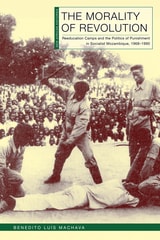
The Morality of Revolution
Reeducation Camps and the Politics of Punishment in Socialist Mozambique, 1968–1990Benedito Luís Machava
Ohio University Press, 2024
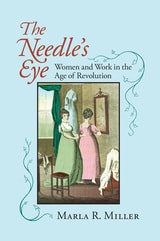
The Needle's Eye
Women and Work in the Age of RevolutionMarla R. Miller
University of Massachusetts Press, 2006
In this book, Marla R. Miller illuminates the significance of women's work in the clothing trades of the early Republic. Drawing on diaries, letters, reminiscences, ledgers, and material culture, she explores the contours of working women's lives in rural New England, offering a nuanced view of their varied ranks and roles—skilled and unskilled, black and white, artisanal and laboring—as producers and consumers, clients and craftswomen, employers and employees. By plumbing hierarchies of power and skill, Miller explains how needlework shaped and reflected the circumstances of real women's lives, at once drawing them together and setting them apart.
The heart of the book brings into focus the entwined experiences of six women who lived in and around Hadley, Massachusetts, a thriving agricultural village nestled in a bend in the Connecticut River about halfway between the Connecticut and Vermont borders. Miller's examination of their distinct yet overlapping worlds reveals the myriad ways that the circumstances of everyday lives positioned women in relationship to one another, enlarging and limiting opportunities and shaping the trajectories of days, years, and lifetimes in ways both large and small. The Needle's Eye reveals not only how these women thought about their work, but how they thought about their world.
The Old Regime and the Revolution, Volume I
The Complete TextAlexis de Tocqueville
University of Chicago Press, 1998
The Old Regime and the Revolution, Volume II
Notes on the French Revolution and NapoleonAlexis de Tocqueville
University of Chicago Press, 2001
With his monumental work The Old Regime and the Revolution, Alexis de Tocqueville (1805–59)—best known for his classic Democracy in America—envisioned a multivolume philosophical study of the origins of modern France that would examine the implications of French history on the nature and development of democratic society. Volume I, which covered the eighteenth-century background to the Revolution, was published to great acclaim in 1856. On the continuation of this project, he wrote: "When this Revolution has finished its work, [this volume] will show what that work really was, and what the new society which has come from that violent labor is, what the Revolution has taken away and what it has preserved from that old regime against which it was directed."
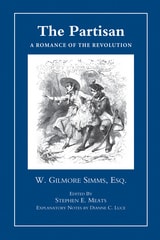
The Partisan
A Romance of RevolutionWilliam Gilmore Simms
University of Arkansas Press, 2011

The Philosophy of Antonio Negri, Volume Two
Revolution in TheoryEdited by Timothy S. Murphy and Abdul-Karim Mustapha
Pluto Press, 2007
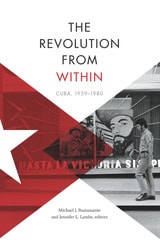
The Revolution from Within
Cuba, 1959–1980Michael J. Bustamante and Jennifer L. Lambe, editors
Duke University Press, 2019
Contributors. Michael J. Bustamante, María A. Cabrera Arús, María del Pilar Díaz Castañón, Ada Ferrer, Alejandro de la Fuente, Reinaldo Funes Monzote, Lillian Guerra, Jennifer L. Lambe, Jorge Macle Cruz, Christabelle Peters, Rafael Rojas, Elizabeth Schwall, Abel Sierra Madero

The Rise of Cable Programming in the United States
Revolution or Evolution?By Megan Mullen
University of Texas Press, 2003
Winner, McGannon Communications Research Award, 2004
In 1971, the Sloan Commission on Cable Communications likened the ongoing developments in cable television to the first uses of movable type and the invention of the telephone. Cable's proponents in the late 1960s and early 1970s hoped it would eventually remedy all the perceived ills of broadcast television, including lowest-common-denominator programming, inability to serve the needs of local audiences, and failure to recognize the needs of cultural minorities. Yet a quarter century after the "blue sky" era, cable television programming closely resembled, and indeed depended upon, broadcast television programming. Whatever happened to the Sloan Commission's "revolution now in sight"?
In this book, Megan Mullen examines the first half-century of cable television to understand why cable never achieved its promise as a radically different means of communication. Using textual analysis and oral, archival, and regulatory history, she chronicles and analyzes cable programming developments in the United States during three critical stages of the medium's history: the early community antenna (CATV) years (1948-1967), the optimistic "blue sky" years (1968-1975), and the early satellite years (1976-1995). This history clearly reveals how cable's roots as a retransmitter of broadcast signals, the regulatory constraints that stymied innovation, and the economic success of cable as an outlet for broadcast or broadcast-type programs all combined to defeat most utopian visions for cable programming.
The Second City Unscripted
Revolution and Revelation at the World-Famous Comedy TheaterMike Thomas
Northwestern University Press, 2012
Since its modest beginning in 1959, The Second City in Chicago has become a world-renowned bastion of hilarity. A training ground for many of today’s top comedic talents—including Alan Arkin, Dan Aykroyd, Stephen Colbert, Tina Fey, Bill Murray, and Amy Sedaris— it was an early blueprint for improv-based sketch revues in North America and abroad. Its immeasurable influence also extends to television, film, and the Broadway stage. Mike Thomas interviewed scores of key figures who have contributed to Second City’s vast legacy —its stars as well as those who worked and continue to work behind the scenes—to create this entertaining and informative oral history. The story is equal parts legendary highlights, gossip, and insight into how the theater’s brand of comedy was and is created. Unprecedented in scope and rife with colorful tales well told, The Second City Unscripted is an essential account of this iconic show business institution.
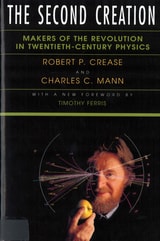
The Second Creation
Makers of the Revolution in Twentieth-Century PhysicsCrease, Robert P
Rutgers University Press, 1996
The Second Creation tells the story of some of the most talented and idiosyncratic people in the world--many times in their own words. Crease and Mann conducted hundreds of interviews to capture the thinking and the personalities as well as the science. The authors make this complex subject matter clear and absorbing.
The Threat of Liberation
Imperialism and Revolution in ZanzibarAmrit Wilson
Pluto Press, 2013
The Threat of Liberation returns to the tumultuous years of the Cold War, when, in a striking parallel with today, imperialist powers were seeking to institute ‘regime change’ and install pliant governments.
Using iconic photographs, declassified US and British documents, and in-depth interviews, Amrit Wilson examines the role of the Umma Party of Zanzibar and its leader, the visionary Marxist revolutionary, Abdulrahman Mohamed Babu. Drawing parallels between US paranoia about Chinese Communist influence in the 1960s with contemporary fears about Chinese influence, it looks at the new race for Africa’s resources, the creation of AFRICOM and how East African politicians have bolstered US control. The book also draws on US cables released by Wikileaks showing Zanzibar's role in the ‘War on Terror’ in Eastern Africa today.
The Threat of Liberation reflects on the history of a party which confronted imperialism and built unity across ethnic divisions, and considers the contemporary relevance of such strategies.
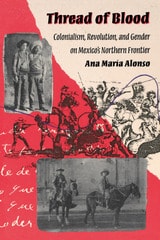
Thread of Blood
Colonialism, Revolution, and Gender on Mexico's Northern FrontierAna María Alonso
University of Arizona Press, 1995
The author demonstrates that a distinct kind of frontier serrano society was generated in Namiquipa between the mid-18th and mid-19th centuries. In exchange for keeping the Apaches at bay, colonists were provided with arms and land grants. At the same time, they developed a gendered sense of ethnic identity that equated honor with land, autonomy, and a kind of masculinity that distinguished the "civilized" colonist from the "barbarous" Indian. While this identity was itself ordered hierarchically between men and women, and between "Hispanic" and "Indian," it also provided serranos with a sense of pride and dignity that was not directly associated with wealth.
After the defeat of the Apaches, and with increased state control during the last decades of the Porfiriato, the serranos on the frontier were transformed from bulwarks of order to victims of progress. The expansion of capitalism and the manipulation of local political office by men no longer accountable to communal norms eroded the legitimacy of both powerholders and the central state. In response, serranos constructed an ideology of history based on past notions of masculine honor and autonomy. This ideology motivated their confrontations with the Mexican state during the 1890s and also served as the force behind their mobilization in the 1910 revolution.
To Rise in Darkness
Revolution, Repression, and Memory in El Salvador, 1920–1932Jeffrey L. Gould, Aldo A. Lauria-Santiago
Duke University Press, 2008
Gould conducted more than two hundred interviews with survivors of la Matanza and their descendants. He and Lauria-Santiago combine individual accounts with documentary sources from archives in El Salvador, Guatemala, Washington, London, and Moscow. They describe the political, economic, and cultural landscape of El Salvador during the 1920s and early 1930s, and offer a detailed narrative of the uprising and massacre. The authors challenge the prevailing idea that the Communist organizers of the uprising and the rural Indians who participated in it were two distinct groups. Gould and Lauria-Santiago demonstrate that many Communist militants were themselves rural Indians, some of whom had been union activists on the coffee plantations for several years prior to the rebellion. Moreover, by meticulously documenting local variations in class relations, ethnic identity, and political commitment, the authors show that those groups considered “Indian” in western El Salvador were far from homogeneous. The united revolutionary movement of January 1932 emerged out of significant cultural difference and conflict.
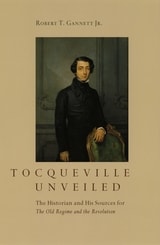
Tocqueville Unveiled
The Historian and His Sources for The Old Regime and the RevolutionRobert T. Gannett Jr.
University of Chicago Press, 2003
Drawing on his unprecedented access to Tocqueville's papers—access made possible by the late French historian Francois Furet—Robert T. Gannett Jr. reveals the ingenuity of Tocqueville's analyses of issues such as landownership, administrative centralization, and public opinion in prerevolutionary France. He also sheds light on the benefits Tocqueville reaped from unexpected intellectual encounters with such authors as Burke, Constant, and Dareste de la Chavanne. A literary detective at work, Gannett tracks Tocqueville as the author himself tracked the French Revolution—and brings him to life as a meticulous historian and an ardent defender of liberty.
An ideal companion to The Old Regime and the Revolution, Volumes 1 and 2, both published by the University of Chicago Press, Tocqueville Unveiled will be a valuable resource for revolutionary historians and Tocqueville enthusiasts alike.