Results by title
53 books match the query 'Revolutionaries' and 11 start with t
Terror And Its Discontents
Suspect Words In Revolutionary FranceCaroline Weber
University of Minnesota Press, 2003
A timely exploration of the political uses of language and rhetoric
Camille Desmoulins, a journalist writing under the Montagnard regime of 1793-94, remarked that France’s government had replaced “the language of democracy” with “the cold poison of fear, which paralyzed thought in the bottom of people’s souls, and prevented it from pouring forth at the tribunal, or in writing.” How this happened, how the Reign of Terror reached even into the realms of thought and language, is the subject of Caroline Weber’s book, a revealing look into the paradoxical embargo on free expression that underpinned the Robespierrists’s self-proclaimed “despotism of liberty” during the French Revolution.
Weber examines Jean-Jacques Rousseau’s and the Robespierrists’s articulation of a series of initiatives designed to curtail and control the dissemination of alternative political and philosophical messages in the republic. Here Weber underscores the internal contradictions and limitations of an enterprise that promised universal freedom while oppressing particularism, and that railed against the very language that it was compelled to adopt as a principal political tool. The book then focuses on two eloquent contemporary critics of this phenomenon, Desmoulins and the Marquis de Sade, the infamous libertine author. Weber demonstrates how Desmoulins reconfigured the Montagnard regime’s rhetoric to conjure up a political system based on tolerance, not terror, and how Sade deftly parodied the Robespierrists’s brutality and hypocrisy, proposing a republic based on the ruthless elimination of dissident voices and on the unabashed celebration of despotism and bloodshed.A balanced account of how the “discourse of totality” actually restricted particular freedoms in the wake of the French Revolution, this book provides a highly original—and timely—exposition of the political uses of rhetoric and of the links between language and power.
The Education of a Radical
An American Revolutionary in Sandinista NicaraguaBy Michael Johns
University of Texas Press, 2012
“I went to Nicaragua with nothing but a tourist visa, $1,500 in cash, the name of someone at the Agrarian Reform Ministry, and the idea of being a revolutionary intellectual. . . . The idea took hold in a simple character flaw: wanting to believe that I knew better than everyone else.” —From the preface
When Michael Johns joined a Sandinista militia in 1983, a fellow revolutionary dubbed him a rábano, a radish: red on the outside but white on the inside. Now, more than twenty-five years later, Johns appreciates the wisdom of that label as he revisits the questions of identity he tried to resolve by working with the Sandinistas at that point in his life. In The Education of a Radical, Johns recounts his immersion in Marxism and the Nicaraguan sojourn it led to, with a painful maturation process along the way.
His conversion began in college, where he joined a student group called the Latin American Solidarity Association and traveled to Chiapas, Mexico, for research on his senior thesis. Overwhelmed by the poverty he witnessed (and fascinated by a new friend named Maricela who was trying to turn peasants into revolutionaries and who carried a heavily highlighted copy of Late Capitalism), he experienced an ideological transformation. When a Marxist professor later encouraged him to travel to Nicaragua, the real internal battle began for him, a battle that was intensified by the U.S. invasion of Grenada and its effect on the Sandinistas, who believed they were the next target for an imminent American invasion. Before he knew it, Johns was digging trenches and learning how to use an AK-47. His intellectual ideals came face-to-face with revolutionary facts, and the results would perplex him for years to come.
Bringing to life a vivid portrait of the sometimes painful process of reconciling reality with romanticized principles, The Education of a Radical encapsulates a trove of truths about humanity, economics, and politics in one man’s memorable journey.

The Fires of New England
A Story of Protest and Rebellion in Antebellum AmericaEric J. Morser
University of Massachusetts Press, 2017
Few people embraced the manifesto and its radical message. Nonetheless, as Eric J. Morser illustrates in this eloquently written and deeply researched book, the address matters because it reveals how commercial, cultural, political, and social changes were remaking the lives of the men who drafted and shared it in the 1830s. Using an imaginative range of sources, Morser artfully reconstructs their moving personal tales and locates them in a grander historical context. By doing so, he demonstrates that even seemingly small stories from antebellum America can help us understand the rich complexities of the era.

The Great Prince Died
A Novel about the Assassination of TrotskyBernard Wolfe
University of Chicago Press, 2015
In The Great Prince Died, Bernard Wolfe offers his lyrical, fictionalized account of Trotsky’s assassination as witnessed through the eyes of an array of characters: the young American student helping to translate the exiled Trotsky’s work (and to guard him), the Mexican police chief, a Rumanian revolutionary, the assassin and his handlers, a poor Mexican “peón,” and Trotsky himself. Drawing on his own experiences working as the exiled Trotsky’s secretary and bodyguard and mixing in digressions on Mexican culture, Stalinist tactics, and Bolshevik history, Wolfe interweaves fantasy and fact, delusion and journalistic reporting to create one of the great political novels of the past century.
The Paris Commune
A Brief HistoryCarolyn J. Eichner
Rutgers University Press, 2022
At dawn on March 18, 1871, Parisian women stepped between cannons and French soldiers, using their bodies to block the army from taking the artillery from their working-class neighborhood. When ordered to fire, the troops refused and instead turned and arrested their leaders. Thus began the Paris Commune, France’s revolutionary civil war that rocked the nineteenth century and shaped the twentieth.
Considered a golden moment of hope and potential by the left, and a black hour of terrifying power inversions by the right, the Commune occupies a critical position in understanding modern history and politics. A 72-day conflict that ended with the ferocious slaughter of Parisians, the Commune represents for some the final insurgent burst of the French Revolution’s long wake, for others the first “successful” socialist uprising, and for yet others an archetype for egalitarian socio-economic, feminist, and political change. Militants have referenced and incorporated its ideas into insurrections across the globe, throughout the twentieth and into the twenty-first centuries, keeping alive the revolution’s now-iconic goals and images. Innumerable scholars in countless languages have examined aspects of the 1871 uprising, taking perspectives ranging from glorifying to damning this world-shaking event.
The Commune stands as a critical and pivotal moment in nineteenth-century history, as the linchpin between revolutionary pasts and futures, and as the crucible allowing glimpses of alternate possibilities. Upending hierarchies of class, religion, and gender, the Commune emerged as a touchstone for the subsequent century-and-a-half of revolutionary and radical social movements.
The Red Earth
A Vietnamese Memoir of Life on a Colonial Rubber PlantationBinh Tu Tran
Ohio University Press, 1985
Phu Rieng was one of many French rubber plantations in colonial Vietnam; Tran Tu Binh was one of 17,606 laborers brought to work there in 1927, and his memoir is a straightforward, emotionally searing account of how one Vietnamese youth became involved in revolutionary politics. The connection between this early experience and later activities of the author becomes clear as we learn that Tran Tu Binh survived imprisonment on Con Son island to help engineer the general uprising in Hanoi in 1945.
The Red Earth is the first of dozens of such works by veterans of the 1924–45 struggle in Vietnam to be published in English translation. It is important reading for all those interested in the many-faceted history of modern Vietnam and of communism in the non-Western world.
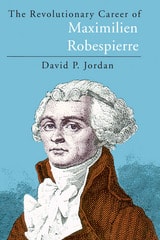
The Revolutionary Career of Maximilien Robespierre
David P. Jordan
University of Chicago Press, 1989
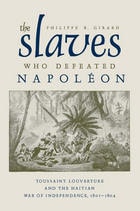
The Slaves Who Defeated Napoléon
Toussaint Louverture and the Haitian War of Independence, 1801–1804Philippe R. Girard
University of Alabama Press, 2011
A deeply researched and definitive account of the climactic battle at the end of the Haitian Revolution
Among the many rebellions against European colonial empires, the Haitian Revolution against France is among the most dramatic and complex. Having begun in 1791 as France was in the throes of its own young revolution, the conflict reached its dramatic climax when Napoleon dispatched a heavily armed expeditionary force led by his brother-in-law Charles Leclerc to re-establish slavery and the sugar economy that had so enriched France. Philippe Girard’s Slaves Who Defeated Napoleon is a deeply researched and engrossing account of this invasion and its spectacular defeat.
For this ambitious account, Philippe Girard has studied not only primary records in Haiti itself but also rare documents from nineteen public and private archives and research libraries in French, U.S., British, and Spanish collections. His more inclusive approach provides a fuller, more accurate and detailed narrative. He reveals not only key military movements, but also less-known aspects like the activities of U.S. merchants, in-fighting within Napoleon’s government, and communication between both sides and other European powers. Girard fills the work with unforgettable stories of those who led or were caught up in the war, people like poorly armed Black soldiers who ambushed Bonaparte’s columns, French child drummers, Jewish bankers in Kingston, weapon smugglers from Quaker Philadelphia, Polish artillerists, and mixed-raced people struggling to preserve their freedom against both Black and white opponents.
Transcending pat ideological and racial categories, the book brings into focus an Atlantic society at the crossroads of African and European influences, where Haitian rebels fought France while embracing its ideals.
This Flame Within
Iranian Revolutionaries in the United StatesManijeh Moradian
Duke University Press, 2022

Toussaint Louverture
A Black Jacobin in the Age of RevolutionsCharles Forsdick and Christian Høgsbjerg
Pluto Press, 2017
These are Toussaint Louverture’s last words before being taken to prison in France. Heroic leader of the only successful slave revolt in history, Louverture is one of the greatest anti-imperialist fighters who ever lived. Born into slavery on a Caribbean plantation, he was able to break from his bondage to lead an army of freed African slaves to victory against the professional armies of France, Spain, and Britain in the Haitian Revolution of 1791-1804.
In this lively narrative biography, Louverture’s fascinating life is explored through the prism of his radical politics. Charles Forsdick and Christian Høgsbjerg champion the “black Robespierre,” whose revolutionary legacy has inspired people and movements in the two centuries since his death. For anyone interested in the roots of modern resistance movements and black political radicalism, Louverture’s extraordinary life provides the perfect groundwork.
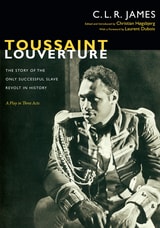
Toussaint Louverture
The Story of the Only Successful Slave Revolt in History; A Play in Three ActsC. L. R. James Edited and Introduced by Christian Høgsbjerg
Duke University Press, 2013