Results by title
150 books match the query 'Rural' and 26 start with t
Teachers on the Waves of Transformation
School Culture Before and After 1989Dana Moree
Karolinum Press, 2020
Teachers on the Waves of Transformation aims to answer this question through the lens of education. With careful exploratory research at two schools in a small town in central Bohemia, anthropologist Dana Moree follows the fates of two generations of teachers at the schools. Through interviews with teachers, school administrators, and the students’ parents, Moree focuses on the relationships, values, shared stories, and symbolic and ritual worlds that create the culture of the schools. Teachers on the Waves of Transformation offers a unique perspective of cultural flux as witnessed in the classroom.

The Alchemy of Meth
A DecompositionJason Pine
University of Minnesota Press, 2019
Meth cooks practice late industrial alchemy—transforming base materials, like lithium batteries and camping fuel, into gold
Meth alchemists all over the United States tap the occulted potencies of industrial chemical and big pharma products to try to cure the ills of precarious living: underemployment, insecurity, and the feeling of idleness. Meth fires up your attention and makes repetitive tasks pleasurable, whether it’s factory work or tinkering at home. Users are awake for days and feel exuberant and invincible. In one person’s words, they “get more life.”
The Alchemy of Meth is a nonfiction storybook about St. Jude County, Missouri, a place in decomposition, where the toxic inheritance of deindustrialization meets the violent hope of this drug-making cottage industry. Jason Pine bases the book on fieldwork among meth cooks, recovery professionals, pastors, public defenders, narcotics agents, and pharmaceutical executives. Here, St. Jude is not reduced to its meth problem but Pine looks at meth through materials, landscapes, and institutions: the sprawling context that makes methlabs possible. The Alchemy of Meth connects DIY methlabs to big pharma’s superlabs, illicit speed to the legalized speed sold as ADHD medication, uniquely implicating the author’s own story in the narrative.
By the end of the book, the backdrop of St. Jude becomes the foreground. It could be a story about life and work anywhere in the United States, where it seems no one is truly clean and all are complicit in the exploitation of their precious resources in exchange for a livable present—or even the hope of a future.

The Bachelors' Ball
The Crisis of Peasant Society in BéarnPierre Bourdieu
University of Chicago Press, 2008

The Broken Hoe
Cultural Reconfiguration in Biase Southeast NigeriaDavid Uru Iyam
University of Chicago Press, 1995
The Biase today face social and economic pressures that seriously strain their ability to cope with the realities of modern Nigeria. Iyam, an anthropologist and a Biase, examines the relationship between culture and development as played out in projects in local communities.
Western technologies and beliefs alone cannot ensure economic growth and modernization, Iyam shows, and should not necessarily be imposed on poor rural groups who may not be prepared to incorporate them; neither, however, is it possible to recover indigenous coping strategies given the complexities of the postcolonial world. A successful development strategy, Iyam argues, needs to strengthen local managerial capacity, and he offers suggestions as to how this can be done in a range of cultural and social settings.
The Community in Rural America
Kenneth P. Wilkinson
University Press of Colorado, 2022

The Concepts, Process and Methods of Social Impact Assessment
Rabel J. Burdge
University Press of Colorado, 2018
The Devil's Fruit
Farmworkers, Health, and Environmental JusticeDvera I. Saxton
Rutgers University Press, 2021
The Human Cost of Food
Farmworkers' Lives, Labor, and AdvocacyEdited by Charles D. Thompson, Jr., and Melinda F. Wiggins
University of Texas Press, 2002
Finding fresh fruits and vegetables is as easy as going to the grocery store for most Americans—which makes it all too easy to forget that our food is cultivated, harvested, and packaged by farmworkers who labor for less pay, fewer benefits, and under more dangerous conditions than workers in almost any other sector of the U.S. economy. Seeking to end the public's ignorance and improve workers' living and working conditions, this book addresses the major factors that affect farmworkers' lives while offering practical strategies for action on farmworker issues.
The contributors to this book are all farmworker advocates—student and community activists and farmworkers themselves. Focusing on workers in the Southeast United States, a previously understudied region, they cover a range of issues, from labor organizing, to the rise of agribusiness, to current health, educational, and legal challenges faced by farmworkers. The authors blend coverage of each issue with practical suggestions for working with farmworkers and other advocates to achieve justice in our food system both regionally and nationally.
The Laissez-Faire Peasant
Post-Socialist Rural Development in SerbiaJovana Dikovic
University College London, 2025
The Laissez-Faire Peasant: Post-Socialist Rural Development in Serbia subverts conventional wisdom on rural development by shifting the focus from state-led planning to the agency of peasants themselves. Rejecting the notion that rural populations are passive victims of top-down policies, Jovana Dikovic presents a compelling ethnographic study of three Serbian villages, where autonomy and local cooperation drive economic and social resilience. She introduces the concept of the “laissez-faire peasant”—a figure who thrives outside rigid government schemes, shaping rural development on their own terms. By examining the friction between state policies and the everyday strategies of rural communities, Dikovic uncovers how peasant autonomy not only resists external intervention but fosters sustainable and self-sufficient growth.
The first in-depth study of contemporary Serbian peasantry, this book reframes rural life as a site of innovation rather than stagnation. An area of interest for scholars of post-socialist transitions, rural development, and economic anthropology, The Laissez-Faire Peasant provides a new lens on how rural communities survive and adapt in a rapidly changing world.
The Landscape of Rural Service Learning, and What It Teaches Us All
Randy Stoecker
Michigan State University Press, 2016
The Lies of the Land
Seeing Rural America for What It Is—and Isn’tSteven Conn
University of Chicago Press, 2023
It seems everyone has an opinion about rural America. Is it gripped in a tragic decline? Or is it on the cusp of a glorious revival? Is it the key to understanding America today? Steven Conn argues that we’re missing the real question: Is rural America even a thing? No, says Conn, who believes we see only what we want to see in the lands beyond the suburbs—fantasies about moral (or backward) communities, simpler (or repressive) living, and what it means to be authentically (or wrongheadedly) American. If we want to build a better future, Conn argues, we must accept that these visions don’t exist and never did.
In The Lies of the Land, Conn shows that rural America—so often characterized as in crisis or in danger of being left behind—has actually been at the center of modern American history, shaped by the same forces as everywhere else in the country: militarization, industrialization, corporatization, and suburbanization. Examining each of these forces in turn, Conn invites us to dispense with the lies and half-truths we’ve believed about rural America and to pursue better solutions to the very real challenges shared all across our nation.
The New Decentralists
The Back-to-the-Land Movement and the Politics of Localism in Appalachia, 1968-2000Jinny A Turman
West Virginia University Press, 2026
How some “back-to-the-landers” fled alienating urban, bureaucratic places for rural Appalachia in pursuit of self-reliance, liberation, and community, only to later find themselves vulnerable to a rising tide of national conservatism that minted new political elites on the state and local level at odds with their progressive social ideas and environmental values.

The Ozarks
An American Survival of Primitive SocietyVance Randolph
University of Arkansas Press, 2017
The Ozarks
Land and LifeMilton D. Rafferty
University of Arkansas Press, 2001
The Politics of Resentment
Rural Consciousness in Wisconsin and the Rise of Scott WalkerKatherine J. Cramer
University of Chicago Press, 2016
With The Politics of Resentment, Katherine J. Cramer uncovers an oft-overlooked piece of the puzzle: rural political consciousness and the resentment of the “liberal elite.” Rural voters are distrustful that politicians will respect the distinct values of their communities and allocate a fair share of resources. What can look like disagreements about basic political principles are therefore actually rooted in something even more fundamental: who we are as people and how closely a candidate’s social identity matches our own. Using Scott Walker and Wisconsin’s prominent and protracted debate about the appropriate role of government, Cramer illuminates the contours of rural consciousness, showing how place-based identities profoundly influence how people understand politics, regardless of whether urban politicians and their supporters really do shortchange or look down on those living in the country.
The Politics of Resentment shows that rural resentment—no less than partisanship, race, or class—plays a major role in dividing America against itself.
The Prairie Winnows Out Its Own
The West River Country of South Dakota in the Years of Depression and DustNelson, Paula M.
University of Iowa Press, 1996
Between 1900 and 1915, in the last great land rush, over one hundred thousand homesteaders flooded into the west river country of South Dakota, a land noted for its aridity and unpredictable weather, its treelessness, and its endless sky. The settlers of “the last, best west” weathered their first crisis in the severe drought of 1910-1911, which winnowed out many of the speculators and faint of heart; they abandoned their founding hopes of quick success and substituted a new ethos of “next year country”—while this year was hard, next year would be better, an ironic phrase at once optimistic and fatalistic.
“Next year,” however, was in many of those years not better. The collapse of the agricultural economy in the immediate aftermath of the boom years of World War I set in motion a pattern of regional decline amid national prosperity and cultural change: the rise of radio and mass culture increased rural folks' awareness of national trends and tastes, a development which paradoxically increased their own sense of remoteness and isolation. The failure of the farm economy to recover to any substantial degree in the twenties caused a less dramatic but cumulatively greater impact on the west river country's population and prospects—a second great crisis.
The Great Depression and the dustbowl years of the thirties were the greatest test of the west river people. The drought of 1910-1911, heretofore seen as the benchmark of bad times, faded even in the remembrances of the original pioneers in the face of the thirties' relentless drought, grasshoppers, blowing dust, and the accompanying starvation, struggle, and despair. The Depression in the west river country was a blast furnace from which a hardened yet still hopeful people emerged, scathed but undefeated. The Prairie Winnows Out Its Own is the voice of this experience.
The Remittance Landscape
Spaces of Migration in Rural Mexico and Urban USASarah Lynn Lopez
University of Chicago Press, 2014
Lopez not only identifies a clear correspondence between the flow of remittances and the recent building boom in rural Mexico but also proposes that this construction boom itself motivates migration and changes social and cultural life for migrants and their families. At the same time, migrants are changing the landscapes of cities in the United States: for example, Chicago and Los Angeles are home to buildings explicitly created as headquarters for Mexican workers from several Mexican states such as Jalisco, Michoacán, and Zacatecas. Through careful ethnographic and architectural analysis, and fieldwork on both sides of the border, Lopez brings migrant hometowns to life and positions them within the larger debates about immigration.

The Road to Rebellion
Class Formation and Kansas Populism, 1865-1900Scott G. McNall
University of Chicago Press, 1988
McNall rejects the traditional view that blames the failure of the Alliance on a turn to mass-based electoral politics, but rather sees the move into national politics by the Farmer's Alliance as part of a rational strategy to better wage their fight for economic justice. The Kansas populists failed, he argues, because of their inability to embrace a broad, working-class base, to provide an effective alternative vision, and ultimately to create a distinct class organization. Debates about how classes come into being, or how democracy is to be realized, cannot be settled in the abstract. McNall's recreation of this heroic struggle is a model in the analysis of class formation. At the same time, The Road to Rebellion is dynamic social history, which holds vital lessons for structuring and realizing alternative political agendas today.
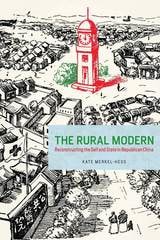
The Rural Modern
Reconstructing the Self and State in Republican ChinaKate Merkel-Hess
University of Chicago Press, 2016
In The Rural Modern, Merkel-Hess shows that Chinese reformers and intellectuals created an idea of modernity that was not simply about what was foreign and new, as in Shanghai and other cities, but instead captured the Chinese people’s desire for social and political change rooted in rural traditions and institutions. She traces efforts to remake village education, economics, and politics, analyzing how these efforts contributed to a new, inclusive vision of rural Chinese life. Merkel-Hess argues that as China sought to redefine itself, such rural reform efforts played a major role, and tensions that emerged between rural and urban ways deeply informed social relations, government policies, and subsequent efforts to create a modern nation during the communist period.

The Village Project
Rural Revitalization in Contemporary BulgariaSarah Craycraft
University of Wisconsin Press, 2026
Since the collapse of socialism, Bulgaria’s population has been on the move—out of rural regions and into cities, or out of the country altogether. Yet today there is a countermovement of young, urban Bulgarians, born around 1989, seeking to repopulate rural villages and reclaim traditional Bulgarian folklife. Though many of these young Bulgarians have no direct experience with a rural lifestyle nor memories of thriving village life, their actions and movements are inspired by a nostalgic vision of the past. And so, beyond a spatial return, this rural revitalization movement speaks to visions of an alternate future, one sparked by dismay with the conditions of contemporary life.
Using ethnographic and folkloristic methods, Sarah Craycraft paints a complex, detailed picture of responses to Europeanization, carried out through neoliberal folklife projects as they collide with ongoing efforts to build a revitalized rural Bulgaria in the ruins of the past. Contextualized within a particular Southeast European nation, the study speaks to broader questions of rural revival, public-facing culture work, intergenerational folklore, and the imbrication of folklore with politics and culture.
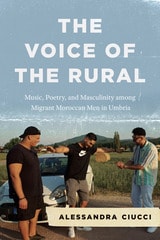
The Voice of the Rural
Music, Poetry, and Masculinity among Migrant Moroccan Men in UmbriaAlessandra Ciucci
University of Chicago Press, 2022
Umbria is known to most Americans for its picturesque rolling hills and medieval villages, but to the many migrant Moroccan men who travel there, Umbria is better known for the tobacco fields, construction sites, small industries, and the outdoor weekly markets where they work. Marginalized and far from their homes, these men turn to Moroccan traditions of music and poetry that evoke the countryside they have left— l-‘arubiya, or the rural. In this book, Alessandra Ciucci takes us inside the lives of Moroccan workers, unpacking the way they share a particular musical style of the rural to create a sense of home and belonging in a foreign and inhospitable nation. Along the way, she uncovers how this culture of belonging is not just the product of the struggles of migration, but also tied to the reclamation of a noble and virtuous masculine identity that is inaccessible to Moroccan migrants in Italy.
The Voice of the Rural allows us to understand the contemporary experiences of migrant Moroccan men by examining their imagined relationship to the rural through sound, shedding new light on the urgent issues of migration and belonging.
There Goes the Neighborhood
Rural School Consolidation at the Grass Roots in Early Twentieth-Century IowaDavid R. Reynolds
University of Iowa Press, 2002
They Live on The Land
Life in an Open Country Southern CommunityPaul W. Terry
University of Alabama Press, 1993
—Florida Historical Quarterly
"One of the finest examples of the genre of the community survey. . . The book is remarkably free of special pleading. And every chapter is paced with fascinating data and insights. The University of Alabama Prss is to be congratulated for reissuing this splendid community study; the volume fits the description of a classic. And Clarence L. Mohr's introduction alone is worth the price of the volume."
—Journal of Southwest Georgia History

Things You Need to Hear
Collected Memories of Growing Up in Arkansas, 1890–1980Margaret Jones Bolsterli
University of Arkansas Press, 2016
Those Who Work, Those Who Don't
Poverty, Morality, and Family in Rural AmericaJennifer Sherman
University of Minnesota Press, 2009
When the rural poor prioritize issues such as the right to bear arms, and disapprove of welfare despite their economic concerns, they are often dismissed as uneducated and backward by academics and political analysts. In Those Who Work, Those Who Don't, Jennifer Sherman offers a much-needed sympathetic understanding of poor rural Americans, persuasively arguing that the growing cultural significance of moral values is a reasonable and inevitable response to economic collapse and political powerlessness.
Those Who Work, Those Who Don't is based on the intimate interviews and in-depth research Sherman conducted while spending a year living in "Golden Valley," a remote logging town in Northern California. Economically devastated by the 1990 ruling that listed the northern spotted owl as a threatened species, Golden Valley proved to be a rich case study for Sherman. She looks at how the members of the community coped with downward mobility caused by the loss of timber industry jobs and examines a wide range of reactions. She shows how substance abuse, domestic violence, and gender roles fluctuated under the town's economic strain.
Compellingly written, shot through with honesty and empathy, Those Who Work, Those Who Don't is a rare firsthand account that studies the rural poor. As incomes erode and the American dream becomes more and more inaccessible, Sherman reveals that moral values and practices become a way for the poor to gain status and maintain a sense of dignity in the face of economic ruin.
Trailer Park America
Reimagining Working-Class CommunitiesLeontina Hormel
Rutgers University Press, 2023