Results by title
137 books match the query 'Science & Technology' and 29 start with t
Teaching Academic Writing in the Health Sciences
A Guide for Instructors, Mentors, and TrainersElla August
University of Michigan Press, 2026
Part 1 offers the pedagogical basis teachers need to apply best practices, as well as:
- Tips for collaborative writing and writing productivity
- Strategies for using generative artificial intelligence (AI) technology in teaching and writing
- Open-access resources and instruction planning activities
Part 2 focuses on the steps of writing a scientific paper, offering:
- A strong foundation in the structure of and strategies for successful writing
- Customizable teaching materials on how to write a scientific paper
- Strategies for planning a paper, crafting writing to reach readers, developing persuasive arguments, and building a successful author team
- How-to write each section of a paper, from the title to the conclusion
- Guidance on navigating the publishing process, including selecting the appropriate journal and effectively responding to peer-reviewer comments
Teaching History in the Digital Age
T. Mills Kelly
University of Michigan Press, 2013
Teaching History in the Digital Age serves as a guide for practitioners on how to fruitfully employ the transformative changes of digital media in the research, writing, and teaching of history. T. Mills Kelly synthesizes more than two decades of research in digital history, offering practical advice on how to make best use of the results of this synthesis in the classroom and new ways of thinking about pedagogy in the digital humanities.
Technological Shortcuts to Social Change
Amitai Etzioni
Russell Sage Foundation, 1973
The Accidental Network
How a Small Company Sparked a Global Broadband TransformationRouzbeh Yassini-Fard
West Virginia University Press, 2025
The Accidental Network shares the untold story of the invention of the cable modem by the small, struggling tech company LANcity in the early 1990s, illustrating how Yassini-Fard overcame a cascade of technical challenges, investment community naysayers, and unnerving business obstacles to create the cable modem technology that has changed the way billions of individuals across the globe now manage their daily lives and commerce. The cable modem delivered broadband, with speeds ranging from 10 megabits per second (Mbps) to 10 gigabits per second (Gbps)—a big leap from the dial-up speeds of 56 kilobits per second (Kbps). This platform, along with the adoption of the DOCSIS (Data Over Cable Service Interface Specification) standard, engendered the modern revolution in broadband Internet access. Shunned by venture capitalists and surviving on a shoestring budget, Yassini-Fard and his colleagues were willing to bet it all (including the deed for Yassini-Fard’s home) on the creation of the cable modem and the pursuit of global adoption.
The Accidental Network is both a valuable history of technology innovation and an engrossing account of business conducted at high speed. The book details Yassini-Fard’s journey from electrical engineer to entrepreneur in the race to secure technology partners, create a wholly new marketplace, and convince cable industry executives that a bold business awaited in transmitting data to households at a time when skepticism about the reach of personal computing was the norm.
Written from the lens of a devoted idealist and WVU alum known as “the father of the cable modem,” this book reveals how a perfect storm of forces—the rise of cable television, the onset of the personal computing era, a growing awareness of the Internet for information and commerce, and the development of the cable modem—converged to usher in the age of broadband access.
The Botanical Odyssey of Richard S. Felger
Edited by Benjamin T. Wilder, Bill Broyles, and Thomas Bowen
University of Arizona Press, 2026
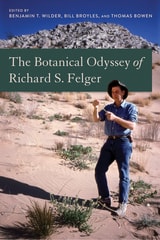
This work is a vibrant tribute to Richard Stephen Felger, who was one of the most influential scientists of the American Southwest and northwestern Mexico. Known as a desert botanist, Felger’s work transcended regional boundaries, blending rigorous fieldwork with global ecological vision. This work offers an intimate and multifaceted portrait of a man whose tireless advocacy for biodiversity and biocultural conservation shaped generations of desert scientists..
Edited by Benjamin T. Wilder, Bill Broyles, and Thomas Bowen, this book is both a celebration and a resource. The work is separated into four parts. With humor, insight, and deep empathy, Felger’s own voice leads the journey in part 1, recounting his most memorable field experiences with masterful prose and sly wit. Part 2 brings together heartfelt reflections from colleagues who worked alongside Felger in the field, revealing the eccentric brilliance and relentless curiosity that defined his career. Part 3 explores his family history and the unconventional path that shaped his life’s work, while part 4 presents a comprehensive bibliography of his most important publications. The book contains four maps that help take you around the world on Felger’s journeys, and fifty images selected from the thousands of slides from his archive that further transport and anchor you in the adventure.
Felger’s own voice, paired with reflections from twenty colleagues, creates a rich, multifaceted narrative, offering readers a rare glimpse into the life of a scientific icon whose legacy continues to inspire desert researchers and conservationists across the globe.
Contributors
James Aronson
Thomas Bowen
Bill Broyles
Alberto Búrquez
Susan Davis Carnahan
Mark Alan Dimmitt
Exequiel Ezcurra
Gil Gillenwater
Russ Kleinman
Angelina Martínez-Yrízar
Gregory McNamee
Cathy Moser Marlett
Gary Paul Nabhan
Wallace J. Nichols
William R. Norris
Humberto Romero Morales
Sue Rutman
Silke Schneider
Jeffrey Seminoff
Jane Spinti
Benjamin T. Wilder
The Composer Embalmed
Relic Culture from Piety to KitschAbigail Fine
University of Chicago Press, 2025
During the nineteenth century, music institutions promoted artworks they deemed timeless and made composers into figureheads of a lasting Western canon. Alongside this institutional face of the canon was a more intimate impulse to preserve, touch, and embrace the residues of the dead. In Germany and Austria between 1870 and 1930, music lovers venerated the bodies, houses, and belongings of composers as relics, shrines, and talismans. In The Composer Embalmed, Abigail Fine documents the vernacular and eccentric ways that composers have been remembered.
Fine navigates a wealth of unknown archival material to recover the stories of devotees: from pilgrims who felt time stop in historic houses to music-loving doctors who made skulls into sacred specimens, dilettantes who displayed Beethoven’s mask as a relic of the “beautiful death,” and interwar critics of those dilettantes who disparaged piety as a false religion, a kitsch replica. In isolation, these practices may look like simple acts of affection. But in the aggregate, Fine asserts, acts of devotion constituted what we might broadly understand as relic culture—a culture that sought to possess the body of the departed genius, and that superimposed habits of anthropological collecting onto artifacts of Austro-German heritage. By excavating objects, ephemera, amateur lyric, visitors’ books, letters, and travelogues, The Composer Embalmed reveals the underbelly of the canon, where guilty pleasures blur the boundary between sanctity and desecration.
The Crime of Galileo
Giorgio de Santillana
University of Chicago Press, 1955
The Cybernetic Brain
Sketches of Another FutureAndrew Pickering
University of Chicago Press, 2010
The Cybernetic Brain explores a largely forgotten group of British thinkers, including Grey Walter, Ross Ashby, Gregory Bateson, R. D. Laing, Stafford Beer, and Gordon Pask, and their singular work in a dazzling array of fields. Psychiatry, engineering, management, politics, music, architecture, education, tantric yoga, the Beats, and the sixties counterculture all come into play as Pickering follows the history of cybernetics’ impact on the world, from contemporary robotics and complexity theory to the Chilean economy under Salvador Allende. What underpins this fascinating history, Pickering contends, is a shared but unconventional vision of the world as ultimately unknowable, a place where genuine novelty is always emerging. And thus, Pickering avers, the history of cybernetics provides us with an imaginative model of open-ended experimentation in stark opposition to the modern urge to achieve domination over nature and each other.
The Dancing Bees
Karl von Frisch and the Discovery of the Honeybee LanguageTania Munz
University of Chicago Press, 2016
The Dancing Bees draws on previously unexplored archival sources in order to reveal von Frisch’s full story, including how the Nazi government in 1940 determined that he was one-quarter Jewish, revoked his teaching privileges, and sought to prevent him from working altogether until circumstances intervened. In the 1940s, bee populations throughout Europe were facing the devastating effects of a plague (just as they are today), and because the bees were essential to the pollination of crops, von Frisch’s research was deemed critical to maintaining the food supply of a nation at war. The bees, as von Frisch put it years later, saved his life. Munz not only explores von Frisch’s complicated career in the Third Reich, she looks closely at the legacy of his work and the later debates about the significance of the bee language and the science of animal communication.
This first in-depth biography of von Frisch paints a complex and nuanced portrait of a scientist at work under Nazi rule. The Dancing Bees will be welcomed by anyone seeking to better understand not only this chapter of the history of science but also the peculiar waggles of our garden visitors.
The Essential Aldo Leopold
Quotations and CommentariesEdited by Curt D. Meine and Richard L. Knight
University of Wisconsin Press, 1999
For the first time, the most important quotations of the great conservationist Aldo Leopold, author of A Sand County Almanac, are gathered in one volume. From conservation education to wildlife ecology, from wilderness protection to soil and water conservation, the writings of Aldo Leopold continue to have profound influence on those seeking to understand the earth and its care. Leopold biographer Curt Meine and noted conservation biologist Richard Knight have assembled this comprehensive collection of quotations from Leopold’s extensive and diverse writings, selected and organized to capture the richness and depth of the North American conservation movement.
Prominent biologists, conservationists, historians, and philosophers provide introductory commentaries describing Leopold’s contributions in varied fields and reflecting upon the significance of his work today.
Contributors:
J. Baird Callicott
David Ehrenfeld
Susan L. Flader
Eric T. Freyfogle
Wes Jackson
Paul W. Johnson
Joni L. Kinsey
Richard L. Knight
Gary K. Meffe
Curt Meine
Gary Paul Nabhan
Richard Nelson
Bryan G. Norton
David W. Orr
Edwin P. Pister
Donald Snow
Stanley A. Temple
Jack Ward Thomas
Charles Wilkinson
Terry Tempest Williams
Donald Worster
Joy B. Zedler
The Experimental Self
Humphry Davy and the Making of a Man of ScienceJan Golinski
University of Chicago Press, 2016
In The Experimental Self, Golinski argues that Davy’s life is best understood as a prolonged process of self-experimentation. He follows Davy from his youthful enthusiasm for physiological experiment through his self-fashioning as a man of science in a period when the path to a scientific career was not as well-trodden as it is today. What emerges is a portrait of Davy as a creative fashioner of his own identity through a lifelong series of experiments in selfhood.
The Huxleys
An Intimate History of EvolutionAlison Bashford
University of Chicago Press, 2022
Two hundred years of modern science and culture told through one family history.
This momentous biography tells the story of the Huxleys: the Victorian natural historian T. H. Huxley (“Darwin’s Bulldog”) and his grandson, the scientist, conservationist, and zoologist Julian Huxley. Between them, they communicated to the world the great modern story of the theory of evolution by natural selection. In The Huxleys, celebrated historian Alison Bashford writes seamlessly about these omnivorous intellects together, almost as if they were a single man whose long, vital life bookended the colossal shifts in world history from the age of sail to the Space Age, and from colonial wars to world wars to the cold war.
The Huxleys’ specialty was evolution in all its forms—at the grandest level of species, deep time, the Earth, and at the most personal and intimate. They illuminated the problems and wonders of the modern world and they fundamentally shaped how we see ourselves, as individuals and as a species.
But perhaps their greatest subject was themselves. Bashford’s engaging, brilliantly ambitious book interweaves the Huxleys’ momentous public achievements with their private triumphs and tragedies. The result is the history of a family, but also a history of humanity grappling with its place in nature. This book shows how much we owe—for better or worse—to the unceasing curiosity, self-absorption, and enthusiasm of a small, strange group of men and women.
The Incredible Afterlives of Dr. Stevenson
One Scientist's Epic Quest for Evidence of Reincarnation, Apparitions, Poltergeists, and Other Matters of the SoulJesse Bering
University of Chicago Press, 2026
While Ian Stevenson (1918–2007) was an academic psychiatrist with a serious demeanor, right down to his three-piece suits and wingtip shoes, he made his name researching an unusual topic for a behavioral scientist: the afterlife. For over four decades, Stevenson traveled the globe investigating cases of reincarnation, apparitions, possessions, and near-death experiences. At the time of his death, Stevenson was widely regarded as one of the most influential figures in parapsychology, a field devoted to psychic phenomena and paranormal experiences.
Set against the colorful backdrop of parapsychology’s rise and fall, from Victorian séances to modern media spectacles, The Incredible Afterlives of Dr. Stevenson captures Stevenson’s relentless quest for evidence of consciousness beyond the grave. Jesse Bering, himself a psychologist, interweaves Stevenson’s research with vivid stories of the larger-than-life characters who shaped his path—from Eileen Garrett, the fearless medium, to Chester Carlson, the inventor of Xerox photocopying and Stevenson’s unlikely patron. Through never-before-seen letters and candid interviews with Stevenson’s surviving family members, readers glimpse the inner turmoil of a scientist struggling to balance his revolutionary ideas with the skepticism of his academic peers as well as those closest to him. Along the way, Bering, a researcher whose own trailblazing work on the psychology of afterlife beliefs had led him to believe it was all just an illusion, is forced to rethink his own worldview. Are psychic phenomena examples of our living brains giving credence to the absurd? Or tantalizing glimmers of life after death?
Equal parts scientific detective story and intimate biography, The Incredible Afterlives of Dr. Stevenson shines a light on a significant figure whose life and work have not yet been fully explored. Bering boldly confronts readers with the complicated legacy of a man who many see as a Galileo-like rebel with groundbreaking ideas, ones that still have the power to upend everything we know about what it means to be human.
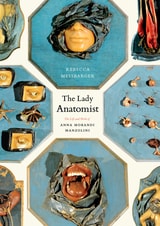
The Lady Anatomist
The Life and Work of Anna Morandi ManzoliniRebecca Messbarger
University of Chicago Press, 2010
Anna Morandi Manzolini (1714-74), a woman artist and scientist, surmounted meager origins and limited formal education to become one of the most acclaimed anatomical sculptors of the Enlightenment. The Lady Anatomist tells the story of her arresting life and times, in light of the intertwined histories of science, gender, and art that complicated her rise to fame in the eighteenth century.
Examining the details of Morandi’s remarkable life, Rebecca Messbarger traces her intellectual trajectory from provincial artist to internationally renowned anatomical wax modeler for the University of Bologna’s famous medical school. Placing Morandi’s work within its cultural and historical context, as well as in line with the Italian tradition of anatomical studies and design, Messbarger uncovers the messages contained within Morandi’s wax inscriptions, part complex theories of the body and part poetry. Widely appealing to those with an interest in the tangled histories of art and the body, and including lavish, full-color reproductions of Morandi’s work, The Lady Anatomist is a sophisticated biography of a true visionary.
The Lizard Man Speaks
By Eric R. Pianka
University of Texas Press, 1994
Alone on the endless red-sand desert in the Australian outback, tracking Varanus giganteus, the perentie lizard that grows to be more than six feet long...for desert rat Eric Pianka, such adventures have led to a satisfying, if unusual, way of life, as well as a distinguished career as a field biologist.
In The Lizard Man Speaks, Pianka recounts more than thirty years of adventures in reptile studies. He tells of "lizarding" in the North American deserts, the Kalahari Desert of southern Africa, and the Great Victoria Desert in Western Australia. His vivid imagery draws the reader into a world where lions lurk in the darkness beyond a gecko hunter's lights, where being stranded by car trouble miles from the last outpost is a constant danger, and where the wilderness still deserves to be called wild.
Along the way, Pianka provides much general information about lizard ecology, the fire succession cycle, and the interaction of humans with the landscape. And he reveals the springs of his own determined spirit and love of solitude, describing a near-fatal boyhood accident and its shaping and character-building effect on the life that followed.
The Man Who Broke Reality
Niels Bohr and the Making of Modern PhysicsPhilip Ball
University of Chicago Press, 2026
From the brilliant Philip Ball, a thrilling biography of Nobel Prize–winning Danish physicist Niels Bohr, the most radical quantum mechanician of all.
In the first half of the twentieth century, the tremendous energy locked up in the nucleus of an atom was discovered and then liberated, bringing both the promise of utopia and the threat of apocalypse. The dawn of the nuclear age is often associated with Albert Einstein, whose iconic equation E = mc2 revealed the staggering energy available from radioactive transformation, or with J. Robert Oppenheimer, who led the project at Los Alamos to build the first nuclear bombs. But the person who arguably did more than any other to shape the Promethean era in which we now live was the Danish physicist Niels Bohr.
In The Man Who Broke Reality, renowned science communicator Philip Ball reveals that it was Bohr who first explained the physics of the nuclear atom, and it was his model of the atom’s dense nucleus that enabled scientists to understand how it could be split apart. Ball also shows how Bohr was the central figure in the development of quantum mechanics, the theory of matter and energy that destabilized centuries of thinking not just about the microscopic nature of the world but about physical reality itself.
Bohr’s story is the story of modern physics and its transformative impact on the world. But The Man Who Broke Reality is not merely an intellectual drama. It chronicles a heroic life lived in turbulent times, across two world wars, the Manhattan Project, and the arms race of the Cold War. And it establishes Bohr as one of the most profound, inventive, and iconoclastic thinkers of the twentieth century.
The Man Who Broke Reality
Niels Bohr and the Making of Modern PhysicsPhilip Ball
University of Chicago Press, 2026
From the brilliant Philip Ball, a thrilling biography of Nobel Prize–winning Danish physicist Niels Bohr, the most radical quantum mechanician of all.
In the first half of the twentieth century, the tremendous energy locked up in the nucleus of an atom was discovered and then liberated, bringing both the promise of utopia and the threat of apocalypse. The dawn of the nuclear age is often associated with Albert Einstein, whose iconic equation E = mc2 revealed the staggering energy available from radioactive transformation, or with J. Robert Oppenheimer, who led the project at Los Alamos to build the first nuclear bombs. But the person who arguably did more than any other to shape the Promethean era in which we now live was the Danish physicist Niels Bohr.
In The Man Who Broke Reality, renowned science communicator Philip Ball reveals that it was Bohr who first explained the physics of the nuclear atom, and it was his model of the atom’s dense nucleus that enabled scientists to understand how it could be split apart. Ball also shows how Bohr was the central figure in the development of quantum mechanics, the theory of matter and energy that destabilized centuries of thinking not just about the microscopic nature of the world but about physical reality itself.
Bohr’s story is the story of modern physics and its transformative impact on the world. But The Man Who Broke Reality is not merely an intellectual drama. It chronicles a heroic life lived in turbulent times, across two world wars, the Manhattan Project, and the arms race of the Cold War. And it establishes Bohr as one of the most profound, inventive, and iconoclastic thinkers of the twentieth century.
The Man Who Flattened the Earth
Maupertuis and the Sciences in the EnlightenmentMary Terrall
University of Chicago Press, 2002
Beginning his scientific career as a mathematician in Paris, Maupertuis entered the public eye with a much-discussed expedition to Lapland, which confirmed Newton's calculation that the earth was flattened at the poles. He also made significant, and often intentionally controversial, contributions to physics, life science, navigation, astronomy, and metaphysics. Called to Berlin by Frederick the Great, Maupertuis moved to Prussia to preside over the Academy of Sciences there. Equally at home in salons, cafés, scientific academies, and royal courts, Maupertuis used his social connections and his printed works to enhance a carefully constructed reputation as both a man of letters and a man of science. His social and institutional affiliations, in turn, affected how Maupertuis formulated his ideas, how he presented them to his contemporaries, and the reactions they provoked.
Terrall not only illuminates the life and work of a colorful and important Enlightenment figure, but also uses his story to delve into many wider issues, including the development of scientific institutions, the impact of print culture on science, and the interactions of science and government. Smart and highly readable, Maupertuis will appeal to anyone interested in eighteenth-century science and culture.
The Meanings of J. Robert Oppenheimer
Lindsey Michael Banco
University of Iowa Press, 2016
The Meanings of J. Robert Oppenheimer examines how he has been represented over the past seven decades in biographies, histories, fiction, comics, photographs, film, television, documentaries, theater, and museums. Lindsey Michael Banco gathers an unprecedented group of cultural texts and seeks to understand the multiple meanings Oppenheimer has held in American popular culture since 1945. He traces the ways these representations of Oppenheimer have influenced public understanding of the atomic bomb, technology, physics, the figure of the scientist, the role of science in war, and even what it means to pursue knowledge of the world around us. Questioning and unpacking both how and why Oppenheimer is depicted as he is across time and genre, this book is broad in scope, profound in detail, and offers unique insights into the rise of nuclear culture and how we think about the relationship between history, imagination, science, and nuclear weapons today.

The Neurotransmitter Revolution
Serotonin, Social Behavior, and the LawRoger D. Masters
Southern Illinois University Press, 1993
Extraordinary advances in neurochemistry are both transforming our understanding of human nature and creating an urgent problem. Much is now known about the ways that neurotransmitters influence normal social behavior, mental illness, and deviance. What are these discoveries about the workings of the human brain? How can they best be integrated into our legal system?
These explosive issues are best understood by focusing on a single neurotransmitter like serotonin, which is associated with such diverse behaviors as dominance and leadership, seasonal depression, suicide, alcoholism, impulsive homicide, and arson. This book brings together revised papers from a conference on this theme organized by the Gruter Institute for Law and Behavioral Research, supplemented with articles by leading scholars who did not attend. Contributors include psychiatrists, neurologists, social scientists, and legal scholars.
The Neurotransmitter Revolution presents a unique survey of the scientific and legal implications of research on the way serotonin combines with other factors to shape human behavior. The findings are quite different from what might have been expected even a decade ago.
The neurochemistry of behavior is not the same thing as genetic determinism. On the contrary, the activity of serotonin varies from one individual to another for many reasons, including the individual’s life experience, social status, personality, and diet. And there are a number of major neurotransmitter systems, each of which interacts with the other. Behavior, culture, and the social environment can influence neurochemistry along with inheritance. Nature and nurture interact—and these interactions can be understood from a vigorously scientific point of view.
The fact that our actions are heavily influenced by neurotransmitters like serotonin is bound to be disquieting. A sophisticated understanding of law and human social behavior will be needed if our society is to respond adequately to these rapid advances in our knowledge. This book is an essential step in that direction, providing the first comprehensive survey of the biochemical, social, and legal considerations arising from research on the behavioral effects of serotonin and related neurotransmitters.
The Pontecorvo Affair
A Cold War Defection and Nuclear PhysicsSimone Turchetti
University of Chicago Press, 2012
The Rule of Law After Artificial Intelligence
Automated NarrativesKatie Szilagyi
University of Chicago Press, 2026
A timely investigation of what is at stake when AI takes legal decision-making out of human hands.
Artificial intelligence is proliferating in many professions, and the legal field is no exception. In The Rule of Law After Artificial Intelligence, Katie Szilagyi investigates the philosophical and practical implications of using AI in legal spaces, beginning with several fundamental questions: What is the law supposed to do, and from where does it derive its authority? Would law still achieve these aims if automated? How might automation affect the rule of law’s integrity and democratic institutions’ operations?
Blending legal philosophy, applied case studies, and insights from both critical legal scholarship and science and technology studies, Szilagyi argues that law and storytelling are deeply connected. Through creating and contesting the law, we make sense of the information around us and generate narratives about our collective world. These narratives are not static: legal precedent evolves, and legal deliberation on hard cases can help to resolve unclear or unprecedented social issues.
Szilagyi demonstrates that technological innovations make the rule of law vulnerable because large language models and machine learning undermine the visioning function of legal narratives, collapsing exercises of legal interpretation into mere administration. Datafication of law—built on the biased data of our cultural past—threatens longstanding legal ideals, lessens the constraints against abuses of power by private actors, and hamstrings society’s ability to reach a more egalitarian future. Szilagyi argues instead for centering narratives within the law and, in turn, rediscovering the tales the law tells us about who we are.
The Space Age Generation
Lives and Lessons from the Golden Age of Solar System ExplorationWilliam Sheehan and Klaus Brasch
University of Arizona Press, 2024
At the heart of this momentous time were the men and women working behind the scenes. Scientists, historians, and astronomers share their memories and contributions from this unparalleled era in essays told in their own words. They are the remarkable generation who witnessed and contributed to some of space science’s most stunning achievements. Here they have recorded their memories—their childhood inspirations, their challenges, failures, and triumphs—for future generations.
A unique and authoritative record of a momentous period in human history, The Space Age Generation highlights the golden age of space exploration and the people who made it happen.
Contributors
Leo Aerts
Alexander Basilevsky
Klaus Brasch
Clark R. Chapman
Dale P. Cruikshank
William K. Hartmann
William Leatherbarrow
Baerbel Koesters Lucchitta
Yvonne Pendleton
Peter H. Schultz
William Sheehan
Paolo Tanga
Charles A. Wood

The Space Station
A Personal JourneyHans Mark
Duke University Press, 1987
In The Space Station the story of this debate is told by Hans mark, who had major roles in the development of the space shuttle from its beginnings in the sixties and who bore a primary responsibility for overseeing the space station project during the decisive years from 1981 to 1984. Mark's appointment to the post of deputy administrator of NASA capped a career devoted to the development and management of space technology—he served as director of NASA's Ames Research Center, then as under secretary and later secretary of the U.S. Air Force. Serving under both President Carter and President Reagan, mark is uniquely able to chronicle the intricate process by which the space shuttle became a reality and the space station an acknowledged goal of the American space effort.
A scientist by training, Mark's account of his career in the space program is the story of a personal dream as well as the story of a vast public enterprise whose human side is only now being fully appreciated.
The Tragic Sense of Life
Ernst Haeckel and the Struggle over Evolutionary ThoughtRobert J. Richards
University of Chicago Press, 2008
Prior to the First World War, more people learned of evolutionary theory from the voluminous writings of Charles Darwin’s foremost champion in Germany, Ernst Haeckel (1834–1919), than from any other source, including the writings of Darwin himself. But, with detractors ranging from paleontologist Stephen Jay Gould to modern-day creationists and advocates of intelligent design, Haeckel is better known as a divisive figure than as a pioneering biologist. Robert J. Richards’s intellectual biography rehabilitates Haeckel, providing the most accurate measure of his science and art yet written, as well as a moving account of Haeckel’s eventful life.
The Traveling Anatomist
Nicolaus Steno and the Intersection of Disciplines in Early Modern ScienceNuno Castel-Branco
University of Chicago Press, 2025
Nicolaus Steno (1638–1686) was a renowned anatomist in his lifetime. He reformed the anatomical understanding of glands, argued that the heart was a muscle, renamed the so-called female testicles as ovaries, and developed a mathematical model for understanding muscle contraction—discoveries that were fundamental to the fields of anatomy and physiology. However, other aspects of Steno’s life have come to define him: his claim that mountains’ strata reveal the history of the Earth and his conversion to Catholicism as a practicing scientist. This excessive attention to his geological discoveries and to asking whether science and religion are compatible, Nuno Castel-Branco argues, has obscured his significant accomplishments as an anatomist. The Traveling Anatomist thus restores Steno to his rightful place as a crucial figure in early modern science.
Using Steno’s extensive travels as a framework, this book depicts him as an active participant in the Republic of Letters. Castel-Branco traverses Leiden, Paris, Copenhagen, Florence, and Rome as he follows Steno in his sojourns through different scientific academies, courts, and artisanal workshops. There he developed new friends, some of whom were women, with whom he researched and exchanged ideas. Drawing on Steno’s books, correspondence, and novel archival material, Castel-Branco invites us to approach Steno and his accomplishments in anatomy, mathematics, and geology through the eyes of his contemporaries. Doing so, Castel-Branco reconstructs the rich and overlapping worlds of scientific disciplines that shaped Steno’s work, revealing the richness of interdisciplinary research in early modern intellectual life. And through Steno, he illustrates larger developments and new networks of significance in mid-seventeenth-century science. By focusing on ideas, scientific genres, institutions, and friendships, Castel-Branco offers a way others might also productively study science from the early modern period until today.
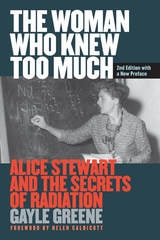
The Woman Who Knew Too Much, Revised Ed.
Alice Stewart and the Secrets of RadiationGayle Greene
University of Michigan Press, 2017
Author Gayle Greene traces Stewart's life and career as she came up against ever more powerful authorities, first the British medical profession, then the U.S. nuclear industry, and finally the regulatory agencies that set radiation safety standards throughout the world. Stewart endured the fate of other women scientists in having her findings dismissed and funding cut, but today is recognized as a pioneering figure in epidemiological research on the dangers of nuclear radiation. In her preface to the second edition, Greene looks at new information that’s come out about the forces and individuals responsible for marginalizing her as a scientist and downplaying the disturbing implications of her research.
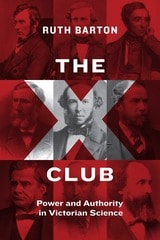
The X Club
Power and Authority in Victorian ScienceRuth Barton
University of Chicago Press, 2018
These six ambitious professionals and three wealthy amateurs—J. D. Hooker, T. H. Huxley, John Tyndall, John Lubbock, William Spottiswoode, Edward Frankland, George Busk, T. A. Hirst, and Herbert Spencer—wanted to guide the development of science and public opinion on issues where science impinged on daily life, religious belief, and politics. They formed a private dining club, which they named the X Club, to discuss and further their plans. As Ruth Barton shows, they had a clear objective: they wanted to promote “scientific habits of mind,” which they sought to do through lectures, journalism, and science education. They devoted enormous effort to the expansion of science education, with real, but mixed, success.
For twenty years, the X Club was the most powerful network in Victorian science—the men succeeded each other in the presidency of the Royal Society for a dozen years. Barton’s group biography traces the roots of their success and the lasting effects of their championing of science against those who attempted to limit or control it, along the way shedding light on the social organization of science, the interactions of science and the state, and the places of science and scientific men in elite culture in the Victorian era.
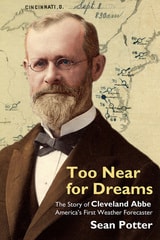
Too Near for Dreams
The Story of Cleveland Abbe, America's First Weather ForecasterSean Potter
American Meteorological Society, 2020
As director of the Cincinnati Observatory and, later, a civilian in the newly established forecast and storm warning division of the U.S. Army Signal Service, Cleveland Abbe was the first person to issue official, regularly scheduled weather forecasts, or “probabilities,” in the United States. Abbe began his work in forecasting in 1869, earning the nickname “Old Probabilities” and gaining recognition for the reliability of his reports. He would go on to become a leader of the US Weather Bureau—which we know today as the National Weather Service. In establishing a system for creating daily weather forecasts and more, this humble pioneer helped lay the foundation for modern meteorology in the United States.
Set against the backdrop of nineteenth and early twentieth-century international events and scientific advancements, this biography of Abbe explores both his personal life and his scientific career. It illuminates his time spent in Russia in the mid-1860s—as the Civil War was waged and a president was assassinated back home—in part through letters with his mother. Decades of diaries and correspondence from the Cleveland Abbe Papers at the Library of Congress, as well as first-person accounts, illuminate this biography of a mild-mannered family man whose thirst for knowledge drove him to become a giant in an emerging scientific field.