Results by title
60 books match the query 'Sculpture & Installation' and 13 start with t
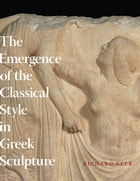
The Emergence of the Classical Style in Greek Sculpture
Richard Neer
University of Chicago Press, 2010
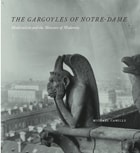
The Gargoyles of Notre-Dame
Medievalism and the Monsters of ModernityMichael Camille
University of Chicago Press, 2009
Michael Camille begins his long-awaited study by recounting architect Eugène Viollet-le-Duc’s ambitious restoration of the structure from 1843 to 1864, when the gargoyles were designed, sculpted by the little-known Victor Pyanet, and installed. These gargoyles, Camille contends, were not mere avatars of the Middle Ages, but rather fresh creations—symbolizing an imagined past—whose modernity lay precisely in their nostalgia. He goes on to map the critical reception and many-layered afterlives of these chimeras, notably in the works of such artists and writers as Charles Méryon, Victor Hugo, and photographer Henri Le Secq. Tracing their eventual evolution into icons of high kitsch, Camille ultimately locates the gargoyles’ place in the twentieth-century imagination, exploring interpretations by everyone from Winslow Homer to the Walt Disney Company.
Lavishly illustrated with more than three hundred images of its monumental yet whimsical subjects, The Gargoyles of Notre-Dame is a must-read for historians of art and architecture and anyone whose imagination has been sparked by the lovable monsters gazing out over Paris from one of the world’s most renowned vantage points.
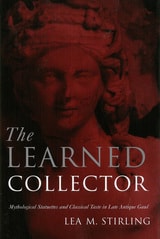
The Learned Collector
Mythological Statuettes and Classical Taste in Late Antique GaulLea M. Stirling
University of Michigan Press, 2005
The majority of statues in late antique homes were heirlooms and antiques. Mythological statuary, which would be interpreted in varying degrees of complexity, favored themes reflecting aristocratic pastimes such as dining and hunting. The Learned Collector investigates the manufacture of these distinctive statuettes in the later fourth century, the reasons for their popularity, and their modes of display in Gaul and the empire.
Although the destruction of ancient artwork looms large in the common view of late antiquity, statuary of mythological figures continued to be displayed and manufactured into the early fifth century. Stirling surveys the sculptural decor of late antique villas across the empire to reveal the universal and regional trends in the late antique confluence of literary education, mythological references, aristocratic mores, and classicizing taste. Deftly combining art historical, archaeological, and literary evidence, this book will be important to classicists and art historians alike. Stirling's accessible writing style makes this an important work for scholars, students, and anyone with an interest in Roman statues of this era.
Lea M. Stirling is Associate Professor of Classics at the University of Manitoba and holds a Canada Research Council Chair in Roman Archaeology. She co-directs excavations at the ancient city of Leptiminus, Tunisia.
The Light Club
On Paul Scheerbart's "The Light Club of Batavia"Josiah McElheny
University of Chicago Press, 2010
In 1912, Scheerbart published The Light Club of Batavia, a Novelle about the formation of a club dedicated to building a spa for bathing—not in water, but in light—at the bottom of an abandoned mineshaft. Translated here into English for the first time, this rare story serves as a point of departure for Josiah McElheny, who, with an esteemed group of collaborators, offers a fascinating array of responses to this enigmatic work.
The Light Club makes clear that the themes of utopian hope, desire, and madness in Scheerbart’s tale represent a part of modernism’s lost project: a world based on political and spiritual ideals rather than efficiency and logic. In his compelling introduction, McElheny describes Scheerbart’s life as well as his own enchantment with the writer, and he explains the ways in which The Light Club of Batavia inspired him to produce art of uncommon breadth. The Light Club also features inspired writings from Gregg Bordowitz and Ulrike Müller, Andrea Geyer, and Branden W. Joseph, as well as translations of original texts by and about Scheerbart. A unique response by one visionary artist to another, The Light Club is an unforgettable examination of what it might mean to see radical potential in absolute illumination.
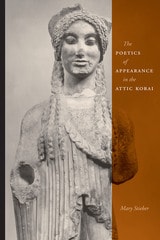
The Poetics of Appearance in the Attic Korai
By Mary Stieber
University of Texas Press, 2004
Some of the loveliest works of Archaic art were the Athenian korai—sculptures of beautiful young women presenting offerings to the goddess Athena that stood on the Acropolis. Sculpted in the sixth and early fifth centuries B.C., they served as votives until Persians sacked the citadel in 480/79 B.C. Subsequently, they were buried as a group and forgotten for nearly twenty-four centuries, until archaeologists excavated them in the 1880s. Today, they are among the treasures of the Acropolis Museum.
Mary Stieber takes a fresh look at the Attic korai in this book. Challenging the longstanding view that the sculptures are generic female images, she persuasively argues that they are instead highly individualized, mimetically realistic representations of Archaic young women, perhaps even portraits of real people. Marshalling a wide array of visual and literary evidence to support her claims, she shows that while the korai lack the naturalism that characterizes later Classical art, they display a wealth and realism of detail that makes it impossible to view them as generic, idealized images. This iconoclastic interpretation of the Attic korai adds a new dimension to our understanding of Archaic art and to the distinction between realism and naturalism in the art of all periods.
The Pygmalion Effect
From Ovid to HitchcockVictor I. Stoichita
University of Chicago Press, 2008
Stoichita traces the reverberations of Ovid’s founding myth from ancient times through the advent of cinema. Emphasizing its erotic origins, he locates echoes of this famous fable in everything from legendary incarnations of Helen of Troy to surrealist painting to photographs of both sculpture and people artfully posed to simulate statues. But it was only with the invention of moving pictures, Stoichita argues, that the modern age found a fitting embodiment of the Pygmalion story’s influence. Concluding with an analysis of Alfred Hitchcock films that focuses on Kim Novak’s double persona in Vertigo, The Pygmalion Effect illuminates the fluctuating connections that link aesthetics, magic, and technical skill. In the process, it sheds new light on a mysterious world of living artifacts that, until now, has occupied a dark and little-understood realm in the history of Western image making.
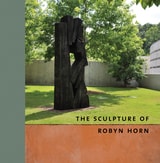
The Sculpture of Robyn Horn
Robyn Horn
University of Arkansas Press, 2018
The essays and images in The Sculpture of Robyn Horn sketch the industrious career of this Little Rock, Arkansas-based sculptor, illuminating her attention to geometry, physics, and the philosophy of design, and exploring the context and origin of the various series—Geodes, Millstones, Standing Stones, and Slipping Stones, among others—that characterize her body of work.
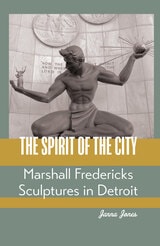
The Spirit of the City
Marshall Fredericks Sculptures in DetroitJanna Jones
Michigan State University Press, 2023
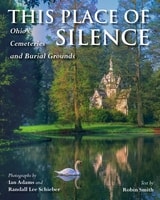
This Place of Silence
Ohio's Cemeteries and Burial GroundsIan Adams; Randall Lee Schieber; Robin L. Smith
Ohio University Press, 2024
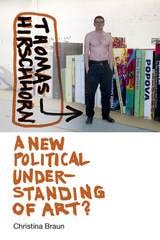
Thomas Hirschhorn
A New Political Understanding of Art?Christina Braun
Dartmouth College Press, 2018
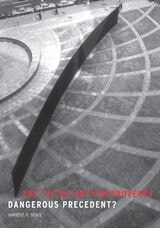
Tilted Arc Controversy
Dangerous PrecedentHarriet F. Senie
University of Minnesota Press, 2001
A comprehensive look at a controversy that continues to fuel debates about the role of public art in America.
Since its installation at and subsequent removal from New York City’s Federal Plaza, noted sculptor Richard Serra’s Tilted Arc has been a touchstone for debates over the role of public art. Installed in 1981, the 10-foot-high, 120-foot-long curved wall of Cor-Ten self-rusting steel instantly became a magnet for criticism. Art critics in the New York Times and the Village Voice labeled it the city’s worst public sculpture, and many denounced it as an example of the elitism associated with art and as an obstacle to the use and enjoyment of the plaza.
Harriet F. Senie explores the history of Tilted Arc, including its 1979 commission and the heated public hearings that eventually led to its removal in 1989 (it was dismantled and is currently stored in a government warehouse in Maryland). Analyzing the archive of popular opinion, Senie shows how the sculpture was caught in an avalanche of shifting local and national discussions about public funding for the arts. She examines the tactics of those opposed to the sculpture and the media’s superficial and sensational coverage of the controversy, reframing the dialogue in terms of public art, public space, and public policy instead of the question of whether the removal of Tilted Arc was poetic justice or a dangerous precedent. Senie provides an enlightening history and analysis of a controversy that will continue to inform our discussions about public art for years to come.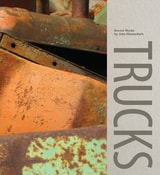
Trucks
Recent Works by John HimmelfarbJohn Himmelfarb
The Artist Book Foundation, 2014
With sculpture, paintings, prints, and drawings, award-winning artist John Himmelfarb explores the iconic American truck. An in-depth consideration of the vehicles that are intrinsically and culturally significant to the American landscape, Trucks: Recent Works by John Himmelfarb showcases the artist's diverse and lighthearted approach, adeptly shifting between mediums, style, and message during his decade-long contemplation of trucks and their specific functions. Under his skillful hands, the utilitarian vehicles of commerce and construction become unique and provocative art forms.
In 2005 and 2006, the truck as narrative becomes center stage for Himmelfarb's work. With his seamless, animated traverse of multiple mediums, viewers cannot help but smile as they appreciate the common truck through unique perspectives. In 2007, another tectonic change occurs in Himmelfarb's pursuit of his theme: as a result of a three-month residency at the John Michael Kohler Arts Center's Arts/Industry program, he begins his first meaningful foray into three-dimensional works.
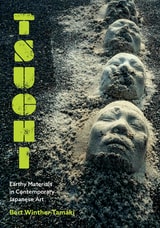
Tsuchi
Earthy Materials in Contemporary Japanese ArtBert Winther-Tamaki
University of Minnesota Press, 2022
An examination of Japanese contemporary art through the lens of ecocriticism and environmental history
Collectively referred to by the word tsuchi, earthy materials such as soil and clay are prolific in Japanese contemporary art. Highlighting works of photography, ceramics, and installation art, Bert Winther-Tamaki explores the many aesthetic manifestations of tsuchi and their connection to the country’s turbulent environmental history, investigating how Japanese artists have continually sought a passionate and redemptive engagement with earth.
In the seven decades following 1955, Japan has experienced severe environmental degradation as a result of natural disasters, industrial pollution, and nuclear irradiation. Artists have responded to these ongoing catastrophes through modes of “mudlarking” and “muckracking,” utilizing raw elements from nature to establish deeper contact with the primal resources of their world and expose its unfettered contamination. Providing a comparative assessment of more than seventy works of art, this study reveals Japanese artists’ engagement with a richly diverse repertoire of earthy materialities, elucidating their aesthetic properties, changing conditions, and cultural significance.
By focusing on the role of tsuchi as a convergence point for a wide range of creative practices, this book offers a critical reassessment of contemporary art in Japan and its intrinsic relationship to the environment. Situating art within the context of ecology and urbanization, Tsuchi shows artists striving to explore and reprocess raw forms of earth beneath the corruptions of human activity.