65 books match the query 'Security' and 9 start with t

cover of Technological Turf Wars: A Case Study of the Computer Antivirus Industry

Technological Turf Wars

A Case Study of the Computer Antivirus Industry

Jessica Johnston

Temple University Press, 2008

In Technological Turf Wars, Jessica Johnston analyzes the tensions and political dilemmas that coexist in the interrelationship among science, technology and society. Illustrating how computer security is as concerned with social relationships as it is with technology, Johnston provides an illuminating ethnography that considers corporate culture and the workplace environment of the antivirus industry.

Using a qualitative, interdisciplinary approach, which combines organizational and security studies with critical and social analysis of science and technology, Johnston questions the motivations, contradictions and negotiations of antivirus professionals. She examines the tensions between the service ethics and profit motives—does the industry release viruses to generate demand for antivirus software?—and considers the dynamics within companies by looking at facets such as gender bias and power politics. Technological Turf Wars is an informed, enlightened and entertaining view of how the production of computer security technology is fraught with social issues.

[more]
cover of The Anthropology of Security: Perspectives from the Frontline of Policing, Counter-terrorism and Border Control

The Anthropology of Security

Perspectives from the Frontline of Policing, Counter-terrorism and Border Control

Edited by Mark Maguire, Catarina Frois, and Nils Zurawski

Pluto Press, 2014

In a post-Cold War world of political unease and economic crisis, processes of securitisation are transforming nation-states, their citizens and non-citizens in profound ways.

The book shows how contemporary Europe is now home to a vast security industry which uses biometric identification systems, CCTV and quasi-military techniques to police migrants and disadvantaged neighbourhoods. This is the first collection of anthropological studies of security with a particular but not exclusive emphasis on Europe.

The Anthropology of Security draws together studies on the lived experiences of security and policing from the perspective of those most affected in their everyday lives. The anthropological perspectives in this volume stretch from the frontlines of policing and counter-terrorism to border control.

[more]
cover of The Black Belt Librarian: Real-World Safety & Security

The Black Belt Librarian

Real-World Safety & Security

Warren Graham

American Library Association, 2011

[more]
cover of The Digital Twin Handbook: Challenges, opportunities and future research directions

The Digital Twin Handbook

Challenges, opportunities and future research directions

Dhaval Thakker

The Institution of Engineering and Technology, 2025
A digital twin (DT) is a digital representation of a real-world physical product, system, or process. It is indistinguishable from its physical counterpart and used for simulation, integration, testing, monitoring and maintenance, often in real-time and in synchronization with the physical system. Digital twins offer the ability to gain a deep insight into the operating principles of any services, the interactions between different parts of the services and the behavioural aspects in a way that can be interactive and actionable for users and decision-makers.
[more]
cover of The Infrastructures of Security: Technologies of Risk Management in Johannesburg

The Infrastructures of Security

Technologies of Risk Management in Johannesburg

Martin J. Murray

University of Michigan Press, 2022

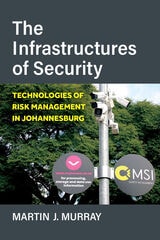
Much of the South African government’s response to crime—especially in Johannesburg—has been to rely increasingly on technology. This includes the widespread use of video cameras, Artificial Intelligence, machine-learning, and automated systems, effectively replacing human watchers with machine watchers. The aggregate effect of such steps is to determine who is, and isn’t, allowed to be in public spaces—essentially another way to continue segregation.

In The Infrastructures of Security, author Martin J. Murray concentrates on not only the turn toward technological solutions to managing the risk of crime through digital (and software-based) surveillance and automated information systems, but also the introduction of somewhat bizarre and fly-by-night experimental “answers” to perceived risk and danger. Digitalized surveillance is significant for two reasons: first, it enables monitoring to take place across wide "geographical distances with little time delay"; and second, it allows for the active sorting, identification, and "tracking of bodies, behaviors, and characteristics of subject populations on a continuous, real-time basis." These new software-based surveillance technologies represent monitoring, tracking, and information gathering without walls, towers, or guards.

[more]
cover of The Long Détente: Changing Concepts of Security and Cooperation in Europe, 1950s–1980s

The Long Détente

Changing Concepts of Security and Cooperation in Europe, 1950s–1980s

Poul Villaume

Central European University Press, 2017

This book presents pieces of evidence, which – taken together – lead to an argument that goes against the grain of the established Cold War narrative. The argument is that a “long détente” existed between East and West from the 1950s to the 1980s, that it existed and lasted for good (economic, national security, societal) reasons, and that it had a profound impact on the outcome of the conflict between East and West and the quintessentially peaceful framework in which this “endgame” was played. New, Euro-centered narratives are offered, including both West and East European perspectives. These contributions point to critical inconsistencies and inherent problems in the traditional U.S. dominated narrative of the “Victory in the Cold War.” The argument of a “long détente” does not need to replace the ruling American narrative. Rather, it can and needs to be augmented with European experiences and perceptions. After all, it was Europe – its peoples, societies, and states – that stood both at the ideological and military frontline of the conflict between East and West, and it was here that the struggle between liberalism and communism was eventually decided.
[more]
cover of Transnational Marriage and Partner Migration: Constellations of Security, Citizenship, and Rights

Transnational Marriage and Partner Migration

Constellations of Security, Citizenship, and Rights

Anne-Marie D'Aoust

Rutgers University Press, 2022
This multidisciplinary collection investigates the ways in which marriage and partner migration processes have become the object of state scrutiny, and the site of sustained political interventions in several states around the world. Covering cases as varied as the United States, Canada, Japan, Iran, France, Belgium or the Netherlands, among others, contributors reveal how marriage and partner migration have become battlegrounds for political participation, control, and exclusion. Which forms of attachments (towards the family, the nation, or specific individuals) have become framed as risks to be managed? How do such preoccupations translate into policies? With what consequences for those affected by them, in terms of rights and access to citizenship? The book answers these questions by analyzing the interplay between issues of security, citizenship and rights from the perspectives of migrants and policymakers, but also from actors who negotiate encounters with the state, such as lawyers, non-governmental organizations, and translators. 
[more]
cover of Trusted Computing

Trusted Computing

Chris Mitchell

The Institution of Engineering and Technology, 2005
As computers are increasingly embedded, ubiquitous and wirelessly connected, security becomes imperative. This has led to the development of the notion of a 'trusted platform', the chief characteristic of which is the possession of a trusted hardware element which is able to check all or part of the software running on this platform. This enables parties to verify the software environment running on a remote trusted platform, and hence to have some trust that the data sent to that machine will be processed in accordance with agreed rules.
[more]
cover of Trusted Platform Modules: Why, when and how to use them

Trusted Platform Modules

Why, when and how to use them

Ariel Segall

The Institution of Engineering and Technology, 2017

Trusted Platform Modules (TPMs) are small, inexpensive chips which provide a limited set of security functions. They are most commonly found as a motherboard component on laptops and desktops aimed at the corporate or government markets, but can also be found on many consumer-grade machines and servers, or purchased as independent components. Their role is to serve as a Root of Trust - a highly trusted component from which we can bootstrap trust in other parts of a system. TPMs are most useful for three kinds of tasks: remotely identifying a machine, or machine authentication; providing hardware protection of secrets, or data protection; and providing verifiable evidence about a machine's state, or attestation.
[more]