Results by title
102 books match the query 'Security (National & International)' and 17 start with t

The Alternate Route
Thomas Graham
Oregon State University Press, 2017
The classic road toward nuclear disarmament appears to be closed for the foreseeable future, but there may be another route. In the last fifty years, well-conceived regional treaties have been developed in Latin America, the South Pacific, Africa, Southeast Asia, and Central Asia. These arrangements have developed for many and varied political and security reasons, but now virtually all of the Southern Hemisphere and important parts of the Northern Hemisphere are legally nuclear-weapon-free. These regional nuclear weapon disarmament treaties are formally respected by the five states recognized under the Non-Proliferation Treaty (NPT) as nuclear weapon states: the United States, the United Kingdom, Russia, France, and China—often referred to collectively as the P-5 states.
Variations of these regional treaties might eventually be negotiated in the Middle East, Northeast Asia, and South Asia, setting aside the P-5 states until the very end of the process. With regional agreements in place around the globe, negotiation among the P-5 states would be all that stands between the world community and the banishment of nuclear weapons, verifiably and effectively worldwide. By the time this point is reached, Russia and the United States might be able to cooperate.
Essential reading for policy advisors, foreign service professionals, and scholars in political science, The Alternate Route examines the possibilities of nuclear-weapon-free zones as a pathway to worldwide nuclear disarmament.
The American Surveillance State
How the U.S. Spies on DissentDavid H. Price
Pluto Press, 2022
New evidence has come to light proving how far the FBI monitored its citizens throughout the Cold War and beyond
When the possibility of wiretapping first became known to Americans they were outraged. Now, in our post-9/11 world, it’s accepted that corporations are vested with human rights, and government agencies and corporations use computers to monitor our private lives. David H. Price pulls back the curtain to reveal how the FBI and other government agencies have always functioned as the secret police of American capitalism up to today, where they luxuriate in a near-limitless NSA surveillance of all.
Price looks through a roster of campaigns by law enforcement, intelligence agencies, and corporations to understand how we got here. Starting with J. Edgar Hoover and the early FBI’s alignment with business, his access to 15,000 pages of never-before-seen FBI files shines a light on the surveillance of Edward Said, Andre Gunder Frank and Alexander Cockburn, Native American communists, and progressive factory owners.
Price uncovers patterns of FBI monitoring and harassing of activists and public figures, providing the vital means for us to understand how these new frightening surveillance operations are weaponized by powerful governmental agencies that remain largely shrouded in secrecy.
The American Warfare State
The Domestic Politics of Military SpendingRebecca U. Thorpe
University of Chicago Press, 2014
The Apathy of Empire
Cambodia in American GeopoliticsJames A. Tyner
University of Minnesota Press, 2024
What America’s intervention in Cambodia during the Vietnam War reveals about Cold War–era U.S. national security strategy
The Apathy of Empire reveals just how significant Cambodia was to U.S. policy in Indochina during the Vietnam War, broadening the lens to include more than the often-cited incursion in 1970 or the illegal bombing after the Paris Peace Accords in 1973. This theoretically informed and thoroughly documented case study argues that U.S. military intervention in Cambodia revealed America’s efforts to construct a hegemonic spatial world order.
James Tyner documents the shift of America’s post-1945 focus from national defense to national security. He demonstrates that America’s expansionist policies abroad, often bolstered by military power, were not so much about occupying territory but instead constituted the construction of a new normal for the exercise of state power. During the Cold War, Vietnam became the geopolitical lodestar of this unfolding spatial order. And yet America’s grand strategy was one of contradiction: to build a sovereign state (South Vietnam) based on democratic liberalism, it was necessary to protect its boundaries—in effect, to isolate it—through both covert and overt operations in violation of Cambodia’s sovereignty. The latter was deemed necessary for the former.
Questioning reductionist geopolitical understandings of states as central or peripheral, Tyner explores this paradox to rethink the formulation of the Cambodian war as sideshow, revealing it instead as a crucial site for the formation of this new normal.
Retail e-book files for this title are screen-reader friendly.
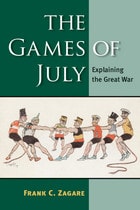
The Games of July
Explaining the Great WarFrank C. Zagare
University of Michigan Press, 2011
"Frank C. Zagare combines a deep command of historical scholarship and the sophisticated skills of an applied game theorist to develop and test a theory of why deterrence failed, catastrophically, in July 1914. . . . Zagare concludes with sage advice on how to avoid even more cataclysmic breakdowns in a nuclear world."
---Steven J. Brams, New York University
"Zagare's deft study of the origins of the First World War using his perfect deterrence theory uncovers new insights into that signal event and shows the value of formal theory applied to historical events. A must-read for those interested in security studies."
---James D. Morrow, University of Michigan
"Through an exemplary combination of formal theory, careful qualitative analysis, and lucid prose, The Games of July delivers important and interesting answers to key questions concerning the international political causes of World War I. Its well-formed narratives and its sustained engagement with leading works in IR and diplomatic history . . . make it a rewarding read for security scholars in general and a useful teaching tool for international security courses."
---Timothy W. Crawford, Boston College
Taking advantage of recent advances in game theory and the latest historiography, Frank C. Zagare offers a new, provocative interpretation of the events that led to the outbreak of World War I. He analyzes key events from Bismarck's surprising decision in 1879 to enter into a strategic alliance with Austria-Hungary to the escalation that culminated in a full-scale global war. Zagare concludes that, while the war was most certainly unintended, it was in no sense accidental or inevitable.
The Games of July serves not only as an analytical narrative but also as a work of theoretical assessment. Standard realist and liberal explanations of the Great War are evaluated along with a collection of game-theoretic models known as perfect deterrence theory.
Frank C. Zagare is UB Distinguished Professor of Political Science at the State University of New York at Buffalo.
Cover illustration: Satirical Italian postcard from World War I. Used with permission from The University of North Carolina at Chapel Hill Libraries.
The Liberal Illusion
Does Trade Promote Peace?Katherine Barbieri
University of Michigan Press, 2005
--Nils Petter Gleditsch, Journal of Peace Research
"Barbieri builds on a solid foundation of work on trade and conflict and specifies the conditions under which trade reduces and increases conflict. . . . The bottom line is that this is an important book in the study of trade and conflict because of its comprehensive approach."
--Kathy L. Powers, Perspectives on Politics
"Barbieri's analysis reveals the fundamental and intellectual weaknesses of the various arguments on this topic. [A] solid and timely contribution to the literature"
--Choice
The Liberal Illusion sheds light on an increasingly important question in international relations scholarship and the domain of policy making-whether international trade promotes peace. By examining a broad range of theories about trade's impact on interstate relations and undertaking a set of empirical analyses of the trade-conflict puzzle, Katherine Barbieri provides a comprehensive assessment of the liberal view that trade promotes peace. Barbieri's stunning conclusions depart from conventional wisdom in international relations. Consequently, The Liberal Illusion serves as an important counterargument and a warning call to policymakers who rely upon trade-based strategies to promote peace, strategies that appear to offer little hope of achieving their goals.
The Military Intervenes
Case Studies in Political DevelopmentHenry Bienen
Russell Sage Foundation, 1968

The Missing Link
West European Neutrals and Regional SecurityRichard E. Bissell and Curt Gasteyger, eds.
Duke University Press, 1990

The North American Arctic
Themes in Regional SecurityEdited by Dwayne Menezes and Heather Nicol
University College London, 2019
The Passion of International Leadership
How Emotions Shape Transatlantic CooperationPhilippe Beauregard
University of Michigan Press, 2022
How do international leaders emerge and why are they successful in bringing followers to converge on their positions? The Passion of International Leadership draws on recent advances in political psychology and state-of-the-art research in International Relations to go beyond current knowledge and simplistic accounts of international leadership. It tells surprising and intense stories of policymakers at the head of great powers attempting to cooperate during crisis moments, and uses these stories to challenge commonly held beliefs and intuitions about international leadership.
Beauregard explores international leadership in four cases of transatlantic cooperation when Western policymakers were confronted with foreign conflicts, like civil or secessionist wars. He provides a fascinating study of the recognition of Slovenia, Croatia, and Bosnia during the wars in Yugoslavia; the peace mediation during the Russia-Georgia war in 2008; the adoption of economic sanctions against Russia over the conflict in Ukraine; and finally, cooperation on striking against the Islamic State in Iraq and Syria. The book argues that leaders are driven by their convictions, and that they must strike a balance between the intense emotions associated with their beliefs and their need to represent a broader community. At the same time as they seek to bring followers on board by persuading them, they need to pay attention to emotionally contagious and resonant events that can alter the course of international cooperation.

The Privatisation of Israeli Security
Shir Hever
Pluto Press, 2017
The School of the Americas
Military Training and Political Violence in the AmericasLesley Gill
Duke University Press, 2004
Based on her unprecedented level of access to the School of the Americas, Gill describes the School’s mission and training methods and reveals how its students, alumni, and officers perceive themselves in relation to the dirty wars that have raged across Latin America. Assessing the School’s role in U.S. empire-building, she shows how Latin America’s brightest and most ambitious military officers are indoctrinated into a stark good-versus-evil worldview, seduced by consumer society and the “American dream,” and enlisted as proxies in Washington’s war against drugs and “subversion.”
The United States and Inter-American Security, 1889–1960
By J. Lloyd Mecham
University of Texas Press, 1961
Of the several regional arrangements that function within the United Nations, the most elaborate in organization and function is the Organization of American States. Although the United Nations holds the primary responsibility for preserving international peace, its charter concedes virtual autonomy to regional arrangements in dealing with matters considered appropriate for regional action. This latitude stimulated a trend toward regionalism which eventually posed the important question of how to preserve legitimate regionalism like Pan-Americanism without impairing the essential overall authority of the United Nations.
Following an introductory description of all existing regional arrangements, this comprehensive case study examines every aspect of security cooperation in the Western Hemisphere in the mid-twentieth century: the historical origins and development of the inter-American system; the perfecting of the security structure; and, most important, the functioning of the system under test by controversies among the member nations, and by two world wars, the Korean emergency, and the aggressive threats of international Communism. Particular attention is given to the Cuban situation.
This volume was the first to recognize, boldly and imaginatively, the overwhelming influence wielded in the OAS by the powerful and wealthy United States. This elastic association of one Great Power and twenty small states, based on a mutuality of interests and a common devotion to the principles of civilized international behavior, can be said to have reached full maturity in 1948 with the adoption of the OAS charter, which articulated the goals toward which it had been striving for fifty-eight years: sovereign equality, nonintervention, and consultation for the peaceful solution of disputes and for hemisphere defense. Ironically, just when the Good Neighbor Policy and the rise of Hitler seemed to have cemented inter-American relations, breaks in the solidarity began to appear. World War II produced new forces destined to profoundly alter the bases and objectives of inter-American cooperation. The “be good” policy began to change to a “do good” policy, and in diplomatic discussions, economic measures began to eclipse those concerned with peril to the peace and security of the hemisphere.
The United States and the Atlantic Community
Issues and ProspectsEdited by James R. Roach
University of Texas Press, 1966
The restiveness among some members of the North Atlantic Treaty Organization as to its structure and functions was an indication not of the failure of NATO, but of a need for a new adjustment to the changes that had developed in world conditions since the organization was established. Such was the consensus underlying the comments of five eminent statesmen and political theorists in a series of lectures delivered at the University of Texas in the spring of 1966 on the general theme of “The United States and the Atlantic Community: Issues and Prospects.”
The grave crisis of confidence in the Atlantic Community resulted, ironically, from the success of NATO in combining the resources of thirteen European states with those of Canada and the United States in a common achievement of peace, economic stability, and security in the face of the postwar threat from the Soviet Union. Now that these objectives are obtained, one argument ran, NATO is no longer needed. The Soviet threat still exists, went another, and seems to be dispelled only because of the presence of NATO; what is needed is revision of policies and functions of the organization to fit new conditions.
The changes in the nature of international relations in the two decades after World War II were of two kinds: those inherent in the world international situation—the economic recovery of Europe (which brought new urgency to the desire for more independence from the United States), the disintegration of European colonial empires, the softened aspect of the Soviet threat, and the great advances in modern technology; and those that depended upon policy decisions—whether Europe should be a confederacy (as advocated by De Gaulle) or a federal union (as advocated by Jean Monnet) and what should be the international policy of a united Europe on such issues as a third force between the United States and Russia, unified or separate approaches to the East and the West, German unity, and military security.
A consideration of what these changes implied for the United States was the purpose of the series of papers collected in this volume. The names of the authors and the titles of their papers indicate the variety of views and interests expressed and the scope of the discussion: Henry A. Kissinger, Professor of Government at Harvard, “NATO: Evolution or Decline” André Philip, Professor of Economics at the Sorbonne, “The Atlantic Economy: Partners and Rivals” Hans Speier, member of the RAND Corporation Council, “Germany: The Continuing Challenge” Fritz Erler, a leader of the German Social Democratic Party, “Western Europe, Eastern Europe, and the Soviet Union” John J. Mccloy, former World Bank president and former U.S. military governor and high commissioner for Germany, “American Interests and Europe’s Future.”

The Vital Realities for 2020 and Beyond
Writings on Water Wars, Nuclear Devastation, Endless War, Economic Revolution, and Surveillance Versus FreedomRoger Armbrust
Parkhurst Brothers, Inc., 2019
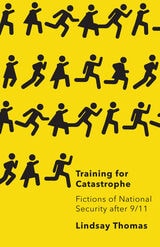
Training for Catastrophe
Fictions of National Security after 9/11Lindsay Thomas
University of Minnesota Press, 2021
A timely, politically savvy examination of how impossible disasters shape the very real possibilities of our world
Why would the normally buttoned-down national security state imagine lurid future scenarios like a zombie apocalypse? In Training for Catastrophe, author Lindsay Thomas shows how our security regime reimagines plausibility to focus on unlikely and even unreal events rather than probable ones. With an in-depth focus on preparedness (a pivotal, emergent national security paradigm since 9/11) she explores how fiction shapes national security.
Thomas finds fiction at work in unexpected settings, from policy documents and workplace training manuals to comics and video games. Through these texts—as well as plenty of science fiction—she examines the philosophy of preparedness, interrogating the roots of why it asks us to treat explicitly fictional events as real. Thomas connects this philosophical underpinning to how preparedness plays out in contemporary politics, emphasizing how it uses aesthetic elements like realism, genre, character, and plot to train people both to regard some disasters as normal and to ignore others.
Training for Catastrophe makes an important case for how these documents elicit consent and compliance. Thomas draws from a huge archive of texts—including a Centers for Disease Control comic about a zombie apocalypse, the work of Audre Lorde, and the political thrillers of former national security advisor Richard Clarke—to ask difficult questions about the uses and values of fiction. A major statement on how national security intrudes into questions of art and life, Training for Catastrophe is a timely intervention into how we confront disasters.
Twenty-First Century Military Innovation
Technological, Organizational, and Strategic Change beyond Conventional WarMarcus Schulzke
University of Michigan Press, 2022
Contemporary war is as much a quest for decisive technological, organizational, and doctrinal superiority before the fighting starts as it is an effort to destroy enemy militaries during battle. Armed forces that are not actively fighting are instead actively reengineering themselves for success in the next fight and imagining what that next fight may look like. Twenty-First Century Military Innovation outlines the most theoretically important themes in contemporary warfare, especially as these appear in distinctive innovations that signal changes in states’ warfighting capacities and their political goals.
Marcus Schulzke examines eight case studies that illustrate the overall direction of military innovation and important underlying themes. He devotes three chapters to new weapons technologies (drones, cyberweapons, and nonlethal weapons), two chapters to changes in the composition of state military forces (private military contractors and special operations forces), and three chapters to strategic and tactical changes (targeted killing, population-centric counterinsurgency, and degradation). Each case study includes an accessible introduction to the topic area, an overview of the ongoing scholarly debates surrounding that topic, and the most important theoretical implications. This book can be read as an overview of the themes that run throughout innovations of varying types or it can be used by readers who are interested in particular topic areas.