Results by title
67 books match the query 'Segregation' and 10 start with t
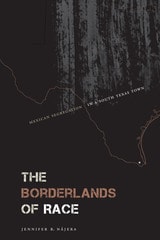
The Borderlands of Race
Mexican Segregation in a South Texas TownBy Jennifer R. Nájera
University of Texas Press, 2015
Throughout much of the twentieth century, Mexican Americans experienced segregation in many areas of public life, but the structure of Mexican segregation differed from the strict racial divides of the Jim Crow South. Factors such as higher socioeconomic status, lighter skin color, and Anglo cultural fluency allowed some Mexican Americans to gain limited access to the Anglo power structure. Paradoxically, however, this partial assimilation made full desegregation more difficult for the rest of the Mexican American community, which continued to experience informal segregation long after federal and state laws officially ended the practice.
In this historical ethnography, Jennifer R. Nájera offers a layered rendering and analysis of Mexican segregation in a South Texas community in the first half of the twentieth century. Using oral histories and local archives, she brings to life Mexican origin peoples’ experiences with segregation. Through their stories and supporting documentary evidence, Nájera shows how the ambiguous racial status of Mexican origin people allowed some of them to be exceptions to the rule of Anglo racial dominance. She demonstrates that while such exceptionality might suggest the permeability of the color line, in fact the selective and limited incorporation of Mexicans into Anglo society actually reinforced segregation by creating an illusion that the community had been integrated and no further changes were needed. Nájera also reveals how the actions of everyday people ultimately challenged racial/racist ideologies and created meaningful spaces for Mexicans in spheres historically dominated by Anglos.

The Infrastructures of Security
Technologies of Risk Management in JohannesburgMartin J. Murray
University of Michigan Press, 2022
In The Infrastructures of Security, author Martin J. Murray concentrates on not only the turn toward technological solutions to managing the risk of crime through digital (and software-based) surveillance and automated information systems, but also the introduction of somewhat bizarre and fly-by-night experimental “answers” to perceived risk and danger. Digitalized surveillance is significant for two reasons: first, it enables monitoring to take place across wide "geographical distances with little time delay"; and second, it allows for the active sorting, identification, and "tracking of bodies, behaviors, and characteristics of subject populations on a continuous, real-time basis." These new software-based surveillance technologies represent monitoring, tracking, and information gathering without walls, towers, or guards.

The Intimate University
Korean American Students and the Problems of SegregationNancy Abelmann
Duke University Press, 2009
Drawing on ten years of ethnographic research with Korean American students at the University of Illinois and closely following multiple generations of a single extended Korean American family in the Chicago metropolitan area, Abelmann investigates the complexity of racial politics at the American university today. Racially hyper-visible and invisible, Korean American students face particular challenges as they try to realize their college dreams against the subtle, day-to-day workings of race. They frequently encounter the accusation of racial self-segregation—a charge accentuated by the fact that many attend the same Evangelical Protestant church—even as they express the desire to distinguish themselves from their families and other Korean Americans. Abelmann concludes by examining the current state of the university, reflecting on how better to achieve the university’s liberal ideals despite its paradoxical celebration of diversity and relative silence on race.
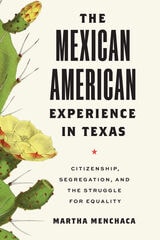
The Mexican American Experience in Texas
Citizenship, Segregation, and the Struggle for EqualityBy Martha Menchaca
University of Texas Press, 2022
A historical overview of Mexican Americans' social and economic experiences in Texas
For hundreds of years, Mexican Americans in Texas have fought against political oppression and exclusion—in courtrooms, in schools, at the ballot box, and beyond. Through a detailed exploration of this long battle for equality, this book illuminates critical moments of both struggle and triumph in the Mexican American experience.
Martha Menchaca begins with the Spanish settlement of Texas, exploring how Mexican Americans’ racial heritage limited their incorporation into society after the territory’s annexation. She then illustrates their political struggles in the nineteenth century as they tried to assert their legal rights of citizenship and retain possession of their land, and goes on to explore their fight, in the twentieth century, against educational segregation, jury exclusion, and housing covenants. It was only in 1967, she shows, that the collective pressure placed on the state government by Mexican American and African American activists led to the beginning of desegregation. Menchaca concludes with a look at the crucial roles that Mexican Americans have played in national politics, education, philanthropy, and culture, while acknowledging the important work remaining to be done in the struggle for equality.
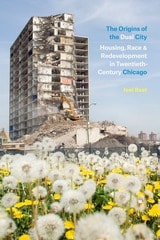
The Origins of the Dual City
Housing, Race, and Redevelopment in Twentieth-Century ChicagoJoel Rast
University of Chicago Press, 2019
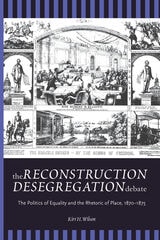
The Reconstruction Desegregation Debate
The Policies of Equality and the Rhetoric of Place, 1870-1875Kirt H. Wilson
Michigan State University Press, 2002
In the decade that followed the Civil War, two questions dominated political debate: To what degree were African Americans now “equal” to white Americans, and how should this equality be implemented in law? Although Republicans entertained multiple, even contradictory, answers to these questions, the party committed itself to several civil rights initiatives. When Congress passed the Thirteenth Amendment, the 1866 Civil Rights Act, the Fourteenth Amendment, and the Fifteenth Amendment, it justified these decisions with a broad egalitarian rhetoric. This rhetoric altered congressional culture, instituting new norms that made equality not merely an ideal,but rather a pragmatic aim for political judgments.
Kirt Wilson examines Reconstruction’s desegregation debate to explain how it represented an important movement in the evolution of U.S. race relations. He outlines how Congress fought to control the scope of black civil rights by contesting the definition of black equality, and the expediency and constitutionality of desegregation. Wilson explores how the debate over desegregation altered public memory about slavery and the Civil War, while simultaneously shaping a political culture that established the trajectory of race relations into the next century.
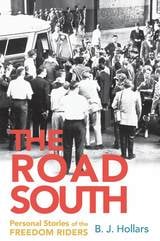
The Road South
Personal Stories of the Freedom RidersB. J. Hollars
University of Alabama Press, 2018
Revisits the inspiring and heroic stories of the Freedom Riders, through their own words.
In May 1961, despite multiple Supreme Court rulings, segregation remained alive and well within the system of interstate travel. All across the American South, interstate buses as well as their travel facilities were divided racially. This blatant disregard for law and morality spurred the Congress of Racial Equality to send thirteen individuals—seven black, six white—on a harrowing bus trip throughout the South as a sign of protest.
These original riders were met with disapproval, arrests and violence along the way, but that did not stop the movement. That summer, more than four hundred Freedom Riders continued their journey—many of them concluding their ride at Mississippi’s notorious Parchman Farm, where they endured further abuses and indignities. As a result of the riders sacrifice, by November of 1961, the Interstate Commerce Commission finally put an end to interstate commerce segregation, and in the process, elevated the riders to become a source of inspiration for other civil rights campaigns such as voter registration rights and school desegregation.
While much has been written on the Freedom Rides, far less has been published about the individual riders. Join award-winning author B. J. Hollars as he sets out on his own journey to meet them, retracing the historic route and learning the stories of as many surviving riders as he could. The Road South: Personal Stories of the Freedom Riders offers an intimate look into the lives and legacies of the riders. Throughout the book these civil rights veterans’ poignant, personal stories offer timely insights into America’s racial past and hopeful future.
Weaving the past with the present, Hollars aims to demystify the legendary journey, while also confronting more modern concerns related to race in America. The Road South is part memoir and part research-based journalism. It transcends the traditional textbook version of this historical journey to highlight the fascinating stories of the many riders—both black and white—who risked their lives to move the country forward.
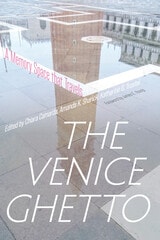
The Venice Ghetto
A Memory Space that TravelsEdited by Chiara Camarda, Amanda K. Sharick, and Katharine G. Trostel
University of Massachusetts Press, 2022
This interdisciplinary collection engages with questions about the history, conditions, and lived experience of the Venice Ghetto, including its legacy as a compulsory, segregated, and enclosed space. Contributors also consider the ghetto's influence on the figure of the Renaissance moneylender, the material culture of the ghetto archive, the urban form of North Africa's mellah and hara, and the ghetto's impact on the writings of Primo Levi and Marjorie Agosín.
In addition to the volume editors, The Venice Ghetto features a foreword from James E. Young and contributions from Shaul Bassi, Murray Baumgarten, Margaux Fitoussi, Dario Miccoli, Andrea Yaakov Lattes, Federica Ruspio, Michael Shapiro, Clive Sinclair, and Emanuela Trevisan Semi.

To Care for the Sick and Bury the Dead
African American Lodges and Cemeteries in TennesseeLeigh Ann Gardner
Vanderbilt University Press, 2022
These Black cemeteries dot the Tennessee landscape, but few know their history or the societies of care they represent. To Care for the Sick and Bury the Dead is the first book-length look at these cemeteries and the lodges that fostered them.
This book is a must-have for genealogists, historians, and family members of the people buried in these cemeteries.
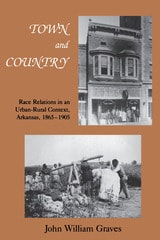
Town and Country
Race Relations in an Urban-Rural Context, Arkansas, 1865–1905John Graves
University of Arkansas Press, 1990
A thoroughly researched and extensively documented look at race relations in Arkansas druing the forty years after the Civil War, Town and Country focuses on the gradual adjustment of black and white Arkansans to the new status of the freedman, in both society and law, after generations of practicing the racial etiquette of slavery.
John Graves examines the influences of the established agrarian culture on the developing racial practices of the urban centers, where many blacks living in the towns were able to gain prominence as doctors, lawyers, successful entrepreneurs, and political leaders. Despite the tension, conflict, and disputes within and between the voice of the government and the voice of the people in an arduous journey toward compromise, Arkansas was one of the most progressive states during Reconstruction in desegregating its people.
Town and Country makes a significant contribution to the history of the postwar South and its complex engagement with the race issue.