94 books match the query 'Services for' and 13 start with t
cover of Targeting Investments in Children: Fighting Poverty When Resources Are Limited

Targeting Investments in Children

Fighting Poverty When Resources Are Limited

Edited by Phillip B. Levine and David J. Zimmerman

University of Chicago Press, 2010

A substantial number of American children experience poverty: about 17 percent of those under the age of eighteen meet the government’s definition, and the proportion is even greater within minority groups. Childhood poverty can have lifelong effects, resulting in poor educational, labor market, and physical and mental health outcomes for adults. These problems have long been recognized, and there are numerous programs designed to alleviate or even eliminate poverty; as these programs compete for scarce resources, it is important to develop a clear view of their impact as tools for poverty alleviation.

Targeting Investments in Children
tackles the problem of evaluating these programs by examining them using a common metric: their impact on earnings in adulthood. The volume’s contributors explore a variety of issues, such as the effect of interventions targeted at children of different ages, and study a range of programs, including child care, after-school care, and drug prevention. The results will be invaluable to educational leaders and researchers as well as policy makers.

[more]
cover of Teen Mothers--Citizens or Dependents?

Teen Mothers--Citizens or Dependents?

Ruth Horowitz

University of Chicago Press, 1994

In a book that speaks clearly and forcefully to the heart of the welfare debate in the United States, Ruth Horowitz examines one of the most critical questions of welfare policy: how can a United States government program help teen mothers—one of the most needful groups of all welfare recipients—move from welfare dependency to employment, independence, and responsible citizenship?

"Rich vignettes reveal the complexities of teenage mothers' lives, particularly the disjuncture between classroom and street identities, 'inside' and 'outside.' . . . Original and illuminating as well as timely."—Sharon Thompson, Women's Review of Books

"Horowitz offers insights that should be considered in the debate over welfare reform. . . . Teen Mothers . . . places Horowitz's results in the context of major theories about the role of welfare in the U.S. and offers a microlevel critique of the implicit assumptions and probable consequences of each theory's approach to welfare reform."—Booklist
[more]
cover of The Compassionate Court?: Support, Surveillance, and Survival in Prostitution Diversion Programs

The Compassionate Court?

Support, Surveillance, and Survival in Prostitution Diversion Programs

Corey S. Shdaimah, Chrysanthi S. Leon, and Shelly A. Wiechelt

Temple University Press, 2023

Laws subject people who perform sex work to arrest and prosecution.  The Compassionate Court? assesses two prostitution diversion programs (PDPs) that offer to “rehabilitate” people arrested for street-based sex work as an alternative to incarceration. However, as the authors show, these PDPs often fail to provide sustainable alternatives to their mandated clients. Participants are subjected to constant surveillance and obligations, which creates a paradox of responsibility in conflict with the system’s logic of rescue. Moreover, as the participants often face shame and re-traumatization as a price for services, poverty and other social problems, such as structural oppression, remain in place.
 
The authors of The Compassionate Court? provide case studies of such programs and draw upon interviews and observations conducted over a decade to reveal how participants and professionals perceive court-affiliated PDPs, clients, and staff. Considering the motivations, vision, and goals of these programs as well as their limitations—the inequity and disempowerment of their participants—the authors also present their own changing perspectives on prostitution courts, diversion programs, and criminalization of sex work.
 
[more]
cover of The Evidence Is Life: Deaf Pilgrimages to Language and Community in Mexico City

The Evidence Is Life

Deaf Pilgrimages to Language and Community in Mexico City

Anne E. Pfister

Gallaudet University Press, 2025
Drawing on theories of language socialization and communities of practice in an ethnographic study of deaf children and their families in Mexico City, sociolinguistic and medical anthropologist Anne E. Pfister shows how her participants reject stigmatizing social and biomedical beliefs about deafness. Grounded in over ten years of ethnographic research through participant observation, visual methods, and participatory analysis, The Evidence Is Life shares the story of La Familia López, a composite narrative woven from the common themes and experiences of the deaf individuals and families in Pfister’s study. The story of the López family is framed as a pilgrimage, through which readers reflect on participating families’ journeys from confusion to profound transformation. Moving from a deficit perspective on deafness to discovering the value of accessible language, the families and children in this study eventually arrive at a community of belonging. Contextualized through Mexican history and institutional structures, The Evidence Is Life illuminates common experiences, challenges dominant narratives regarding deafness, and provides recommendations for families, educators, policymakers, medical professionals, and advocates working in deaf education.
[more]
cover of The Ex-Prisoner's Dilemma: How Women Negotiate Competing Narratives of Reentry and Desistance

The Ex-Prisoner's Dilemma

How Women Negotiate Competing Narratives of Reentry and Desistance

Leverentz, Andrea M

Rutgers University Press, 2014

2014 Choice Outstanding Academic Title

When a woman leaves prison, she enters a world of competing messages and conflicting advice.  Staff from prison, friends, family members, workers at halfway houses and treatment programs all have something to say about who she is, who she should be, and what she should do.  The Ex-Prisoner’s Dilemma offers an in-depth, firsthand look at how the former prisoner manages messages about returning to the community. 

Over the course of a year, Andrea Leverentz conducted repeated interviews with forty-nine women as they adjusted to life outside of prison and worked to construct new ideas of themselves as former prisoners and as mothers, daughters, sisters, romantic partners, friends, students, and workers.  Listening to these women, along with their family members, friends, and co-workers, Leverentz pieces together the narratives they have created to explain their past records and guide their future behavior.  She traces where these narratives came from and how they were shaped by factors such as gender, race, maternal status, age, and experiences in prison, halfway houses, and twelve-step programs—factors that in turn shaped the women’s expectations for themselves, and others’ expectations of them.  The women’s stories form a powerful picture of the complex, complicated human experience behind dry statistics and policy statements regarding prisoner reentry into society for women, how the experience is different for men and the influence society plays.

With its unique view of how society’s mixed messages play out in ex-prisoners’ lived realities, The Ex-Prisoner’s Dilemma shows the complexity of these women’s experiences within the broad context of the war on drugs and mass incarceration in America. It offers invaluable lessons for helping such women successfully rejoin society.
[more]
cover of The First-Year Experience Cookbook

The First-Year Experience Cookbook

Raymond Pun

Assoc of College & Research Libraries, 2017
[more]
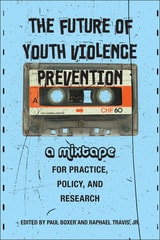
cover of The Future of Youth Violence Prevention: A Mixtape for Practice, Policy, and Research

The Future of Youth Violence Prevention

A Mixtape for Practice, Policy, and Research

Paul Boxer

Rutgers University Press, 2025
The Future of Youth Violence Prevention: A Mixtape for Practice, Policy, and Research focuses on innovative approaches to youth violence prevention that utilize consistent principles found within existing best practices but are dynamic and adaptable across settings—and the sociohistorical and cultural realities of those settings. This book features scholars anchored in applied practices who can ground these forward-thinking strategies in the substantive base of research and theory that has produced successful interventions across multiple disciplines. The scholarship and cutting-edge thinking assembled in this volume could produce new-era youth violence prevention coordinators prepared to serve in any setting—including community outreach programs, therapeutic group homes, day reporting centers, juvenile probation offices, schools, or clinics. These coordinators will be able to cocreate intervention techniques using core prevention elements drawing from a range of ideas and a multitude of disciplines while embracing the assets and resources already in place.
[more]
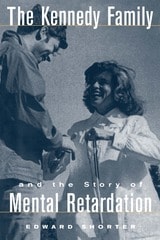
cover of The Kennedy Family

The Kennedy Family

Edward Shorter

Temple University Press, 2000

According to Edward Shorter, just forty years ago the institutions housing people with mental retardation (MR) had become a national scandal. The mentally retarded who lived at home were largely isolated and a source of family shame. Although some social stigma still attaches to the people with developmental disabilities (a range of conditions including what until recently was called mental retardation), they now actively participate in our society and are entitled by law to educational, social, and medical services. The immense improvement in their daily lives and life chances came about in no small part because affected families mobilized for change but also because the Kennedy family made mental retardation its single great cause.

Long a generous benefactor of MR-related organizations, Joseph P. Kennedy made MR the special charitable interest of the family foundation he set up in the 1950s. Although he gave all of his children official roles, he involved his daughter Eunice in performing its actual work -- identifying appropriate recipients of awards and organizing the foundation's activities. With unique access to family and foundation papers, Shorter brings to light the Kennedy family's strong commitment to public service, showing that Rose and Joe taught their children by precept and example that their wealth and status obligated them to perform good works. Their parents expected each of them to apply their considerable energies to making a difference.

Eunice Kennedy Shriver took up that charge and focused her organizational and rhetorical talent on putting MR on the federal policy agenda. As a sister of the President of the United States, she had access to the most powerful people in the country and drew their attention to the desperate situation of families affected by mental retardation. Her efforts made an enormous difference, resulting in unprecedented public attention to MR and new approaches to coordinating medical and social services. Along with her husband, R. Sargent Shriver, she made the Special Olympics an international, annual event in order to encourage people with mental retardation to develop their skills and discover the joy of achievement. She emerges from these pages as a remarkable and dedicated advocate for people with developmental disabilities.
  
Shorter's account of mental retardation presents an unfamiliar view of the Kennedy family and adds a significant chapter to the history of disability in this country.
[more]
cover of The Librarian's Guide to Homelessness: An Empathy-Driven Approach to Solving Problems, Preventing Conflict, and Serving Everyone

The Librarian's Guide to Homelessness

An Empathy-Driven Approach to Solving Problems, Preventing Conflict, and Serving Everyone

Ryan Dowd

American Library Association, 2018

Homelessness is a perennial topic of concern at libraries. In fact, staff at public libraries interact with almost as many homeless individuals as staff at shelters do. Empathy and understanding, along with specific actionable advice that’s drawn from experience, makes all the difference in working with this group. In this book Dowd, executive director of a homeless shelter, spotlights best practices drawn from his own shelter’s policies and training materials. Filled with to-the-point guidance that will help frontline public library staff and managers understand and serve this population better, this resource

  • includes facts about homelessness every librarian should know;
  • debunks widespread myths about these individuals, explaining how they see themselves, what issues they struggle with, and how libraries can shift towards supporting them;
  • shares de-escalation techniques like showing respect, ways to avoid making things personal, and using proper body language;
  • walks readers through dealing with common issues like a sleeping patron, questionable hygiene, offensive behavior, and asking a patron to leave; and
  • advises on how to provide backup to a colleague and when to call the police.
[more]
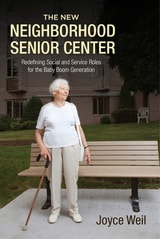
cover of The New Neighborhood Senior Center: Redefining Social and Service Roles for the Baby Boom Generation

The New Neighborhood Senior Center

Redefining Social and Service Roles for the Baby Boom Generation

Weil, Joyce

Rutgers University Press, 2014
In 2011, seven thousand American “baby boomers” (those born between 1946 and 1964) turned sixty-five daily. As this largest U.S. generation ages, cities, municipalities, and governments at every level must grapple with the allocation of resources and funding for maintaining the quality of life, health, and standard of living for an aging population. 

In The New Neighborhood Senior Center, Joyce Weil uses in-depth ethnographic methods to examine a working-class senior center in Queens, New York. She explores the ways in which social structure directly affects the lives of older Americans and traces the role of political, social, and economic institutions and neighborhood processes in the decision to close such centers throughout the city of New York. 

Many policy makers and gerontologists advocate a concept of “aging in place,” whereby the communities in which these older residents live provide access to resources that foster and maintain their independence. But all “aging in place” is not equal and the success of such efforts depends heavily upon the social class and availability of resources in any given community. Senior centers, expanded in part by funding from federal programs in the 1970s, were designed as focal points in the provision of community-based services. However, for the first wave of “boomers,” the role of these centers has come to be questioned.  

Declining government support has led to the closings of many centers, even as the remaining centers are beginning to “rebrand” to attract the boomer generation. However, The New Neighborhood Senior Centerdemonstrates the need to balance what the boomers’ want from centers with the needs of frailer or more vulnerable elders who rely on the services of senior centers on a daily basis. Weil challenges readers to consider what changes in social policies are needed to support or supplement senior centers and the functions they serve. 
[more]
cover of The Price of Safety: Hidden Costs and Unintended Consequences for Women in the Domestic Violence Service System

The Price of Safety

Hidden Costs and Unintended Consequences for Women in the Domestic Violence Service System

Sara Shoener

Vanderbilt University Press, 2017

Specialized public resources for survivors of intimate partner violence (IPV) are increasingly common and diverse--from protection order courts and dedicated domestic violence units in police precincts to a vast network of community-based emergency shelters and counseling services. Yet little consensus exists regarding which resources actually work to reduce violence and help survivors lead the lives they would like to live. This book is an account of these resources and IPV survivors' experiences with them in three communities in the United States.

Through detailed observations of services such as court procedures, public benefits processes, and community-based IPV programs as well as in-depth interviews with dozens of IPV survivors and practitioners, Shoener describes how our current institutional response to IPV is often not useful--and sometimes quite harmful--for IPV survivors with the least material, social, and cultural capital to spare. For these women, as the interviews vividly record, IPV has long-term economic and social consequences, disrupting career paths and creating social isolation.
[more]
cover of The Prism of Human Rights: Seeking Justice amid Gender Violence in Rural Ecuador

The Prism of Human Rights

Seeking Justice amid Gender Violence in Rural Ecuador

Karin Friederic

Rutgers University Press, 2023
Gender violence has been at the forefront of women’s human rights struggles for decades, shaping political movements and NGO and government programs related to women’s empowerment, community development, and public health. Drawing on over twenty years of research and activism in rural Ecuador, Karin Friederic provides a remarkably intimate view of what these rights-based programs actually achieve over the long term. The Prism of Human Rights brings us into the lives of women, men, and children who find themselves entangled in intimate partner violence, structural violence, political economic change, and a global cultural project in which “rights” are associated with modernity, development, and democratic states. She details the multiple forms of violence that rural women experience; shows the diverse ways they make sense of, endure, and combat this violence; and helps us understand how people are grappling with new ideas of gender, rights, and even of violence itself. Ultimately, Friederic demonstrates that rights-based interventions provide important openings for women seeking a life free of violence, but they also unwittingly expose “liberated” women to more extreme dynamics of structural violence. Thus, these interventions often reduce women’s room to maneuver and encourage communities to hide violence in order to appear “modern” and “developed.” This analysis of human rights in practice is essential for anyone seeking to promote justice in a culturally responsible manner, and for anyone who hopes to understand how the globalization of rights, legal institutions, and moral visions is transforming distant locales and often perpetuating violence in the process.
[more]
cover of Their Time Has Come: Youth with Disabilities on the Cusp of Adulthood

Their Time Has Come

Youth with Disabilities on the Cusp of Adulthood

Leiter, Valerie

Rutgers University Press, 2012

The lives of youth with disabilities have changed radically in the past fifty years. Youth who are coming of age right now are the first generation to receive educational services throughout childhood and adolescence. Disability policies have opened up opportunities to youth, and they have responded by getting higher levels of education than ever before. Yet many youth are being left behind, compared to their peers without disabilities. Youth with disabilities often still face major obstacles to independence.

In Their Time Has Come, Valerie Leiter argues that there are crucial missing links between federal disability policies and the lives of young people. Youth and their parents struggle to gather information about the resources that disability policies have created, and youth are not typically prepared to use their disability rights effectively. Her argument is based on thorough examination of federal disability policy and interviews with young people with disabilities, their parents, and rehabilitation professionals. Attention is given to the diversity of expectations, the resources available to them, and the impact of federal policy and public and private attitudes on their transition to adulthood.

[more]