Results by title
72 books match the query 'Sex in literature' and 9 start with t
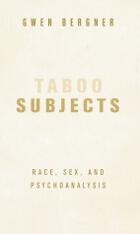
Taboo Subjects
Race, Sex, and PsychoanalysisGwen Bergner
University of Minnesota Press, 2005

Telemorphosis
Jean Baudrillard
University of Minnesota Press, 2015
The art of living today has shifted to a continuous state of the experimental. In one of his last texts, Telemorphosis, renowned thinker and anti-philosopher Jean Baudrillard takes on the task of thinking and reflecting on the coming digital media architectures of the social. While “the social” may have never existed, according to Baudrillard, his analysis at the beginning of the twenty-first century of the coming social media–networked cultures cannot be ignored. One need not look far in order to find oneself snared within some sort of screenification of a techno-social community. “What the most radical critical critique, the most subversive delirious imagination, what no Situationist drift could have done . . . television has done.” Collective reality has entered a realm of telemorphosis.
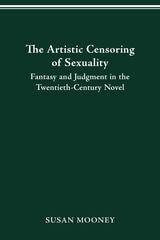
The Artistic Censoring of Sexuality
Fantasy and Judgment in the Twentieth Century NovelSusan Mooney
The Ohio State University Press, 2008
Through the twentieth century, from colonial Ireland to the United States, and from Franco's Spain to late Soviet Russia, to include sexuality in a novel signaled social progressiveness and artistic innovation, but also transgression. Certain novelists—such as James Joyce, Vladimir Nabokov, Luis Martín-Santos, and Viktor Erofeev—radicalized the content of the novel by incorporating sexual thoughts, situations, and fantasies and thus portraying repressed areas of social, cultural, political, and mental life.
In The Artistic Censoring of Sexuality: Fantasy and Judgment in the Twentieth-Century Novel, Susan Mooney extensively examines four modernist and postmodernist novels that prompted in their day harsh external censorship because of their sexual content—Ulysses, Lolita, Time of Silence, and Russian Beauty. She shows how motifs of censorship, with all its restrictions, pressures, rules, judgments, and forms of negation, became artistically embedded in the novels' plots, characters, settings, tropes, and themes. These novels contest censorship's status quo and critically explore its processes and power. This study reveals the impact of censorship on literary creation, particularly in relation to the twentieth century's growing interest in sexuality and its discourses.
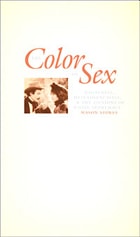
The Color of Sex
Whiteness, Heterosexuality, and the Fictions of White SupremacyMason Stokes
Duke University Press, 2001
The Color of Sex reveals what happens when race and sexuality meet, when white desire encounters its own ambivalence. As Stokes argues, whiteness and heterosexuality exist in anxious relation to one another. Mutually invested in “the normal,” they support each other in their desperate insistence on the cultural logic of exclusion. At the same time, however, they threaten one another in their attempt to create and sustain a white future, since reproducing whiteness necessarily involves the risk of contamination
Charting the curious movements of this “white heterosexuality,” The Color of Sex inaugurates a new moment in our ongoing attempt to understand the frenzied interplay of race and sexuality in America. As such, it will appeal to scholars interested in race theory, sexuality studies, and American history, culture, and literature.
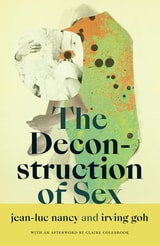
The Deconstruction of Sex
Jean-Luc Nancy and Irving Goh
Duke University Press, 2021
The Misfit of the Family
Balzac and the Social Forms of SexualityMichael Lucey
Duke University Press, 2003
The Misfit of the Family is a compelling argument that Balzac must be taken seriously as a major inventor and purveyor of new tools for analyzing connections between the sexual and the social. Lucey’s account of the novelist’s deployment of "sexual misfits" to impel a wide range of his most canonical works—Cousin Pons, Cousin Bette, Eugenie Grandet, Lost Illusions, The Girl with the Golden Eyes—demonstrates how even the flexible umbrella term "queer" barely covers the enormous diversity of erotic and social behaviors of his characters. Lucey draws on the thinking of Michel Foucault and Pierre Bourdieu and engages the work of critics of nineteenth-century French fiction, including Naomi Schor, D. A. Miller, Franco Moretti, and others. His reflections on Proust as Balzac’s most cannily attentive reader suggest how the lines of social and erotic force he locates in Balzac’s work continued to manifest themselves in twentieth-century writing and society.
The Reinvention of Obscenity
Sex, Lies, and Tabloids in Early Modern FranceJoan DeJean
University of Chicago Press, 2002
The Reinvention of Obscenity casts a fresh light on the mythical link between sexual impropriety and things French. Exploring the complicity between censorship, print culture, and obscenity, DeJean argues that mass market printing and the first modern censorial machinery came into being at the very moment that obscenity was being reinvented—that is, transformed from a minor literary phenomenon into a threat to society. DeJean's principal case in this study is the career of Moliére, who cannily exploited the new link between indecency and female genitalia to found his career as a print author; the enormous scandal which followed his play L'école des femmes made him the first modern writer to have his sex life dissected in the press.
Keenly alert to parallels with the currency of obscenity in contemporary America, The Reinvention of Obscenity will concern not only scholars of French history, but anyone interested in the intertwined histories of sex, publishing, and censorship.
The Sexual Labyrinth of Nikolai Gogol
Simon Karlinsky
University of Chicago Press, 1992
"A brilliant new biography that will long be prized for its illuminating psychological insights into Gogol's actions, its informative readings of his fiction and drama, and its own stylistic grace and vivacity."—Edmund White, Washington Post Book World
The Submerged Plot and the Mother's Pleasure from Jane Austen to Arundhati Roy
Kelly A. Marsh
The Ohio State University Press, 2016
Combining feminist and rhetorical narratological approaches, Marsh’s study offers fresh readings of Persuasion, Jane Eyre, Bleak House, The Woman in White, The House of Mirth, The Last September, The Color Purple, A Thousand Acres, Bastard Out of Carolina, Talking to the Dead, and The God of Small Things. Through these readings, The Submerged Plot and the Mother’s Pleasure explores how the unnarratable can be communicated in fiction and offers a significant contribution to our understanding of narrative progression.