Results by title
101 books match the query 'Social Activists' and 18 start with t

Tell Mother I'm in Paradise
Memoirs of a Political Prisoner in El SalvadorAna Margarita Gasteazoro, edited by Judy Blankenship and Andrew Wilson
University of Alabama Press, 2022
The life and times of Ana Margarita Gasteazoro: political activist, clandestine operative, and prisoner of conscience.
Ana Margarita Gasteazoro (1950–1993) was a Salvadoran opposition activist and renowned Amnesty International prisoner of conscience. Tell Mother I’m in Paradise:Memoirs of a Political Prisoner in El Salvador recounts her extraordinary life story. From a privileged Catholic upbringing, with time spent studying and working abroad, Ana Margarita first became a member of the legal political opposition in the late 1970s and later a clandestine operative at work against the brutal military junta.
Gasteazoro recounts her early rebellion against the strictures of conservative upper-class Salvadoran society. She spoke perfect English and discovered a talent for organizing in administrative jobs abroad and at home. As the civil war progressed, she quickly became a valued figure in the National Revolutionary Movement (MNR), a social democratic party, often representing it at international meetings. Against the backdrop of massive social oppression and the “disappearances” of thousands of opposition members, Gasteazoro began a double life as an operative in a faction of the Farabundo Martí National Liberation Front (FMLN). Multitalented and energetic, she organized safe houses for fellow activists, transported weapons and equipment, wrote scripts for an underground radio station, and produced an award-winning documentary film. But the toll on her family life and personal relationships was heavy.
Ana Margarita was disappeared in May 1981 by the infamous National Guard and endured a nightmare 11 days of interrogations, beatings, and abuse. Through international pressure and the connections of her family, her arrest was finally made public, and she was transferred to the women’s prison at Ilopango. There, she and other activists continued the political struggle through the Committee of Political Prisoners of El Salvador (COPPES). During her two years in prison, tested by hunger strikes, violence, and factional divisions, she became one of Amnesty International’s best-known prisoners of conscience. Tell Mother I’m in Paradise is a gripping story of a self-aware activist and a vital young woman’s struggle to find her own way within a deeply conservative society.
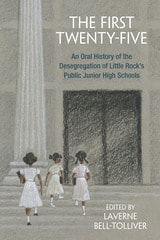
The First Twenty-Five
An Oral History of the Desegregation of Little Rock’s Public Junior High SchoolsLaVerne Bell-Tolliver
University of Arkansas Press, 2018
“It was one of those periods that you got through, as opposed to enjoyed. It wasn’t an environment that . . . was nurturing, so you shut it out. You just got through it. You just took it a day at a time. You excelled if you could. You did your best. You felt as though the eyes of the community were on you.”—Glenda Wilson, East Side Junior High
Much has been written about the historical desegregation of Little Rock Central High School by nine African American students in 1957. History has been silent, however, about the students who desegregated Little Rock’s five public junior high schools—East Side, Forest Heights, Pulaski Heights, Southwest, and West Side—in 1961 and 1962.
The First Twenty-Five gathers the personal stories of these students some fifty years later. They recall what it was like to break down long-standing racial barriers while in their early teens—a developmental stage that often brings emotional vulnerability. In their own words, these individuals share what they saw, heard, and felt as children on the front lines of the civil rights movement, providing insight about this important time in Little Rock, and how these often painful events from their childhoods affected the rest of their lives.
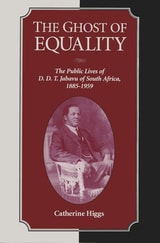
The Ghost of Equality
The Public Lives of D. D. T. Jabavu of South Africa, 1885–1959Catherine Higgs
Ohio University Press, 1996
Davidson Don Tengo Jabavu was born in the Cape Colony in British southern Africa on October 20, 1885, when a few African men could vote and the prospects for black equality with the ruling whites seemed promising. He died on August 3, 1959, in the Cape Province of the Union of South Africa, eleven years after the apartheid state had begun stripping blacks of their rights and exorcising the ‘ghost of equality’ with a completeness unparalleled in the country’s history. The ‘ghost of equality was the last vestige of the Cape liberal tradition — itself best summed up by the dictum ’equal rights for all civilized men‘ — finally erased in 1959 with the passage of legislation that would, the following year, remove from parliament the last elected white representatives of Africans.…
If D.D.T. Jabavu’s life reveals anything about South Africa’s political history, it is that this history was not monolithic. It was not simply a lengthly confrontation between a black elite represented by the African National Congress and the white segregationist state. Rather, there was a range of black political opinion and activity, of which Jabavu, an active participant in virtually every government-sponsored and every major extraparliamentary conference between 1920 and the late 1940s, represented one prominent historical strain.
This book, however, is about more than D.D.T. Javavu’s politics; it is about his public life, or perhaps more accurately, his public lives. The book is arranged thematically, divided according to the parts Jabavu played: student, teacher, Methodist, and politician.
— from the introduction by the author
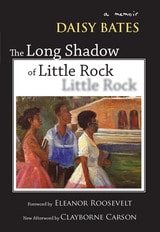
The Long Shadow of Little Rock
A MemoirDaisy Bates
University of Arkansas Press, 2007
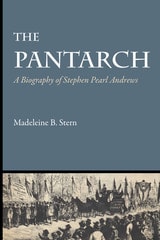
The Pantarch
A Biography of Stephen Pearl AndrewsBy Madeleine B. Stern
University of Texas Press, 1968
An abolitionist and a champion of free love and women’s rights would seem decidedly out of place in nineteenth-century Texas, but such a man was Stephen Pearl Andrews (1812–1886), American reformer, civil rights proponent, pioneer in sociology, advocate of reformed spelling, lawyer, and eccentric philosopher. Since his life mirrored and often anticipated the various reform movements spawned not only in Texas but in the United States in the nineteenth century, this first biography of him sharply reflects and elucidates his times.
The extremely important role Andrews played in the abolition movement in this country has not heretofore been accorded him. After having witnessed slavery in Louisiana during the 1830s, Andrews came to Texas and began his career as an abolitionist with an audacious attempt to free the slaves there.
His singular career, however, comprised many more activities than abolitionism, and most have long been forgotten by historians. He introduced Pitman shorthand into the United States as a means of teaching the uneducated to read; his role in the community of Modern Times, Long Island, was as important as that of Josiah Warren, the “first American anarchist,” although Andrews’s participation in this communal venture, along with the significance of Modern Times itself, has been underestimated.
Other causes which Andrews supported included free love and the rights of women, dramatized by his journalistic debate with Horace Greeley and Henry James, Sr., and by his endorsement of Victoria Woodhull as the first woman candidate for the Presidency of the United States. These interests, together with his consequent involvement in the Beecher-Tilton Scandal, provide insight into some of the more colorful aspects of nineteenth-century American reform movements.
Andrews’s attacks upon whatever infringed on individual freedom brought him into diverse arenas—economic, sociological, and philosophical. The philosophical system he developed included among its tenets the sovereignty of the individual, a science of society, a universal language (his Alwato long preceded Esperanto), the unity of the sciences, and a “Pantarchal United States of the World.” His philosophy has never before been epitomized nor have its applications to later thought been considered.
“I have made it the business of my life to study social laws,” Andrews wrote. “I see now a new age beginning to appear.” This biography of the dynamic reformer examines those social laws and that still-unembodied new age. It reanimates a heretofore neglected American reformer and casts new light upon previously unexplored bypaths of nineteenth-century American social history. The biography is fully documented, based in part upon a corpus of unpublished material in the State Historical Society of Wisconsin.
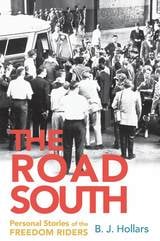
The Road South
Personal Stories of the Freedom RidersB. J. Hollars
University of Alabama Press, 2018
Revisits the inspiring and heroic stories of the Freedom Riders, through their own words.
In May 1961, despite multiple Supreme Court rulings, segregation remained alive and well within the system of interstate travel. All across the American South, interstate buses as well as their travel facilities were divided racially. This blatant disregard for law and morality spurred the Congress of Racial Equality to send thirteen individuals—seven black, six white—on a harrowing bus trip throughout the South as a sign of protest.
These original riders were met with disapproval, arrests and violence along the way, but that did not stop the movement. That summer, more than four hundred Freedom Riders continued their journey—many of them concluding their ride at Mississippi’s notorious Parchman Farm, where they endured further abuses and indignities. As a result of the riders sacrifice, by November of 1961, the Interstate Commerce Commission finally put an end to interstate commerce segregation, and in the process, elevated the riders to become a source of inspiration for other civil rights campaigns such as voter registration rights and school desegregation.
While much has been written on the Freedom Rides, far less has been published about the individual riders. Join award-winning author B. J. Hollars as he sets out on his own journey to meet them, retracing the historic route and learning the stories of as many surviving riders as he could. The Road South: Personal Stories of the Freedom Riders offers an intimate look into the lives and legacies of the riders. Throughout the book these civil rights veterans’ poignant, personal stories offer timely insights into America’s racial past and hopeful future.
Weaving the past with the present, Hollars aims to demystify the legendary journey, while also confronting more modern concerns related to race in America. The Road South is part memoir and part research-based journalism. It transcends the traditional textbook version of this historical journey to highlight the fascinating stories of the many riders—both black and white—who risked their lives to move the country forward.
The Road to Blair Mountain
Saving a Mine Wars Battlefield from King CoalCharles B. Keeney
West Virginia University Press, 2021
In 1921 Blair Mountain in southern West Virginia was the site of the country’s bloodiest armed insurrection since the Civil War, a battle pitting miners led by Frank Keeney against agents of the coal barons intent on quashing organized labor. It was the largest labor uprising in US history. Ninety years later, the site became embroiled in a second struggle, as activists came together to fight the coal industry, state government, and the military- industrial complex in a successful effort to save the battlefield—sometimes dubbed “labor’s Gettysburg”—from destruction by mountaintop removal mining.
The Road to Blair Mountain is the moving and sometimes harrowing story of Charles Keeney’s fight to save this irreplaceable landscape. Beginning in 2011, Keeney—a historian and great-grandson of Frank Keeney—led a nine-year legal battle to secure the site’s placement on the National Register of Historic Places. His book tells a David-and-Goliath tale worthy of its own place in West Virginia history. A success story for historic preservation and environmentalism, it serves as an example of how rural, grassroots organizations can defeat the fossil fuel industry.
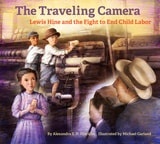
The The Traveling Camera
Lewis Hine and the Fight to End Child LaborAlexandra S. D. Hinrichs
J. Paul Getty Trust, The, 2021
Stunning visuals and poetic text combine to tell the inspiring story of Lewis Hine (1874–1940), a teacher and photographer who employed his art as a tool for social reform. Working for the National Child Labor Committee, Hine traveled the United States, taking pictures of children as young as five toiling under dangerous conditions in cotton mills, seafood canneries, farms, and coal mines. He often wore disguises to sneak into factories, impersonating a machinery inspector or traveling salesman. He said, “If I could tell this story in words, I wouldn’t need to lug a camera.” His poignant pictures attracted national attention and were instrumental in the passage of child labor laws. The Traveling Camera contains extensive back matter, including a time line, original photos, and a bibliography.
Ages six to nine.
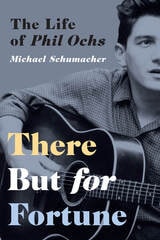
There But for Fortune
The Life of Phil OchsMichael Schumacher
University of Minnesota Press, 2018
The life and influence of singer Phil Ochs
Phil Ochs burst onto the American music scene just as the popularity of folk music was breaking through on the national consciousness. Along with friend and rival Bob Dylan, Ochs wrote some of the most compelling topical music of his time. In There But for Fortune, Michael Schumacher explores the life and career of a singer, songwriter, and political activist whose music resonates today as much as it applied to a divided country a half-century ago. His politically charged songs were covered by Pete Seeger; Joan Baez; Gordon Lightfoot; Peter, Paul and Mary; and a host of others, and such songs as “I Ain’t Marching Anymore” and “The War Is Over” became anthems of the anti–Vietnam War movement. He seemed to be performing everywhere, from concerts on college campuses to huge demonstrations, culminating with an appearance at the Democratic National Convention in Chicago in 1968.
But as this biography illustrates in painstaking detail, Ochs suffered from a dark side that gravely affected his life and music. Diagnosed as manic depressive, he shifted between incredible highs and debilitating lows that ultimately drove him to suicide at age 36. To piece together his life story, Schumacher interviewed Ochs’s friends, family members, and fellow musicians; examined his journals and scrapbooks; and even scrutinized his FBI files. While Phil Ochs’s life might have been plagued by downturn and tragedies, his music is an enduring call to activism and fighting for a better future.
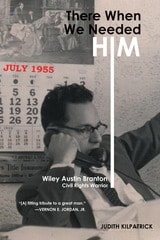
There When We Needed Him
Wiley Austin Branton, Civil Rights WarriorJudith Kilpatrick
University of Arkansas Press, 2007
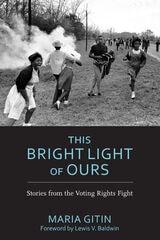
This Bright Light of Ours
Stories from the Voting Rights FightMaria Gitin
University of Alabama Press, 2014
Combining memoir with oral history, creates a vivid and searing portrait of the Freedom Summer of 1965.
This Bright Light of Ours offers a tightly focused insider’s view of the community-based activism that was the heart of the civil rights movement. A celebration of grassroots heroes, this book details through first-person accounts the contributions of ordinary people who formed the nonviolent army that won the fight for voting rights.
Combining memoir and oral history, Maria Gitin fills a vital gap in civil rights history by focusing on the neglected Freedom Summer of 1965 when hundreds of college students joined forces with local black leaders to register thousands of new black voters in the rural South. Gitin was an idealistic nineteen-year-old college freshman from a small farming community north of San Francisco who felt called to action when she saw televised images of brutal attacks on peaceful demonstrators during Bloody Sunday, in Selma, Alabama.
Atypical among white civil rights volunteers, Gitin came from a rural low-income family. She raised funds to attend an intensive orientation in Atlanta featuring now-legendary civil rights leaders. Her detailed letters include the first narrative account of this orientation and the only in-depth field report from a teenage Summer Community Organization and Political Education (SCOPE) project participant.
Gitin details the dangerous life of civil rights activists in Wilcox County, Alabama, where she was assigned. She tells of threats and arrests, but also of forming deep friendships and of falling in love. More than four decades later, Gitin returned to Wilcox County to revisit the people and places that she could never forget and to discover their views of the “outside agitators” who had come to their community. Through conversational interviews with more than fifty Wilcox County residents and former civil rights workers, she has created a channel for the voices of these unheralded heroes who formed the backbone of the civil rights movement.
This Is Not For You
An Activist's Journey of Resistance and ResilienceRichard Brown
Oregon State University Press, 2021
The book finds Brown approaching his eightieth birthday and reflecting on his life. As he recalls his childhood in 1940s Harlem, his radicalization in the newly desegregated Air Force, and his decades of activism in one of America’s whitest cities, he questions how much longer he’ll do this work, and he wonders who, if anyone, will take his place.
This is a book about how and why to become an engaged, activist citizen, and how activists can stay grounded, no matter how deeply they immerse themselves in the work. It also offers an intimate, firsthand look at policing: what policing is and could be, how civilians can have a say, and how police can and should be responsive to and inclusive of civilian voices. This Is Not For You speaks on every page about being Black in America: about Black pride; Black history, art, and culture; and the experience of resisting white supremacy. It also stands as a much-needed counternarrative to Portlandia, telling a different story about the city and who has shaped it.
Over fifty percent of royalties earned on this book will be donated to organizations working on behalf of Black Portlanders.
Till the Dark Angel Comes
Abolitionism and the Road to the Second American RevolutionWilliam S. King
Westholme Publishing, 2016
Establishing himself as a fresh and important voice in the history of African American emancipation,William S. King provides a critical introduction to the lead-up to the Civil War. A skilled and judicious chronicler, King seamlessly weaves multiple and seemingly disparate threads, including early nineteenth-century Revivalism, the emergence of the Republic of Texas, the fugitive slave laws—and even the explosion of a cannon aboard the U.S.S. Princeton in 1844—to explain how the opposition to slavery in America changed from producing speeches and pamphlets to embracing the reality that slavery could be eradicated only through armed conflict. By tracing this transformation through the life of John Brown, King provides an entirely new assessment of this enigmatic figure who was characterized as a “mad man” in the wake of his butchering of proslavery settlers in Kansas and the inept raid on Harpers Ferry, Virginia. King puts these actions in context to explain the paradox of Brown’s legacy. On one hand he was vilified as an unstable threat to American democracy or a fanatical sideshow to the history of the Civil War, while on the other he was an inspiration to the oppressed, a man who garnered the indomitable Harriet Tubman’s commitment to the righteousness of his endeavor.
Elegantly written with a command of period sources, Till the Dark Angel Comes: Abolitionism and the Road to the Second American Revolution is the story of interracial opposition to slavery, the important debates among free blacks as to their future in America, and the arguments and compromises at the highest levels of government. Here we encounter many personalities of the time, some well known, such as Frederick Douglass,William Lloyd Garrison, and John C. Calhoun, and others less so, but no less important—Martin Delany, Henry Highland Garnet, and Elijah Lovejoy.
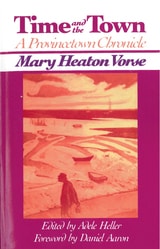
Time and the Town
A Provincetown ChronicleAdele Heller
Rutgers University Press, 1991
Time and the Town was the last of Mary Heaton Vorse's books. It is about many things —a town and its people, the author, a certain kind of idyllic life. As much as anything else, it is the biography of the house Vorse bought in 1907 and lived in, off and on, for the next thirty-six years. The moods of the house mirrored her own. "Our houses," she wrote, "are our biographies, the stories of our defeats and victories."
Tinged with nostalgia and disenchantment, the book describes a Provincetown that has changed, a place on the verge of modernity. It is no longer a major fishing port. It has become a place whose business is tourism. Contrasting the old and the new, Vorse celebrates the enduring character of the town itself. She tells stories that are engaging and charming, droll and fabulous. The wrinkled Mrs. Mary Mooncusser who, though drunk and stark naked, conducts herself with great decorum when Vorse pays her a call, might have stepped out of the pages of Sherwood Anderson or Eudora Welty. In another anecdote, the townspeople scour the beaches for cases of booze dumped into the sea by rumrunners and are briefly inflated with the spirit of ancestral smugglers and buccaneers.
Vorse herself remained something of an outsider in Provincetown, despite her evident affection for the place and its inhabitants. They surely regarded her as simply another of those artist-intellectuals--many of whom appear in the pages of this book. The "off-Cape" outsiders put the town in the national limelight but took no interest in local matters. Vorse here ponders local matters exclusively, almost, one suspects, as a way of forgetting the more complex matters that occupied her--her agonies of parental guilt, her resentment of domestic obligations, her third marriage, her depressions and breakdowns. The town is in that sense beyond time.
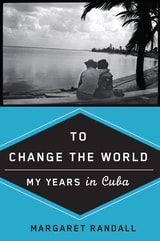
To Change the World
My Years in CubaRandall, Margaret
Rutgers University Press, 2009
Randall gives readers an inside look at her children's education, the process through which new law was enacted, the ins and outs of healthcare, employment, internationalism, culture, and ordinary people's lives. She explores issues of censorship and repression, describing how Cuban writers and artists faced them. She recounts one of the country's last beauty pageants, shows us a night of People's Court, and takes us with her when she shops for her family's food rations. Key figures of the revolution appear throughout, and Randall reveals aspects of their lives never before seen.
More than fifty black and white photographs, most by the author, add depth and richness to this astute and illuminating memoir. Written with a poet's ear, depicted with a photographer's eye, and filled with a feminist vision, To Change the Worldùneither an apology nor gratuitous attackùadds immensely to the existing literature on revolutionary Cuba.
To Do Justice
The Civil Rights Ministry of Reverend Robert E. HughesRandall C. Jimerson
University of Alabama Press, 2022
A minister’s call to justice in the struggle for civil rights.
A native Alabamian, Reverend Robert E. Hughes worked full-time in the civil rights movement as executive director of the Alabama Council of Human Relations, where he developed a close relationship with Dr. Martin Luther King Jr. After facing backlash from the Ku Klux Klan, spending four days in jail for refusing to disclose ACHR membership lists, and ultimately being forced to leave the state of Alabama, he served as a Methodist missionary in Southern Rhodesia (now part of Zimbabwe). After two years of organizing Black liberation groups, he was banned as a “prohibited immigrant” by the Ian Smith government. His lifelong commitment to social justice, racial equality, and peaceful resolution of conflicts marks a fascinating career richly documented in this comprehensive biography.
To Do Justice: The Civil Rights Ministry of Reverend Robert E. Hughes traces the life and career of an admirable and lesser-known civil rights figure who fought injustice on two continents. This account presents valuable new evidence about the civil rights movement in the United States as well as human rights and liberation issues in colonial Southern Rhodesia in the years leading up to independence and self-rule. It provides an intimate portrait of a courageous individual who worked outside of the public spotlight but provided essential support and informational resources to public activists and news reporters
Randall C. Jimerson explores the interwoven threads of race relations and religious beliefs on two continents, focusing on the dual themes of the American civil rights movement and the African struggles for decolonization and majority rule. The life and career of Robert Hughes provide insight into the international dimensions of racial prejudice and discrimination that can be viewed in comparative context to similar oppressions in other colonial lands.
Toward a Natural Forest
The Forest Service in Transition (A Memoir)Jim Furnish
Oregon State University Press, 2015
The Forest Service stumbled in responding to a wave of lawsuits from environmental groups in the late 20th Century—a phenomenon best symbolized by the spotted owl controversy that shut down logging on public forests in the Pacific Northwest in the 1990s. The agency was brought to its knees, pitted between a powerful timber industry that had been having its way with the national forests for decades, and organized environmentalists who believed public lands had been abused and deserved better stewardship.
Toward a Natural Forest offers an insider’s view of this tumultuous time in the history of the Forest Service, presenting twin tales of transformation, both within the agency and within the author’s evolving environmental consciousness. While stewarding our national forests with the best of intentions, had the Forest Service diminished their natural essence and ecological values? How could one man confront the crisis while remaining loyal to his employer?
In this revealing memoir, Furnish addresses the fundamental human drive to gain sustenance from and protect the Earth, believing that we need not destroy it in the process. Drawing on the author’s personal experience and his broad professional knowledge, Toward a Natural Forest illuminates the potential of the Forest Service to provide strong leadership in global conservation efforts. Those interested in our public lands—environmentalists, natural resource professionals, academics, and historians—will find Jim Furnish’s story deeply informed, thought-provoking, and ultimately inspiring.
Twenty Years at Hull-House
Jane Addams, with Autobiographical Notes. Introduction and Notes by James Hurt.
University of Illinois Press, 1990