Results by title
95 books match the query 'Social media' and 12 start with t

Telemorphosis
Jean Baudrillard
University of Minnesota Press, 2015
The art of living today has shifted to a continuous state of the experimental. In one of his last texts, Telemorphosis, renowned thinker and anti-philosopher Jean Baudrillard takes on the task of thinking and reflecting on the coming digital media architectures of the social. While “the social” may have never existed, according to Baudrillard, his analysis at the beginning of the twenty-first century of the coming social media–networked cultures cannot be ignored. One need not look far in order to find oneself snared within some sort of screenification of a techno-social community. “What the most radical critical critique, the most subversive delirious imagination, what no Situationist drift could have done . . . television has done.” Collective reality has entered a realm of telemorphosis.
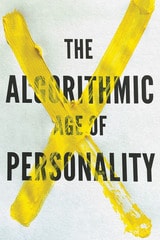
The Algorithmic Age of Personality
African Literature and Cancel CultureJames Yékú
Michigan State University Press, 2025
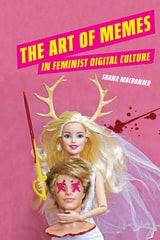
The Art of Memes in Feminist Digital Culture
Shana MacDonald
The Ohio State University Press, 2025
In The Art of Memes in Feminist Digital Culture, Shana MacDonald argues that memes are a unique medium of communication that both respond to and reflect the current cultural moment. The book—the first to treat memes as a unique medium of communication distinct from other internet and digital media—examines feminist and queer activist uses of memes as a form of digital resistance, demonstrating through collage, reenactment, and montage that countercultural meme makers intervene in the status quo and offer cultural critiques with potentially broad circulation. In this way, MacDonald situates memes as part of a lineage of aesthetic resistance, exploring the operational logic of bricolage, intertextuality, and intermediality within contemporary internet meme cultures on the left.
MacDonald examines memes from feminist, queer, antiracist, and anticapitalist accounts on Instagram, as well as how meme genres and themes shift when they travel across different platforms and subcultures. By considering memes as a medium, she sheds light on how they operate within contemporary digital culture as a beacon for online public discourse that pushes against dominant norms.
The Digital Party
Political Organisation and Online DemocracyPaolo Gerbaudo
Pluto Press, 2018
These new political formations tap into the potential of social media to gain consensus, and use online participatory platforms to include the rank-and-file. Paolo Gerbaudo looks at the restructuring of political parties and campaigns in the time of Facebook, Twitter, Instagram, and big data. Drawing on interviews with key political leaders and digital organizers, he argues that the digital party is very different from the class-based “mass party” of the industrial era, and offers promising new solutions to social polarization and the failures of liberal democracy today.
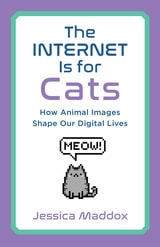
The Internet Is for Cats
How Animal Images Shape Our Digital LivesJessica Maddox
Rutgers University Press, 2023
The Internet is for Cats examines how animal images are employed to create a lighter, more playful mood, uniting users within online spaces that can otherwise easily become fractious and toxic. Placing today’s pet videos, photos, and memes within a longer history of mediated animal images, communication scholar Jessica Maddox also considers the factors that make them unique. She explores the roles that animals play within online economies of cuteness and attention, as well as the ways that animal memes and videos respond to common experiences of life under neoliberalism.
Conducting a rich digital ethnography, Maddox combines observations and textual analysis with extensive interviews of the people who create, post and share animal media, including TikTok influencers seeking to make their pets famous, activists tweeting about wildlife conservation, and Redditors upvoting every cute cat photo. The Internet is for Cats will leave you with a new appreciation for the human social practices behind the animal images you encounter online.

The Librarian's Nitty-Gritty Guide to Social Media
Laura Solomon
American Library Association, 2012
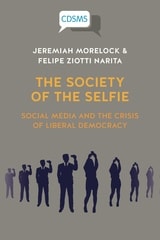
The Society of the Selfie
Social Media and the Crisis of Liberal DemocracyJeremiah Morelock and Felipe Ziotti Narita
University of Westminster Press, 2021

The Time of Laughter
Comedy and the Media Cultures of JapanDavid Humphrey
University of Michigan Press, 2023

The Visibility Bind
Being Seen, Getting Paid, and Paying the Price of Social Media SuccessBrooke Erin Duffy
University of Chicago Press, 0
A revelatory look at the people, platforms, and power struggles shaping work in the creator economy.
More than two decades after YouTube first invited scrappy amateurs to “broadcast yourself,” social media content creation has transformed into one of the fastest growing labor markets. Today, some two hundred million people work as platform-dependent content creators, influencers, or streamers. Social media platforms boldly tout the rewards of the digital creator economy: independence, flexibility, and the chance to convert one’s ingenuity into cash. Yet the image of work in this entrepreneurial Promised Land conceals a starker reality—one marked by labor precarity, exploitation, and entrenched structural inequalities.
In this essential work, award-winning communication scholar Brooke Erin Duffy analyzes the paradox of the “visibility bind.” On the one hand, labor devaluation and algorithmic suppression—where unseen forces and so-called “shadowbans” bury worker output—threaten to render creators invisible. On the other, excessive visibility introduces harms of its own, from scrutiny and surveillance to networked harassment. For creators at the margins—among them, creators of color, LGBTQ+ voices, and disability advocates—the bind is especially pronounced, belying the promise of a talent meritocracy.
Drawing on extensive, in-depth interviews and more than a decade of insight, Duffy situates creators’ experiences within the broader landscapes of self-commodification and platform capitalism. But while platforms hold immense power to structure the pathways to success, creators and influencers wield newfound sway in this high-stakes visibility game. They are organizing, building solidarity, and experimenting with new forms of labor consciousness.
Refuting conventional wisdom about creator careers, Duffy illuminates the hidden labor dynamics for a class of workers shaping everything from culture and commerce to civil liberties and geopolitical conflict. The Visibility Bind reveals the price and perils for anyone who “puts themselves out there.”

Transient Images
Personal Media in Public FrameworksAuthored by Eric Freedman
Temple University Press, 2010
In this probing study, Eric Freedman focuses on what images from photography, mobile communications, and the Internet reveal about looking. Exploring subjectivity by critically examining the look, he elaborates on the nature of the photographic frame and its relation to interpretive practices. Freedman scrutinizes what he calls "technobiography"—a life written through technology, and considers the movement of personal images into public spaces. He also considers authorship that situates the self as inherently engaged with and inscribed by information technology.
All of the chapters in Transient Images explore Freedman's interest in examining how media technologies activate particular notions of self and community. He provides examples that address trauma—pictures of missing children on milk cartons and episodes of the reality series Intervention—as well as the strategies behind creating and distributing personal advertisements on the Internet. Transient Images draws out the tensions that exist in images circulating in the digital era.
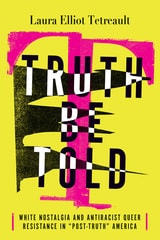
Truth Be Told
White Nostalgia and Antiracist Queer Resistance in “Post-Truth” AmericaLaura Elliot Tetreault
The Ohio State University Press, 2025
Taking a critical disinformation studies approach, Tetreault analyzes post-truth political messaging in the US after 2016. Using racial rhetorical criticism combined with a queer lens, they focus on how contemporary antiracist, queer, and feminist activists used various forms of cultural production to work against disinformation and its circulation, enacting refusal and insisting on the validity of their own knowledges as a form of community care. Tetreault ultimately argues that it’s not just the truth that academics must advocate for; they must question whose truth and how that truth is mediated and circulated.

Tweets and the Streets
Social Media and Contemporary ActivismPaolo Gerbaudo
Pluto Press, 2012
Tweets and the Streets analyses the culture of the new protest movements of the 21st century. From the Arab Spring to the 'indignados' protests in Spain and the Occupy movement, Paolo Gerbaudo examines the relationship between the rise of social media and the emergence of new forms of protest.
Gerbaudo argues that activists' use of Twitter and Facebook does not fit with the image of a 'cyberspace' detached from physical reality. Instead, social media is used as part of a project of re-appropriation of public space, which involves the assembling of different groups around 'occupied' places such as Cairo’s Tahrir Square or New York’s Zuccotti Park.
An exciting and invigorating journey through the new politics of dissent, Tweets and the Streets points both to the creative possibilities and to the risks of political evanescence which new media brings to the contemporary protest experience.