Results by title
52 books match the query 'Social medicine' and 18 start with t

Technology Bureaucracy Healing
A Postmodern ParadigmRoger J. Bulger
University of Iowa Press, 1988
The Body Multiple
Ontology in Medical PracticeAnnemarie Mol
Duke University Press, 2002
The Body Multiple juxtaposes two distinct texts. Alongside Mol’s analysis of her ethnographic material—interviews with doctors and patients and observations of medical examinations, consultations, and operations—runs a parallel text in which she reflects on the relevant literature. Mol draws on medical anthropology, sociology, feminist theory, philosophy, and science and technology studies to reframe such issues as the disease-illness distinction, subject-object relations, boundaries, difference, situatedness, and ontology. In dialogue with one another, Mol’s two texts meditate on the multiplicity of reality-in-practice.
Presenting philosophical reflections on the body and medical practice through vivid storytelling, The Body Multiple will be important to those in medical anthropology, philosophy, and the social study of science, technology, and medicine.

The Cult of Health and Beauty in Germany
A Social History, 1890-1930Michael Hau
University of Chicago Press, 2003
Hau argues that the obsession with personal health and fitness was often rooted in anxieties over professional and economic success, as well as fears that modern industrialized civilization was causing Germany and its people to degenerate. He also examines how different social groups gave different meanings to the same hygienic practices and aesthetic ideals. What results is a penetrating look at class formation in pre-Nazi Germany that will interest historians of Europe and medicine and scholars of culture and gender.

The Cultivation of Whiteness
Science, Health, and Racial Destiny in AustraliaWarwick Anderson
Duke University Press, 2006
“[Anderson] writes with passion, wit, and panache, and the principal virtues of The Cultivation of Whiteness are the old-fashioned ones of thoroughness, accuracy, and impeccable documentation. . . . [His] sensitive study is a model of how contentious historical issues can be confronted.”—W. F. Bynum, Times Literary Supplement
“One of the virtues of The Cultivation of Whiteness is that it brings together aspects of Australian life and history that are now more often separated—race and environment, blood and soil, medicine and geography, tropical science and urban health, biological thought and national policy, Aboriginality and immigration, the body and the mind. The result is a rich and subtle history of ideas that is both intellectual and organic, and that vividly evokes past states of mind and their lingering, haunting power.”—Tom Griffiths, Sydney Morning Herald
The Death Gap
How Inequality KillsDavid A. Ansell, MD
University of Chicago Press, 2017
While the contrasts and disparities among Chicago’s communities are particularly stark, the death gap is truly a nationwide epidemic—as Ansell shows, there is a thirty-five-year difference in life expectancy between the healthiest and wealthiest and the poorest and sickest American neighborhoods. If you are poor, where you live in America can dictate when you die. It doesn’t need to be this way; such divisions are not inevitable. Ansell calls out the social and cultural arguments that have been raised as ways of explaining or excusing these gaps, and he lays bare the structural violence—the racism, economic exploitation, and discrimination—that is really to blame. Inequality is a disease, Ansell argues, and we need to treat and eradicate it as we would any major illness. To do so, he outlines a vision that will provide the foundation for a healthier nation—for all.
Inequality is all around us, and often the distance between high and low life expectancy can be a matter of just a few blocks. But geography need not be destiny, urges Ansell. In The Death Gap he shows us how we can face this national health crisis head-on and take action against the circumstances that rob people of their dignity and their lives.
The Death Gap
How Inequality KillsDavid A. Ansell, MD
University of Chicago Press, 2021
While the contrasts and disparities among Chicago’s communities are particularly stark, the death gap is truly a nationwide epidemic—as Ansell shows, there is a thirty-five-year difference in life expectancy between the healthiest and wealthiest and the poorest and sickest American neighborhoods. If you are poor, where you live in America can dictate when you die. It doesn’t need to be this way; such divisions are not inevitable. Ansell calls out the social and cultural arguments that have been raised as ways of explaining or excusing these gaps, and he lays bare the structural violence—the racism, economic exploitation, and discrimination—that is really to blame. Inequality is a disease, Ansell argues, and we need to treat and eradicate it as we would any major illness. To do so, he outlines a vision that will provide the foundation for a healthier nation—for all.
As the COVID-19 mortality rates in underserved communities proved, inequality is all around us, and often the distance between high and low life expectancy can be a matter of just a few blocks. Updated with a new foreword by Chicago mayor Lori Lightfoot and an afterword by Ansell, The Death Gap speaks to the urgency to face this national health crisis head-on.

The Limits of Medicine
How Science Shapes Our Hope for the CureEdward S. Golub
University of Chicago Press, 1997
major advances in medicine are caused by changes in the way scientists describe disease.
Bleeding, sweating, and other treatments we consider barbaric were standard treatments for
centuries because they conformed to a conception of disease shared by patients and doctors.
Scientific breakthroughs in the understanding of disease in the nineteenth century transformed
treatment and the goals of medicine. Golub argues that the ongoing revolution in molecular
genetics has opened the door to the "biology of complexity," again transforming our view of
disease. This thought-provoking, timely book reveals a crucial but overlooked role of science
in medicine, and offers a new vision for the goals of both science and medicine as we enter the
twenty-first century.

The Medical Library Association Guide to Health Literacy at the Library
American Library Association, 2008
The Mirage of Health
Utopia, Progress, and Biological ChangeDubos, Jean
Rutgers University Press, 1987

The Political Economy of Health in Africa
Mis Af#60Toyin Falola
Ohio University Press, 1992
The Politics of Public Health
Turshen, Meredeth
Rutgers University Press, 1989
The book is divided into four parts. Part 1 outlines current and alternative approaches to health, theories of disease causation, the policies and practices that follow from these theories, and issues of equity and access to health care. A chapter of women's health in three African countries illustrates these concepts. Part 2 describes limits to conventional public health, using case histories of plague control, dioxin decontamination, sanitary reform, and smallpox and malaria eradication. In Part 3, Turshen presents case histories of preventive medicine, nutrition and agribusiness, mental health, and AIDS in Africa to suggest new approaches based on an alternative model of social production. Part 4 looks to the future of public health. It examines basic issues in integrating public health research, training, and services, and concludes with an agenda for action.
The Politics of Public Health
Turshen, Meredeth
Rutgers University Press, 1989
The book is divided into four parts. Part 1 outlines current and alternative approaches to health, theories of disease causation, the policies and practices that follow from these theories, and issues of equity and access to health care. A chapter of women's health in three African countries illustrates these concepts. Part 2 describes limits to conventional public health, using case histories of plague control, dioxin decontamination, sanitary reform, and smallpox and malaria eradication. In Part 3, Turshen presents case histories of preventive medicine, nutrition and agribusiness, mental health, and AIDS in Africa to suggest new approaches based on an alternative model of social production. Part 4 looks to the future of public health. It examines basic issues in integrating public health research, training, and services, and concludes with an agenda for action.

The Social Medicine Reader
Gail E. Henderson, Nancy M. P. King, Ronald P. Strauss, Sue E. Estroff, and Larry R. Churchill, eds.
Duke University Press, 1997
Based on more than a decade of teaching social medicine to first-year medical students at the pioneering Department of Social Medicine at the University of North Carolina, The Social Medicine Reader defines the meaning of the social medicine perspective and offers an approach for teaching it. Looking at medicine from a variety of perspectives, this anthology features fiction, medical reports, scholarly essays, poetry, case studies, and personal narratives by patients and doctors—all of which contribute to an understanding of how medicine and medical practice is profoundly influenced by social, cultural, political, and economic forces.
What happens when a person becomes a patient? How are illness and disability experienced? What causes disease? What can medicine do? What constitutes a doctor/patient relationship? What are the ethical obligations of a health care provider? These questions and many others are raised by The Social Medicine Reader, which is organized into sections that address how patients experience illness, cultural attitudes toward disease, social factors related to health problems, the socialization of physicians, the doctor/patient relationship, health care ethics and the provider’s role, medical care financing, rationing, and managed care.
The Social Medicine Reader, Second Edition
Volume 3: Health Policy, Markets, and MedicineJonathan Oberlander, Larry R. Churchill, Sue E. Estroff, Gail E. Henderson, Nancy M. P. King, and Ronald P. Strauss, eds.
Duke University Press, 2005
Praise for the 3-volume second edition of The Social Medicine Reader:
“A superb collection of essays that illuminate the role of medicine in modern society. Students and general readers are not likely to find anything better.”—Arnold S. Relman, Professor Emeritus of Medicine and Social Medicine, Harvard Medical School
Praise for the first edition:
“This reviewer strongly recommends The Social Medicine Reader to the attention of medical educators.”—Samuel W. Bloom, JAMA: The Journal of the American Medical Association
Volume 3:
Over the past four decades the American health care system has witnessed dramatic changes in private health insurance, campaigns to enact national health insurance, and the rise (and perhaps fall) of managed care. Bringing together seventeen pieces new to this second edition of The Social Medicine Reader and four pieces from the first edition, Health Policy, Markets, and Medicine draws on a broad range of disciplinary perspectives—including political science, economics, history, and bioethics—to consider changes in health care and the future of U.S. health policy. Contributors analyze the historical and moral foundation of today’s policy debates, examine why health care spending is so hard to control in the United States, and explain the political dynamics of Medicare and Medicaid. Selections address the rise of managed care, its impact on patients and physicians, and the ethical implications of applying a business ethos to medical care; they also compare the U.S. health care system to the systems in European countries, Canada, and Japan. Additional readings probe contemporary policy issues, including the emergence of consumer-driven health care, efforts to move quality of care to the top of the policy agenda, and the implications of the aging of America for public policy.
Contributors: Henry J. Aaron, Drew E. Altman, George J. Annas, Robert H. Binstock, Thomas Bodenheimer, Troyen A. Brennan, Robert H. Brook, Lawrence D. Brown, Daniel Callahan, Jafna L. Cox, Victor R. Fuchs, Kevin Grumbach, Rudolf Klein, Robert Kuttner, Larry Levitt, Donald L. Madison, Wendy K. Mariner, Elizabeth A. McGlynn, Jonathan Oberlander, Geov Parrish, Sharon Redmayne, Uwe E. Reinhardt, Michael S. Sparer, Deborah Stone
The Social Medicine Reader, Second Edition
Volume Two: Social and Cultural Contributions to Health, Difference, and InequalityGail E. Henderson, Sue E. Estroff, Larry R. Churchill, Nancy M. P. King, Jonathan Oberlander, and Ronald P. Strauss, eds.
Duke University Press, 2005
Praise for the 3-volume second edition of The Social Medicine Reader:
“A superb collection of essays that illuminate the role of medicine in modern society. Students and general readers are not likely to find anything better.”—Arnold S. Relman, Professor Emeritus of Medicine and Social Medicine, Harvard Medical School
Praise for the first edition:
“This reviewer strongly recommends The Social Medicine Reader to the attention of medical educators.”—Samuel W. Bloom, JAMA: The Journal of the American Medical Association
Volume 2:
Ranging from a historical look at eugenics to an ethnographic description of parents receiving the news that their child has Down syndrome, from analyses of inequalities in the delivery of health services to an examination of the meaning of race in genomics research, and from a meditation on the loneliness of the long-term caregiver to a reflection on what children owe their elderly parents, this volume explores health and illness. Social and Cultural Contributions to Health, Difference, and Inequality brings together seventeen pieces new to this edition of The Social Medicine Reader and five pieces that appeared in the first edition. It focuses on how difference and disability are defined and experienced in contemporary America, how the social categories commonly used to predict disease outcomes—such as gender, race and ethnicity, and social class—have become contested terrain, and why some groups have more limited access to health care services than others. Juxtaposing first-person narratives with empirical and conceptual studies, this compelling collection draws on several disciplines, including cultural and medical anthropology, sociology, and the history of medicine.
Contributors: Laurie K. Abraham, Raj Bhopal, Ami S. Brodoff, Daniel Callahan, David Diamond, Liam Donaldson, Alice Dreger, Sue E. Estroff, Paul Farmer, Anne Fausto-Sterling, Jerome Groopman, Gail E. Henderson, Linda M. Hunt, Barbara A. Koenig, Donald R. Lannin, Sandra Soo-Jin Lee, Carol Levine, Judith Lorber, Nancy Mairs, Holly F. Mathews, James P. Mitchell, Joanna Mountain, Alan R. Nelson, Martin S. Pernick, Rayna Rapp, Sally L. Satel, Robert S. Schwartz, Brian D. Smedley, Adrienne Y. Stith, Sharon Sytsma, Gordon Weaver, Bruce Wilson, Irving Kenneth Zola
The Social Medicine Reader, Volume I, Third Edition
Ethics and Cultures of BiomedicineJonathan Oberlander, Mara Buchbinder, Larry R. Churchill, Sue E. Estroff, Nancy M. King, Barry F. Saunders, Ronald P. Strauss, and Rebecca L. Walker, editors
Duke University Press, 2019
Volume 1, Ethics and Cultures of Biomedicine, contains essays, case studies, narratives, fiction, and poems that focus on the experiences of illness and of clinician-patient relationships. Among other topics the contributors examine the roles and training of professionals alongside the broader cultures of biomedicine; health care; experiences and decisions regarding death, dying, and struggling to live; and particular manifestations of injustice in the broader health system. The Reader is essential reading for all medical students, physicians, and health care providers.
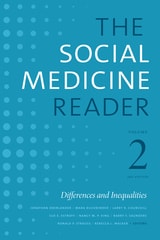
The Social Medicine Reader, Volume II, Third Edition
Differences and Inequalities, Volume 2Jonathan Oberlander, Mara Buchbinder, Larry R. Churchill, Sue E. Estroff, Nancy M. King, Barry F. Saunders, Ronald P. Strauss, and Rebecca L. Walker, editors
Duke University Press, 2019
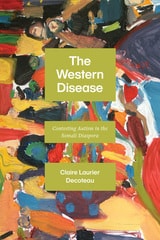
The Western Disease
Contesting Autism in the Somali DiasporaClaire Laurier Decoteau
University of Chicago Press, 2021
Because autism is an increasingly common diagnosis, North Americans are familiar with its symptoms and treatments. But what we know and think about autism is shaped by our social relationship to health, disease, and the medical system. In The Western Disease Claire Laurier Decoteau explores the ways that recent immigrants from Somalia to Canada and the US make sense of their children’s diagnosis of autism. Having never heard of autism before migrating to North America, they often determine that it must be a Western disease. Given its apparent absence in Somalia, they view it as Western in nature, caused by environmental and health conditions unique to life in North America.
Following Somali parents as they struggle to make sense of their children's illness and advocate for alternative care, Decoteau unfolds how complex interacting factors of immigration, race, and class affect Somalis’ relationship to the disease. Somalis’ engagement with autism challenges the prevailing presumption among Western doctors that their approach to healing is universal. Decoteau argues that centering an analysis on autism within the Somali diaspora exposes how autism has been defined and institutionalized as a white, middle-class disorder, leading to health disparities based on race, class, age, and ability. The Western Disease asks us to consider the social causes of disease and the role environmental changes and structural inequalities play in health vulnerability.