Results by title
135 books match the query 'Sociological aspects' and 27 start with t
Tactical Urbanism for Librarians
Quick, Low-Cost Ways to Make Big ChangesKaren Munro
American Library Association, 2017
The Arc of War
Origins, Escalation, and TransformationJack S. Levy and William R. Thompson
University of Chicago Press, 2011
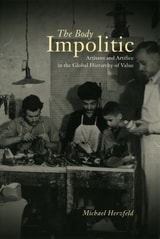
The Body Impolitic
Artisans and Artifice in the Global Hierarchy of ValueMichael Herzfeld
University of Chicago Press, 2003
Michael Herzfeld takes us inside a rich variety of small-town Cretan artisans' workshops to show how apprentices are systematically thwarted into learning by stealth and guile. This harsh training reinforces a stereotype of artisans as rude and uncultured. Moreover, the same stereotypes that marginalize artisans locally also operate to marginalize Cretans within the Greek nation and Greece itself within the international community. What Herzfeld identifies as "the global hierarchy of value" thus frames the nation's ancient monuments and traditional handicrafts as evidence of incurable "backwardness."
Herzfeld's sensitive observations offer an intimately grounded way of understanding the effects of globalization and of one of its most visible offshoots, the heritage industry, on the lives of ordinary people in many parts of the world today.

The Cancer Stage of Capitalism
From Crisis to CureJohn McMurtry
Pluto Press, 2013
The Cancer Stage of Capitalism is a modern classic of critical philosophy and political economy, renowned for its depth and comprehensive research. It provides a step by step diagnosis of the continuing economic collapse in the US and Europe and has had an enormous influence on new visions of economic alternatives.
John McMurtry argues that our world disorder of unending crises is the predictable result of a cancerous economic system multiplying out of all control and destroying ecological, social and organic life - a process he describes as 'global ecogenocide'. In this updated edition he explains the ‘social immune response’ required to fight the ‘macro cancer’, something which has already been shown in developments such as the Occupy movement and the democratic social transformation of Latin America.
In an official global culture increasingly destructive of life, this book shows the necessity and possibility of building a sustainable society based on a universal commitment to life and nature.
The Company We Keep
Occupational Community in the High-Tech Network SocietyDaniel Marschall
Temple University Press, 2014
At the birth of the Internet Age, computer technologists in small, aggressive software development companies became part of a unique networked occupational community. They were creative, team-oriented, and enthusiastic workers who built "boundaryless careers," hopping from one employer to another.
In his absorbing ethnography The Company We Keep, sociologist Daniel Marschall immerses himself in IntenSivity, one such technological workplace. Chronicling the employees' experiences, Marschall examines how these workers characterize their occupational culture, share values and work practices, and help one another within their community. He sheds light on the nature of this industry marked by highly skilled jobs and rapid technological change.
The experiences at IntenSivity are now mirrored by employees at Facebook and thousands of other cutting-edge, high-tech start-up firms. The Company We Keep helps us understand the emergence of virtual work communities and the character of the contemporary labor market at the level of a small enterprise.
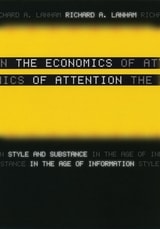
The Economics of Attention
Style and Substance in the Age of InformationRichard A. Lanham
University of Chicago Press, 2006
With all the verve and erudition that have established his earlier books as classics, Richard A. Lanham here traces our epochal move from an economy of things and objects to an economy of attention. According to Lanham, the central commodity in our new age of information is not stuff but style, for style is what competes for our attention amidst the din and deluge of new media. In such a world, intellectual property will become more central to the economy than real property, while the arts and letters will grow to be more crucial than engineering, the physical sciences, and indeed economics as conventionally practiced. For Lanham, the arts and letters are the disciplines that study how human attention is allocated and how cultural capital is created and traded. In an economy of attention, style and substance change places. The new attention economy, therefore, will anoint a new set of moguls in the business world—not the CEOs or fund managers of yesteryear, but new masters of attention with a grounding in the humanities and liberal arts.
Lanham’s The Electronic Word was one of the earliest and most influential books on new electronic culture. The Economics of Attention builds on the best insights of that seminal book to map the new frontier that information technologies have created.
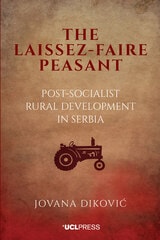
The Laissez-Faire Peasant
Post-Socialist Rural Development in SerbiaJovana Dikovic
University College London, 2025
The Laissez-Faire Peasant: Post-Socialist Rural Development in Serbia subverts conventional wisdom on rural development by shifting the focus from state-led planning to the agency of peasants themselves. Rejecting the notion that rural populations are passive victims of top-down policies, Jovana Dikovic presents a compelling ethnographic study of three Serbian villages, where autonomy and local cooperation drive economic and social resilience. She introduces the concept of the “laissez-faire peasant”—a figure who thrives outside rigid government schemes, shaping rural development on their own terms. By examining the friction between state policies and the everyday strategies of rural communities, Dikovic uncovers how peasant autonomy not only resists external intervention but fosters sustainable and self-sufficient growth.
The first in-depth study of contemporary Serbian peasantry, this book reframes rural life as a site of innovation rather than stagnation. An area of interest for scholars of post-socialist transitions, rural development, and economic anthropology, The Laissez-Faire Peasant provides a new lens on how rural communities survive and adapt in a rapidly changing world.
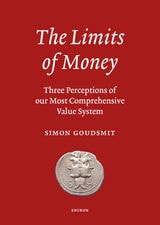
The Limits of Money
Three Perceptions of Our Most Comprehensive Value SystemSimon Goudsmit
Eburon Academic Publishers, 2005
The Limits of Money is an intriguing and much-needed study of the role of money in daily life and human societies.

The Many Names of Anonymity
Portraitists of the Canton TradeWinnie Wong
University of Chicago Press, 2025
Challenging contemporary procedures for establishing attribution, chronology, and authenticity in Chinese art, Winnie Wong explores the means, methods, and stakes of recovering the names of an anonymous community of artists. To examine how Western art history has misconstrued and miscategorized names and identities in Chinese art, she looks to conflicting features of modernity: the European attachment of singular names to individuals and their works, and the Chinese use of socially contingent names that often are not attached to material labor and sometimes operate against it. Wong charts the genealogy of this naming problem by bringing to life the artists of the Qing Empire’s trade with Europeans at the port of Guangzhou, centering on a group of portraitists known by names that were recorded in a pidgin language: Chin Qua, Chit Qua, Spoilum, Lam Qua, and Ting Qua.
Many of these paintings survive today, yet scholars have identified only a handful of the painters’ identities. Pushing against Western norms that have shaped our understanding of authorship, Wong reveals that these artists shared names, created works in multiples, and signed their pieces with different names or none at all. This lavishly illustrated volume explores portraiture across media, including unfired clay, reverse painting on glass, watercolor on paper, oil on canvas, and the daguerreotype, to propose new ways of studying anonymity, copying, and the emergence of author names in the Sino-European visual culture of the long eighteenth century.
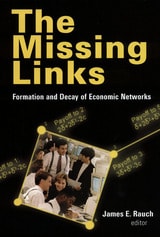
The Missing Links
Formation and Decay of Economic NetworksJames E. Rauch
Russell Sage Foundation, 2007
The New Economic Sociology
Developments in an Emerging FieldMaruo F. Guillen
Russell Sage Foundation, 2002
The New Institutionalism in Sociology
Mary C. Brinton
Russell Sage Foundation, 1998
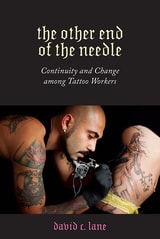
The Other End of the Needle
Continuity and Change among Tattoo WorkersDavid C. Lane
Rutgers University Press, 2021
Yet, Lane notes, prior research has focused almost exclusively on the tattoos—the outcome of an intricate social process—and have ignored the significance of tattoo workers themselves. "Tattooists," as Lane dubs them, make decisions, but they work within a social world that constrains and shapes the outcome of their labor—the tattoo. The goal of this book is to help readers understand the world of tattoo work as an intricate and nuanced form of work. Lane ultimately asks new questions about the social processes occurring prior to the tattoo’s existence.
The Past in the Present
Women's Higher Education in the Twentieth-Century American SouthAmy T. McCandless
University of Alabama Press, 1999
The Political Economy of Distributism
Property, Liberty, and the Common GoodAlexander William Salter
Catholic University of America Press, 2023
The Politics of Value
Three Movements to Change How We Think about the EconomyJane L. Collins
University of Chicago Press, 2017
Each case shows how the concrete actions of a group of citizens can prompt us to reflect on what is needed for a just and sustainable economic system. In one case, activists raised questions about the responsibilities of business, in the second about the significance of local economies, and in the third about the contributions of the public sector. Through these movements, Jane L. Collins maps a set of cultural conversations about the types of investments and activities that contribute to the health of the economy. Compelling and persuasive, The Politics of Value offers a new framework for viewing economic value, one grounded in thoughtful assessment of the social division of labor and the relationship of the state and the market to civil society.
The Power at the End of the Economy
Brian Massumi
Duke University Press, 2015
The Real Economy
Essays in Ethnographic TheoryEdited by Federico Neiburg and Jane I. Guyer
HAU, 2020
An ambitious anthropology of economy, this volume questions how assemblages of vernacular and scientific realizations and enactments of the economy are linked to ideas of truth and moral value; how these multiple and shifting realities become present and entangle with historically and socially situated lives; and how the formal realizations of the concept of the “real” in the governance of economies engage with the experiential lives of ordinary people. Featuring essays from some of the world’s most prominent economic anthropologists, The Real Economy is a milestone collection in economic anthropology that crosses disciplinary boundaries and adds new life to social studies of the economy.
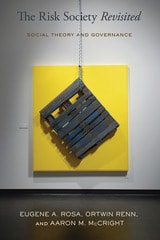
The Risk Society Revisited
Social Theory and Risk GovernanceEugene Rosa
Temple University Press, 2015
Risk is a part of life. How we handle uncertainty and deal with potential threats influence decision making throughout our lives. In The Risk Society Revisited, Eugene A. Rosa, Ortwin Renn, and Aaron M. McCright offer the first book to present an integrated theory of risk and governance.
The authors examine our sociological understanding of risk and how we reconcile modern human conditions with our handling of risk in our quest for improved quality of life. They build a new framework for understanding risk—one that provides an innovative connection between social theory and the governance of technological and environmental risks and the sociopolitical challenges they pose for a sustainable future.
Showing how our consciousness affects risk in the decisions we make—as individuals and as members of a democratic society—The Risk Society Revisited makes an important contribution to the literature of risk research.
The Social Organization of Schooling
Larry V. Hedges
Russell Sage Foundation, 2005
The Sociology of the Economy
Frank Dobbin
Russell Sage Foundation, 2004
The Solidarity Economy
Jean-Louis Laville
University of Minnesota Press, 2023
Questioning the boundaries between politics and economics
Jean-Louis Laville’s large body of work has focused on an intellectual history of the concept of solidarity since the Industrial Revolution. In The Solidarity Economy, his most famous distillation of this work, Laville establishes how the formations of economic solidarities (unions, activism, and other forms of associationalism) reveal that the boundaries between politics and economics are porous and structured such that politics, ideally a pure expression of ethics and values, is instead integrated with economic concerns.
Exploring the possibilities and long histories of association, The Solidarity Economy identifies the power of contemporary social and solidarity movements and examines the history of postcapitalist practices in which democratic demands invade the heart of the economy. The Solidarity Economy ranges in focus from workers associations in France dating back to the nineteenth century, to associations of African Americans and feminists in the United States in the late nineteenth and early twentieth centuries, to a Brazilian landless-worker coalition in the twentieth century.
Studying solidarity associations over time allows us to examine how we can recombine the economic and political spheres to address dependencies and inequalities. Ultimately, The Solidarity Economy has global scope and inspiring examples of associations that deepen democracy.
The Structure of World History
From Modes of Production to Modes of ExchangeKojin Karatani
Duke University Press, 2014
The Whites Are Enemies of Heaven
Climate Caucasianism and Asian Ecological ProtectionMark W. Driscoll
Duke University Press, 2020
Time Matters
On Theory and MethodAndrew Abbott
University of Chicago Press, 2001
Time Matters focuses particularly on questions of time, events, and causality. Abbott grounds each essay in straightforward examinations of actual social scientific analyses. Throughout, he demonstrates the crucial assumptions we make about causes and events, about actors and interaction and about time and meaning every time we employ methods of social analysis, whether in academic disciplines, market research, public opinion polling, or even evaluation research. Turning current assumptions on their heads, Abbott not only outlines the theoretical orthodoxies of empirical social science, he sketches new alternatives, laying down foundations for a new body of social theory.
Training the Body for China
Sports in the Moral Order of the People's RepublicSusan Brownell
University of Chicago Press, 1995
Training the Body for China is the first book on Chinese sports based on extended fieldwork by a Westerner. Brownell introduces the notion of "body culture" to analyze Olympic sports as one element in a whole set of Chinese body practices: the "old people's disco dancing" craze, the new popularity of bodybuilding (following reluctant official acceptance of the bikini), mass calisthenics, martial arts, military discipline, and more.
Translating official and dissident materials into English for the first time and drawing on performance theory and histories of the body, Brownell uses the culture of the body as a focal point to explore the tensions between local and global organizations, the traditional and the modern, men and women. Her intimate knowledge of Chinese social and cultural life and her wide range of historic examples make Training the Body for China a unique illustration of how gender, the body, and the nation are interlinked in Chinese culture.
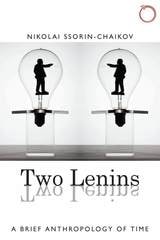
Two Lenins
A Brief Anthropology of TimeNikolai Ssorin-Chaikov
HAU, 2017
Nikolai Ssorin-Chaikov grounds his theoretical exploration in fascinating ethnographic and historical material on two Lenins: the first is the famed Soviet leader of the early twentieth century, and the second is a Siberian Evenki hunter—nicknamed “Lenin”—who experienced the collapse of the USSR during the 1990s. Through their intertwined stories, Ssorin-Chaikov unveils new dimensions of ethnographic reality by multiplying our notions of time.
Ssorin-Chaikov examines Vladimir Lenin at the height of his reign in 1920s Soviet Russia, focusing especially on his relationship with American businessperson Armand Hammer. He casts this scene against the second Lenin—the hunter on the far end of the country, in Siberia, at the far end of the century, the 1990s, who is tasked with improvising postsocialism in the economic and political uncertainties of post-Soviet transition. Moving from Moscow to Siberia to New York, and traveling form the 1920s to the 1960s to the 1990’s, Ssorin-Chaikov takes readers beyond a simple global history or cross-temporal comparison, instead using these two figures to enact an ethnographic study of the very category of time that we use to bridge different historical contexts.