Results by title
74 books match the query 'Sociology, Urban' and 16 start with t
The Appearing Demos
Hong Kong During and After the Umbrella MovementPang Laikwan
University of Michigan Press, 2020
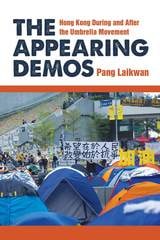
The 79-day-long Hong Kong Umbrella Movement occupied major streets in the busiest parts of the city, creating tremendous inconvenience to this city famous for capitalist order and efficiency. It was also a peaceful collective effort of appearance, and it was as much a political event as a cultural one. The urge for expressing an independent cultural identity underlined both the Occupy movement and the remarkably rich cultural expressions it generated. While understanding the specificity of Hong Kong’s situations, The Appearing Demos also comments on some global predicaments we are facing in the midst of neoliberalism and populism. It directs our attention from state-based sovereignty to city-based democracy, and emphasizes the importance of participation and cohabitation. The book also examines how the ideas of Hannah Arendt are useful to those happenings much beyond the political circumstances that gave rise to her theorization. The book pays particular attention to the actual intersubjective experiences during the protest. These experiences are local, fragile, and sometimes inarticulable, therefore resisting rationality and debates, but they define the fullness of any individual, and they also make politics possible. Using the Umbrella Movement as an example, this book examines the “freed” political agents who constantly take others into consideration in order to guarantee the political realm as a place without coercion and discrimination. In doing so, Pang Laikwan demonstrates how politics means neither to rule nor to be ruled, and these movements should be defined by hope, not by goals.

The Art of Defiance
Graffiti, Politics and the Reimagined City in PhiladelphiaTyson Mitman
Intellect Books, 2018
In order to both demystify and complicate our understanding of the practice of graffiti writing, this book pushes past the narrative that links the origins of graffiti to criminal gangs and instead offers a detailed portrait of graffiti as a rich urban culture with its own rules and practices. To do so, it examines the cultural history of graffiti in Philadelphia from the early 1970s onward and explores what it is like to be a graffiti writer in the city today. Ultimately, Tyson Mitman aims to humanize graffiti writers and to show that what they do is not merely destructive or puerile, but, rather, adds something important to the urban experience that is a conscious and deliberate act on the part of its practitioners.
The City
Robert E. Park and Ernest W. Burgess
University of Chicago Press, 2019
The City after Property
Abandonment and Repair in Postindustrial DetroitSara Safransky
Duke University Press, 2023

The City, Revisited
Urban Theory from Chicago, Los Angeles, and New YorkDennis R. Judd
University of Minnesota Press, 2011
Contributors: Janet Abu-Lughod, Northwestern U and New School for Social Research; Robert Beauregard, Columbia U; Larry Bennett, DePaul U; Andrew A. Beveridge, Queens College and CUNY; Amy Bridges, U of California, San Diego; Terry Nichols Clark, U of Chicago; Nicholas Dahmann, U of Southern California; Michael Dear, U of California, Berkeley; Steven P. Erie, U of California, San Diego; Frank Gaffikin, Queen's U of Belfast; David Halle, U of California, Los Angeles; Tom Kelly, U of Illinois at Chicago; Ratoola Kunda, U of Illinois at Chicago; Scott A. MacKenzie, U of California, Davis; John Mollenkopf, CUNY; David C. Perry, U of Illinois at Chicago; Francisco Sabatini, Ponticia Universidad Catolica de Chile; Rodrigo Salcedo, Pontificia Universidad Catolica de Santiago; Dick Simpson, U of Illinois at Chicago; Daphne Spain, U of Virginia; Costas Spirou, National-Louis U in Chicago.
The Gold Coast and the Slum
A Sociological Study of Chicago's Near North SideHarvey Warren Zorbaugh
University of Chicago Press, 1983
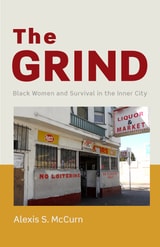
The Grind
Black Women and Survival in the Inner CityMcCurn, Alexis S
Rutgers University Press, 2018
Alexis S. McCurn draws on nearly two years of naturalistic field research among adolescents and adults in Oakland, California to provide an ethnographic account of how black women accomplish the routine tasks necessary for basic survival in poor inner-city neighborhoods and how the intersections of race, gender, and class shape how black women interact with others in public. This book makes the case that the daily consequences of racialized poverty in the lives of African Americans cannot be fully understood without accounting for the personal and collective experiences of poor black women.
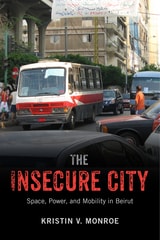
The Insecure City
Space, Power, and Mobility in BeirutMonroe, Kristin V
Rutgers University Press, 2016
Download open access ebook here.

The New Metropolis
Power, Place, and Inequality in Twenty-First-Century AmericaMargaret Weir
University of Chicago Press, 2027
A path-breaking investigation of changing patterns of inequality and contestation in America’s metropolises.
Since 1990, a new political geography of winners and losers has emerged in metros across America. This new metropolis looks nothing like the old. In many exurbs, suburban mansions abut declining towns and distressed communities. In historic central cities, African American communities reel from institutional stripping, even as gentrification and immigration revitalize once forgotten neighborhoods. The New Metropolis considers why, despite all the changes over the past four decades, we have recreated a metropolis that makes it harder for low-income Americans—especially low-income Americans of color—to thrive and why some efforts to promote equitable opportunity succeed against the odds.
With a focus on Chicago, Atlanta, and Houston, The New Metropolis shows how multi-level political actors and translocal networks build power across political boundaries to determine the pool of local public resources and the scope of local powers. Weir demonstrates how the timing of urbanization set up distinct conflicts over the public sector in Frostbelt versus Sunbelt metropolises, explaining how partisan divisions now supercharge these conflicts.
The New Metropolis shows why the battle over the metropolis sits at the center of American politics. It determines the shape of the public arenas where we make decisions and, ultimately, the kinds of connections Americans have with one another.
The Post-Global City
Theorizing Technology Cultures in Urban AfricaEditors: Katrien Pype, Omolade Adunbi and Michael M.J. Fischer
University of Michigan Press, 2026
The Post-Global City seeks to open a new field of analytical inquiry that examines knowledge production and technological developments in urban Africa rooted in local, historical realities, while also partaking in transnational, global processes. This work explores the ways in which urban residents have utilized technologies and networks to operate around, under, and beyond the state and the international “order,” and challenges the stereotypical images of Africa as a continent either devoid of technology or filled with either broken technologies or technologies from the Global North or Asia. This book focuses on accounts and critiques of new “Rising Africa” ideologies, examining megaprojects such as geothermal and hydroelectric plants with new networked startups that circumvent state and patriarchal hierarchies, women vendors selling online, youths designing and constructing oil refining technologies and tech startups working across diasporas.
Grounded in ethnographic fieldwork carried out in urban spaces in Nigeria, Kenya, the Democratic Republic of Congo, Sudan, Gabon, Cameroon, and Tanzania, The Post-Global City brings together voices from Africa, Europe, and the United States to inquire into the dialectics between technology and the urban on the African continent.
The Social Production of Urban Space
By M. Gottdiener
University of Texas Press, 1994
From reviews of the first edition:
"This is perhaps the best theoretically oriented book by a United States urban sociologist since the work of Firey, Hawley, and Sjoberg in the 1940s and 1950s.... Gottdiener is on the cutting edge of urban theoretical work today." —Joe R. Feagin, Contemporary Sociology
Since its first publication in 1985, The Social Production of Urban Space has become a landmark work in urban studies. In this second edition, M. Gottdiener assesses important new theoretical models of urban space—and their shortcomings—including the global perspective, the flexible accumulation school, postmodernism, the new international division of labor, and the "growth machine" perspective.
Going beyond the limitations of these and older theories, Gottdiener proposes a model of urban growth that accounts for the deconcentration away from the central city that began in the United States in the 1920s and continues today. Sociologists, political scientists, economists, geographers, and urban planners will find his interdisciplinary approach to urban science invaluable, as it is currently the most comprehensive treatment of European and American work in these related fields.
The Streets of Europe
The Sights, Sounds, and Smells That Shaped Its Great CitiesBrian Ladd
University of Chicago Press, 2020
Merchants’ shouts, jostling strangers, aromas of fresh fish and flowers, plodding horses, and friendly chatter long filled the narrow, crowded streets of the European city. As they developed over many centuries, these spaces of commerce, communion, and commuting framed daily life. At its heyday in the 1800s, the European street was the place where social worlds connected and collided.
Brian Ladd recounts a rich social and cultural history of the European city street, tracing its transformation from a lively scene of trade and crowds into a thoroughfare for high-speed transportation. Looking closely at four major cities—London, Paris, Berlin, and Vienna—Ladd uncovers both the joys and the struggles of a past world. The story takes us up to the twentieth century, when the life of the street was transformed as wealthier citizens withdrew from the crowds to seek refuge in suburbs and automobiles. As demographics and technologies changed, so did the structure of cities and the design of streets, significantly shifting our relationships to them. In today’s world of high-speed transportation and impersonal marketplaces, Ladd leads us to consider how we might draw on our history to once again build streets that encourage us to linger.
By unearthing the vivid descriptions recorded by amused and outraged contemporaries, Ladd reveals the changing nature of city life, showing why streets matter and how they can contribute to public life.
The Surrounds
Urban Life within and beyond CaptureAbdouMaliq Simone
Duke University Press, 2022
The Third City
Chicago and American UrbanismLarry Bennett
University of Chicago Press, 2010
Our traditional image of Chicago—as a gritty metropolis carved into ethnically defined enclaves where the game of machine politics overshadows its ends—is such a powerful shaper of the city’s identity that many of its closest observers fail to notice that a new Chicago has emerged over the past two decades. Larry Bennett here tackles some of our more commonly held ideas about the Windy City—inherited from such icons as Theodore Dreiser, Carl Sandburg, Daniel Burnham, Robert Park, Sara Paretsky, and Mike Royko—with the goal of better understanding Chicago as it is now: the third city.
Bennett calls contemporary Chicago the third city to distinguish it from its two predecessors: the first city, a sprawling industrial center whose historical arc ran from the Civil War to the Great Depression; and the second city, the Rustbelt exemplar of the period from around 1950 to 1990. The third city features a dramatically revitalized urban core, a shifting population mix that includes new immigrant streams, and a growing number of middle-class professionals working in new economy sectors. It is also a city utterly transformed by the top-to-bottom reconstruction of public housing developments and the ambitious provision of public works like Millennium Park. It is, according to Bennett, a work in progress spearheaded by Richard M. Daley, a self-consciously innovative mayor whose strategy of neighborhood revitalization and urban renewal is a prototype of city governance for the twenty-first century. The Third City ultimately contends that to understand Chicago under Daley’s charge is to understand what metropolitan life across North America may well look like in the coming decades.
Theorizing the City
The New Urban Anthropology ReaderLow, Setha M.
Rutgers University Press, 1999
Anthropological perspectives are not often represented in urban studies, even though many anthropologists have been contributing actively to theory and research on urban poverty, racism, globalization, and architecture. The New Urban Anthropology Reader corrects this omission by presenting 12 cross-cultural case studies focusing on the analysis of space and place.
To Dwell among Friends
Personal Networks in Town and CityClaude S. Fischer
University of Chicago Press, 1982