Results by title
50 books match the query 'Standards' and 9 start with t

Temporary Power Systems
A guide to the application of BS 7671 and BS 7909 for temporary eventsJames Eade
The Institution of Engineering and Technology, 2014
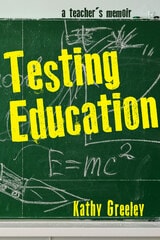
Testing Education
A Teacher's MemoirKathy Greeley
University of Massachusetts Press, 2024
Since the 2002 implementation of No Child Left Behind, the American public education system has been fundamentally changed. Excessive testing, standardized curriculums, destructive demands on children, corporate-style evaluations, and top-down mandates have become the norm. In response, record numbers of demoralized educators have quit, and millions of students have been left educationally impoverished. This troubling transformation has been exhaustively critiqued by scholars and commentators. Yet one crucial voice has been missing, until now.
In Testing Education, Kathy Greeley recounts the impact of education reform from a teacher’s point of view. Based on a teaching career spanning nearly forty years, Greeley details how schools went from learning communities infused with excitement, intellectual stimulation, and joy to sterile spaces of stress, intimidation, and fear. In this ultimately hopeful memoir, Greeley asks us to learn from the past to reimagine the future of public education.

The Busy Librarians Guide To Information Literacy In
Jeanne Davidson
Assoc of College & Research Libraries, 2012

The Future of Memory
A History of Lossless Format Standards in the Moving Image ArchiveJimi Jones and Marek Jancovic
University of Illinois Press, 2025
Drawing on interviews with archivists and developers, Jones and Jancovic reveal the archive as a dynamic space where deeply entrenched social practices produce disagreements but also resourceful collaborations. They contrast the unprecedented rise of archivist-driven standardization and controversies around non-standard technology with the historical dominance of the film and broadcast industries. Throughout, the authors clarify the role of tech companies, software developers, film pirates, hackers, and other players with poorly understood roles in the process.
A timely look at the state of audiovisual preservation, The Future of Memory provides a history of recent innovations alongside a snapshot of a field in the midst of profound technological change.

The Gold Standard
The Challenge Of Evidence-Based MedicineStefan Timmermans and Marc Berg
Temple University Press, 2003
The Myth of Achievement Tests
The GED and the Role of Character in American LifeEdited by James J. Heckman, John Eric Humphries, and Tim Kautz
University of Chicago Press, 2013
The Myth of Achievement Tests shows that achievement tests like the GED fail to measure important life skills. James J. Heckman, John Eric Humphries, Tim Kautz, and a group of scholars offer an in-depth exploration of how the GED came to be used throughout the United States and why our reliance on it is dangerous. Drawing on decades of research, the authors show that, while GED recipients score as well on achievement tests as high school graduates who do not enroll in college, high school graduates vastly outperform GED recipients in terms of their earnings, employment opportunities, educational attainment, and health. The authors show that the differences in success between GED recipients and high school graduates are driven by character skills. Achievement tests like the GED do not adequately capture character skills like conscientiousness, perseverance, sociability, and curiosity. These skills are important in predicting a variety of life outcomes. They can be measured, and they can be taught.
Using the GED as a case study, the authors explore what achievement tests miss and show the dangers of an educational system based on them. They call for a return to an emphasis on character in our schools, our systems of accountability, and our national dialogue.
Contributors
Eric Grodsky, University of Wisconsin–Madison
Andrew Halpern-Manners, Indiana University Bloomington
Paul A. LaFontaine, Federal Communications Commission
Janice H. Laurence, Temple University
Lois M. Quinn, University of Wisconsin–Milwaukee
Pedro L. Rodríguez, Institute of Advanced Studies in Administration
John Robert Warren, University of Minnesota, Twin Cities
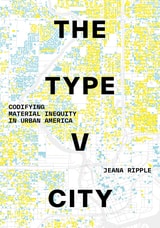
The Type V City
Codifying Material Inequity in Urban AmericaJeana Ripple
University of Texas Press, 2025
How building codes shaped material, social, and environmental landscapes in American cities.
Almost every American city contains neighborhoods dominated by wood frame construction—light, cheap, combustible, and requiring the lowest upfront investment of labor and material in the building industry. Known as a Type V (five) construction in the terminology of building codes, these buildings became ubiquitous in the American urban landscape thanks to the abundance of timber, housing affordability aspirations, and the adoption of a uniform code.
In The Type V City, Jeana Ripple examines the social and spatial history of building codes and material patterns in five cities—New York, Tampa, Chicago, Philadelphia, and Seattle—to reframe the stories of America’s building priorities, methods, negotiations, and assumptions. By examining the development of building materials and codes alongside the environmental, social, economic, and political context of each city’s development, Ripple reveals previously overlooked connections between the power structures underpinning regulatory evolution and the impacts that lay just beyond the frame of city builders’ priorities. Handsomely illustrated and informed by both archival research and insights enabled by contemporary data analysis, The Type V City critiques the homogenous construction practices underlying US urbanization and raises pointed questions for future generations of data-driven city planners and architects.

Tracks across Continents, Paths through History
The Economic Dynamics of Standardization in Railway GaugeDouglas J. Puffert
University of Chicago Press, 2009
A standard track gauge—the distance between the two rails—enables connecting railway lines to exchange traffic. But despite the benefits of standardization, early North American railways used six different gauges extensively, and even today breaks of gauge at national borders and within such countries as India and Australia are expensive burdens on commerce. In Tracks across Continents, Paths through History, Douglas J. Puffert offers a global history of railway track gauge, examining early choices and the dynamic process of diversity and standardization that resulted.
Drawing on the economic theory of path dependence, and grounded in economic, technical, and institutional realities, this innovative volume traces how early historical events, and even idiosyncratic personalities, have affected choices of gauge ever since, despite changing technology and understandings of what gauge is optimal. Puffert also uses this history to develop new insights in the theory of path dependence. Tracks across Continents, Paths through History will be essential reading for anyone interested in how history and economics inform each other.

Tuning the World
The Rise of 440 Hertz in Music, Science, and Politics, 1859–1955Fanny Gribenski
University of Chicago Press, 2023
Tuning the World tells the unknown story of how the musical pitch A 440 became the global norm.
Now commonly accepted as the point of reference for musicians in the Western world, A 440 hertz only became the standard pitch during an international conference held in 1939. The adoption of this norm was the result of decades of negotiations between countries, involving a diverse group of performers, composers, diplomats, physicists, and sound engineers. Although there is widespread awareness of the variability of musical pitches over time, as attested by the use of lower frequencies to perform early music repertoires, no study has fully explained the invention of our current concert pitch. In this book, Fanny Gribenski draws on a rich variety of previously unexplored archival sources and a unique combination of musicological perspectives, transnational history, and science studies to tell the unknown story of how A 440 became the global norm. Tuning the World demonstrates the aesthetic, scientific, industrial, and political contingencies underlying the construction of one of the most “natural” objects of contemporary musical performance and shows how this century-old effort was ultimately determined by the influence of a few powerful nations.