Results by title
389 books match the query 'State' and 83 start with t
Term Limits in State Legislatures
John M. Carey, Richard G. Niemi, and Lynda W. Powell
University of Michigan Press, 2000
The Battle for the University of Alabama
The Perilous Path of Higher Education in the Reconstruction SouthWilliam Warren Rogers, Jr.
University of Alabama Press, 2025
Traces the little-known story of the bitter contest for the fate of the University of Alabama after the Civil War.
In The Battle for the University of Alabama, William Warren Rogers Jr. gives a fascinating account of the fierce struggle over the nature of the University of Alabama after the Civil War. Union forces reduced the campus to ruins as the war ended, and the university did not reopen until 1869. In the interregnum, powerful forces shifted the trajectory of the school. Alabama Republicans authored an egalitarian state constitution that delivered oversight of the university to the Republican Party. That set the stage for turmoil and confrontation. This book tells the story of that conflict.
In the next few years, Democrats charged Republicans with turning the university into a “radical” institution. They alleged that a handful of unqualified individuals had gained faculty positions because of their political allegiance, which resulted in the university’s academic desecration. Professors were bitterly denounced in the state newspaper press and quite personally in Tuscaloosa. Administration of the university became part of the fratricidal political debate in the state. Political violence and questions concerning race, specifically the possible integration of the university, illuminated the controversies of the Reconstruction years. Many of these questions resonate even today.
This authoritative account sets events at the University of Alabama against the backdrop of what occurred at other state universities in the Reconstruction South. The University of North Carolina experienced controversy similar to Alabama’s. At the University of Georgia, however, calm prevailed. This story of the incendiary events at Alabama’s flagship university charts new ground and provides a revelatory look into the extraordinary partisanship that characterized the South after the Civil War.
The Birth of the State
Ancient Egypt, Mesopotamia, India and ChinaPetr Charvát
Karolinum Press, 2013
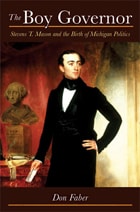
The Boy Governor
Stevens T. Mason and the Birth of Michigan PoliticsDon Faber
University of Michigan Press, 2012
In 1831, Stevens T. Mason was named Secretary of the Michigan Territory at the tender age of 19, two years before he could even vote. The youngest presidential appointee in American history, Mason quickly stamped his persona on Michigan life in large letters. After championing the territory's successful push for statehood without congressional authorization, he would defend his new state's border in open defiance of the country's political elite and then orchestrate its expansion through the annexation of the Upper Peninsula---all before his official election as Michigan's first governor at age 24, the youngest chief executive in any state's history.
The Boy Governor tells the complete story of this dominant political figure in Michigan's early development. Capturing Mason's youthful idealism and visionary accomplishments, including his advocacy for a strong state university and legislating for the creation of the Soo Locks, this biography renders a vivid portrait of Michigan's first governor---his conflicts, his desires, and his sense of patriotism. This book will appeal to anyone with a love of American history and interest in the many, larger-than-life personalities that battled on the political stage during the Jacksonian era.
The Broken Table
The Detroit Newspaper Strike and the State of American LaborChris Rhomberg
Russell Sage Foundation, 2012

The Cadastral Map in the Service of the State
A History of Property MappingRoger J. P. Kain and Elizabeth Baigent
University of Chicago Press, 1992
The Cadastral Map in the Service of the State, illustrated with 126 maps, traces the development and application of rural property mapping in Europe from the Renaissance through the nineteenth century. Beginning with a review of the roots of cadastral mapping in the Roman Empire, the authors concentrate on the use of cadastral maps in the Netherlands, France, England, the Nordic countries, the German lands, the territories of the Austrian Habsburgs, and the European colonies. During the sixteenth century government institutions began to use maps to secure economic and political bases; by the nineteenth century these maps had become tools for aggressive governmental control of land as tax bases, natural resources, and national territories. This work demonstrates how the seemingly neutral science of cartography became a political instrument for national
interests.
The Chief Executive In Texas
A Study in Gubernatorial LeadershipBy Fred Gantt, Jr.
University of Texas Press, 1964
"A Texas governor has only two happy days: the day he is inaugurated and the day he retires."
So spoke Joseph D. Sayers at the beginning of the twentieth century. Now, in an analysis of the Texas governorship by Fred Gantt, Jr., the reader learns why Governor Sayers' remark remains true many years after it was uttered: the office has come to be so demanding that the reader may ask why anyone would want it. Price Daniel described a typical day: "The governor's job is a night-and-day job; I usually get up in the morning about seven and start answering the telephone, and then look over the mail that has come in late the day before. I sign mail before going over to the office and then have interviews most of the day. . . . In the evening at the Mansion I take calls and messages until late in the night."
The Chief Executive in Texas is much more than a book full of interesting facts: It is a discerning political commentary built on a broad historical foundation that places events and persons in a perspective perhaps not previously considered by the reader.
The office of chief executive in other states also is explored, as well as the decline and rise of executive power as it has been limited in various constitutions in Texas and as it has developed through custom. The account of the governor's relationship with the Legislature is historically valuable. Especially interesting to many readers will be the discussions of the political roles of individual Texas governors, whose ranks include "Ma" and "Pa" Ferguson and "Pappy" O'Daniel. These studies are personally revealing, and they attest that polities in Texas apparently can never be dull.
The Colorado General Assembly, Second Edition
John A. Straayer
University Press of Colorado, 2000
The Colorado General Assembly is based on years of author John Straayer's first-hand observations, his review of original documents and secondary sources, and hundred of conversations with lawmakers, lobbyists, members of the legislative staff, executive branch personnel, and journalists.
In this lively, informative book, Straayer describes the formal structure of the Legislature, as well as the all-important process by which bills become or do not become law, and how the power center within the institution can move or kill legislative initiatives. He also examines the clout of the lobby corps, which outnumbers the elected lawmakers five to one; the way the Legislature dominates the budget process; and the manner by which divisions between the two parties, the two houses, and the legislative and executive branches impact the conduct of the public's business under Colorado's gold dome.
The Colorado General Assembly fills a major gap in our knowledge of state government. It will appeal to students and practitioners of politics as well as to those with general interest in civic life.
The Dealmakers of Downstate Illinois
Paul Powell, Clyde L. Choate, John H. StelleRobert E. Hartley
Southern Illinois University Press, 2016
Many people are unaware that from 1945 to 1975, downstate lawmakers dominated the Illinois political arena. In The Dealmakers of Downstate Illinois, Robert E. Hartley details the lives and contributions of three influential southern Illinois politicians, Paul Powell, Clyde Choate, and John Stelle. He describes how these “dealmakers” were able to work with Democrats and Republicans throughout the state to bring jobs and facilities to their region. Using a variety of coalitions, they maintained downstate political strength in the face of growing Chicago influence.
Hartley traces the personal histories of Powell, Choate, and Stelle, shows how they teamed up to advance a downstate political agenda, and reviews their challenges and successes. Beginning with an account of early experiences, including the battlefield courage that earned Choate the Medal of Honor as well as Stelle’s World War I experience and later entrepreneurship, the book continues with an exploration of the groundwork for their collaborative legislative agenda and their roles in the growth of Southern Illinois University and the passage of income tax legislation. Hartley reviews the importance of Powell’s relationship with Governor Stratton, Choate’s leadership of the 1972 Democratic National Convention and his relationships with Governor Walker and with Chicago interests.
The Dealmakers of Downstate Illinois is a vivid, straightforward tale of fighting in the legislative chambers, backstabbing behind the scenes, and trading special favors for votes in pursuit of not only personal gain but also the advancement of a regional agenda.
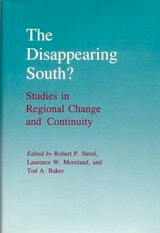
The Disappearing South?
Studies in Regional Change and ContinuityRobert P. Steed
University of Alabama Press, 1990
There is widespread agreement that the South has changed dramatically since the end of World War II—the essays in The Disappearing South address the ongoing debate
There is widespread agreement that the South has changed dramatically since the end of World War II. Social, demographic, economic, and political changes have altered significantly the region long considered the nation’s most distinctive. There is less agreement, however, about the extent to which the forces of nationalization have eroded the major elements of Southern distinctiveness. Although this volume does not purport to settle the debate on Southern political change, it does present a variety of recent evidence that helps put this important debate into perspective. In the process it helps clarify the contemporary politics of the South for readers ranging from the scholar to the more casual observer.
The essays in The Disappearing South address the ongoing debate. Contributors, in addition to the editors, include E. Lee Bernick, Earl Black, Merle Black, Lewis Bowman, Edward G. Carmines, Patrick Cotter, Thomas Eamon, Douglas G. Feig, John C. Green, James L. Guth, William E. Hulbary, Anne E. Kelley, Lyman A. Kellstedt, David M. Olson, John Shelton Reed, Harold Stanley, James G. Stovall, John Theilmann, Stephen H. Wainscott, and Allen Wilhite.
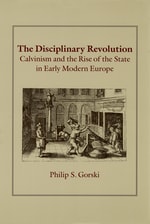
The Disciplinary Revolution
Calvinism and the Rise of the State in Early Modern EuropePhilip S. Gorski
University of Chicago Press, 2003

The End of Nomadism?
Society, State, and the Environment in Inner AsiaCaroline Humphrey and David Sneath
Duke University Press, 1999
Using extensive and detailed case studies comparing pastoralism in Siberian Russia, Mongolia, and Northwest China, Humphrey and Sneath explore the different paths taken by nomads in these countries in reaction to a changing world. In examining how each culture is facing not only different prospects for sustainability but also different environmental problems, the authors come to the surprising conclusion that mobility can, in fact, be compatible with a modern and urbanized world. While placing emphasis on the social and cultural traditions of Inner Asia and their fate in the post-Socialist economies of the present, The End of Nomadism? investigates the changing nature of pastoralism by focusing on key areas under environmental threat and relating the ongoing problems to distinctive socioeconomic policies and practices in Russia and China. It also provides lively contemporary commentary on current economic dilemmas by revealing in telling detail, for instance, the struggle of one extended family to make a living.
This book will interest Central Asian, Russian, and Chinese specialists, as well as those studying the environment, anthropology, sociology, peasant studies, and ecology.
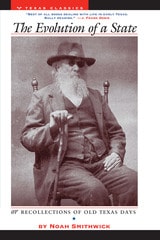
The Evolution of a State, or, Recollections of Old Texas Days
By Noah Smithwick
University of Texas Press, 1983
"I was but a boy in my nineteenth year, and in for adventure when I started out from Hopkinsville, Kentucky, with all my worldly possessions, consisting of a few dollars in money, a change of clothes, and a gun, of course, to seek my fortune in this lazy man's paradise."
Noah Smithwick was an old man, blind and near his ninetieth year, when his daughter recorded these words. He had stayed on in "paradise"—Texas—from 1827 to 1861, when his opposition to secession took him to California. The Evolution of a State is his story of these "old Texas days."
A blacksmith and a tobacco smuggler, Noah Smithwick made weapons for the Battle of Concepción, and he fought in that battle. With Hensley's company, he chased the Mexican army south of the Rio Grande after the Battle of San Jacinto. Twice he served with the Texas Rangers. In quieter times, he was a postmaster and justice of the peace in little Webber's Prairie.
Eyewitness to so much Texas history, Smithwick recounts his life and adventures in a simple, straightforward style, with a wry sense of humor. His keen memory for detail—what the people wore, what they ate, how they worked and played— vividly evokes the sights, sounds, and smells of the frontier.
First published in part by the Dallas Morning News, Smithwick's recollections gained such popularity that they were published in book form, as The Evolution of a State, in 1900. This new edition of a Texas classic makes widely available for the first time in many years this "best of all books dealing with life in early Texas."

The Fatal Embrace
Jews and the StateBenjamin Ginsberg
University of Chicago Press, 1993
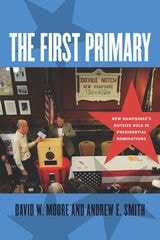
The First Primary
New Hampshire's Outsize Role in Presidential NominationsDavid W. Moore
University of New Hampshire Press, 2015
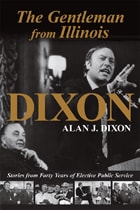
The Gentleman from Illinois
Stories from Forty Years of Elective Public ServiceAlan J. Dixon
Southern Illinois University Press, 2013
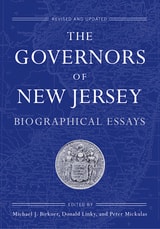
The Governors of New Jersey
Biographical EssaysBirkner, Michael J
Rutgers University Press, 2014
Rogues, aristocrats, and a future U.S. president. These and other governors are portrayed in this revised and updated edition of the classic reference work on the chief executives of New Jersey. Editors Michael J. Birkner, Donald Linky, and Peter Mickulas present new essays on the governors of the last three decades—Brendan T. Byrne, Thomas Kean, James Florio, Christine Todd Whitman, Donald DiFrancesco, James McGreevey, Richard Codey, and Jon Corzine. The essays included in the original edition are amended, edited, and corrected as necessary in light of new and relevant scholarship.
The authors of each governor’s life story represent a roster of such notable scholars as Larry Gerlach, Stanley Katz, Arthur Link, and Clement Price, as well as many other experts on New Jersey history and politics. As a result, this revised edition is a thorough and current reference work on the New Jersey governorship—one of the strongest in the nation.
Also of Interest:
New Jersey Politics and Government
The Suburbs Come of Age
Fourth Edition
Barbara G. Salmore with Stephen A. Salmore
978-0-8135-6139-4 paper $34.95
A volume in the Rivergate Regionals Collection
Me, Governor?
My Life in the Rough-and-Tumble World of New Jersey Politics
Richard J. Codey
978-0-8135-5045-9 cloth $24.95
The Life and Times of Richard J. Hughes
The Politics of Civility
John B. Wefing
978-0-8135-4641-4 cloth $32.50
Governor Tom Kean
From the New Jersey Statehouse to the 911 Commission
Alvin S. Felzenberg
978-0-8135-3799-3 cloth $29.95

The House That Madigan Built
The Record Run of Illinois' Velvet HammerRay Long. Foreword by Charles N. Wheeler III
University of Illinois Press, 2022
Veteran reporter Ray Long draws on four decades of observing state government to provide the definitive political analysis of Michael Madigan. Secretive, intimidating, shrewd, power-hungry--Madigan mesmerized his admirers and often left his opponents too beaten down to oppose him. Long vividly recreates the battles that defined the Madigan era, from stunning James Thompson with a lightning-strike tax increase, to pressing for a pension overhaul that ultimately failed in the courts, to steering the House toward the Rod Blagojevich impeachment. Long also shines a light on the machinery that kept the Speaker in power. Head of a patronage army, Madigan ruthlessly used his influence and fundraising prowess to reward loyalists and aid his daughter’s electoral fortunes. At the same time, he reshaped bills to guarantee he and his Democratic troops shared in the partisan spoils of his legislative victories. Yet Madigan’s position as the state’s seemingly invulnerable power broker could not survive scandals among his close associates and the widespread belief that his time as Speaker had finally reached its end.
Unsparing and authoritative, The House That Madigan Built is the page-turning account of one the most powerful politicians in Illinois history.

The House Will Come To Order
How the Texas Speaker Became a Power in State and National PoliticsBy Patrick L. Cox and Michael Phillips
University of Texas Press, 2010
In a state assumed to have a constitutionally weak governor, the Speaker of the Texas House wields enormous power, with the ability to almost single-handedly dictate the legislative agenda. The House Will Come to Order charts the evolution of the Speaker's role from a relatively obscure office to one of the most powerful in the state. This fascinating account, drawn from the Briscoe Center's oral history project on the former Speakers, is the story of transition, modernization, and power struggles.
Weaving a compelling story of scandal, service, and opportunity, Patrick Cox and Michael Phillips describe the divisions within the traditional Democratic Party, the ascendance of Republicans, and how Texas business, agriculture, and media shaped perceptions of officeholders. While the governor and lieutenant governor wielded their power, the authors show how the modern Texas House Speaker built an office of equal power as the state became more complex and diverse. The authors also explore how race, class, and gender affected this transition as they explain the importance of the office in Texas and the impact the state's Speakers have had on national politics.
At the apex of its power, the Texas House Speaker's role at last receives the critical consideration it deserves.
The Influence of Campaign Contributions in State Legislatures
The Effects of Institutions and PoliticsLynda W. Powell
University of Michigan Press, 2012
Campaign contributions are widely viewed as a corrupting influence but most scholarly research concludes that they have marginal impact on legislative behavior. Lynda W. Powell shows that contributions have considerable influence in some state legislatures but very little in others. Using a national survey of legislators, she develops an innovative measure of influence and delineates the factors that explain this great variation across the 99 U.S. state legislative chambers.
Powell identifies the personal, institutional, and political factors that determine how much time a legislator devotes to personal fundraising and fundraising for the caucus. She shows that the extent of donors' legislative influence varies in ways corresponding to the same variations in the factors that determine fundraising time. She also confirms a link between fundraising and lobbying with evidence supporting the theory that contributors gain access to legislators based on donations, Powell's findings have important implications for the debate over the role of money in the legislative process.
The Institutions of France under the Absolute Monarchy, 1598-1789, Volume 1
Society and the StateRoland Mousnier
University of Chicago Press, 1979
In a society divided by hierarchical social groups, conflicts among lineages, communities, and districts became inevitable. Aristocratic disdain, ancestral attachment to privileges, and autonomous powers looked upon as rights, made civil unrest, dislocation, and anarchy endemic. Mousnier examines this contention between classes as they faced each other across the institutional barriers of education, religion, economic resources, technology, means of defense and communication, and territorial and family ties. He shows why a monarchical state was necessary to preserve order within this fragmented society.
Though it was intent on ensuring the survival of French society and the public good, the Absolute Monarchy was unable to maintain security, equilibrium, and cooperation among rival social groups. Discussing the feeble technology at its disposal and its weak means of governing, Mousnier points to the causes that brought the state to the limits of its resources. His comprehensive analysis will greatly interest students of the ancien régime and comparativists in political science and sociology as well.
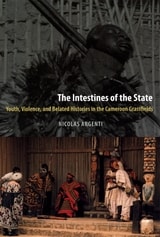
The Intestines of the State
Youth, Violence, and Belated Histories in the Cameroon GrassfieldsNicolas Argenti
University of Chicago Press, 2007
Beginning his study with a political analysis of youth in the Grassfields from the eighteenth century to the present, Argenti pays special attention to the repeated violent revolts staged by young victims of political oppression. He then combines this history with extensive ethnographic fieldwork in the Oku chiefdom, discovering that the specter of past violence lives on in the masked dance performances that have earned intense devotion from today’s youth. Argenti contends that by evoking the imagery of past cataclysmic events, these masquerades allow young Oku men and women to address the inequities they face in their relations with elders and state authorities today.
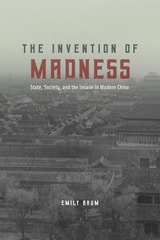
The Invention of Madness
State, Society, and the Insane in Modern ChinaEmily Baum
University of Chicago Press, 2018
Focusing on typically marginalized historical actors, including municipal functionaries and the urban poor, The Invention of Madness shifts our attention from the elite desire for modern medical care to the ways in which psychiatric discourses were implemented and redeployed in the midst of everyday life. New meanings and practices of madness, Baum argues, were not just imposed on the Beijing public but continuously invented by a range of people in ways that reflected their own needs and interests. Exhaustively researched and theoretically informed, The Invention of Madness is an innovative contribution to medical history, urban studies, and the social history of twentieth-century China.
The Ku Klux Klan in 1920s Arkansas
How Protestant White Nationalism Came to Rule a StateKenneth C. Barnes
University of Arkansas Press, 2021
Winner, 2022 J.G. Ragsdale Book Award, Arkansas Historical Association
The Ku Klux Klan established a significant foothold in Arkansas in the 1920s, boasting more than 150 state chapters and tens of thousands of members at its zenith. Propelled by the prominence of state leaders such as Grand Dragon James Comer and head of Women of the KKK Robbie Gill Comer, the Klan established Little Rock as a seat of power second only to Atlanta. In The Ku Klux Klan in 1920s Arkansas, Kenneth C. Barnes traces this explosion of white nationalism and its impact on the state’s development.
Barnes shows that the Klan seemed to wield power everywhere in 1920s Arkansas. Klansmen led businesses and held elected offices and prominent roles in legal, medical, and religious institutions, while the women of the Klan supported rallies and charitable activities and planned social gatherings where cross burnings were regular occurrences. Inside their organization, Klan members bonded during picnic barbeques and parades and over shared religious traditions. Outside of it, they united to direct armed threats, merciless physical brutality, and torrents of hateful rhetoric against individuals who did not conform to their exclusionary vision.
By the mid-1920s, internal divisions, scandals, and an overzealous attempt to dominate local and state elections caused Arkansas’s Klan to fall apart nearly as quickly as it had risen. Yet as the organization dissolved and the formal trappings of its flamboyant presence receded, the attitudes the Klan embraced never fully disappeared. In documenting this history, Barnes shows how the Klan’s early success still casts a long shadow on the state to this day.
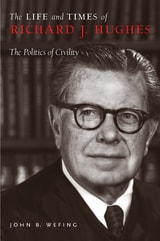
The Life and Times of Richard J. Hughes
The Politics of CivilityWefing, John B
Rutgers University Press, 2009
This biography illuminates the governor's accomplishments between 1962 and 1970, including the creation of the Hackensack Meadowlands Commission, formation of the county college system, establishment of stringent antipollution laws, design of the public defender system, and the adoption of a New Jersey sales tax, as well as his pivotal role during the Newark riots. As chief justice, Hughes faced difficult issuesùschool funding, low and moderate income housing needs, freedom of speech, and his decision in the rightto-die case involving Karen Ann Quinlan. With a career characterized by liberal activism, Hughes also contributed nationally and internationally, from serving as host of the 1964 Democratic National Convention to monitoring elections in South Vietnam.
John B. Wefing's research includes interviews with prominent politicians and leaders who worked with Hughes at various points in his career. The result is a rich story of a public servant who possessed a true ability to work with members of both political parties and played a significant role in shaping modern New Jersey.

The Little Mans Big Friend
James E. Folsom in Alabama Politics, 1946-1958George E. Sims
University of Alabama Press, 1985
At the end of World War II changing economic and social forces transformed the lives of Alabamians, whose political leaders had built careers on localistic politics shaped by established economic and governmental interests. Into this context strolled “Big Jim”—six feet eight inches tall—with his corn-shuck mop, wooden suds bucket, and a promise to scrub out the Capitol. Ridiculed by his opponents, Folsom advertised his progressive program in every crossroads community.
As governor, Folsom faced a legislature dominated by local politicians whom he had bypassed during the campaign, and although he won approval of some bills, legislative opposition made his administration a four-year filibuster.
Not until 1955, after his election to a second term, did Folsom become an effective leader. Tying programs for expanded services to the local interests of the legislators, he won approval for road construction, “old-age pensions,” industrial development, and reorganization of the state docks. But the lawmakers balked at constitutional reform.
As his reform efforts met defeat during 1956, Folsom was losing his ability to lead. He refused to exploit racial tensions, and the rise of the civil rights movement undermined his popularity among whites. Unwilling to discipline his aides and supporters, his administration became notorious for petty graft. By 1958 aspiring candidates kept their distance from Folsom. “Big Jim” attempted a comeback in the 1962 campaign, but he was never again to hold public office.
The Making of the Mexican Border
The State, Capitalism, and Society in Nuevo León, 1848-1910By Juan Mora-Torres
University of Texas Press, 2001
The issues that dominate U.S.-Mexico border relations today—integration of economies, policing of boundaries, and the flow of workers from south to north and of capital from north to south—are not recent developments. In this insightful history of the state of Nuevo León, Juan Mora-Torres explores how these processes transformed northern Mexico into a region with distinct economic, political, social, and cultural features that set it apart from the interior of Mexico.
Mora-Torres argues that the years between the establishment of the U.S.-Mexico boundary in 1848 and the outbreak of the Mexican Revolution in 1910 constitute a critical period in Mexican history. The processes of state-building, emergent capitalism, and growing linkages to the United States transformed localities and identities and shaped class formations and struggles in Nuevo León. Monterrey emerged as the leading industrial center and home of the most powerful business elite, while the countryside deteriorated economically, politically, and demographically. By 1910, Mora-Torres concludes, the border states had already assumed much of their modern character: an advanced capitalist economy, some of Mexico's most powerful business groups, and a labor market dependent on massive migrations from central Mexico.
The Man Who Emptied Death Row
Governor George Ryan and the Politics of CrimeJames L. Merriner
Southern Illinois University Press, 2008
George H. Ryan, Illinois governor from 1999 to 2003, became nationally known for two significant and very different reasons. The first governor in the United States to clear out his state’s death row and put a moratorium on the death penalty, he was also convicted and sent to prison on corruption charges. The Man Who Emptied Death Row: Governor George Ryan and the Politics of Crime details the career of a man who both enhanced and tarnished the image of the highest office in Illinois and examines the political history and culture that shaped him.
Author James L. Merriner explores the two very different stories of George Ryan: the brave crusader against the death penalty and the petty crook. An extensive analysis of the official record, exclusive interviews, and previously undisclosed incidents in Ryan’s career expose why the governor pardoned or commuted the sentences of all 171 prisoners on Illinois’s death row before leaving office and how he later was convicted of eighteen counts of official corruption.
This biography traces Ryan’s family history and the Illinois political climate that influenced his development as a politician. Although Ryan championed “good-government” initiatives—organ donations, tougher drunken-driving and lobbyist disclosure laws—he never overcame a reputation as a wheeler-dealer, notes Merriner.
Merriner goes beyond Ryan’s life and career to explore the politics of crime, highlighting the successes and failures of the criminal justice system and suggesting how both white-collar fraud and violent crime shape politics. A fascinating story that reveals much about the way Illinois politics works, The Man Who Emptied Death Row will help determine how history will judge Illinois governor George Ryan.
The Moral Economy of the State
Conservation, Community Development, and State-Making in ZimbabweWilliam A. Munro
Ohio University Press, 1998

The Nation and the States, Rivals or Partners
William Anderson
University of Minnesota Press, 1955
The Nation and the States, Rivals or Partners was first published in 1955. Minnesota Archive Editions uses digital technology to make long-unavailable books once again accessible, and are published unaltered from the original University of Minnesota Press editions.
Are the states losing their self-government? What did the framers of the Constitution intend with respect to states' rights? Are federal grants-in-aid to the states a boon or a bane? Is big government too big? Are overlapping taxes a necessary evil?
These are the kinds of questions -- basic, complex, and difficult yet essential to answer -- that Professor Anderson clarifies in this handbook, which is intended for general readers as well as for students of government. The language has been kept simple and clear, and the viewpoint does not presuppose any extensive knowledge of the subject on the part of the reader.
As a member of the President's Commission on Intergovernmental Relations, Professor Anderson has recognized a real need on the part of the public for a better understanding of the background issues involved in any discussion of the balance of authority, functions, and finances between the nation, the states, and the local governments of America. This book will help responsible citizens, government officials, and students of political science, history, and other social sciences to reach informed decisions on the merits of any proposals for readjustments in intergovernmental relations.
After providing the historical background for the subject and scrutinizing the current issues in fact as well as in propaganda, Professor Anderson presents a constructive program designed for the strengthening of all three levels of American government.

The Neighborhood
Space, State, and Daily Life in a Manchurian CityNianshen Song
University of Chicago Press, 2025
What can one neighborhood reveal about the making of a modern nation? The Neighborhood deciphers the unexpected significance of Xita, a half-square-mile quarter in Shenyang, in Northeast China. As the historian Nianshen Song shows, over nearly four centuries, Xita has been shaped and reshaped by empire, war, migration, and urban transformation. Remarkably, the history of this small area mirrors large-scale changes, including and especially China’s metamorphosis from a multiethnic Eurasian empire to a postindustrial society.
Song begins with Xita’s origins as a Qing-era Tibetan Buddhist center, following the lives of Mongol lamas and their imperial patrons. He tracks the neighborhood through the tumultuous twentieth century, when competing Russian and Japanese railway empires fueled its industrial growth, and Japanese colonizers turned it into a showcase for their imperial ambitions. Later, Xita became a vital enclave for Korea’s diaspora before emerging in the post-Mao era as a neon-lit hub of commerce and entertainment.
A thoroughly researched microhistory, The Neighborhood reveals how global forces play out in everyday spaces. By studying the emperors, warlords, merchants, laborers, and migrants who shaped Xita, Song presents a captivating and original perspective for understanding China’s past—not from the top down, but through the streets and people who lived it.

The Oil Palm Complex
Smallholders, Agribusiness and the State in Indonesia and MalaysiaEdited by Robert Cramb and John F. McCarthy
National University of Singapore Press, 2016
Based on detailed studies of specific communities and plantations and an analysis of the regional political economy of oil palm, this book unpicks the dominant policy narratives, business strategies, models of land acquisition, and labour-processes. It presents the oil palm industry in Malaysia and Indonesia as a complex system in which land, labour and capital are closely interconnected. Understanding this complex is a prerequisite to developing better strategies to harness the oil palm boom for a more equitable and sustainable pattern of rural development.

The Origins of the State in Italy, 1300-1600
Edited by Julius Kirshner
University of Chicago Press, 1996
The Origins of the State in Italy, 1300-1600 represents the best in American, British, and Italian scholarship and offers a valuable and critical overview of the key problems of the emergence of the state in Europe. Some of the topics covered include the political legitimacy of the aborning regional states, the changing legal culture, the conflict between church and state, the forces shaping public finances, and the creation of the Italian League.
The eight essays in this collection originally appeared in the Journal of Modern History. Contributors include Roberto Bizzocchi, Giorgio Chittolini, Trevor Dean, Riccardo Fubini, Elena Fasano Guarini, Aldo Mazzacane, Anthony Molho, and Pierangelo Schiera. This volume will appeal to historians, historical sociologists, and historians of political thought.

The Paradox of Progress
Economic Change, Individual Enterprise, and Politic Culture in Michigan, 1837-1878Martin J. Hershock
Ohio University Press, 2003
Guiding this transformation was the nineteenth-century Republican party. Drawing heavily from both the pro-market commitments of the early Whig party and the anti-capitalist culture of Jackson's Democratic party, the early Republican party found itself torn between these competing values. Nowhere was this contested process more obvious or more absorbing than in Civil War-era Michigan, the birthplace of the Republican party.
In The Paradox of Progress, a fascinating look at the central factors underlying the history of the GOP, Martin Hershock reveals how in their determination to resolve their ideological dilemma, Republicans of the Civil War era struggled to contrive a formula that wo uld enable them to win popular elections and to model America's acceptance of Gilded Age capitalism.
The People’s Party in Texas
A Study in Third Party PoliticsBy Roscoe Martin
University of Texas Press, 1970
Roscoe Martin's study of the People's Party in Texas was a pioneering analysis of the state populist movements and long considered one of the best. The People's Party was an influential force in United States politics in the last decade of the nineteenth century, especially in the western and southern states. Martin's study of third-party politics in Texas, as well as being an important work in Texas history, provides much insight into the national radical movement of the 1890s.
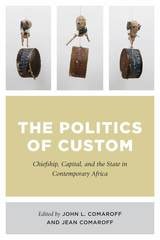
The Politics of Custom
Chiefship, Capital, and the State in Contemporary AfricaEdited by John L. Comaroff and Jean Comaroff
University of Chicago Press, 2018
This pathbreaking volume, edited by anthropologists John L. Comaroff and Jean Comaroff, explores the reasons behind the increasingly assertive politics of custom in many corners of Africa. Chiefs come in countless guises—from university professors through cosmopolitan businessmen to subsistence farmers–but, whatever else they do, they are a critical key to understanding the tenacious hold that “traditional” authority enjoys in the late modern world. Together the contributors explore this counterintuitive chapter in Africa’s history and, in so doing, place it within the broader world-making processes of the twenty-first century.
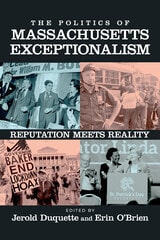
The Politics of Massachusetts Exceptionalism
Reputation Meets RealityEdited by Jerold Duquette and Erin O'Brien
University of Massachusetts Press, 2022
Are claims of Massachusetts’s special and instructive place in American history and politics justified? Alternately described as a “city upon a hill” and “an organized system of hatreds,” Massachusetts politics has indisputably exerted an outsized pull on the national stage. The Commonwealth’s leaders often argue for the state’s distinct position within the union, citing its proud abolitionist history and its status as a policy leader on health care, gay marriage, and transgender rights, not to mention its fertile soil for budding national politicians. Detractors point to the state’s busing crisis, sky high levels of economic inequality, and mixed support for undocumented immigrants.
The Politics of Massachusetts Exceptionalism tackles these tensions, offering a collection of essays from public policy experts that address the state’s noteworthy contributions to the nation’s political history. This is a much-needed volume for Massachusetts policymakers, journalists, and community leaders, as well as those learning about political power at the state level, inside and outside of the classroom. Contributors include the editors as well as Maurice T. Cunningham, Lawrence Friedman, Shannon Jenkins, Luis F. Jiménez, and Peter Ubertaccio.
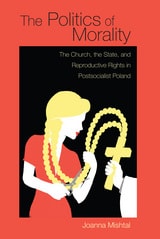
The Politics of Morality
The Church, the State, and Reproductive Rights in Postsocialist PolandJoanna Mishtal
Ohio University Press, 2015
After the fall of the state socialist regime and the end of martial law in 1989, Polish society experienced both a sense of relief from the tyranny of Soviet control and an expectation that democracy would bring freedom. After this initial wave of enthusiasm, however, political forces that had lain concealed during the state socialist era began to emerge and establish a new religious-nationalist orthodoxy. While Solidarity garnered most of the credit for democratization in Poland, it had worked quietly with the Catholic Church, to which a large majority of Poles at least nominally adhered. As the church emerged as a political force in the Polish Sejm and Senate, it precipitated a rapid erosion of women’s reproductive rights, especially the right to abortion, which had been relatively well established under the former regime.
The Politics of Morality is an anthropological study of this expansion of power by the religious right and its effects on individual rights and social mores. It explores the contradictions of postsocialist democratization in Poland: an emerging democracy on one hand, and a declining tolerance for reproductive rights, women’s rights, and political and religious pluralism on the other. Yet, as this thoroughly researched study shows, women resist these strictures by pursuing abortion illegally, defying religious prohibitions on contraception, and organizing into advocacy groups. As struggles around reproductive rights continue in Poland, these resistances and unofficial practices reveal the sharp limits of religious form of governance.
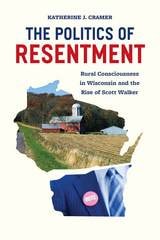
The Politics of Resentment
Rural Consciousness in Wisconsin and the Rise of Scott WalkerKatherine J. Cramer
University of Chicago Press, 2016
With The Politics of Resentment, Katherine J. Cramer uncovers an oft-overlooked piece of the puzzle: rural political consciousness and the resentment of the “liberal elite.” Rural voters are distrustful that politicians will respect the distinct values of their communities and allocate a fair share of resources. What can look like disagreements about basic political principles are therefore actually rooted in something even more fundamental: who we are as people and how closely a candidate’s social identity matches our own. Using Scott Walker and Wisconsin’s prominent and protracted debate about the appropriate role of government, Cramer illuminates the contours of rural consciousness, showing how place-based identities profoundly influence how people understand politics, regardless of whether urban politicians and their supporters really do shortchange or look down on those living in the country.
The Politics of Resentment shows that rural resentment—no less than partisanship, race, or class—plays a major role in dividing America against itself.
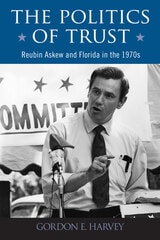
The Politics of Trust
Reubin Askew and Florida in the 1970sGordon E. Harvey
University of Alabama Press, 2015
Askew rose to power on a wave of “New South” leadership that hoped to advance the Democratic Party beyond the intransigent torpor of southern politics since the Civil War. He hoped to replace appeals to white supremacy with a vision of a more diverse and inclusive party. Following his election in Florida, other New South leaders such as Georgia’s Jimmy Carter, Arkansas’s Dale Bumpers, and South Carolina’s John C. West all came to power.
Audacious and gifted, Askew was one of six children raised by a single mother in Pensacola. As he worked his way up through the ranks of the state legislature, few in Florida except his constituents knew his name when he challenged Republic incumbent Claude R. Kirk Jr. on a populist platform promising higher corporate taxes. When he won, he inaugurated a series of reforms, including a new 5 percent corporate income tax; lower consumer, property, and school taxes; a review of penal statutes; environmental protections; higher welfare benefits; and workers’ compensation to previously uncovered migrant laborers.
Touting honesty, candor, and transparency, Askew dubbed his administration “government in the sunshine.” Harvey demonstrates that Askew’s success was not in spite of his penchant for bold, sometimes unpopular stances, but rather because his mix of unvarnished candor, sober ethics, and religious faith won the trust of the diverse peoples of his state.

The Politics of the Minimum Wage
Jerold Waltman
University of Illinois Press, 2000
The minimum wage appears to be a standard economic regulatory measure, yet a politics of symbolism more than anything else defines the political contests that periodically erupt over it. Detractors abhor its corruption of market principles, while supporters see it as a measure of society's symbolic commitment to the poor.
Tracing the history of the minimum wage and exposing its inherent contradictions as a political issue, Jerold Waltman proposes an alternative to the economic arguments that now dominate debates over it. Citing overwhelming public support for the minimum wage as evidence of an enduring civic consciousness and humanitarianism, Waltman advocates recasting the discussion in terms of a political economy of citizenship. Such a perspective would focus on the communal value of work, the need for citizens to have a stake in the community, and the effects of economic inequality on the bonds of common citizenship.
Positioning the minimum wage as a fulcrum for the most basic conflict underlying America's unique combination of democracy and a market economy, The Politics of the Minimum Wage shows how a defense of the minimum wage built on a communal sense of responsibility rests on a strong tradition of civic republicanism and strengthens the hope for a truly democratic society.

The Power of Data
An Introduction to Using Local, State, and National Data to Support School Library ProgramsSandra D. Andrews
American Library Association, 2012
The Power of the Texas Governor
Connally to BushBy Brian McCall
University of Texas Press, 2009
George W. Bush called it "the best job in the world," yet many would argue that the Texas governorship is a weak office. Given few enumerated powers by the Texas Constitution, the governor must build a successful relationship with the state legislature—sometimes led by a powerful lieutenant governor or speaker of the opposing party—to advance his or her policy agenda. Yet despite the limitations on the office and the power of the legislative branch, many governors have had a significant impact on major aspects of Texas's public life—government, economic development, education, and insurance reform among them. How do Texas governors gain the power to govern effectively?
The Power of the Texas Governor takes a fresh look at the state's chief executives, from John Connally to George W. Bush, to discover how various governors have overcome the institutional limitations of the office. Delving into the governors' election campaigns and successes and failures in office, Brian McCall makes a convincing case that the strength of a governor's personality—in particular, his or her highly developed social skills—can translate into real political power. He shows, for example, how governors such as Ann Richards and George W. Bush forged personal relationships with individual legislators to achieve their policy goals. Filled with revealing insights and anecdotes from key players in each administration, The Power of the Texas Governor offers new perspectives on leadership and valuable lessons on the use of power.
The Practical Imagination
The German Sciences of State in the Nineteenth CenturyDavid F. Lindenfeld
University of Chicago Press, 1997
Lindenfeld argues that these sciences of state developed a technique of deliberation on practical issues such as tax policy and welfare, that serves as a model for contemporary administrations.

The Real Venezuela
Making Socialism in the 21st CenturyIain Bruce
Pluto Press, 2008
Venezuela has become a huge source of hope and inspiration for the Left throughout the world. Some see it as a shining example of how to begin building a successful socialist state, but Western leaders see it as a dangerous enemy and accuse Chávez of being a dictator. This book reveals the truth by examining the country from the ground up.
Iain Bruce explores the political changes underway in Venezuela at the level of the lives of ordinary people. Through grassroots investigations and extended interviews, he explores a series of key transformations in Venezuela: a new social economy around a network of co-operatives; workplace democracy; popular education; radical agrarian reform; participatory budgets and community planning. The result is a clear picture of everyday life in Venezuela.
No other book on the country has this level of detail; it will be a key text for students of Latin American politics and social movements and of interest to anyone following the fortunes of the Bolivarian Revolution.
The Republican Party of Texas
A Political HistoryBy Wayne Thorburn
University of Texas Press, 2021
On July 4, 1867, a group of men assembled in Houston to establish the Republican Party of Texas. Combatting entrenched statewide support for the Democratic Party and their own internal divisions, Republicans struggled to gain a foothold in the Lone Star State, which had sided with the Confederacy and aligned with the Democratic platform. In The Republican Party of Texas, Wayne Thorburn, former executive director of the Texas GOP, chronicles over one hundred and fifty years of the defeats and victories of the party that became the dominant political force in Texas in the modern era.
Thorburn documents the organizational structure of the Texas GOP, drawing attention to prominent names, such as Harry Wurzbach and George W. Bush, alongside lesser-known community leaders who bolstered local support. The 1960s and 1970s proved a watershed era for Texas Republicans as they shored up ideological divides and elected the first Republican governor and more state senators and congressional representatives than ever before. From decisions about candidates and shifting allegiances and political stances, to race-based divisions and strategic cooperation with leaders in the Democratic Party, Thorburn unearths the development of the GOP in Texas to understand the unique Texan conservatism that prevails today.
The Rhetoric of Church and State
A Critical Analysis of Religion Clause JurisprudenceFrederick Mark Gedicks
Duke University Press, 1995
Gedicks suggests that the Supreme Court’s inconsistent decisions mirror a divergence in American society between an increasingly secular public culture and the primarily devout private lives of the majority of Americans. He notes that while the Court is committed to principles of secular individualism, it has repeatedly endorsed government actions that violate those principles—actions that would be far more justifiable under the discourse of religious communitarianism. The impossibility of reconciling the two discourses leaves the Court no choice but to efface—often implausibly—the religious nature of practices it deems permissible. Gedicks concludes that the road to a coherent religion clause doctrine lies neither in a return to religious communitarianism nor in its complete displacement by secular individualism, but in a yet-to-be-identified discourse that would attract popular support while protecting a meaningful measure of religious freedom.
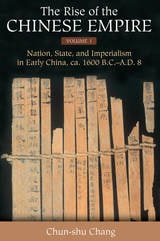
The Rise of the Chinese Empire
Nation, State, and Imperialism in Early China, ca. 1600 B.C.-A.D. 8Chun-shu Chang
University of Michigan Press, 2006
The second and first centuries B.C. were a critical period in Chinese history—they saw the birth and development of the new Chinese empire and its earliest expansion and acquisition of frontier territories. But for almost two thousand years, because of gaps in the available records, this essential chapter in the history was missing. Fortunately, with the discovery during the last century of about sixty thousand Han-period documents in Central Asia and western China preserved on strips of wood and bamboo, scholars have been able, for the first time, to put together many of the missing pieces.
In this first volume of his monumental history, Chun-shu Chang uses these newfound documents to analyze the ways in which political, institutional, social, economic, military, religious, and thought systems developed and changed in the critical period from early China to the Han empire (ca. 1600 B.C. – A.D. 220). In addition to exploring the formation and growth of the Chinese empire and its impact on early nation-building and later territorial expansion, Chang also provides insights into the life and character of critical historical figures such as the First Emperor (221– 210 B.C.) of the Ch’in and Wu-ti (141– 87 B.C.) of the Han, who were the principal agents in redefining China and its relationships with other parts of Asia. As never before, Chang’s study enables an understanding of the origins and development of the concepts of state, nation, nationalism, imperialism, ethnicity, and Chineseness in ancient and early Imperial China, offering the first systematic reconstruction of the history of Chinese acquisition and colonization.
Chun-shu Chang is Professor of History at the University of Michigan and is the author, with Shelley Hsueh-lun Chang, of Crisis and Transformation in Seventeenth-Century China and Redefining History: Ghosts, Spirits, and Human Society in P’u Sung-ling’s World, 1640 – 1715.
“An extraordinary survey of the political and administrative history of early imperial China, which makes available a body of evidence and scholarship otherwise inaccessible to English-readers. The underpinning of research is truly stupendous.”
—Ray Van Dam, Professor, Department of History, University of Michigan
“Powerfully argues from literary and archaeological records that empire, modeled on Han paradigms, has largely defined Chinese civilization ever since.”
—Joanna Waley-Cohen, Professor, Department of History, New York University
The Rural Modern
Reconstructing the Self and State in Republican ChinaKate Merkel-Hess
University of Chicago Press, 2016
In The Rural Modern, Merkel-Hess shows that Chinese reformers and intellectuals created an idea of modernity that was not simply about what was foreign and new, as in Shanghai and other cities, but instead captured the Chinese people’s desire for social and political change rooted in rural traditions and institutions. She traces efforts to remake village education, economics, and politics, analyzing how these efforts contributed to a new, inclusive vision of rural Chinese life. Merkel-Hess argues that as China sought to redefine itself, such rural reform efforts played a major role, and tensions that emerged between rural and urban ways deeply informed social relations, government policies, and subsequent efforts to create a modern nation during the communist period.
The Sagebrush State, 3d Edition
Nevada's History, Government, and PoliticsMichael W. Bowers
University of Nevada Press, 2006