Results by title
73 books match the query 'Strategy' and 23 start with t
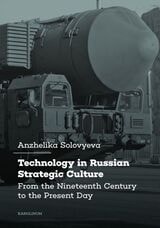
Technology in Russian Strategic Culture
From the Nineteenth Century to the Present DayAnzhelika Solovyeva
Karolinum Press, 2024
This book traces the dynamics of military-technological innovation in Russia over the last hundred and fifty years, particularly focusing on three distinct periods: the introduction of rifled breech-loading weapons in Imperial Russia in the nineteenth century, the invention of nuclear weapons in the Soviet Union in the twentieth century, and the development of precision-guided weapons in post-Soviet Russia in the twenty-first century. The analysis relies extensively on primary data obtained from Russian archives, complemented by a series of expert interviews, and deciphers Russia’s distinct strategic cultural approach to military-technological innovation.
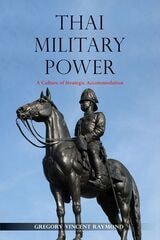
Thai Military Power
A Culture of Strategic AccommodationGregory Vincent Raymond
National University of Singapore Press, 2018
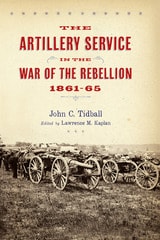
The Artillery Service in the War of the Rebellion, 1861–65
John C. Tidball
Westholme Publishing, 2011
A Rediscovered History That Will Become Essential Reading for Civil War Studies
The Artillery Service in the War of the Rebellion, 1861–65, is a comprehensive overview and analysis of the U.S. Army’s field artillery service in the Civil War’s principal battles, written by John C. Tidball, a distinguished artilleryman of the era. The overview, which appeared in the Journal of the Military Service Institution from 1891 to 1893, and nearly impossible to find today, examines the Army of the Potomac, including the battles of Fair Oaks, Gaines’s Mill, Mechanicsville, Malvern Hill, Antietam, Fredericksburg, Chancellorsville, and Gettysburg; the Army of the Tennessee, including the battles of Stones River and Chickamauga, and the Army of the Ohio’s battle of Shiloh. Tidball, a decorated Civil War veteran and superintendent of artillery instruction for the army, expertly presents the war through an artilleryman’s eyes in explaining the organization, equipping, and manning of the artillery service. His analysis highlights how the improper use of artillery, tying batteries down to relatively small infantry commands that diluted their firepower, seriously undermined the army’s effectiveness until reforms produced independent artillery commands that could properly mass artillery fire in battle.
The Artillery Service in the War of the Rebellion, edited by historian Lawrence M. Kaplan and presented here in one volume for the first time, includes additional material from an unpublished paper Tidball wrote in 1905 which contains further insights into the artillery service, as well as a general overview of the Petersburg campaign. A major new discovery in Civil War scholarship, The Artillery Service in the War of the Rebellion contains essential information that will change earlier historical interpretations of key battles and will be essential reading for all those interested in the war or contemplating writing about it.
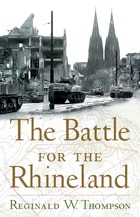
The Battle for the Rhineland
Reginald W. Thompson
Westholme Publishing, 2012
In this fascinating account of the critical final campaign against Nazi Germany on the western front, Reginald W. Thompson focuses on both the command decisions by the British and American generals and the performance of the enlisted men in order to explain the complex series of events that led to the German defeat in World War II. During the planning and run-up to what was intended to be a massive joint British and American push across the Rhine River and into the heart of Germany, the Allies encountered unexpected setbacks. Operation Market-Garden, the Allied aerial assault of the Low Countries, ended in disaster, while the attack through the Hu¨rtgen Forest was met by unexpected heavy resistance due to the build-up for the German surprise counterstrike planned for December 1944, what would become known as the Battle of the Bulge. The author identifies the attack on the town of Schmidt in the Hu¨rtgen Forest as the key battle that set in motion a series of events that both prolonged the war and shaped Allied strategy in their effort to cross the Rhine. Here the reader will learn the chain of decisions that allowed the Allies to pressure German forces between the Roer and Rhine rivers and move on Cologne, Dusseldorf, and other key points, including the famous bridge over the Rhine at Remagen, near Bonn. Based on both American and British official reports and the author’s independent research and originally published in 1958, The Battle for the Rhineland is a lucid, balanced, and engaging account of a critical period in Western Europe during the Second World War.
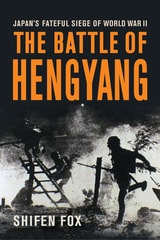
The Battle of Hengyang
Japan's Fateful Siege of World War IIShifen Fox
Westholme Publishing, 2026
The first English language history of China's Most Important Battle in World War II
In April 1944, Imperial Japan launched Operation Ichigo to secure a transport route linking Japanese forces in northern China and Southeast Asia, while eliminating American airfields in the region. The Japanese army quickly overran Chinese resistance and pushed fast toward the city of Hengyang, a key railway junction in south-central China. The Battle of Hengyang began on June 23, 1944. With just 17,000 troops and besieged in an area of less than ten square miles, the Chinese 10th Army held off a Japanese force totaling more than 110,000 men, supported by aircraft, tanks, chemical weapons, and artillery, for forty-seven days. The fighting was among the most savage of the entire Second World War. Hengyang finally fell on August 8, but the Chinese defenders and undaunted American pilots had stopped Ichigo’s momentum. The Japanese military’s failure to quickly conquer such a small city led to the fall of Japanese Prime Minister Tojo’s cabinet in July 1944, ultimately weakening Japan’s resolve to prosecute the war. News accounts compared the battle to the German defeat at Stalingrad in its ferocity and to the Battle of Suiyang, the most famous siege in ancient Chinese history.
In the aftermath of World War II, the battle was erased from Chinese history books since Communist propaganda insisted that only they, not the Nationalists, had successfully resisted the Japanese. But the survivors, both soldiers and civilians, kept the battle alive in their memories, and during the early part of the twenty-first century, the truth of Hengyang was finally presented to the Chinese people. The Battle of Hengyang: Japan’s Fateful Siege of World War II by Shifen Fox is the first English language history of one of the most important battles of the Second World War. The author returned to China where she interviewed survivors and children of survivors, read private letters, and had access to normally closed archives; in addition, she read memoirs written by Japanese survivors and referenced Japanese historical records. Learning late in life that her father perished in the battle, she also explains how the role of her father and this heroic defense was censored by China, but more than eighty years later has now been restored to its place in Chinese and world history.
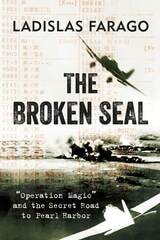
The Broken Seal
"Operation Magic" and the Secret Road to Pearl HarborLadislas Farago
Westholme Publishing, 1967
“In this fascinating account. . . . Mr. Farago’s investigation suggests that the real villain was the system itself.”—New York Times
“In this well-written and informative account. . . Mr. Farago provides many new facts from both American and Japanese sources.”—Library Journal
“A good history of Japanese and American code-breaking operations between 1921 and December 7, 1941. . . . Farago is important because in this technical study of cryptology he has arrived independently at the same general conclusion as did the non-revisionist diplomatic historians: there was no plot by Roosevelt or his advisers.”—Choice
“His conclusions should act as a corrective to the enthusiasts who claim that intelligence always provides the complete answer.”—Times Literary Supplement
The Broken Seal: The Story of “Operation Magic” and the Pearl Harbor Disaster explores the questions of why, if the United States knew the Japanese codes, did we not anticipate the December 7, 1941 surprise attack and how did the Japanese spy system in Hawaii operate? As a chief of research and planning in the Special Warfare Branch of the Office of Naval Intelligence, the author had access to both Japanese and American classified material to write this study. The author’s intent was to independently ascertain the validity of earlier claims that the Pearl Harbor attack could have been avoided. The result is an eminently readable and engrossing story, first published in 1968, of the relationship between America and Japan in the interwar years and the relentless cat-and-mouse intelligence game conducted by both sides. Despite more recent suppositions that there was a conspiracy among American and British officials to ignore warnings of a Japanese attack that had been gleaned from deciphered diplomatic codes in order to force America into a world war, the author confirms that human error and misjudgment and the actual state of intelligence interpretation at the time made an accurate assessment of Japanese intentions impossible.
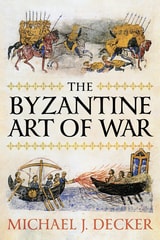
The Byzantine Art of War
Michael J. Decker
Westholme Publishing, 2013
The Byzantine Art of War explores the military history of the thousand-year empire of the eastern Mediterranean, Byzantium. Throughout its history the empire faced a multitude of challenges from foreign invaders seeking to plunder its wealth and to occupy its lands, from the deadly Hunnic hordes of Attila, to the Arab armies of Islam, to the western Crusaders bent on carving out a place in the empire or its former lands. In order to survive the Byzantines relied on their army that was for centuries the only standing, professional force in Europe. Leadership provided another key to survival; Byzantine society produced a number of capable strategic thinkers and tacticians—and several brilliant ones. These officers maintained a level of professionalism and organization inherited and adapted from Roman models. The innovations of the Byzantine military reforms of the sixth century included the use of steppe nomad equipment and tactics, the most important of which was the refinement of the Roman mounted archer. Strategy and tactics evolved in the face of victory and defeat; the shock of the Arab conquests led to a sharp decline in the number and quality of imperial forces. By the eighth and ninth centuries Byzantine commanders mastered the art of the small war, waging guerrilla campaigns, raids, and flying column attacks that injured the enemy but avoided the decisive confrontation the empire was no longer capable of winning. A century later they began the most sustained, glorious military expansion of their history. This work further sketches the key campaigns, battles, and sieges that illustrate Byzantine military doctrine, vital changes from one era to another, the composition of forces and the major victories and defeats that defined the territory and material well-being of its citizens. Through a summary of their strategies, tactics, and innovations in the tools of war, the book closes with an analysis of the contributions of this remarkable empire to world military history.
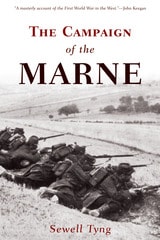
The Campaign of the Marne
Sewell Tyng
Westholme Publishing, 2007
The Definitive Account of the Battle of the Marne, One of World War I's Most Important Events
"A masterly account of the First World War in the West."—John Keegan
"A distinguished piece of historical writing."—Journal of Modern History
"Admirable... clear and interesting."—Foreign Affairs
"Direct and clear... it lays bare a most complicated course of events so that even the layman can follow."—New Republic
Named as One of The 100 Best Nonfiction Books of the Twentieth Century
With diplomacy unraveling during the summer of 1914, Germany swept into Belgium during the first week of August in an audacious attempt to catch France and England off guard. First contemplated after the Franco-Prussian War, the Schlieffen Plan was designed to keep Germany from fighting on two fronts. With a quick and decisive victory over France and its allies to the west, Germany could then confront Russia to the east. Despite the surprise of Germany's initial advance, the plan ultimately failed because it required much more mobile troops than were available at the time - something that would have to await the mechanized blitzkrieg of World War II—allowing France and British Expeditionary Forces to establish a tenacious defense. What followed was a stalemate along the Marne River and the beginning of four long years of destructive trench warfare that would only be lifted by a joint French, British, and American offensive across this same river plain in 1918. In The Campaign of the Marne, the entire genesis of the Schlieffen Plan, its modification, implementation, and the complex series of grueling battles that followed is laid out with the intent to make the entire episode comprehensible to the general reader. Hailed as one of the 100 best nonfiction books of the twentieth century by eminent military historian John Keegan, this is the first time the book has been available since its original publication in 1935.
The Command of the Air
Giulio Douhet, translated by Dino Ferrari
University of Alabama Press, 2009
The theory that put victory in the skies.
The Command of the Air presents Giulio Douhet’s groundbreaking argument that air power is the decisive force in modern war. In this classic work of military theory, Douhet defines the revolutionary concept of the “command of the air”—the idea that victory belongs to the nation able to prevent its enemy from flying while striking vital centers deep behind the lines. Through bold logic and vivid examples, the book shows how aviation transformed warfare by bypassing armies and navies entirely, projecting power directly against a nation’s industrial, communications, and civilian infrastructure.
This edition brings together Douhet’s original 1921 text, his expanded 1927 revision, and subsequent essays, all framed by a rich editors’ introduction. Readers gain insight into his vision of the Independent Air Force, the strategic use of mass bombing, and the technological evolution of modern aircraft. Douhet’s credentials—an Italian general, early aviation commander, and one of history’s most influential air‑power theorists—underscore the authority and ambition behind his ideas.
Scholars and students of military history, air‑power strategy, national security, and the evolution of modern warfare will find this volume indispensable. It is equally valuable for contemporary defense professionals seeking to understand how concepts such as strategic bombing, total war, and air superiority first took shape.
The Cruel Sky
A Heavy Bomber Group in World War IIRobert Thompson
Westholme Publishing, 2025
The Decision Was Always My Own
Ulysses S. Grant and the Vicksburg CampaignTimothy B. Smith
Southern Illinois University Press, 2018
The Vicksburg Campaign, argues Timothy B. Smith, is the showcase of Ulysses S. Grant’s military genius. From October 1862 to July 1863, Grant tried repeatedly to capture the Confederate river city. His final, daring move allowed him to land an army in Mississippi and fight his way to the gates of Vicksburg. He captured the city and Confederate garrison on July 4, 1863, opening the Mississippi River for the Union.
This volume presents a fast-paced reexamination of Grant’s decision-making process during the Vicksburg maneuvers, battles, and siege. Smith details the course of campaigning on military, political, administrative, and personal levels. The successful military campaign required Grant to handle President Lincoln’s impatience, as well as to deal with troublesome general John A. McClernand, all while juggling administrative work. In addition, Grant was more than a military genius—he was also a husband and a father, and Smith shows how Grant’s family played a role in every decision he made.
Grant’s nontraditional choices went against the accepted theories of war, supply, and operations, as well as against the chief thinkers of the day, such as Henry Halleck, Grant’s superior. Yet Grant pulled off the victory in compelling fashion. In the first in-depth examination in decades, Smith shows how Grant’s decisions created and won the Civil War’s most brilliant, complex, decisive, and lengthy campaign.
The Ethiopian Army
From Victory to Collapse, 1977-1991Fantahun Ayele
Northwestern University Press, 2014
The Ethiopian popular revolution of 1974 ended a monarchy that claimed descent from King Solomon and the Queen of Sheba, and brought to power a military government that created one of the largest and best-equipped armies in Africa. In his panoramic study of the Ethiopian army, Fantahun Ayele draws upon his unprecedented access to Ethiopian Ministry of Defense archives to study the institution that was able to repel the Somali invasion of 1977 and suppress internal uprisings, but collapsed in 1991 under the combined onslaught of armed insurgencies in Eritrea and Tigray. Besides military operations, The Ethiopian Army discusses tactical areas such as training, equipment, intelligence, and logistics, as well as grand strategic choices such as ending the 1953 Ethio-American Mutual Defense Agreement and signing a treaty of military assistance with the Soviet Union. The result sheds considerable light on the military developments that have shaped Ethiopia and the Horn in the twentieth century.
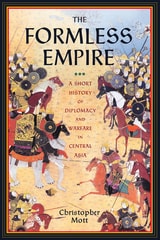
The Formless Empire
A Short History of Diplomacy and Warfare in Central AsiaChristopher Mott
Westholme Publishing, 2015
Central Asia, a vast region extending from eastern Russia and across Kazakhstan, Uzbekistan, Turkmenistan, Afghanistan, Tajikistan, Kyrgystan, Mongolia, and western China, has its own tradition of foreign policy rooted in the ancient nomadic culture of many of its peoples as well as the region’s distinctive geography. From the thundering hooves of Mongol or Cossack cavalry across the steppes to the clanking of tanks on parade in Moscow or Beijing, elements of this system still cast a shadow on the region at the heart of Earth’s largest continent. By tracing the evolution of Central Asian warfare and diplomacy through a series of historical examples, ranging from the ancient Xiongnu people and medieval Mongol Empire to the fall of the Soviet Union, historian Christopher Mott argues that the original system of informal relationships, indirect rule, and rapid military movement did not entirely fade from the region with the eclipse of the nomadic powers during the Middle Ages. In fact, many states like China, Iran, and Russia had already been influenced by nomadic people, and in so doing adapted their own diplomatic and military policies accordingly. The Formless Empire: A Short History of Diplomacy and Warfare in Central Asia is an engaging study of the nature of non-Western imperialism and great-power strategy. In addition, the book demonstrates that regional histories can show us the variety of political possibilities in the past and how they were adapted to changing circumstances—a point made even more important by the rapid changes facing global security and new forms of empire building.
“Christopher Mott’s extremely erudite and wide-ranging examination of the history of Central Asia shows us that we have been far too narrow-minded and Eurocentric in thinking about power and how the global system changes historically. Given the current interest in ‘caliphates’ we need to reflect on the history of the areas of the world that dance to a different historical drum than we do in the West.” —Andrew John Williams, author of France, Britain, and the United States in the Twentieth Century

The Invasion of Virginia, 1781
Michael Cecere
Westholme Publishing, 2017
The American War for Independence was fought in nearly every colony, but some colonies witnessed far more conflict than others. In the first half of the war, the bulk of military operations were concentrated in Massachusetts, New York, New Jersey, and Pennsylvania. A shift in British strategy southward after the Battle of Monmouth in 1778 triggered numerous military engagements in 1779 and 1780 in Georgia and the Carolinas.Surprisingly, Virginia, the largest of the original thirteen colonies, saw relatively little fighting for the first six years of the Revolutionary War. This changed in 1781 when British and American forces converged on Virginia. The war’s arrival did not result from one particular decision or event, but rather, a series of incidents and battles beginning in the fall of 1780 at Kings Mountain, South Carolina.
Benedict Arnold’s sudden appearance in Virginia in early 1781 with 1,600 seasoned British troops and his successful raid up the James River to Richmond and subsequent occupation of Portsmouth, demonstrated Virginia’s vulnerability to attack and the possibility that the colonies could be divided and subdued piecemeal, a strategy Britain had attempted to deploy several times earlier in the war. British General Henry Clinton’s decision to reinforce Arnold in Virginia expanded Britain’s hold on the colony while events in North Carolina, including the battle of Guilford Court House, led British General Charles Cornwallis to conclude that defeating the Patriots in Virginia was the key to ending the war. As a result, Cornwallis marched his army north in May 1781 to assume command of what was now a very powerful British force of over 7,000 troops. The war had returned to Virginia with a vengeance, and how it did so and what happened as a result is the focus of The Invasion of Virginia 1781.
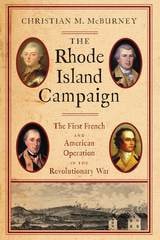
The Rhode Island Campaign
The First French and American Operation in the Revolutionary WarChristian M. McBurney
Westholme Publishing, 2011
The Marquis de Lafayette and the French Navy join Nathanael Green, John Sullivan, and a Continental Army to Attach a British Stronghold in New England
On July 29, 1778, a powerful French naval squadron sailed confidently to the entrance of Narragansett Bay. Its appearance commenced the first joint French and American campaign of the Revolutionary War. The new allies’ goal was to capture the British garrison at Newport, Rhode Island. With British resolve reeling from the striking patriot victory at Saratoga the previous autumn, this French and American effort might just end the war.
As the French moved into the bay, surprised British captains scuttled or burned many of their vessels rather than risk capture, resulting in the most significant loss of warships suffered by the British navy during the war. French Admiral Comte d’Estaing then turned to sea to engage the main British fleet but his ships were scattered and damaged by a huge storm. After his flagship and two other ships were attacked, d’Estaing’s squadron was taken out of the campaign. The American army under General John Sullivan, meanwhile, was stranded on a small island near Newport without the expected French naval support. When they tried to retreat off the island, British and Hessian regulars were sent to destroy Sullivan’s army; instead of a rout, a running battle ensued that lasted for more than six hours. Continentals, brimming with confidence after their training during the winter of Valley Forge, once more proved that they were an effective fighting force. While the Rhode Island Campaign ended in failure for the Americans and French, there were positive signs for the future of the alliance and the Revolution.
The Rhode Island Campaign: The First French and American Operation of the Revolutionary War unravels one of the most complex and multi-faceted events of the war, one which combined land and sea strategies and featured controversial decisions on both sides. Many prominent patriots participated, including Nathanael Greene, Marquis de Lafayette, John Hancock, and Paul Revere. Most important, while the campaign’s failure led to harsh criticism of the French in some quarters, leaders such as Greene, Lafayette, and George Washington steadfastly worked to ensure that the alliance would remain intact, knowing that the next joint operation could well succeed. Relying on in-depth research from American, French, British, and German original sources, author Christian McBurney has written the most authoritative book on this fascinating episode in American history.
The Strategy of Campaigning
Lessons from Ronald Reagan and Boris YeltsinKiron K. Skinner, Serhiy Kudelia, Bruce Bueno de Mesquita, and Condoleezza Rice
University of Michigan Press, 2010
The Strategy of Campaigning explores the political careers of Ronald Reagan and Boris Yeltsin, two of the most galvanizing and often controversial political figures of our time. Both men overcame defeat early in their political careers and rose to the highest elected offices in their respective countries.
The authors demonstrate how and why Reagan and Yeltsin succeeded in their political aspirations, despite—or perhaps because of—their apparent “policy extremism”: that is, their advocacy of policy positions far from the mainstream. The book analyzes the viability of policy extremism as a political strategy that enables candidates to forge new coalitions and outflank conventional political allegiances.
Bruce Bueno de Mesquita is Julius Silver Professor and Director of the Alexander Hamilton Center for Political Economy at New York University and a Senior Fellow at the Hoover Institution.
Condoleezza Rice is on a leave of absence from Stanford University, where she was a Professor of Political Science and a Senior Fellow at the Hoover Institution. She is currently serving as U.S. Secretary of State.

The Strategy of Life
Teleology and Mechanics in Nineteenth-Century German BiologyTimothy Lenoir
University of Chicago Press, 1989
Strongly influenced by Immanuel Kant, the biologists' approach combined a sophisticated teleology with mechanistic theories and sparked bitter controversies with the rival programs, mechanistic reductionism and Darwinism. Although temporarily eclipsed by these two approaches, the morphological tradition, Lenoir argues, was not vanquished in the field of scientific debate. It contributed to pathbreaking research in areas such as comparative anatomy, embryology, paleontology, and biogeography.
The Strategy of Sanctions
From Antiquity to the 21st CenturyEdited by S.C.M. Paine and Anand Toprani
University of Michigan Press, 2026
In recent decades, sanctions have become the preferred tool for the nonviolent coercion of other nations. The US government employs sanctions and embargoes to pressure not only enemies but sometimes even its friends. Despite their ubiquity, the debate over their efficacy continues. Measuring their success is controversial since many sanctions are economic, while the desired outcomes are political. Under what circumstances can sanctions or embargoes deliver their intended policy objectives at an acceptable cost? How can they best be integrated with other available instruments of national power?
The Strategy of Sanctions uses case studies from antiquity to the present to evaluate the strategic utility of sanctions and embargoes. The authors utilize a blended approach combining earlier definitions of sanctions, concepts from teaching of strategy, as well as terms of their own creation. They apply a common framework for teaching strategy, which disaggregates operational-level from strategic-level goals, and goals from strategies. By examining sanctions in different eras and contexts, the book highlights the circumstances that are most conducive to their efficacy.
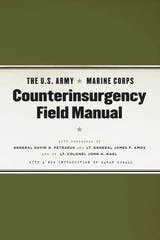
The U.S. Army/Marine Corps Counterinsurgency Field Manual
The United States Army and Marine Corps
University of Chicago Press, 2007
When the U.S. military invaded Iraq, it lacked a common understanding of the problems inherent in counterinsurgency campaigns. It had neither studied them, nor developed doctrine and tactics to deal with them. It is fair to say that in 2003, most Army officers knew more about the U.S. Civil War than they did about counterinsurgency.
The U.S. Army / Marine Corps Counterinsurgency Field Manual was written to fill that void. The result of unprecedented collaboration among top U.S. military experts, scholars, and practitioners in the field, the manual espouses an approach to combat that emphasizes constant adaptation and learning, the importance of decentralized decision-making, the need to understand local politics and customs, and the key role of intelligence in winning the support of the population. The manual also emphasizes the paradoxical and often counterintuitive nature of counterinsurgency operations: sometimes the more you protect your forces, the less secure you are; sometimes the more force you use, the less effective it is; sometimes doing nothing is the best reaction.
An new introduction by Sarah Sewall, director of the Carr Center for Human Rights Policy at Harvard’s Kennedy School of Government, places the manual in critical and historical perspective, explaining the significance and potential impact of this revolutionary challenge to conventional U.S. military doctrine.
An attempt by our military to redefine itself in the aftermath of 9/11 and the new world of international terrorism, The U.S. Army / Marine Corps Counterinsurgency Field Manual will play a vital role in American military campaigns for years to come.
The University of Chicago Press will donate a portion of the proceeds from this book to the Fisher House Foundation, a private-public partnership that supports the families of America’s injured servicemen. To learn more about the Fisher House Foundation, visit www.fisherhouse.org.

Till the Extinction of This Rebellion
George Rogers Clark, Frontier Warfare, and the Illinois Campaign of 1778–1779Eric Sterner
Westholme Publishing, 2026
Clark’s expedition was sanctioned by Virginia in order to protect its western border, and the author provides an overview of this rationale along with the strategies, tactics, and logistics Clark employed, particularly his ability to operate over great distances in remote areas. In particular, the author pays close attention to the psychological battlefield and how Clark combined mobility, surprise, and a calculated reputation for violence—a tactic respected by the Native peoples—to achieve dominance over his adversaries, often enabling the Americans to achieve their goals without harming anyone. The book culminates with the capture of Fort Sackville/Vincennes, in which Clark and his men fought the only pitched battle of the Illinois Campaign. The resounding success of Clark’s expedition laid the foundation for credible American postwar claims to lands as far west as the Mississippi, opening even more territory to new settlements at the expense of the Native peoples. Till the Extinction of This Rebellion is an important contribution to understanding the impact of the American Revolution on both Native peoples and westward expansion.

Total Communication
Structure and StrategyLionel Evans
Gallaudet University Press, 1982

Trinity
An Illustrated History of the World's First Atomic TestEmily Seyl
University of Chicago Press, 2026
Explore the scientific crescendo of the Manhattan Project through newly contextualized and never-before-seen photographs from Los Alamos National Laboratory’s legacy collections—some just declassified.
Twenty-one days before the world learned of the atomic bomb through its wartime use against Japan, a team of scientists led by J. Robert Oppenheimer detonated the first nuclear device on a remote stretch of New Mexico desert, in an operation codenamed Trinity. Both a military proof test and an elaborate, well-documented scientific experiment, the Trinity shot on July 16, 1945, brought under the control of humankind a new fire: the energy of the atom.
In this expertly curated journey through the beginning of the atomic age, hundreds of carefully restored photographs, still frames, and once-secret documents bring new and vivid focus to a watershed moment in science and history. Written for all to understand, Trinity weaves steadily through subplots and surprises set against the evolving, looming backdrop of a world at war. It shadows the humans and hardware at work in the rugged landscape of the test operation; dissects a fiery mushroom cloud unfurling frame by frame, frozen in time; and follows soldiers, scientists, and two atomic bombs across the Pacific Ocean to Tinian Island, onto the strike planes Enola Gay and Bockscar, and to Hiroshima and Nagasaki, the two Japanese cities devastated on August 6 and 9, 1945.
Inviting readers into the clandestine spaces where a new era began—behind the cameras, the bunker doors, the gates and guard posts—Trinity strives, grieves, celebrates, and ponders. It artfully captures that extraordinary summer when scientists invented urgently in the waning months of the “before”—and the tension between violence and progress, hope and fear, that persists into the after.
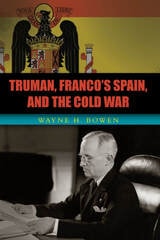
Truman, Franco's Spain, and the Cold War
Wayne H Bowen
University of Missouri Press, 2017
President Harry S. Truman harbored an abiding disdain for Spain and its government. During his presidency (1945–1953), the State Department and the Department of Defense lobbied Truman to form an alliance with Spain to leverage that nation’s geostrategic position, despite Francisco Franco’s authoritarian dictatorship. The eventual alliance between the two countries came only after years of argument for such a shift by nearly the entire U.S. diplomatic and military establishment. This delay increased the financial cost of the 1953 defense agreements with Spain, undermined U.S. planning for the defense of Europe, and caused dysfunction over foreign policy at the height of the Cold War.