Results by title
67 books match the query 'Students' and 10 start with t
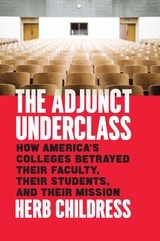
The Adjunct Underclass
How America’s Colleges Betrayed Their Faculty, Their Students, and Their MissionHerb Childress
University of Chicago Press, 2019
Welcome to the life of the mind in the gig economy. Over the past few decades, the job of college professor has been utterly transformed—for the worse. America’s colleges and universities were designed to serve students and create knowledge through the teaching, research, and stability that come with the longevity of tenured faculty, but higher education today is dominated by adjuncts. In 1975, only thirty percent of faculty held temporary or part-time positions. By 2011, as universities faced both a decrease in public support and ballooning administrative costs, that number topped fifty percent. Now, some surveys suggest that as many as seventy percent of American professors are working course-to-course, with few benefits, little to no security, and extremely low pay.
In The Adjunct Underclass, Herb Childress draws on his own firsthand experience and that of other adjuncts to tell the story of how higher education reached this sorry state. Pinpointing numerous forces within and beyond higher ed that have driven this shift, he shows us the damage wrought by contingency, not only on the adjunct faculty themselves, but also on students, the permanent faculty and administration, and the nation. How can we say that we value higher education when we treat educators like desperate day laborers?
Measured but passionate, rooted in facts but sure to shock, The Adjunct Underclass reveals the conflicting values, strangled resources, and competing goals that have fundamentally changed our idea of what college should be. This book is a call to arms for anyone who believes that strong colleges are vital to society.
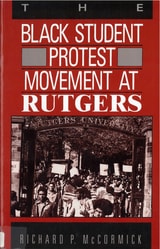
The Black Student Protest Movement at Rutgers
Richard P. McCormick
Rutgers University Press, 1990
Richard P. McCormick has chronicled the black student protest movement at Rutgers University, from the 1960s to today. He examines the forces that produced the protest movement, the tactics that were employed, and the qualified gains that were achieved. He tells us about demonstrations, building occupations, committee hearings, and countless meetings, but he also paints portraits of the many student leaders who mobilized protest. This is the story of a lot of pain, some blunders, and some successes.
In the mid-sixties, the University established committees to recruit black students and to add more blacks to the faculty. These efforts produced only modest results. By 1968, there were still not enough black students on campus, but there were enough to create a political presence for the first time. They were committed to acting against the racism they perceived within the University. To respond to their protests, in March 1969 the Board of Governors passed a dramatically new and controversial policy to encourage disadvantaged students who lived in Camden, Newark, and New Brunswick to apply to Rutgers, where they would take college-preparatory classes as unmatriculated students, and then enter Rutgers as matriculated students. This program, never very successful, lasted only two years.
Unrest did not end with the sixties. During the seventies, black students sporadically voiced protests against what they perceived to be an unsupportive environment. During the eighties, black enrollment actually declined, as did the black graduation rate. In conclusion, McCormick points to the effort that has been made but even more to the effort that still needs to be made and the social cost of ignoring the problem.
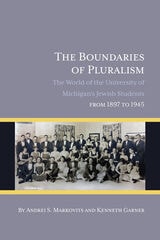
The Boundaries of Pluralism
The World of the University of Michigan’s Jewish Students from 1897 to 1945Andrei S. Markovits & Kenneth Garner
Michigan Publishing Services, 2020
Raoul Wallenberg Distinguished University Professor of History,
University of Michigan
Arthur F. Thurnau Professor, University of Michigan,
and Director, Bentley Historical Library
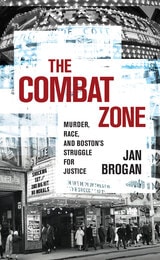
The Combat Zone
Murder, Race, and Boston's Struggle for JusticeJan Brogan
University of Massachusetts Press, 2021
At the end of the 1976 football season, more than forty Harvard athletes went to Boston's Combat Zone to celebrate. In the city's adult entertainment district, drugs and prostitution ran rampant, violent crime was commonplace, and corrupt police turned the other way. At the end of the night, Italian American star athlete Andy Puopolo, raised in the city's North End, was murdered in a stabbing. Three African American men were accused of the crime. His murder made national news and led to the eventual demise of the city's red-light district.
Starting with this brutal murder, The Combat Zone tells the story of the Puopolo family's struggle with both a devastating loss and a criminal justice system that produced two trials with opposing verdicts, all within the context of a racially divided Boston. Brogan traces the contentious relationship between Boston’s segregated neighborhoods during the busing crisis; shines a light on a court system that allowed lawyers to strike potential jurors based purely on their racial or ethnic identity; and lays bare the deep-seated corruption within the police department and throughout the Combat Zone. What emerges is a fascinating snapshot of the city at a transitional moment in its recent past.
The Educated Underclass
Students and the False Promise of Social MobilityGary Roth
Pluto Press, 2019
The dream of social mobility is dying. Where previous generations routinely expected to surpass their parents' level of economic success, prospects for today's young people are increasingly bleak. What role does higher education play in the process? An essential and frightening one, according to author Gary Roth.
The Educated Underclass reveals the structural problems that are helping to create this problem. Gary Roth shows how universities—touted as the best way up the economic ladder for young people—actually reproduce traditional class hierarchies. And as more graduates emerge every year into economies that are no longer creating a steady stream of stable jobs, the odds of landing one decrease—and over-educated people end up scrapping for poorly compensated positions for which they're overqualified. Chapters include:
*Higher education and class
*The overproduction of intelligence
*Class in transition: historical background
*Underemployment through the decades
*Class status and economic instability
*And more!
Roth writes in his Introduction, “Education has become an intermediary institution between a social system that habitually sputters and declines while ever-greater amounts of consumer products are dangled in front of the system’s workforce. The result: a dynamic fraught with all sort of negative possibilities, both socially and psychotically.”
A broadside against the failures of our education system and our economy, Gary Roth’s The Educated Underclass aims to startle us out of our complacency and wake us up to action.
The Mee-Ow Show at 50
From Cultural Rebellion to Comedy InstitutionJoseph B. Radding and Paul W. Warshauer
Northwestern University Press, 2025
The fifty-year history of the Mee-Ow Show at Northwestern University and its influence on contemporary comedy
In the fall of 1973, two students at Northwestern University resolved to create something on stage that was wholly their own. Soon, they would be joined by a cohort of performers, musicians, and staff, and the resulting production would go on to launch the careers of scores of entertainment professionals, including some of the most well-known and awarded names in comedy today. This book is not only an account of the rebellious fifty-year history of the Mee-Ow Show, now the longest-running student sketch comedy and improv show in the country, but also its far-reaching influence. The storied group’s alumni include such household names as Craig Bierko, Ana Gasteyer, Julia Louis-Dreyfus, John Cameron Mitchell, Dermot Mulroney, Seth Meyers, and Kristen Schaal.
Based on more than a hundred new interviews with group members, presenting their words alongside never-before-published photographs and ephemera, The Mee-Ow Show at 50 provides a chronicle of the last half-century of the American undergraduate experience—and reveals how, from New York to Los Angeles, contemporary comedy can trace its roots to an upstart student production in Evanston, Illinois.
The Politics of Puerto Rican University Students
By Arthur Liebman
University of Texas Press, 1970
In the 1960s, when students everywhere were coming alive politically, and when the Latin American student activist in particular became as archetypal of radicalism as the Latin American dictator was of repression, Puerto Rican students remained strangely silent. With the exception of FUPI, a radical student group with only a small following, student political behavior conformed to that of Puerto Rican society in general—center to conservative.
Historically, Puerto Rico has been economically and politically dominated first by Spain and then by the United States. But unlike other colonial dependencies in Latin America, Puerto Rico has never rebelled. Puerto Rican politics centers on the status issue—independence, statehood, or association for the island. But no legendary victories, no heroic defeats offer a battle cry for nationalists, leftists, and independistas. Overwhelming foreign influence in the Church, the schools, the economy, and eventually the mass media deprived the island of any strong indigenous institutions that might foster nationalism. Militancy lies outside the mainstream of Puerto Rican tradition.
Against this historical and cultural backdrop, Arthur Liebman closely examines the social background and political activity of students at the Rio Piedras campus of the University of Puerto Rico. Based on personal interviews with students, faculty, and administrators, as well as on a survey of the student body, his study reveals the strength of political inheritance among university students in Puerto Rico. The student left is small and weak largely because the left of the parents’ generation is small and weak. To date, Puerto Rican students have been the children of their parents and of their society.
Within a university that emphasizes practicality, the nonmilitant majority of the students study education, business, engineering, and medicine, being trained to participate in and to reap the rewards of the status quo. Student leftists, in the minority, generally study history, economics, sociology, and law—fields that open wider perspectives on their society and its problems and offer no immediate guarantee of its benefits. Brighter, less religious, and more dissatisfied with their role as a student, the student leftists stand apart from their cohort at the University of Puerto Rico. Like their adult counterparts, they are an anomaly in an acquisitive, relatively conservative society.
The University and Social Justice
Struggles Across the GlobeAziz Choudry
Pluto Press, 2020
Whether calling for the decommodification or the decolonization of education, many of these struggles have attempted to draw on (and in turn, resonate with) longer histories of popular resistance, broader social movements and radical visions of a fairer world. In this critical collection, Aziz Choudry, Salim Vally and a host of international contributors bring grounded, analytical accounts of diverse struggles relating to higher education into conversation with each other.
Featuring contributions written by students and staff members on the frontline of struggles from 12 different countries, including Canada, Chile, France, India, Mexico, Nigeria, Occupied Palestine, the Philippines, South Africa, Turkey, the UK and the USA, the book asks what can be learned from these movements' strategies, demands and visions.
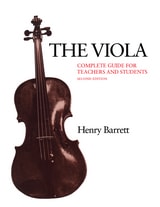
The Viola
Complete Guide for Teachers and StudentsBetsy Mason Barrett
University of Alabama Press, 1996
The second edition is extensively expanded in its graded lists of studies and solos
This book, in its encyclopedic catalog of viola literature in print, and (perhaps most important) in its treatment of the musical and pedagogical aspects of teaching the viola. A work already unique has been augmented in all its major aspects. The excerpts that follow are from reviews of the out-of-print first edition.
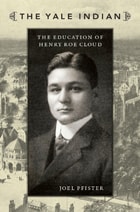
The Yale Indian
The Education of Henry Roe CloudJoel Pfister
Duke University Press, 2009
Roe Cloud’s white-collar activism was entwined with the Progressive Era formation of an Indian professional and managerial class, a Native “talented tenth,” whose members strategically used their contingent entry into arenas of white social, intellectual, and political power on behalf of Indians without such access. His Yale training provided a cross-cultural education in class-structured emotions and individuality. While at Yale, Roe Cloud was informally adopted by a white missionary couple. Through them he was schooled in upper-middle-class sentimentality and incentives. He also learned how interracial romance could jeopardize Indian acceptance into their class. Roe Cloud expanded the range of what modern Indians could aspire to and achieve.