Results by title
53 books match the query 'Success' and 8 start with t
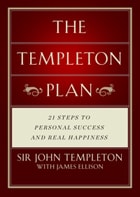
Templeton Plan
21 Steps to Personal Success and Real HappinessSir John Templeton
Templeton Press, 2013
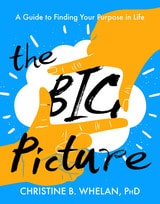
The Big Picture
A Guide to Finding Your Purpose in LifeChristine B. Whelan
Templeton Press, 2016
“If young adults could be guided in the right direction for a life journey of meaning and purpose, we would be grooming the leaders of tomorrow for a better world. This book is the perfect guide.” —Deepak Chopra, MD, FACP, founder of the Chopra Center for Wellbeing
What am I going to do for the rest of my life?
This question is familiar for young people at a turning point—whether it’s facing the end of high school, college, graduate school, or just a dead-end job. Maybe they have the degree they want but don’t know where to start their job search. Perhaps they’re still choosing a major and, given the range—from “Biochemistry” to “Adventure Education”—are lost in the options. Maybe they’re facing a mountain of debt but don’t want to get locked into a job they hate.
While other books might advise writing resumes or preparing for interviews, they only go so far. Young people want more than just another job—they want a life, and a meaningful one at that.
Enter The Big Picture. Created by the leading authority on self-help research and reviewed by over six hundred college students, Dr. Christine B. Whelan’s The Big Picture offers a guide to discovering one’s talents, dreams, and desires that can lead one to a fulfilling career but fulfilling life. It guides young people to take a step back and look at the “big picture” of who they are, what they want, and why they’re here.
Through quizzes and questionnaires which college students have vetted, Whelan guides the reader through “big picture” questions like,
- What are my talents—and how can I use those to help others and create meaning?
- How have my life experiences shaped who I am and what I can give?
- What do I value—and how can I be happy while being true to those values?
Although there are endless books on finding a job, this is the first book that presents research-based and tested material to help young people answer the question, What will I do with my life? The Big Picture provides the resources needed to find—and live—a purposeful life. An excellent gift for a graduate or a guide for yourself.

The Burnout-Belonging Connection
Why Burnout is Not Our Fault and How Community Can Fortify Us Against ItLisa M. Nunn
Rutgers University Press, 2027
For over a decade now, we’ve been hearing the wrong messages about burnout: we are told that we have to fix ourselves in order to fix burnout. This misguided wisdom says that better time management, stronger boundaries, and more yoga-mindfulness-gratitude-exercise-vacation are the solution. Nope. Stronger, healthier communities are the solution. Lisa M. Nunn shows us that the same dynamics that create the social bonds of belonging, when absent, become the drivers of burnout. Greedy communities drive burnout; respectful communities foster belonging. Unfair communities drive burnout; trustworthy communities foster belonging. Negligent communities drive burnout; attentive communities foster belonging. The book offers 35 strategies to cultivate strong belonging—and in doing so minimize burnout—in our workplaces, families, friendship circles, volunteer organizations, athletic clubs, and every other community in our lives.
The Last Resort
Success And Failure In Campaigns For CasinosJohn Dombrink
University of Nevada Press, 1990

The Purpose-Based Library
Finding Your Path to Survival, Success, and GrowthJohn J. Huber
American Library Association, 2015
The Templeton Plan
21 Steps to Personal Success and Real HappinessJohn Marks Templeton
Templeton Press, 2011
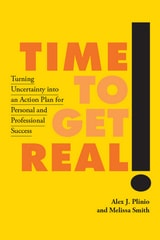
Time to Get Real!
Turning Uncertainty into an Action Plan for Personal and Professional SuccessAlex J. Plinio
Rutgers University Press, 2019
The Life and Career Planning Model in Time to Get Real! has been utilized by individuals in early, mid and later career and life. Too many individuals let life happen to them. Control more of your life through readiness and preparation. We can help you visualize a future that you desire and a road that you can travel to get there.
Written by Alex J. Plinio, and Melissa Smith, acclaimed business leaders and life and career planning specialists, this book is filled with instructive case studies, illuminating stories, interactive exercises, and inspirational quotes enabling you to unlock those things leading to personal satisfaction and success. The Life and Career Planning Model helps you target what matters the most to you in your life while providing the impetus to move you forward in a positive direction. Whether you are 21, 41, or 61, it is now Time to Get Real!
Twentieth-Century American Success Rhetoric
How to Construct a Suitable SelfJohn Ramage
Southern Illinois University Press, 2005
Self-help authors like Tom Peters and Stephen Covey, who have dominated best-seller lists over the last two decades, have exercised increasing influence on political, governmental, and educational organizations. By contrast, the topic of American success books— texts that promise to help readers succeed by retrofitting their identity to meet workplace demands—has been ignored by scholars since the 1980s. John Ramage challenges the neglect of this hugely popular literature and revives a once-lively conversation among eminent critics about the social phenomenon represented in the work of Bruce Barton, Dale Carnegie, and Norman Vincent Peale, among others.
Using literary texts from Don Quixote to Catch-22 to gloss the discussion, Ramage utilizes Kenneth Burke’s rhetorical theory to understand symbolic acts and social issues and brings together earlier commentaries within a new critical framework. He considers the problematic and paradoxical nature of success and examines its meaning in terms of its traditional dialectic partner, happiness. A synopsis of seventeenth- to nineteenth-century forerunners prefaces this analysis in which Ramage links literary code heroes with the activities of twentieth-century business leaders to determine whether, in the search for authenticity, the heroic individual or the corporation is ultimately served.
This comprehensive study chronicles the legitimation of the success book genre, enumerates rhetorical strategies used to win over readers, and supplies the historical context that renders each book’s message timely. After considering some of the dangers of crossing disciplinary borders, as exemplified by Deborah Tannen’s work, Ramage critiques Stanley Fish’s theoretical strictures against this practice, finally summoning academic critics to action with a strong call to exert greater influence within the popular marketplace.