Results by title
52 books match the query 'Tale' and 8 start with t
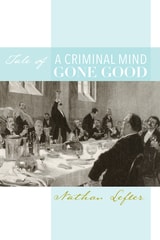
Tale of a Criminal Mind Gone Good
Nathan Lefler
St. Augustine's Press, 2021
Entrée G. K. Chesterton. If Girard recognizes the talent certain literary figures have for observing what celebrated philosophers fail to see, Chesterton is one of these men of real vision. Lefler in his match-making is interested in “Romance and the romantic,” and placing Girard and Chesterton in a kind of dialogue he draws a clearer concept of Romanticism. Who is the Romatic hero? And why do we so badly need to know? If what Lefler sees in Chesterton and Girard requires “special pleading” on the part of the reader for the author to make himself more clear, Lefler obliges. He takes a sharp turn into the Father Brown stories and points the reader to Chesterton’s famous villain: Flambeau, the “colossus of crime”. The moral transition from sinner to saint in Flambeau is strikingly anti-Romantic and, with Girard in mind, also very much anti-mimetic. Or is it? Lefler argues that even Girard would have “inclined his own regal forehead in delight and awe” at Chesterton’s portrayal of the crowning Romantic quality and unlikely machete in an overgrown jungle of the self-intoxicated modern imagination––namely, humility.
Lefler makes his mark in several places with this new study. As literary critic, both Chesterton and Girard are honored. As philosopher, Lefler speaks as if somehow he managed to find a pocket of unpolluted air to breath. As theologian, he betrays that he also loves what Chesterton and Girard loved. And as special service to the reader, the full text of Chesterton’s The Queer Feet is provided.
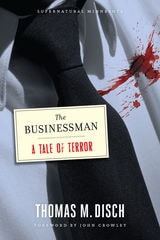
The Businessman
A Tale of TerrorThomas M. Disch
University of Minnesota Press, 2010

The Little Bulbs
A Tale of Two GardensElizabeth A. Lawrence
Duke University Press, 1986
“A few garden writers offer prose that goes beyond how to spade and spray to convey the experience and pleasures of gardening. The late Elizabeth Lawrence was such a writer.”—Southern Living
“First published in 1957 and out-of-print for many years, this is a delightfully written and enormously informative introduction to the fascinating variety of little bulbs available to the gardener. The author discusses a wide variety of plants, both familiar and little-known, including crocuses, species daffodils, hardy cyclamen and lily-family members such as Brodiaea, Bessera, and Calochortus.”—American Horticulturist
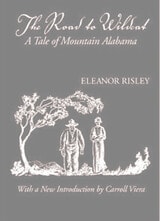
The Road to Wildcat
A Tale of Mountain AlabamaEleanor Risley
University of Alabama Press, 2004
A remarkable chronicle of southern mountain life in the early 20th century
The Road to Wildcat recounts the travels in North Alabama in the mid-1920s of Eleanor Risley (suffering from diabetes), her asthmatic husband, Pierre, their dog, John, and a Chinese wheelbarrow named Sisyphus that held their travel goods. Advised to make the walking tour for improvement of their health, the group left Fairhope in south Alabama and walked hundreds of miles in the southern Appalachians for months, sleeping out under the stars at night, or in a canvas tent or an abandoned building, cooking their fresh-caught foods over campfires, and accepting the generosity and advice of the mountain people they met, some of them moonshiners and outlaws.
During their sojourn across the rural wilderness, they enjoyed fiddlin’ dances in rickety halls, joined Sacred Harp singers, learned about the grapevine telegraph, saw the dreadful effects of inbreeding, and attended “Snake Night” at Posey Holler (a religious revival that included snake handling). Published in segments in the Atlantic Monthly in 1928 and 1929 and then reorganized into book form, the travelogue is a colorful record of the culture, customs, and dialect of the southern mountaineers of that era.
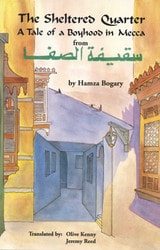
The Sheltered Quarter
A Tale of a Boyhood in MeccaBy Hamza Bogary
University of Texas Press, 1991
Hamza Bogary describes a bygone way of life that has now irreversibly disappeared. He speaks of life in Mecca before the advent of oil. Only partly autobiographical, the memoir is nevertheless rich in remembered detail based on Bogary's early observations of life in Mecca. He has transformed his knowledge into art through his sense of humor, empathy, and remarkable understanding of human nature. This work not only entertains; it also informs its readers about the Arabia of the first half of the twentieth century in a graphic and fascinating way. The narrator, young Muhaisin, deals with various aspects of Arabian culture, including education, pilgrimages, styles of clothing, slavery, public executions, the status of women, and religion. Muhaisin is frank in his language and vivid in his humor. The reader quickly comes to love the charming and mischievous boy in this universal tale.
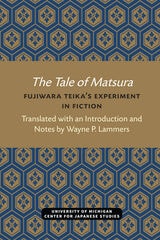
The Tale of Matsura
Fujiwara Teika’s Experiment in FictionTranslated with an Introduction and Notes by Wayne P. Lammers
University of Michigan Press, 1992
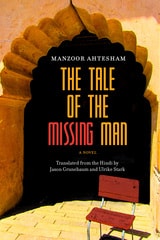
The Tale of the Missing Man
A NovelManzoor Ahtesham, translated from the Hindi by Jason Grunebaum and Ulrike Stark
Northwestern University Press, 2018
The Tale of the Missing Man (Dastan-e Lapata) is a milestone in Indo-Muslim literature. A refreshingly playful novel, it explores modern Muslim life in the wake of the 1947 partition of India and Pakistan. Zamir Ahmad Khan suffers from a mix of alienation, guilt, and postmodern anxiety that defies diagnosis. His wife abandons him to his reflections about his childhood, writing, ill-fated affairs, and his hometown, Bhopal, as he attempts to unravel the lies that brought him to his current state (while weaving new ones).
A novel of a heroic quest gone awry, The Tale of the Missing Man artfully twists the conventions of the Urdu romance, or dastan, tradition, where heroes chase brave exploits that are invariably rewarded by love. The hero of Ahtesham’s tale, living in the fast-changing city of Bhopal during the 1970s and ’80s, suffers an identity crisis of epic proportions: he is lost, missing, and unknown both to himself and to others. The result is a twofold quest in which the fate of protagonist and writer become inextricably and ironically linked. The lost hero sets out in search of himself, while the author goes in search of the lost hero, his fictionalized alter ego.
New York magazine cited the book as one of “the world's best untranslated novels.” In addition to raising important questions about Muslim identity, Ahtesham offers a very funny and thoroughly self-reflective commentary on the modern author’s difficulties in writing autobiography.
The Global Humanities Translation Prize is awarded annually to a previously unpublished translation that strikes the delicate balance between scholarly rigor, aesthetic grace, and general readability, as judged by a rotating committee of Northwestern faculty, distinguished international scholars, writers, and public intellectuals. The Prize is organized by the Global Humanities Initiative, which is jointly supported by Northwestern University’s Buffett Institute for Global Studies and Kaplan Institute for the Humanities.
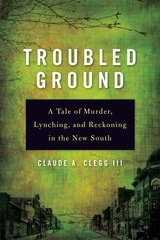
Troubled Ground
A Tale of Murder, Lynching, and Reckoning in the New SouthClaude A. Clegg III
University of Illinois Press, 2010