Results by title
94 books match the query 'Techniques' and 22 start with t

Tactile Sensibilities
Seeing Through Print in American ArtJuliet Sperling
University of Chicago Press, 0
A print-driven history of American art in the long nineteenth century.
Juliet Sperling’s Tactile Sensibilities uses interactive printed objects to uncover culturally instilled ideas about touch’s role in perception and shows how these frameworks were integral to ways of making and appreciating even seemingly untouchable works of painting and sculpture. Crucial to Sperling’s argument is a genre of paper constructions designed to engage the hand and eye in tandem: multilayered and lift-the-flap book plates, pull-tab engravings, foldable playbills, and spinning paper wheels that built expectations of touch as a trained, focused process into their structure and material. Intimately scaled and portable, tactile prints cut across multiple spheres of experience, including spaces in which people learned to view, understand, and create art.
Sperling reverses standard procedures for integrating prints into art history. Rather than working her way outward from canonical artworks toward ephemeral sources within the artist’s orbit, she uses previously unstudied printed materials to open period discourses of tactile sensibility that ultimately lead to art objects, unlocking new meanings behind works of painting and sculpture by artists including Raphaelle Peale, Hiram Powers, William Sidney Mount, and Winslow Homer. In treating sidelined materials as dedicated objects of study in their own right, Tactile Sensibilities reveals that in the long nineteenth century, print was an intellectually dense and powerfully connective medium, vital in mediating the tactile sensibilities that shaped ways of making and appreciating art.
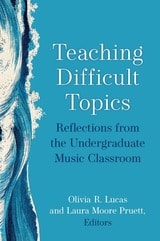
Teaching Difficult Topics
Reflections from the Undergraduate Music ClassroomOlivia R. Lucas and Laura Moore Pruett
University of Michigan Press, 2024
The teaching reflections in Teaching Difficult Topics examine difficult themes that fall into three primary categories: subjects that instructors sense to be controversial or emotionally challenging to discuss, those that derive from or intersect with real-world events that are difficult to process, and bigger-picture discussions of how music studies often focuses on dominant narratives while overlooking other perspectives. Some chapters offer practical guidance, lesson plans, and teaching materials to enable instructors to build discussions of race, gender, sexuality, and traumatic histories into their own classrooms; others take a more global view, reflecting on the importance and relevance of teaching these difficult topics and on how to respond in the music classroom when external events disrupt daily life.

Techniques and Technologies in Electrical Stimulation for Neuromuscular Rehabilitation
Ian Swain
The Institution of Engineering and Technology, 2025
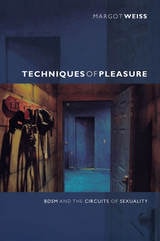
Techniques of Pleasure
BDSM and the Circuits of SexualityMargot Weiss
Duke University Press, 2012
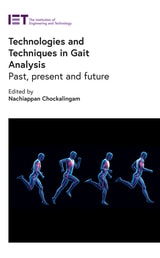
Technologies and Techniques in Gait Analysis
Past, present and futureNachiappan Chockalingam
The Institution of Engineering and Technology, 2022

Texas Gardening the Natural Way
The Complete HandbookBy Howard Garrett
University of Texas Press, 2004
Compost your old "complete" gardening guide. There's a new way of gardening in Texas that's healthier for people and the environment, more effective at growing vigorous plants and reducing pests, cheaper to maintain, and just more fun. It's Howard Garrett's "The Natural Way" organic gardening program, and it's all here in Texas Gardening the Natural Way.
This book is the first complete, state-of-the-art organic gardening handbook for Texas. Using Howard Garrett's new mainstream gardening techniques, Texas Gardening the Natural Way presents a total gardening program:
- How to plan, plant, and maintain beautiful landscapes without using chemical fertilizers and toxic pesticides.
- Gardening fundamentals: soils, landscape design, planting techniques, and maintenance practices.
- Includes more native and adaptable varieties of garden and landscape plants than any other guide on the market.
- Trees: 134 species of evergreens, berry- and fruit-bearing, flowering, yellow fall color, orange fall color, and red fall color.
- Shrubs and specialty plants: 85 species for sun, shade, spring flowering, summer flowering, and treeform shrubs.
- Ground covers and vines: 51 species for sun and shade.
- Annuals and perennials: 136 species for fall color, winter color, summer color in shade and sun, and spring color. Also seeding rates for wildflowers.
- Lawn grasses: 10 species for sun and shade, with additional information on 16 native grasses, seeding rates for 32 grasses, and suggested mowing heights.
- Fruits, nuts, and vegetables: 58 species, with a vegetable planting chart and information on organic pecan and fruit tree growing, fruit varieties for Texas, grape and pecan varieties, and gardening by the moon.
- Common green manure crops: 29 crops that help enrich the soil.
- Herbs: 66 species for culinary and medicinal uses.
- Bugs: 73 types of helpful and harmful bugs, with organic remedies for pests, lists of beneficial bugs and plants that attract them, a beneficial bug release schedule, and sources for beneficial bugs.
- Plant diseases: organic treatments for 55 common problems.
- Organic methods for repelling mice, rabbits, armadillos, beavers, cats, squirrels, and deer.
- Organic management practices: watering, fertilizing, controlling weeds, releasing beneficial insects, biological controls (including bats and purple martins), and recipes for Garrett Juice, fire ant control drench, vinegar herbicide, Sick Tree Treatment, and Tree Trunk Goop.
- Average first and last freeze dates for locations around the state.
- Organic fertilizers and soil amendments: 61 varieties, including full instructions for making compost.
- Organic pest control products: 30 varieties.
- Common house plants and poisonous plants.
- Instructions for climbing vegetable structures and bat houses.
- 833 gorgeous full-color photographs.
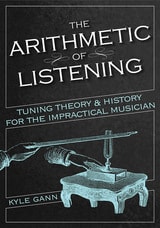
The Arithmetic of Listening
Tuning Theory and History for the Impractical MusicianKyle Gann
University of Illinois Press, 2019
A classroom essential and an invaluable reference, The Arithmetic of Listening offers beginners the grounding in music theory necessary to find their own way into microtonality and the places it may take them. Moving from ancient Greece to the present, Kyle Gann delves into the infinite tunings available to any musician who feels straitjacketed by obedience to standardized Western European tuning. He introduces the concept of the harmonic series and demonstrates its relationship to equal-tempered and well-tempered tuning. He also explores recent experimental tuning models that exploit smaller intervals between pitches to create new sounds and harmonies.
Systematic and accessible, The Arithmetic of Listening provides a much-needed primer for the wide range of tuning systems that have informed Western music.
Audio examples demonstrating the musical ideas in The Arithmetic of Listening can be found at: https://www.kylegann.com/Arithmetic.html
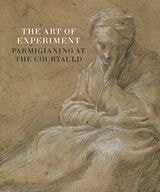
The Art of Experiment
Parmigianino at The CourtauldEdited by Ketty Gottardo and Guido Rebecchini
Paul Holberton Publishing, 2022
Accompanying an exhibition at London’s Courtauld Gallery, this stunning catalog presents works by the Renaissance artist Girolamo Francesco Maria Mazzola, better known as Parmigianino (1503–1540).
Fundamentally a draftsman at heart, Parmigianino drew relentlessly during his relatively short life, and around a thousand of his drawings have survived. The Courtauld’s collection comprises twenty-four sheets. In preparation for the catalog, new photography and technical examinations have been carried out on all the works, revealing two new drawings that were previously unknown, hidden underneath their historic mounts. They have also helped to better identify connections between some of the drawings and the finished paintings for which they were conceived. This stunning illustrated catalog presents the whole Courtauld collection and sheds light on an artist who approached every technique with unprecedented freedom and produced innovative works that are still admired by artists and collectors today.
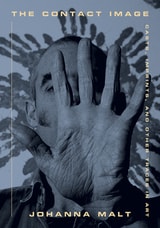
The Contact Image
Casts, Imprints, and Other Traces in ArtJohanna Malt
University of Minnesota Press, 2026
A new conceptual tool for understanding the history of art
From ancient cave paintings to contemporary sculpture, forms of indexical trace are vital to the human practice of artmaking. Through this wide-ranging exploration, Johanna Malt shows how casts, molds, and imprints (“contact images”) offer a paradigm for thinking about our relationship to objects and their surfaces as sites of meaning. Engaging and complicating philosophical dualities of absence and presence, art and non-art, original and copy, Malt introduces the contact image as an important new concept for the study of Western art.
Close reading examples from 30,000 years of art history, Malt cuts across eras and media to unite diverse forms of artistic production created through instances of contact with “the objects of the world.” From holy relics to Napoleon’s death mask to life casts of the human body by artists such as Duane Hanson and Janine Antoni, as well as conceptual and performance work by Jasper Johns and Yves Klein, The Contact Image traces themes of selfhood, time, negation, and vestige in these tactile encounters.
Revisiting fundamental questions about representation, perception, and aesthetics, The Contact Image is a sophisticated provocation for a theory of art built on the tension and oscillations that emerge when we explore how artworks embody opposites.
Retail e-book files for this title are screen-reader friendly with images accompanied by short alt text and/or extended descriptions.
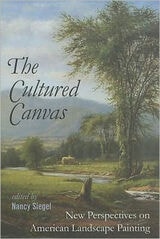
The Cultured Canvas
New Perspectives on American Landscape PaintingNancy Siegel
University of New Hampshire Press, 2012
Written from aesthetic, sociopolitical, cultural, and literary perspectives, The Cultured Canvas explores myriad ways in which American visual culture can be evaluated through newly conceived thematic and ideological approaches. This book moves beyond our accepted notion of the oil painting on canvas to consider the term as both a literal and figurative surface upon which artists construct or construe the landscape as an intellectual, cultural, or physical entity. It provides an innovative reevaluation of traditional thought concerning the Hudson River School, Luminism, and artists of the Civil War era.
As interdisciplinary emphases are employed with increasing frequency in arts and humanities courses, the breadth and depth of topics covered in this collection will provide a much-needed text for scholars in American art history, nineteenth-century American studies, and landscape studies, in addition to serving as a complement to courses in American literature and culture.
Hardcover is un-jacketed.
The Double Screen
Medium and Representation in Chinese PaintingWu Hung
University of Chicago Press, 1997
and pictorial representations, The Double Screen shows how the
collaboration and tension between material form and image gives life to
a painting. A Chinese painting is often reduced to the image it bears;
its material form is dismissed; its intimate connection with social
activities and cultural conventions neglected.
A screen occupies a space and divides it, supplies an ideal surface for
painting, and has been a favorite pictorial image in Chinese art since
antiquity. Wu Hung undertakes a comprehensive analysis of the screen,
which can be an object, an art medium, a pictorial motif, or all three
at once. With its diverse roles, the screen has provided Chinese
painters with endless opportunities to reinvent their art.
The Double Screen provides a powerful non-Western perspective on
issues from portraiture and pictorial narrative to voyeurism,
masquerade, and political rhetoric. It will be invaluable to anyone
interested in the history of art and Asian studies.
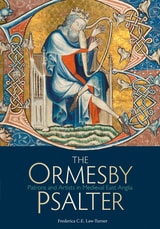
The Ormesby Psalter
Patrons and Artists in Medieval East AngliaFrederica C. E. Law-Turner
Bodleian Library Publishing, 2005
Housed in Oxford’s Bodleian Library for over 150 years, this enigmatic masterpiece is perhaps the most magnificent yet enigmatic of the great Gothic psalters produced in East Anglia in the first half of the fourteenth century. Manuscript expert Frederica C. E. Law-Turner places the psalter within a wider historical context and then deciphers its lush illuminations—scenes that vary wildly in tone from the comic to the bawdy to the mythic. Full-color photographs illustrate the text’s many characters: falcons and hunting dogs at bay, kings and courtesans, and other animals dressed in human garb. Created over a period of decades by previously unrecognized scribes and artists, the Ormesby Psalter is an exceptional amalgam of medieval art and history. For scholars of medieval life, as well as art historians, this new study will be an invaluable resource.
The Painting of T'ang Yin
Anne De Coursey Clapp
University of Chicago Press, 1991
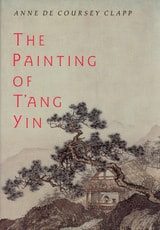
Anne De Coursey Clapp's work also explores larger issues of Ming painting raised by the artist's turbulent career. She describes the social and intellectual values exalted in Ming Suchou, its system of patronage, the contrast between the professional and amateur artist, and the formative influence of twelfth-century Sung dynasty styles on Suchou painters. Clapp shows how T'ang Yin's artistic inventions were made in the course of leading the revival of Sung dynasty styles in Suchou: tracing T'ang Yin's early studies of ancient and contemporary masters, she describes how he reworked an antique style, converting it into a vehicle of expression that reached fruition in a long series of fresh and powerful paintings of landscapes and birds-and-flowers. In the process, she revises the distorted version of middle Ming painting written by later Chinese art theorists to justify their own social and artistic values, noting especially the role of art patrons and their effect on artistic production.
Clapp analyzes the increasing currency of painting as a means of social exchange in ancient China. In particular, she identifies commemorative painting as a major genre of the later dynasties and explores the role it played in the oeuvres of professional masters with its humanistic implications for the Chinese view of the ideal scholarly man. Her broad view of T'ang Yin's career shows him divided between the professional and amateur camps of his time: in landscape and figural subjects he was aligned with the professionals; in flower subjects with the amateurs. Clap argues that the uneven distribution of styles and genres between this master who was subject to the market, and those who were independent of it, suggests that T'ang deliberately tried to expand the range of his paintings in order to appeal to buyers in the lower educational and social strata. Illustrated by some of T'ang Yin's most celebrated paintings and by some which are published for the first time, her work is of tremendous importance to art, literary, and cultural historians of Ming China.
"In this important work, Anne de Coursey Clapp has drawn a clear picture of T'ang Yin's life, patronage relationships, and contribution to the history of Chinese painting. In the person of T'ang Yin, she has chosen an ideal focus around which to examine some of the misleading stereotypes
which have distorted our understanding of Chinese painting since the seventeenth century. Marked by analytical clarity and scrupulous scholarship, her work is a welcome addition to the few works in English on individual Chinese artists."—Louise Yuhas, Occidental College
The Place of Narrative
Mural Decoration in Italian Churches, 431-1600Marilyn Aronberg Lavin
University of Chicago Press, 1990
"Like many masterpieces, Lavin's book builds upon a simple idea . . . it is possible to do a computer analysis of . . . visual narratives. . . . This is the first computer-based study of the visual arts of which I am aware that illustrates how those technologies can utterly transform the study of old master art. An extremely important book, one likely to become the most influential recent study of art of this period, The Place of Narrative is also a beautiful artifact."—David Carrier, Leonardo
"Covering over a millennium and dealing with the whole of Italy, Lavin makes pioneering use of new methodology employing a computer database . . . [and] novel terminology to describe the disposition of scenes of church and chapel walls. . . . We should recognize this as a book of high seriousness which reaches out into new areas and which will fruitfully stimulate much thought on a neglected subject of very considerable significance."—Julian Gardner, Burlington Magazine
The Story Quilts of Yvonne Wells
Stacy I. Morgan
University of Alabama Press, 2024
The introduction and definitive guide to the work of celebrated folk artist Yvonne Wells, whose vibrant, innovative story quilts address an array of historic, cultural, and religious themes
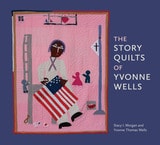
The Story Quilts of Yvonne Wells is an introduction and definitive guide to the self-taught quilter whose expansive body of work serves as testament to the sweeping tides of American life and Wells’s significance as a major figure within the folk art and art world writ large.
Beginning when she was nearly 40 years old and without formal training, Wells created her first quilt for practical use but was soon hand stitching appliqué figures into bold, original designs that unleashed her voice as a storyteller. Incorporating a wide variety of symbolic materials and unconventional objects—“anything I can stick a needle in”—Wells’s vivid story quilts reveal a fearless and encyclopedic vision ranging from the intimately autobiographical to iconic scenes from African American history, the Bible, Southern culture, and contemporary headlines.
The result of years of close collaboration between Stacy I. Morgan and Wells herself, The Story Quilts of Yvonne Wells is richly illustrated with more than 100 quilts accompanied by narratives about each, told in the artist's own words, and interspersed with in-depth essays documenting Wells’s unique artistic practice and creative journey during her five-decade art career.
The Story of Rose O'Neill
An AutobiographyEdited by Miriam Forman-Brunell
University of Missouri Press, 2022
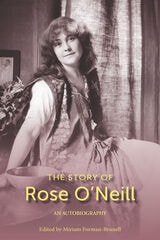
To most of us, Rose O'Neill is best known as the creator of the Kewpie doll, perhaps the most widely known character in American culture until Mickey Mouse. Prior to O'Neill's success as a doll designer, however, she already had earned a reputation as one of the best-known female commercial illustrators. Her numerous illustrations appeared in America's leading periodicals, including Life, Harper's Bazaar, and Cosmopolitan. While highly successful in the commercial world, Rose O'Neill was also known among intellectuals and artists for her contributions to the fine arts and humanities. In the early 1920s, her more serious works of art were exhibited in galleries in Paris and New York City. In addition, she published a book of poetry and four novels.
Yet, who was Rose Cecil O'Neill? Over the course of the twentieth century, Rose O'Neill has captured the attention of journalists, collectors, fans, and scholars who have disagreed over whether she was a sentimentalist or a cultural critic. Although biographers of Rose O'Neill have drawn heavily on portions of her previously unpublished autobiography, O'Neill's own voice--richly revealed in her well-written manuscript--has remained largely unheard until now.
In these memoirs, O'Neill reveals herself as a woman who preferred art, activism, and adventure to motherhood and marriage. Featuring photographs from the O'Neill family collection, The Story of Rose O'Neill fully reveals the ways in which she pushed at the boundaries of her generation's definitions of gender in an effort to create new liberating forms.

The Texas Way
Money, Power, Politics, and Ambition at The UniversityBy William H. Cunningham
University of Texas Press, 2013
This engaging memoir details Bill Cunningham’s seven years as president of the University of Texas at Austin and his eight years as chancellor of the UT System. Along the way, he relates accounts of the important issues UT faced during that time, including fraternity hazing, affirmative action, the demise of the Southwest Conference and the creation of the Big 12, apartheid and divestment protests, the future of higher education in Texas, and many other issues.
The Texas Way outlines how money, power, politics, and ambition all play roles in the business of running the state’s premier university system, particularly in its relations with the state government. As president and then as chancellor, Cunningham dealt with conflict from all sides of the political spectrum, always striving to protect the university’s interests.
Bill Cunningham was at the center of many important issues during the fifteen years he served as president and chancellor. The Dolph Briscoe Center for American History at the University of Texas at Austin is pleased to publish Cunningham’s detailed and insightful memoir, which serves as a reminder of how these issues continue to resonate and affect higher education in Texas.
The Unauthorized Audubon
Anita Skeen and Laura B. DeLind
Michigan State University Press, 2014
The Varnish and the Glaze
Painting Splendor with Oil, 1100–1500Marjolijn Bol
University of Chicago Press, 2023
Panel painters in both the middle ages and the fifteenth century created works that evoke the luster of precious stones, the sheen of polished gold and silver, and the colorful radiance of stained glass. Yet their approaches to rendering these materials were markedly different. Marjolijn Bol explores some of the reasons behind this radical transformation by telling the history of the two oil painting techniques used to depict everything that glistens and glows—varnish and glaze.
For more than a century after his death, the fifteenth-century painter Jan van Eyck was widely credited with inventing varnish and oil paint, on account of his unique visual realism. Once this was revealed to be a myth, the verisimilitude of his work was attributed instead to a new translucent painting technique: the glaze. Today, most theories about how Van Eyck achieved this realism revolve around the idea that he was the first to discover or refine the glazing technique. Bol, however, argues that, rather than being a fifteenth-century refinement, varnishing and glazing began centuries before. Drawing from an extensive body of recipes, Bol pieces together how varnishes and glazes were first developed as part of the medieval art of material mimesis. Artisans embellished metalwork and wood with varnishes and glazes to imitate gold and gems; infused rock crystal with oil, resin, and colorants to imitate more precious minerals; and oiled parchment to transform it into the appearance of green glass. Likewise, medieval panel painters used varnishes and glazes to create the look of enamel, silk, and more.
The explorations of materials and their optical properties by these artists stimulated natural philosophers to come up with theories about transparent and translucent materials produced by the earth. Natural historians, influenced by medieval artists’ understanding of refraction and reflection, developed theories about gems, their creation, and their optical qualities.

The Virgin and the Dynamo
Public Murals in American Architecture, 1893–1917Bailey Van Hook
Ohio University Press, 2003
The beaux-arts mural movement in America was fueled by energetic young artists and architects returning from training abroad. They were determined to transform American art and architecture to make them more thematically cosmopolitan and technically fluid and accomplished. The movement slowly coalesced around the decoration of mansions of the Gilded Age elite, mostly in New York, and of public buildings and institutions across the breadth of the country.
The Virgin and the Dynamo: Public Murals in American Architecture, 1893-1917 is the first book in almost a century to concentrate exclusively on the beaux-arts mural movement in the United States. Beginning with a short history of the movement from its inception in Boston during the American Renaissance, Bailey Van Hook focuses on the movement’s public manifestations in the period between the World’s Columbian Exposition in Chicago in 1893 and the First World War.
Professor Van Hook explores different aspects of the mural movement, the concept and meaning of “decoration,” the claim that murals are inherently democratic, the shift in preference from allegory to history, the gendered concept of modernity, the ideologies behind the iconography, and, finally, the decline of the movement when it began to be seen as old fashioned and anachronistic.
The Virgin and the Dynamo raises our understanding of the beaux-arts movement to a new level. For the general reader, this illustrated history will explain many familiar representations of local and national values.

Tips, Tools, and Techniques to Care for Antiques, Collectibles, and Other Treasures
Georgia Kemp Caraway
University of North Texas Press, 2012

To Destroy Painting
Louis Marin
University of Chicago Press, 1994