Results by title
62 books match the query 'Teenagers' and 13 start with t

Teenage Wasteland
Suburbia's Dead End KidsDonna Gaines
University of Chicago Press, 1998
"A powerful book."—Samuel G. Freedman, New York Times Book Review
"[Gaines] sheds light on a poorly understood world and raises compelling questions about what society might do to help this alienated group of young people."—Ann Grimes, Washington Post Book World
"There is no comparable study of teenage suburban culture . . . and very few ethnographic inquiries written with anything like Gaines's native gusto or her luminous eye for detail."—Andrew Ross, Transition
"An outstanding case study. . . . Gaines shows how teens engage in cultural production and how such social agency is affected by economic transformations and institutional interventions."—Richard Lachman, Contemporary Sociology
"The best book on contemporary youth culture."—Rolling Stone

Teenage Witches
Magical Youth and the Search for the SelfBerger, Helen
Rutgers University Press, 2007
Yet, as Helen A. Berger and Douglas Ezzy show in this in-depth look into the lives of teenage Witches, the reality of their practices, beliefs, values, and motivations is very different from the sensational depictions we see in popular culture. Drawing on extensive research across three countries--the United States, England, and Australia--and interviews with young people from diverse backgrounds, what they find are highly spiritual and self-reflective young men and women attempting to make sense of a postmodern world via a religion that celebrates the earth and emphasizes self-development.
The authors trace the development of Neo-Paganism (an umbrella term used to distinguish earth-based religions from the pagan religions of ancient cultures) from its start in England during the 1940s, through its growing popularity in the decades that followed, up through its contemporary presence on the Internet. Though dispersed and disorganized, Neo-Pagan communities, virtual and real, are shown to be an important part of religious identity particularly for those seeking affirmation during the difficult years between childhood and adulthood.
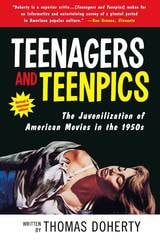
Teenagers And Teenpics
Juvenilization Of American MoviesThomas Doherty
Temple University Press, 2002

Teens and Libraries
Getting It RightElaine Meyers
American Library Association, 2003
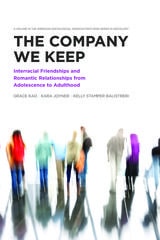
The Company We Keep
Interracial Friendships and Romantic Relationships from Adolescence to AdulthoodGrace Kao
Russell Sage Foundation, 2019
While research on interracial social ties has often focused on whites and blacks, Hispanics are the largest minority group and Asian Americans are the fastest growing racial group in the United States. The Company We Keep examines friendships and romantic relationships among blacks, whites, Hispanics, and Asian Americans to better understand the full spectrum of contemporary race relations. Using data from the National Longitudinal Study of Adolescent to Adult Health, the authors explore the social ties of more than 15,000 individuals from their first survey responses as middle and high school students in the mid-1990s through young adulthood nearly fifteen years later. They find that while approval for interracial marriages has increased and is nearly universal among young people, interracial friendships and romantic relationships remain relatively rare, especially for whites and blacks. Black women are particularly disadvantaged in forming interracial romantic relationships, while Asian men are disadvantaged in the formation of any romantic relationships, both as adolescents and as young adults. They also find that people in same-sex romantic relationships are more likely to have partners from a different racial group than are people in different-sex relationships. The authors pay close attention to how the formation of interracial friendships and romantic relationships depends on opportunities for interracial contact. They find that the number of students choosing different-race friends and romantic partners is greater in schools that are more racially diverse, indicating that school segregation has a profound impact on young people’s social ties.
Kao, Joyner, and Balistreri analyze the ways school diversity and adolescent interracial contact intersect to lay the groundwork for interracial relationships in young adulthood. The Company We Keep provides compelling insights and hope for the future of living and loving across racial divides.
The Crisis of School Violence
A New PerspectiveMarianna King
Michigan State University Press, 2020
The Fear of Child Sexuality
Young People, Sex, and AgencySteven Angelides
University of Chicago Press, 2019
The Five Life Decisions
How Economic Principles and 18 Million Millennials Can Guide Your ThinkingRobert T. Michael
University of Chicago Press, 2016
Economist Robert T. Michael won’t tell you what to choose. Instead, he’ll show you how to make smarter choices. Michael focuses on five critical decisions we all face about college, career, partners, health, and parenting. He uses these to demonstrate how the science of scarcity and choice—concepts used to guide major business decisions and shape national legislation—can offer a solid foundation for our own lives. Employing comparative advantage can have a big payoff when picking a job. Knowing how to work the marketplace can minimize uncertainty when choosing a partner. And understanding externalities—the ripple of results from our actions—can clarify the if and when of having children.
Michael also brings in data from the National Longitudinal Survey of Youth, a scientific sample of 18 million millennials in the United States that tracks more than a decade of young adult choices and consequences. As the survey’s longtime principal investigator and project director, Michael shows that the aggregate decisions can help us understand what might lie ahead along many possible paths—offering readers insights about how their own choices may turn out.
There’s no singular formula for always making the right choice. But the adaptable framework and rich data at the heart of The Five Life Decisions will help you feel confident in whatever you decide.
The Modern Age
Turn-of-the-Century American Culture and the Invention of AdolescenceKent Baxter
University of Alabama Press, 2008
The Modern Age examines the discourses that have come to characterize adolescence and argues that commonplace views of adolescents as impulsive, conflicted, and rebellious are constructions inspired by broader cultural anxieties that characterized American society in early-twentieth-century America.
The idea of adolescence, argues Kent Baxter, came into being because it fulfilled specific historical and cultural needs: to define a quickly expanding segment of the population, and to express concerns associated with the movement into a new era. Adolescence—a term that had little currency before 1900 and made a sudden and pronounced appearance in a wide variety of discourses thereafter—is a “modern age” not only because it sprung from changes in American society that are synonymous with modernity, but also because it came to represent all that was threatening about “modern life.”
Baxter provides a preliminary history of adolescence, focusing specifically on changes in the American educational system and the creation of the juvenile justice system that carved out a developmental space between the child and the adult. He looks at the psychological works of G. Stanley Hall and the anthropological works of Margaret Mead and explores what might have inspired their markedly negative descriptions of this new demographic. He examines the rise of the Woodcraft Indian youth movement and its promotion of “red skin” values while also studying the proliferation of off-reservation boarding schools for Native American youth, where educators attempted to eradicate the very “red skin” values promoted by the Woodcraft movement.
Finally Baxter studies reading at the turn of the century, focusing specifically on Horatio Alger (the Ragged Dick series) and Edward Stratemeyer (the Tom Swift, Nancy Drew, and Hardy Boys series) and what those works reveal about the “problem” of adolescence and its solutions in terms of value, both economic and moral.
The Official YALSA Awards Guidebook
American Library Association, 2008
The Readers' Advisory Guide to Teen Literature
Angela Carstensen
American Library Association, 2018

The Reading-Writing Connection
Edited by Nancy Nelson and Robert C. Calfee
University of Chicago Press, 1998
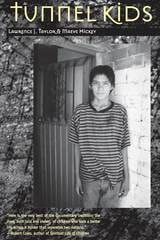
Tunnel Kids
Lawrence J. Taylor and Maeve Hickey
University of Arizona Press, 2001
Beneath the streets of the U.S.-Mexico border, children are coming of age. They have come from all over Mexico to find shelter and adventure in the drainage tunnels that connect the twin cities of Nogales, Sonora, and Nogales, Arizona. This book opens up the world of the tunnel kids and tells how in this murky underworld of struggling immigrants, drug dealers, and thieves, these kids have carved out a place of their own. Two parallel tunnels— each fourteen feet wide and several miles long— drain the summer rains from Mexico to the United States. Here and in the crumbling colonias you'll meet the tunnel kids: streetwise El Boston, a six-year veteran of the tunnels; his little pal Jesús; Jesús' girlfriend, La Flor, and her six-month-old baby; wild Negra; poetic Guanatos; moody Romel and his beautiful girlfriend, La Fanta. They form an extended family of some two dozen young people who live hard-edged lives and answer to no one in El Barrio Libre— the free barrio.
Lawrence Taylor and Maeve Hickey met these kids at Mi Nueva Casa, the safe house built to draw the youths out of the tunnels and into a more normal life. The authors spent two summers with tunnel kids as they roamed all over Nogales and beyond in their struggle to survive. In the course of their adventures the kids described their lives, talking about what might tempt them to leave the tunnels— and what kept them there. Hickey's stunning portraits provide a heart-stopping counterpoint to Taylor's incisive prose. Story and photos together open a window into the life of the tunnel kids—a world like that of many homeless children, precarious and adaptive, albeit unique to the border. Where most people might see just another gang of doped-up, violent children, Taylor and Hickey discover displaced and sometimes heroic young people whose stories add a human dimension to the world of the U.S.-Mexico border.