155 books match the query 'Telecommunications' and 18 start with t

cover of Telecommunication Networks

Telecommunication Networks

J.E. Flood

The Institution of Engineering and Technology, 1997
Telecommunications is vital to modern life, and the global telecommunication network that has developed is an essential part of the infrastructure of society. Although there is an extensive literature on many aspects of telecommunication technology, comparatively little has been published on the functioning and planning of complete telecommunication networks. The first edition of this book was intended to help fill that gap and this new edition has been thoroughly revised and includes much new material.
[more]
cover of Telecommunications Network Modelling, Planning and Design

Telecommunications Network Modelling, Planning and Design

Sharon Evans

The Institution of Engineering and Technology, 2003
Telecommunications Network Modelling, Planning and Design addresses sophisticated modelling techniques from the perspective of the communications industry and covers some of the major issues facing telecommunications network engineers and managers today. Topics covered include network planning for transmission systems, modelling of SDH transport network structures and telecommunications network design and performance modelling, as well as network costs, ROI modelling and QoS in 3G networks. This practical book will prove a valuable resource to network engineers and managers working in today's competitive telecommunications environment.
[more]
cover of Telecommunications Performance Engineering

Telecommunications Performance Engineering

Roger Ackerley

The Institution of Engineering and Technology, 2003
Service quality and cost control are critical success factors for the communications industry and performance engineering is vital in achieving both. It enables service quality to be 'built in' to products; cost control is achieved by addressing potential problems at an early stage, before the costs to remedy problems rise and large failure costs are incurred.
[more]
cover of Telecommunications Quality of Service Management: From legacy to emerging services

Telecommunications Quality of Service Management

From legacy to emerging services

Antony Oodan

The Institution of Engineering and Technology, 2003
In today's increasingly competitive communications environment, Quality of Service (QoS) is of paramount importance in the battle to win market share. However, the enhanced expectations of customers and the introduction of many new services and technologies makes comprehending and meeting customer requirements a real challenge. Building on the issues covered in Quality of Service in Telecommunications (1997), this book examines the technical, service and human issues that need to be addressed in order to provide a level of QoS that will meet those requirements. One key objective is to increase the reader's understanding of the importance of QoS and to show how the concepts presented can be applied to the reader's own circumstances. The book provides a comprehensive overview of definitions and standards, frameworks and models, network performance, internet, mobile and satellite services, the impact on customers, external drivers, economics, fraud and security and future trends. The authors, established experts in their fields, have wide-ranging experience in both UK and US telecommunications companies, reflecting the global nature of this industry and the universal concept of QoS.
[more]
cover of Telecommunications Regulation

Telecommunications Regulation

John Buckley

The Institution of Engineering and Technology, 2003

Telecommunications Regulation examines the background to regulation and the work of the regulator. It discusses typical regulatory rules and the legal and administrative framework for regulation, and looks at regulatory strategies, market structures and approaches to price control. The book includes a number of case studies which show how regulators engage with such topical issues as interconnection and loop unbundling, and also features technical coverage of both numbering and number portability. Finally, it looks at new products and services such as virtual network operators, intelligent networks, radio spectrum and next generation networks, and considers the impact these might have on the future of regulation.
[more]
cover of Telecommunications Signalling

Telecommunications Signalling

Richard Manterfield

The Institution of Engineering and Technology, 1999

As the Information Age evolves, customers need communications of high quality, excellent value and widespread mobility. The response is to establish efficient networks carrying a wide range of services. Signalling is at the heart of this revolution, energising networks to meet customer expectations.
[more]
cover of Telecommunications Traffic, Tariffs and Costs: An Introduction for Managers

Telecommunications Traffic, Tariffs and Costs

An Introduction for Managers

R.E. Farr

The Institution of Engineering and Technology, 1988
This book has been written with the intention of helping those who ore concerned with planning, ordering, managing and using telecommunications facilities in connection with their business activities, and who do not wish to obtain a detailed technical and mathematical knowledge of the subject. The various types of telecommunications traffic are analysed without recourse to the underlying theory, and the reader is introduced to the terminology and operation of modern telecommunications systems and networks. Particular attention is paid to the relationship between traffic-carrying capacity and cost, and to the importance of traffic measurement and forecasting as a means of matching equipment provision to demand. The role of performance targets is discussed and the book explains how a comparison between public-network tariff options and the cost of private system and network alternatives can ensure a cost-effective solution to any communications problem. The principles are demonstrated by simple worked examples and a detailed glossary of terms is included.
[more]
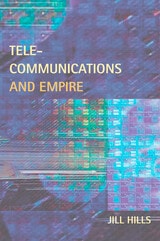
cover of Telecommunications and Empire

Telecommunications and Empire

Jill Hills

University of Illinois Press, 2007

Jill Hills picks up from her pathbreaking study The Struggle for Control of Global Communication: The Formative Century to continue her examination of the political, technological, and economic forces at work in the global telecommunications market from World War II to the World Trade Organization agreement of 1997. In the late twentieth century, focus shifted from the creation and development of global communication markets to their intense regulation. The historical framework behind this control--where the market was regulated, by what institution, controlled by what power, and to whose benefit--masterfully complements Hills's analysis of power relations within the global communications arena. 

Hills documents attempts by governments to direct, replace, and bypass international telecommunications institutions. As she shows, the results have offered indirect control over foreign domestic markets, government management of private corporations, and government protection of its own domestic communication market. Hills reveals that the motivation behind these powerful, regulatory efforts on person-to-person communication lies in the unmatched importance of communication in the world economy. 

As ownership of communications infrastructure becomes more valuable, governments have scrambled to shape international guidelines. Hills provides insight into struggles between U.S. policymakers and the rest of the world, illustrating the conflict between a growing telecommunications empire and sovereign states that are free to implement policy changes. Freshly detailing the interplay between U.S. federal regulation and economic power, Hills fosters a deep understanding of contemporary systems of power in global communications.

[more]
cover of Terahertz Dielectric Resonator Antennas for High Speed Communication and Sensing: From theory to design and implementation

Terahertz Dielectric Resonator Antennas for High Speed Communication and Sensing

From theory to design and implementation

Rajveer S. Yaduvanshi

The Institution of Engineering and Technology, 2022
Terahertz dielectric resonator antennas (DRAs) provide ultrafast data transfer rates using large bandwidth and multimode operations, which make them ideal for high speed communication due to their low loss and high efficiency. They can work at microwave, terahertz or optical frequencies, and are compact in size, which makes them well suited for advanced applications in sensing, scanning and imaging. New geometries are being developed for conical optical DRAs, cylindrical optical DRAs and spherical optical DRAs. Spherical optical DRAs have features of super directivity which can be used in quantum radars. Cylindrical optical DRAs with photo diodes can be used for wireless energy harvesting.
[more]
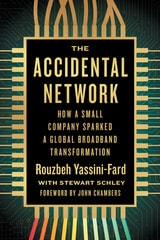
cover of The Accidental Network: How a Small Company Sparked a Global Broadband Transformation

The Accidental Network

How a Small Company Sparked a Global Broadband Transformation

Rouzbeh Yassini-Fard

West Virginia University Press, 2025

“How would our lives change,” wondered entrepreneur Rouzbeh Yassini-Fard in 1987, “if everyday people had a stable, high-speed data connection to the Internet?” While he wasn’t the first to imagine a world of digital connectivity, Yassini-Fard was in the vanguard by creating the cable modem, which transformed residential Internet access from its slow, frustrating dial-up origins to a fast, always-on, and extraordinary connectivity tool by harnessing the existing infrastructure of the residential cable network.

The Accidental Network shares the untold story of the invention of the cable modem by the small, struggling tech company LANcity in the early 1990s, illustrating how Yassini-Fard overcame a cascade of technical challenges, investment community naysayers, and unnerving business obstacles to create the cable modem technology that has changed the way billions of individuals across the globe now manage their daily lives and commerce. The cable modem delivered broadband, with speeds ranging from 10 megabits per second (Mbps) to 10 gigabits per second (Gbps)—a big leap from the dial-up speeds of 56 kilobits per second (Kbps). This platform, along with the adoption of the DOCSIS (Data Over Cable Service Interface Specification) standard, engendered the modern revolution in broadband Internet access. Shunned by venture capitalists and surviving on a shoestring budget, Yassini-Fard and his colleagues were willing to bet it all (including the deed for Yassini-Fard’s home) on the creation of the cable modem and the pursuit of global adoption.

The Accidental Network is both a valuable history of technology innovation and an engrossing account of business conducted at high speed. The book details Yassini-Fard’s journey from electrical engineer to entrepreneur in the race to secure technology partners, create a wholly new marketplace, and convince cable industry executives that a bold business awaited in transmitting data to households at a time when skepticism about the reach of personal computing was the norm.
Written from the lens of a devoted idealist and WVU alum known as “the father of the cable modem,” this book reveals how a perfect storm of forces—the rise of cable television, the onset of the personal computing era, a growing awareness of the Internet for information and commerce, and the development of the cable modem—converged to usher in the age of broadband access.

[more]
cover of The Convergence of AI, IoT, Smart Sensors and Remote Sensing for Sustainable Smart Environment Applications

The Convergence of AI, IoT, Smart Sensors and Remote Sensing for Sustainable Smart Environment Applications

Chaker Abdelaziz Kerrache

The Institution of Engineering and Technology, 2026

AI and data-driven methods, particularly machine and deep learning models, have revolutionized image processing tasks such as object detection and segmentation, as well as inverse sensing tasks such as atmospheric condition monitoring. These models enable highly accurate predictions from large, labelled datasets. However, one of the key challenges with current AI systems is their opacity. While they deliver precise results, they often fail to provide clear insights into the underlying mechanisms driving these predictions. The lack of interpretability, especially in the context of sensing data, complicates the understanding of how internal features are represented and utilized. This issue is particularly pronounced in smart environment applications, where artificial intelligence techniques are increasingly employed, yet their internal workings remain largely opaque.
[more]
cover of The New American Cinema

The New American Cinema

Jon Lewis, ed.

Duke University Press, 1998

This collection of essays provides the first comprehensive survey of Hollywood and independent films from the mid-sixties to the present. Deliberately eclectic and panoramic, The New American Cinema brings together thirteen leading film scholars who present a range of theoretical, critical, and historical perspectives on this rich and pivotal era in American cinema.
The essays are divided into three sections: "Movies and Money," "Cinema and Culture," and "Independents and Independence." The first section focuses on the economics of the industry and analyzes the connection between the film business and the finished product. Topics include a look at the economic conditions that made the seventies’ auteur renaissance possible, the distribution of studio and independent films, and the recent spate of mergers and acquisitions that have come to characterize the new Hollywood. The second part of The New American Cinema deals with the political and cultural significance of war and Vietnam films (Platoon, Apocalypse Now, Born on the Fourth of July); "male rampage" films (Rambo, Lethal Weapon, Die Hard); women’s psychothrillers (The Silence of the Lambs); special effects pictures (2001: A Space Odyssey, Star Wars); and historical re-presentations (Oliver Stone’s JFK). The final section casts a keen eye on films produced and exhibited outside the commercial mainstream, examining the financial realities of "indie" films; the influence of independent filmmaker John Cassavetes on Coppola, Altman, and Scorsese; the stereotyping of African Americans in mainstream cinema; and the films of independent women filmmakers.
[more]
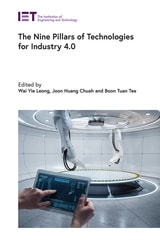
cover of The Nine Pillars of Technologies for Industry 4.0

The Nine Pillars of Technologies for Industry 4.0

Wai Yie Leong

The Institution of Engineering and Technology, 2021

Industry 4.0 refers to automation and data exchange in manufacturing technologies. From innovative research, challenges, solutions and strategies to real-world case studies, the aim of this edited book is to focus on the nine pillars of technology that are supporting the transition to Industry 4.0 and smart manufacturing. The nine pillars include the internet of things, cloud computing, autonomous and robotics systems, big data analytics, augmented reality, cyber security, simulation, system integration, and additive manufacturing. A key role is played by the industrial IoTs and state-of-the-art technologies such as fog and edge computing, advanced data analytics, innovative data exchange models, artificial intelligence, machine learning, mobile and network technologies, robotics and sensors.
[more]
cover of The Role of 6G and Beyond on the Road to Net-Zero Carbon

The Role of 6G and Beyond on the Road to Net-Zero Carbon

Muhammad Ali Imran

The Institution of Engineering and Technology, 2023

In the race against climate change, the focus has turned towards achieving the 2050 net-zero carbon target. Achieving net-zero means balancing between the amount of greenhouse gas removed from the atmosphere and those produced and released. Efforts are needed on both sides to find suitable solutions to reduce released emissions and to remove current emissions from the atmosphere. A collective effort revolving around the utilisation of new technologies, particularly in wireless and mobile communications, is needed to achieve the net-zero carbon target.
[more]
cover of Theory and Practice of Modern Antenna Range Measurements, Volume 1

Theory and Practice of Modern Antenna Range Measurements, Volume 1

Clive Parini

The Institution of Engineering and Technology, 2021

This greatly expanded, co-authored, two-volume text provides a comprehensive introduction and explanation of both the theory and practice of modern antenna measurements, from their most basic postulates and assumptions, to the intricate details of their applications in various demanding modern measurement scenarios.
[more]
cover of Theory and Practice of Modern Antenna Range Measurements, Volume 2

Theory and Practice of Modern Antenna Range Measurements, Volume 2

Clive Parini

The Institution of Engineering and Technology, 2021
This greatly expanded, co-authored, two-volume text provides a comprehensive introduction and explanation of both the theory and practice of modern antenna measurements, from their most basic postulates and assumptions, to the intricate details of their applications in various demanding modern measurement scenarios.
[more]
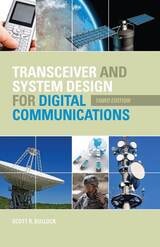
cover of Transceiver and System Design for Digital Communications

Transceiver and System Design for Digital Communications

Scott R. Bullock

The Institution of Engineering and Technology, 2009

Now in its 3rd edition, this successful book provides an intuitive approach to transceiver design, allowing a broad spectrum of readers to understand the topics clearly. It covers a wide range of data link communication design techniques, including link budgets, dynamic range and system analysis of receivers and transmitters used in data link communications, digital modulation and demodulation techniques of phase-shift keyed and frequency hopped spread spectrum systems using phase diagrams, multipath, gain control, an intuitive approach to probability, jamming reduction method using various adaptive processes, global positioning systems (GPS) data link, and direction-finding and interferometers, plus a section on broadband communications and home networking. Various techniques and designs are evaluated for modulating and sending digital data. Thus readers gain a firm understanding of the processes needed to effectively design wireless data link communication systems.
[more]
cover of Turn on the Words!: Deaf Audiences, Captions, and the Long Struggle for Access

Turn on the Words!

Deaf Audiences, Captions, and the Long Struggle for Access

Harry G. Lang

Gallaudet University Press, 2021

The story of how captioning came into the lives of deaf and hard of hearing people has not been told with any detail, though captions are one of the greatest technological advancements in the effort to improve access to films, television, and other video content for both deaf and hearing audiences. In Turn on the Words!, Harry G. Lang documents the struggles and strategies over nearly a century to make spoken communication accessible through the use of captioning technology.

       Lang describes the legislation, programs, and people who contributed great ingenuity and passion over decades to realize widespread access to captions, one breakthrough at a time. He also chronicles the resistance to captioned films from Hollywood studios and others, and the Deaf and hearing activists who championed the right to access. Deaf, hard of hearing, disabled, and English-as-a-second-language audiences now experience improved access to the educational, occupational, and cultural benefits of film and television programming. The struggle continues as deaf audiences advocate for equal access in a variety of settings such as movie theaters and online video-sharing platforms. This is a history of technological innovation, as well as a testament to the contributions of the Deaf community to the benefit of society as a whole.

       This book has been made possible in part by the National Endowment for the Humanities: Exploring the human endeavor. Any views, findings, conclusions, or recommendations expressed in this book do not necessarily represent those of the National Endowment for the Humanities.
[more]