Results by title
85 books match the query 'Television broadcasting' and 22 start with t
TV Family Values
Gender, Domestic Labor, and 1980s SitcomsAlice Leppert
Rutgers University Press, 2019
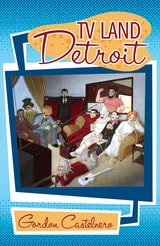
TV Land--Detroit
Gordon Castelnero
University of Michigan Press, 2006
Long before cable, prepackaged syndication, infomercials, do-it-yourselfers, and reality shows cluttered the television dial, there was a brand of entertainment that has today nearly vanished from the airwaves: local TV. And with its colorful and quirky cast of characters, Detroit TV arguably offered some of the best of the best of local programming anywhere in the nation-a smorgasbord of exuberant, one-of-a-kind television shows.
Based on actual interviews with the people who made Detroit TV, Gordon Castelnero's TV Land-Detroit awakens the emotional attachment and nostalgia our community has for these shows, bringing the beloved characters and memorable programs back to life.
From the glamorous Rita Bell to the insanity of the Ghoul, the zany Jingles in Boofland to the opinionated and often confrontational Lou Gordon and the gruff-voiced and somnolent George Pierrot, Castelnero reacquaints us with the talent and behind-the-scenes people, of the creative spirit in Detroit, and the intimacy they shared with the community both on and off the air.
Gordon Castelnero was a producer at WNIC radio for four years. He produced the acclaimed documentaries for WDIV and WTVS, Michigan, It Started Here! Michigan and the American Dream, and Titanic: The Final Chapter. He currently lives in Livonia, Michigan, and works at Technicolor in DVD and game media distribution. He can be contacted by e-mail at tvlanddetroit@yahoo.com
TV Socialism
Anikó Imre
Duke University Press, 2016
Television after TV
Essays on a Medium in TransitionLynn Spigel and Jan Olsson, eds.
Duke University Press, 2004
With historical, critical, and speculative essays by some of the leading television and media scholars, Television after TV examines both commercial and public service traditions and evaluates their dual (and some say merging) fates in our global, digital culture of convergence. The essays explore a broad range of topics, including contemporary programming and advertising strategies, the use of television and the Internet among diasporic and minority populations, the innovations of new technologies like TiVo, the rise of program forms from reality tv to lifestyle programs, television’s changing role in public places and at home, the Internet’s use as a means of social activism, and television’s role in education and the arts. In dialogue with previous media theorists and historians, the contributors collectively rethink the goals of media scholarship, pointing toward new ways of accounting for television’s past, present, and future.
Contributors. William Boddy, Charlotte Brunsdon, John T. Caldwell, Michael Curtin, Julie D’Acci, Anna Everett, Jostein Gripsrud, John Hartley, Anna McCarthy, David Morley, Jan Olsson, Priscilla Peña Ovalle, Lisa Parks, Jeffrey Sconce, Lynn Spigel, William Uricchio
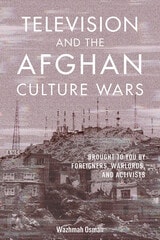
Television and the Afghan Culture Wars
Brought to You by Foreigners, Warlords, and ActivistsWazhmah Osman
University of Illinois Press, 2020
Fieldwork from across Afghanistan allowed Osman to record the voices of many Afghan media producers and people. Afghans offer their own seldom-heard views on the country's cultural progress and belief systems, their understandings of themselves, and the role of international interventions. Osman analyzes the impact of transnational media and foreign funding while keeping the focus on local cultural contestations, productions, and social movements. As a result, she redirects the global dialogue about Afghanistan to Afghans and challenges top-down narratives of humanitarian development.
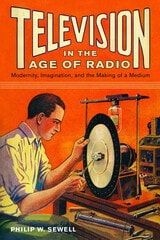
Television in the Age of Radio
Modernity, Imagination, and the Making of a MediumSewell, Philip W
Rutgers University Press, 2014
Television existed for a long time before it became commonplace in American homes. Even as cars, jazz, film, and radio heralded the modern age, television haunted the modern imagination. During the 1920s and 1930s, U.S. television was a topic of conversation and speculation. Was it technically feasible? Could it be commercially viable? What would it look like? How might it serve the public interest? And what was its place in the modern future? These questions were not just asked by the American public, but also posed by the people intimately involved in television’s creation. Their answers may have been self-serving, but they were also statements of aspiration. Idealistic imaginations of the medium and its impact on social relations became a de facto plan for moving beyond film and radio into a new era.
In Television in the Age of Radio, Philip W. Sewell offers a unique account of how television came to be—not just from technical innovations or institutional struggles, but from cultural concerns that were central to the rise of industrial modernity. This book provides sustained investigations of the values of early television amateurs and enthusiasts, the fervors and worries about competing technologies, and the ambitions for programming that together helped mold the medium.
Sewell presents a major revision of the history of television, telling us about the nature of new media and how hopes for the future pull together diverse perspectives that shape technologies, industries, and audiences.

Television, History, and American Culture
Feminist Critical EssaysMary Beth Haralovich and Lauren Rabinovitz, eds.
Duke University Press, 1999
The essays collected here focus on women in front of, behind, and on the TV screen, as producers, viewers, and characters. Using feminist and historical criticism, the contributors investigate how television has shaped our understanding of gender, power, race, ethnicity, and sexuality from the 1950s to the present. The topics range from the role that women broadcasters played in radio and early television to the attempts of Desilu Productions to present acceptable images of Hispanic identity, from the impact of TV talk shows on public discourse and the politics of offering viewers positive images of fat women to the negotiation of civil rights, feminism, and abortion rights on news programs and shows such as I Spy and Peyton Place.
Innovative and accessible, this book will appeal to those interested in women’s studies, American studies, and popular culture and the critical study of television.
Contributors. Julie D’Acci, Mary Desjardins, Jane Feuer, Mary Beth Haralovich, Michele Hilmes, Moya Luckett, Lauren Rabinovitz, Jane M. Shattuc, Mark Williams
Television, Japan, and Globalization
Mitsuhiro Yoshimoto, Eva Tsai, and JungBong Choi, Editors
University of Michigan Press, 2010
Television, Nation, and Culture in Indonesia
Ris Sea#104Philip Kitley
Ohio University Press, 2000

Television
An international history of the formative yearsR.W. Burns
The Institution of Engineering and Technology, 1998
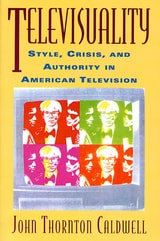
Televisuality
Caldwell, John T
Rutgers University Press, 1995
“Holling is tormented by Koyaanisqatsi dreams until he goes out and does the wild thing with a young stag . . . . ”––Synopsis from production company “Bible,” Northern Exposure, March 30, 1992
The collision of auteurism and rap––couched by primetime producers in the Northern Exposure script––was actually rather commonplace by the early 1990s. Series, and even news broadcasts, regularly engineered their narratives around highly coded aesthetic and cultural fragments, with a kind of ensemble iconography. Televisuality interrogates the nature of such performances as an historical phenomenon, an aesthetic and industrial practice, and as a socially symbolic act. This book suggests that postmodernism does not fully explain television's stylistic exhibitionism and that a reexamination of “high theory” is in order. Caldwell’s unique approach successfully integrates production practice with theory in a way that will enlighten both critical theory and cultural studies.
Televisuality
Style, Crisis, and Authority in American TelevisionJohn T Caldwell
Rutgers University Press, 2020
The Anxiety of Obsolescence
The American Novel in the Age of TelevisionKathleen Fitzpatrick
Vanderbilt University Press, 2006
It almost goes without saying that the rise in popularity of television has killed the audience for "serious" literature. This is such a given that reading Fitzpatrick's challenge to this notion can be very disconcerting, as she traces the ways in which a small cadre of writers of "serious" literature--DeLillo, Pynchon, and Franzen, for instance--have propagated this myth in order to set themselves up as the last bastions of good writing. Fitzpatrick first explores whether serious literature was ever as all-pervasive as critics of the television culture claim and then asks the obvious question: what, or who, exactly, are these guys defending good writing against?
Fitzpatrick examines the ways in which the anxiety about the supposed death of the novel is built on a myth of the novel's past ubiquity and its present displacement by television. She explores the ways in which this myth plays out in and around contemporary fiction and how it serves as a kind of unacknowledged discourse about race, class, and gender. The declaration constructs a minority status for the "white male author" who needs protecting from television's largely female and increasingly non-white audience. The novel, then, is transformed from a primary means of communication into an ancient, almost forgotten, and thus, treasured form reserved for the well-educated and well-to-do, and the men who practice it are exalted as the practitioners of an almost lost art.
Such positioning serves to further marginalize women writers and writers of color because it makes the novel, by definition, the preserve of the poor endangered white man. If the novel is only a product of a small group of white men, how can the contributions of women and writers of color be recognized? Instead, this positioning abandons women and people of color to television as a creative outlet, and in return, cedes television to them. Fitzpatrick argues that there's a level of unrecognized patronization in assuming that television serves no purpose but to provide dumb entertainment to bored women and others too stupid to understand novels. And, instead, she demonstrates the real positive effects of a televisual culture.
The Golden Age of Boston Television
Terry Ann Knopf
University Press of New England, 2017
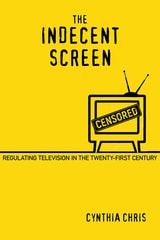
The Indecent Screen
Regulating Television in the Twenty-First CenturyChris, Cynthia
Rutgers University Press, 2019

The Spectacle of Democracy
Spanish Television, Nationalism, and Political TransitionRichard Maxwell
University of Minnesota Press, 1994
The Spectacle of Democracy was first published in 1994. Minnesota Archive Editions uses digital technology to make long-unavailable books once again accessible, and are published unaltered from the original University of Minnesota Press editions.
In this age of increased global communication the media seem like juggernauts paving the way from dictatorship to democracy. Richard Maxwell's study of television in Spain overturns this myth of technological power. He shows us how transitions themselves have a profound impact on the media, as controllers of national television clash with commercial media promoters and with regionalists who want television to extend their nationalist politics and collective identity.
Maxwell's sophisticated analysis of the many variables shaping communication policy within the nation-state draws on a decade of research into Spanish culture, mass media, and political economy. Although focused on Spain, his work provides general insight into the nature of communication policy debates in today's globalized economy. A study of the transformation of television in Spain following the end of Franco's dictatorship, Maxwell's book examines the politics of the privatization of television, the rise of regional television, and the transnational realignment of national media space.Richard Maxwell is assistant professor in the department of radio, television, and film in the School of Speech at Northwestern University.
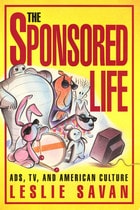
The Sponsored Life
Ads, TV, and American CultureLeslie Savan
Temple University Press, 1994
How does a blatant lying in TV commercials—like Joe Isuzu's manic claims—create public trust in a product or a company? How does a company associated with a disaster, Exxon or Du Pont for example, restore its reputation? What is the real story behind the rendering of the now infamous Joe Camel? And what is the deeper meaning of living in an ad, ad, ad world? For a decade, journalist Leslie Savan has been exposing the techniques used by advertisers to push products and pump up corporate images. In the lively essays in this collection, Savan penetrates beneath the slick surfaces of specific ads and marketing campaigns to show how they reflect and shape consumer desires.
Savan's interviews with ad agencies and corporate clients—along with her insightful analyses of influential TV sports—reveal how successful advertising works. Ads do more than command attention. They are signposts to the political, cultural, and social trends that infiltrate the individual consumer's psyche. Think of the products associated with corporate mascots—the drum-beating bunny, the cereal-pushing tiger, the doughboy—that have become pop culture icons. Think cool. Think of the clothing manufacturer that uses multiracial imagery. Think progressive. Buy their worldview, buy their product. When virtually every product can be associate with some positive self-image, we are subtly refashioned into the advertiser's concept of a good citizen. Like it or not, we lead "the sponsored life."
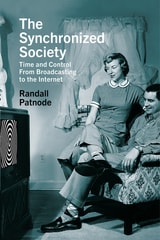
The Synchronized Society
Time and Control From Broadcasting to the InternetRandall Patnode
Rutgers University Press, 2023
The Synchronized Society traces the history of the synchronous broadcast experience of the twentieth century and the transition to the asynchronous media that dominate today. Broadcasting grew out of the latent desire by nineteenth-century industrialists, political thinkers, and social reformers to tame an unruly society by controlling how people used their time. The idea manifested itself in the form of the broadcast schedule, a managed flow of information and entertainment that required audiences to be in a particular place – usually the home – at a particular time and helped to create “water cooler” moments, as audiences reflected on their shared media texts. Audiences began disconnecting from the broadcast schedule at the end of the twentieth century, but promoters of social media and television services still kept audiences under control, replacing the schedule with surveillance of media use. Author Randall Patnode offers compelling new insights into the intermingled roles of broadcasting and industrial/post-industrial work and how Americans spend their time.
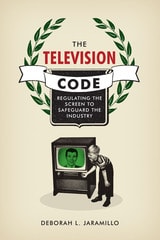
The Television Code
Regulating the Screen to Safeguard the IndustryBy Deborah L. Jaramillo
University of Texas Press, 2018
The broadcasting industry’s trade association, the National Association of Broadcasters (NAB), sought to sanitize television content via its self-regulatory document, the Television Code. The Code covered everything from the stories, images, and sounds of TV programs (no profanity, illicit sex and drinking, negative portrayals of family life and law enforcement officials, or irreverence for God and religion) to the allowable number of commercial minutes per hour of programming. It mandated that broadcasters make time for religious programming and discouraged them from charging for it. And it called for tasteful and accurate coverage of news, public events, and controversial issues.
Using archival documents from the Federal Communications Commission, NBC, the NAB, and a television reformer, Senator William Benton, this book explores the run-up to the adoption of the 1952 Television Code from the perspectives of the government, TV viewers, local broadcasters, national networks, and the industry’s trade association. Deborah L. Jaramillo analyzes the competing motives and agendas of each of these groups as she builds a convincing case that the NAB actually developed the Television Code to protect commercial television from reformers who wanted more educational programming, as well as from advocates of subscription television, an alternative distribution model to the commercial system. By agreeing to self-censor content that viewers, local stations, and politicians found objectionable, Jaramillo concludes, the NAB helped to ensure that commercial broadcast television would remain the dominant model for decades to come.
The Writers
A History of American Screenwriters and Their GuildBanks, Miranda J
Rutgers University Press, 2016
Transmitting the Past
Historical and Cultural Perspectives on BroadcastingEdited by J. Emmett Winn and Susan L. Brinson
University of Alabama Press, 2005
Original essays exploring important developments in radio and television broadcasting
The essays included in this collection represent some of the best cultural and historical research on broadcasting in the U. S. today. Each one concentrates on a particular event in broadcast history—beginning with Marconi’s introduction of wireless technology in 1899.
Michael Brown examines newspaper reporting in America of Marconi's belief in Martians, stories that effectively rendered Marconi inconsequential to the further development of radio. The widespread installation of radios in automobiles in the 1950s, Matthew Killmeier argues, paralleled the development of television and ubiquitous middle-class suburbia in America. Heather Hundley analyzes depictions of male and female promiscuity as presented in the sitcom Cheers at a time concurrent with media coverage of the AIDS crisis. Fritz Messere examines the Federal Radio Act of 1927 and the clash of competing ideas about what role radio should play in American life. Chad Dell recounts the high-brow programming strategy NBC adopted in 1945 to distinguish itself from other networks. And George Plasketes studies the critical reactions to Cop Rock, an ill-fated combination of police drama and musical, as an example of society's resistance to genre-mixing or departures from formulaic programming.
The result is a collection that represents some of the most recent and innovative scholarship, cultural and historical, on the intersections of broadcasting and American cultural, political, and economic life.
Tuning Out Blackness
Race and Nation in the History of Puerto Rican TelevisionYeidy M. Rivero
Duke University Press, 2005
Drawing on interviews, participant observation, archival research, and textual analysis, Rivero considers representations of race in Puerto Rico, taking into account how they are intertwined with the island’s status as a U.S. commonwealth, its national culture, its relationship with Cuba before the Cuban Revolution in 1959, and the massive influx of Cuban migrants after 1960. She focuses on locally produced radio and television shows, particular television events, and characters that became popular media icons—from the performer Ramón Rivero’s use of blackface and “black” voice in the 1940s and 1950s, to the battle between black actors and television industry officials over racism in the 1970s, to the creation, in the 1990s, of the first Puerto Rican situation comedy featuring a black family. As the twentieth century drew to a close, multinational corporations had purchased all Puerto Rican stations and threatened to wipe out locally produced programs. Tuning Out Blackness brings to the forefront the marginalization of nonwhite citizens in Puerto Rico’s media culture and raises important questions about the significance of local sites of television production.