Results by title
146 books match the query 'Terrorism' and 31 start with t

Terracene
A Crude AestheticsSalar Mameni
Duke University Press, 2023
Terror and History, Volume 2003
Van Gosse , ed.
Duke University Press, 0
Contributors. Joel Beinin, Lisa Brock, Horace Campbell, Duane J. Corpis, Belinda Davis, Allen Feldman, Ian Christopher Fletcher, Van Gosse, Joy James, J. Angus Johnston, Amy Kaplan, Thomas Miller Klubock, R. J. Lambrose, Jesse Lemisch, Deborah Levenson, Walter Benn Michaels, Donnacha Ó Beacháin, Deborah Poole, Vijay Prashad, David Prochaska, Gerardo Rénique, Cedric J. Robinson, Nikhil Pal Singh, Stephanie J. Smith, Akinyele O. Umoja, Verónica Valdivia Ortiz de Zárate, Jon Wiener, Marilyn B. Young, Joseba Zulaika
Terror and Territory
The Spatial Extent of SovereigntyStuart Elden
University of Minnesota Press, 2009
Today's global politics demands a new look at the concept of territory. From so-called deterritorialized terrorist organizations such as al-Qaeda to U.S.-led overthrows of existing regimes in the Middle East, the relationship between territory and sovereignty is under siege. Unfolding an updated understanding of the concept of territory, Stuart Elden shows how the contemporary "war on terror" is part of a widespread challenge to the connection between the state and its territory.
Although the importance of territory has been disputed under globalization, territorial relations have not come to an abrupt end. Rather, Elden argues, the territory/sovereignty relation is being reconfigured. Traditional geopolitical analysis is transformed into a critical device for interrogating hegemonic geopolitics after the Cold War, and is employed in the service of reconsidering discourses of danger that include "failed states," disconnection, and terrorist networks.
Looking anew at the "war on terror"; the development and application of U.S. policy; the construction and demonization of rogue states; events in Lebanon, Somalia, and Pakistan; and the wars continuing in Afghanistan and Iraq, Terror and Territory demonstrates how a critical geographical analysis, informed by political theory and history, can offer an urgently needed perspective on world events.

Terror and Violence
Imagination and the UnimaginableEdited by Pamela J. Stewart, Andrew Strathern, and Neil L. Whitehead
Pluto Press, 2005
Terrorism for Humanity
Inquiries in Political PhilosophyTed Honderich
Pluto Press, 2003
Terrorism on Trial
Political Violence and Abolitionist FuturesNicole Nguyen
University of Minnesota Press, 2023
A landmark sociological examination of terrorism prosecution in United States courts
Rather than functioning as a final arbiter of justice, U.S. domestic courts are increasingly seen as counterterrorism tools that can incapacitate terrorists, maintain national security operations domestically, and produce certain narratives of conflict. Terrorism on Trial examines the contemporary role that these courts play in the global war on terror and their use as a weapon of war: hunting, criminalizing, and punishing entire communities in the name of national security.
Nicole Nguyen advocates for a rethinking of popular understandings of political violence and its root causes, encouraging readers to consider anti-imperial abolitionist alternatives to the criminalization, prosecution, and incarceration of individuals marked as real or perceived terrorists. She exposes how dominant academic discourses, geographical imaginations, and social processes have shaped terrorism prosecutions, as well as how our fundamental misunderstanding of terrorism has led to punitive responses that do little to address the true sources of violence, such as military interventions, colonial occupations, and tyrannical regimes. Nguyen also explores how these criminal proceedings bear on the lives of defendants and families, seeking to understand how legal processes unevenly criminalize and disempower communities of color.
A retheorization of terrorism as political violence, Terrorism on Trial invites readers to carefully consider the role of power and politics in the making of armed resistance, addressing the root causes of political violence, with a goal of building toward a less violent and more liberatory world.

Terrorism, Italian Style
Representations of Political Violence in Contemporary Italian CinemaRuth Glynn
University of London Press, 2012
Terrorism, Ticking Time-Bombs, and Torture
A Philosophical AnalysisFritz Allhoff
University of Chicago Press, 2012
Terrorism
The Self-Fulfilling ProphecyJoseba Zulaika
University of Chicago Press, 2009
In counterterrorism circles, the standard response to questions about the possibility of future attacks is the terse one-liner: “Not if, but when.” This mantra supposedly conveys a realistic approach to the problem, but, as Joseba Zulaika argues in Terrorism, it functions as a self-fulfilling prophecy. By distorting reality to fit their own worldview, the architects of the War on Terror prompt the behavior they seek to prevent—a twisted logic that has already played out horrifically in Iraq. In short, Zulaika contends, counterterrorism has become pivotal in promoting terrorism.
Exploring the blind spots of counterterrorist doctrine, Zulaika takes readers on a remarkable intellectual journey. He contrasts the psychological insight of Truman Capote’s In Cold Blood with The 9/11 Commission Report, plumbs the mindset of terrorists in works by Orianna Fallaci and Jean Genet, maps the continuities between the cold war and the fight against terrorism, and analyzes the case of a Basque terrorist who tried to return to civilian life. Zulaika’s argument is powerful, inventive, and rich with insights and ideas that provide a new and sophisticated perspective on the War on Terror.
Terrorist Assemblages
Homonationalism in Queer TimesJasbir K. Puar
Duke University Press, 2007
Puar combines transnational feminist and queer theory, Foucauldian biopolitics, Deleuzian philosophy, and technoscience criticism, and draws from an extraordinary range of sources, including governmental texts, legal decisions, films, television, ethnographic data, queer media, and activist organizing materials and manifestos. Looking at various cultural events and phenomena, she highlights troublesome links between terrorism and sexuality: in feminist and queer responses to the Abu Ghraib photographs, in the triumphal responses to the Supreme Court’s Lawrence decision repealing anti-sodomy laws, in the measures Sikh Americans and South Asian diasporic queers take to avoid being profiled as terrorists, and in what Puar argues is a growing Islamophobia within global queer organizing.
Terrorist Assemblages
Homonationalism in Queer TimesJasbir K. Puar
Duke University Press, 2017
Ten years on, Jasbir K. Puar’s pathbreaking Terrorist Assemblages remains one of the most influential queer theory texts and continues to reverberate across multiple political landscapes, activist projects, and scholarly pursuits. Puar argues that configurations of sexuality, race, gender, nation, class, and ethnicity are realigning in relation to contemporary forces of securitization, counterterrorism, and nationalism. She examines how liberal politics incorporate certain queer subjects into the fold of the nation-state, shifting queers from their construction as figures of death to subjects tied to ideas of life and productivity. This tenuous inclusion of some queer subjects depends, however, on the production of populations of Orientalized terrorist bodies. Heteronormative ideologies that the U.S. nation-state has long relied on are now accompanied by what Puar calls homonationalism—a fusing of homosexuality to U.S. pro-war, pro-imperialist agendas.
As a concept and tool of biopolitical management, homonationalism is here to stay. Puar’s incisive analyses of feminist and queer responses to the Abu Ghraib photographs, the decriminalization of sodomy in the wake of the Patriot Act, and the profiling of Sikh Americans and South Asian diasporic queers are not instances of a particular historical moment; rather, they are reflective of the dynamics saturating power, sexuality, race, and politics today.
This Tenth Anniversary Expanded Edition features a new foreword by Tavia Nyong’o and a postscript by Puar entitled “Homonationalism in Trump Times.” Nyong’o and Puar recontextualize the book in light of the current political moment while reposing its original questions to illuminate how Puar’s interventions are even more vital and necessary than ever.
The Consequences of Counterterrorism
Martha Crenshaw
Russell Sage Foundation, 2010
The Dying Sahara
US Imperialism and Terror in AfricaJeremy Keenan
Pluto Press, 2013
In The Dark Sahara (Pluto, 2009), Jeremy Keenan exposed the collusion between the US and Algeria in fabricating terrorism to justify a new ‘Saharan front’ in Washington’s War on Terror. Now, in The Dying Sahara, he reveals how the designation of the region as a ‘Terror Zone’ has destroyed the lives and livelihoods of thousands of innocent people.
Beginning in 2004, with what local people called the US ‘invasion’ of the Sahel, The Dying Sahara shows how repressive, authoritarian regimes - cashing in on US terrorism ‘rents’ - provoked Tuareg rebellions in both Niger and Mali. Further, he argues that US activity has unleashed a new, narco-trafficking branch of Al-Qaeda.
Keenan's chillingly detailed research shows that the US and its new combatant African command (AFRICOM) have created instability in a region the size of western Europe.
The End of Innocence?
Indonesian Islam and the Temptations of RadicalismAndrée Feillard, Rémy Madinier
National University of Singapore Press, 2013
The Future of Fallout, and Other Episodes in Radioactive World-Making
Joseph Masco
Duke University Press, 2020
The Guantanamo Files
The Stories of the 774 Detainees in America's Illegal PrisonAndy Worthington
Pluto Press, 2007
Deprived of the safeguards of the Geneva Conventions, and, for the most part, sold to the Americans by their allies in Afghanistan and Pakistan, the detainees have struggled for five years to have their stories heard. Looking in detail at the circumstances of their capture, and at the coercive interrogations and unsubstantiated allegations that have been used to justify their detention. Stories of torture in Afghanistan and Guantanamo are uncovered, as well as new information about the process of 'extraordinary rendition' that underpins the US administration's 'war on terror'.
Who will speak for the 773 men who have been held in Guantanamo? This passionate and brilliantly detailed book brings their stories to the world for the first time.
The Intensification of Surveillance
Crime, Terrorism and Warfare in the Information AgeEdited by Kirstie Ball and Frank Webster
Pluto Press, 2003

The Making of Terrorism
Michel Wieviorka
University of Chicago Press, 1993
Wieviorka demonstrates that the truly terrorist actor has become alienated both from the collective movement and society. The actor turns to the blind violence when he finds himself cut off from the very ideology which legitimates his actions. Pure terrorism, Wieviorka concludes, is more than simply a break between those who use it and those it targets; it is also a relationship—between the individual and the collective he represents—which has been rendered unrealistic or artificial. Thus, terrorist violence should be understood not as the desperate act of a faltering movement but as a substitute for a movement which has fallen away from the ideology in which it was forged.
For the revelations it offers on the roots and motivations of terrorism, for its innovative methods, and for its useful comparative analysis of terrorist groups in recent history, The Making of Terrorism will be an important resource across many disciplines for anyone interested in terrorism or political violence.
The Making of Terrorism
Michel Wieviorka
University of Chicago Press, 2004
The Making of a Human Bomb
An Ethnography of Palestinian ResistanceNasser Abufarha
Duke University Press, 2009
Abufarha draws on the life histories of martyrs, interviews he conducted with their families and members of the groups that sponsored their operations, and examinations of Palestinian literature, art, performance, news stories, and political commentaries. He also assesses data—about the bombers, targets, and fatalities caused—from more than two hundred martyrdom operations carried out by Palestinian groups between 2001 and 2004. Some involved the use of explosive belts or the detonation of cars; others entailed armed attacks against Israeli targets (military and civilian) undertaken with the intent of fighting until death. In addition, he scrutinized suicide attacks executed by Hamas and Islamic Jihad between 1994 and 2000. In his analysis of Palestinian political violence, Abufarha takes into account Palestinians’ understanding of the history of the conflict with Israel, the effects of containment on Palestinians’ everyday lives, the disillusionment created by the Oslo peace process, and reactions to specific forms of Israeli state violence. The Making of a Human Bomb illuminates the Palestinians’ perspective on the conflict with Israel and provides a model for ethnographers seeking to make sense of political violence.
The Malayan Emergency
Essays on a Small, Distant WarSouchou Yao
National University of Singapore Press, 2016
The Moro Morality Play
Terrorism as Social DramaRobin Wagner-Pacifici
University of Chicago Press, 1986
The Political Brain
The Emergence of NeuropoliticsMatt Qvortrup
Central European University Press, 2024
We have politics on our mind—or, rather, we have politics in different parts of our brains. In this path-breaking study, Matt Qvortrup takes the reader on a whistle stop tour through the fascinating, and sometimes frightening, world of neuropolitics; the discipline that combines neuroscience and politics, and is even being used to win elections.
Putting the 'science' back into political science, The Political Brain shows how fMRI-scans can identify differences between Liberals and Conservatives, can predict our behaviour with sometimes greater accuracy than surveys, and can explain the biology of uprisings, revolutions, and wars.
Not merely a study of empirical evidence, the book shows how the philosophical theories of, among others, Plato, Aristotle, and Spinoza can be supported by brain scans. Along the way, it also provides an overview of the state-of-the-art knowledge of the organ that shapes our politics. The book shows that if we rely on evolutionary primitive parts of the midbrain—those engaged when we succumb to polarised politics—we stand in danger of squandering the gains we made through the last eight million years.
The Politics of Possibility
Risk and Security Beyond ProbabilityLouise Amoore
Duke University Press, 2013
The Provisional IRA
From Insurrection to ParliamentTommy McKearney
Pluto Press, 2011
This book analyses the underlying reasons behind the formation of the Provisional Irish Republican Army (IRA), its development, where this current in Irish republicanism is at present and its prospects for the future.
Tommy McKearney, a former IRA member who was part of the 1980 hunger strike, challenges the misconception that the Provisional IRA was only, or even wholly, about ending partition and uniting Ireland. He argues that while these objectives were always the core and headline demands of the organisation, opposition to the old Northern Ireland state was a major dynamic for the IRA’s armed campaign. As he explores the makeup and strategy of the IRA he is not uncritical, examining alternative options available to the movement at different periods, arguing that its inability to develop a clear socialist programme has limited its effectiveness and reach.
This authoritative and engaging history provides a fascinating insight into the workings and dynamics of a modern resistance movement.
The Second Palestinian Intifada
A Chronicle of a People's StruggleRamzy Baroud
Pluto Press, 2006
Ramzy Baroud is a veteran journalist and former producer for Al-Jazeera TV. This is his comprehensive account of the momentous events of the last five years which shaped the political landscape not only of Palestine and Israel but of the entire Middle East region.
Addressing the most controversial issues, including the alarming escalation in suicide bombings, and the construction of the Separation Wall, he reports on the huge rate of unemployment and hunger in the Occupied Territories -- statistics so critical that NGOs compare their magnitude to African nations such as the Congo. From the brutality of the Israeli army to the ever-compromising nature of the Palestinian Authority, few are spared Baroud’s thoughtful critique.
The book is clear and concise, with one chapter dedicated to the major events of each year, and includes a comprehensive timeline.
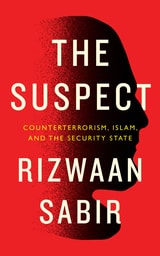
The Suspect
Counterterrorism, Islam, and the Security StateRizwaan Sabir
Pluto Press, 2021
What impact has two decades' worth of policing and counterterrorism had on the state of mind of Muslims in Britain? The Suspect draws on the author's lived experiences of being suspected of terrorism to take the reader on a journey through British counterterrorism practices and the policing of Muslims.
Rizwaan Sabir describes what led to his arrest for suspected terrorism, his time in detention, and the surveillance he was subjected to on release from custody, including stop and frisk on the roadside, detentions at the border, and monitoring by police and government departments throughout his research.
Writing publicly for the first time about the traumatizing mental health effects of these experiences, he argues that these harmful outcomes are not the result of errors in government planning, but the consequences of using a counterinsurgency warfare approach to surveillance. If we are to break this injustice, we need to resist counterterrorism policy and practice.
The Terrorism News Beat
Professionalism, Profit, and the PressAaron M. Hoffman
University of Michigan Press, 2025
The Terrorism News Beat engages thinking about terrorism and the news media from the fields of political science, communication, criminology, economics, and sociology using multimethod research involving more than 2,500 newspaper articles published between 1997 and 2018. Chapters analyze the terrorism news beat’s subject matter, language, and coverage of the Oklahoma City Bombing, Olympic Park bombing, 9/11 attacks, DC Sniper case, and Dallas Police shooting. When it comes to language use, Hoffman finds that, rather than giving into the temptation to convey the news in lurid detail, journalists are minimalists. The language used to depict events on the terrorism beat is typically moderate and extreme words like “torture” appear only as necessary. The Terrorism News Beat shows that contrary to claims of sensationalism, the tone of terrorism coverage becomes even more sober during terrorism crises than it is during non-crisis periods and meets journalistic standards for quality.
The Theater of Operations
National Security Affect from the Cold War to the War on TerrorJoseph Masco
Duke University Press, 2014
The U.S. Army/Marine Corps Counterinsurgency Field Manual
The United States Army and Marine Corps
University of Chicago Press, 2007
When the U.S. military invaded Iraq, it lacked a common understanding of the problems inherent in counterinsurgency campaigns. It had neither studied them, nor developed doctrine and tactics to deal with them. It is fair to say that in 2003, most Army officers knew more about the U.S. Civil War than they did about counterinsurgency.
The U.S. Army / Marine Corps Counterinsurgency Field Manual was written to fill that void. The result of unprecedented collaboration among top U.S. military experts, scholars, and practitioners in the field, the manual espouses an approach to combat that emphasizes constant adaptation and learning, the importance of decentralized decision-making, the need to understand local politics and customs, and the key role of intelligence in winning the support of the population. The manual also emphasizes the paradoxical and often counterintuitive nature of counterinsurgency operations: sometimes the more you protect your forces, the less secure you are; sometimes the more force you use, the less effective it is; sometimes doing nothing is the best reaction.
An new introduction by Sarah Sewall, director of the Carr Center for Human Rights Policy at Harvard’s Kennedy School of Government, places the manual in critical and historical perspective, explaining the significance and potential impact of this revolutionary challenge to conventional U.S. military doctrine.
An attempt by our military to redefine itself in the aftermath of 9/11 and the new world of international terrorism, The U.S. Army / Marine Corps Counterinsurgency Field Manual will play a vital role in American military campaigns for years to come.
The University of Chicago Press will donate a portion of the proceeds from this book to the Fisher House Foundation, a private-public partnership that supports the families of America’s injured servicemen. To learn more about the Fisher House Foundation, visit www.fisherhouse.org.
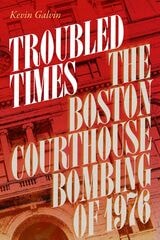
Troubled Times
The Boston Courthouse Bombing of 1976Kevin Galvin
Brandeis University Press, 2026
Interweaves the stories of a revolutionary and a bombing victim to explore the roots and unintended consequences of political violence.
1976. The Vietnam War had ended, but radical political groups still operated clandestinely throughout the United States. Nowhere was the threat of civil unrest greater than in Boston. Racial tensions had been building since a federal judge ordered the desegregation of the Boston Public Schools, and civic leaders were counting on the pageantry of the nation’s Bicentennial to boost both tourism and investment. In April, the Sam Melville-Jonathan Jackson Unit, prison reformers schooled in Marxism and angered by US interventions abroad, bombed the Suffolk County Courthouse, injuring twenty-two people. The site of the blast marked the spot where the lives of two men intersected: a mill town kid who’d been radicalized in Vietnam and prison, and an immigrant waiting in line because he needed to renew a cab license.
Fifty years after the bombing shook the city, Troubled Times tells the story of lives changed by political violence at a time when the American experiment is again in crisis.