Results by title
660 books match the query 'Texas' and 189 start with t

Taking the Waters in Texas
Springs, Spas, and Fountains of YouthBy Janet Mace Valenza
University of Texas Press, 2000
"It is well known that Southern Texas possesses a greater variety of Mineral Waters than any other country on the globe" enthused a promotion for one of Texas' many watering spas of the nineteenth century. Though most are closed and nearly forgotten today, Texas spas and resorts once drew thousands of visitors from across the country, seeking healing of body and spirit in the rejuvenating mineral waters.
This book offers the first comprehensive history of Texas' healing springs. Janet Valenza tracks the rise, popularity, and decline of the "water cure" from the 1830s to the present day. She follows the development of major spas and resorts, such as Mineral Wells and Indian Hot Springs near El Paso, as well as of smaller, family-run springs. She also describes how mineral waters influenced patterns of settlement, transportation routes, commerce, and people's attitudes toward the land. Period photos and quotes from those seeking cures offer vivid glimpses into the daily life at the springs, which Valenza lists and describes county-by-county in the appendix.
Tales from the Big Thicket
Francis Edward Abernethy
University of North Texas Press, 2002
Tales of Old-Time Texas
By J. Frank Dobie
University of Texas Press, 1955
It is for good reason that J. Frank Dobie is known as the Southwest's master storyteller. With his eye for color and detail, his ear for the rhythm of language and song, and his heart open to the simple truth of folk wisdom and ways, he movingly and unpretentiously spins the tales of our collective heritages. This he does in Tales of Old-Time Texas, a heartwarming array of twenty-eight stories filled with vivid characters, exciting historical episodes, and traditional themes. As Dobie himself says: "Any tale belongs to whoever can best tell it." Here, then, is a collection of the best Texas tales—by the Texan who can best tell them.
Dobie's recollections include such classics in Lone Star State lore as the tale of Jim Bowie's knife, the legend of the Texas bluebonnet, the story of the Wild Woman of the Navidad, and the account of the headless horseman of the mustangs. Other stories in this outstanding collection regale us with odd and interesting characters and events: the stranger of Sabine Pass, the Apache secret of the Guadalupes, the planter who gambled away his bride, and the Robinhooding of Sam Bass. These stories, and many more, make Tales of Old-Time Texas a beloved classic certain to endure for generations.
Tales of Texas Cooking
Stories and Recipes from the Trans Pecos to the Piney Woods and High Plains to the Gulf PrairiesFrances Brannen Vick
University of North Texas Press, 2015
Tales of the Wild Horse Desert
By Betty Bailey Colley and Jane Clements Monday
University of Texas Press, 2001
Highly skilled, hard-working, and loyal to each other and to the ranches that employ them, the Mexican and Mexican American vaqueros who work on the famous King and Kenedy Ranches of South Texas' Wild Horse Desert are some of America's best cowboys. Many of them come from families who have lived and worked on the ranches for over a hundred years. They preserve the memories of ranch life handed down by their grandparents and great-grandparents, even as they use modern technologies to keep the ranches running smoothly in the twenty-first century.
This book tells the stories of the vaqueros of the Wild Horse Desert for fourth- through eighth-grade students. It begins with a brief history of the vaqueros and the King and Kenedy Ranches. Then, using in the words of today's vaqueros and their families, it describes many aspects of past and present life on the ranches. Young readers will learn what it's like to grow up on the ranches and how vaqueros learn their work. They'll also discover how much goes into being a vaquero, from using all the different ropes and equipment, to working a round-up, to showing prize-winning cattle and horses. Teachers and parents will appreciate all the supplemental material in the appendix, including a glossary, lists of related books and websites, hands-on learning activities, and even range and camp house recipes.

Tall Walls and High Fences
Bob Alexander
University of North Texas Press, 2020

Technology and Place
Sustainable Architecture and the Blueprint FarmBy Steven A. Moore
University of Texas Press, 2001
Developing "sustainable" architectural and agricultural technologies was the intent behind Blueprint Farm, an experimental agricultural project designed to benefit farm workers displaced by the industrialization of agriculture in the Rio Grande Valley of Texas. Yet, despite its promise, the very institutions that created Blueprint Farm terminated the project after just four years (1987-1991).
In this book, Steven Moore demonstrates how the various stakeholders' competing definitions of "sustainability," "technology," and "place" ultimately doomed Blueprint Farm. He reconstructs the conflicting interests and goals of the founders, including Jim Hightower and the Texas Department of Agriculture, Laredo Junior College, and the Center for Maximum Potential Building Systems, and shows how, ironically, they unwittingly suppressed the self-determination of the very farm workers the project sought to benefit. From the instructive failure of Blueprint Farm, Moore extracts eight principles for a regenerative architecture, which he calls his "nonmodern manifesto."
Tejano Journey, 1770-1850
Edited by Gerald E. Poyo
University of Texas Press, 1996
A century before the arrival of Stephen F. Austin's colonists, Spanish settlers from Mexico were putting down roots in Texas. From San Antonio de Bexar and La Bahia (Goliad) northeastward to Los Adaes and later Nacogdoches, they formed communities that evolved their own distinct "Tejano" identity.
In Tejano Journey, 1770-1850, Gerald Poyo and other noted borderlands historians track the changes and continuities within Tejano communities during the years in which Texas passed from Spain to Mexico to the Republic of Texas and finally to the United States. The authors show how a complex process of accommodation and resistance—marked at different periods by Tejano insurrections, efforts to work within the political and legal systems, and isolation from the mainstream—characterized these years of changing sovereignty.
While interest in Spanish and Mexican borderlands history has grown tremendously in recent years, the story has never been fully told from the Tejano perspective. This book complements and continues the history begun in Tejano Origins in Eighteenth-Century San Antonio, which Gerald E. Poyo edited with Gilberto M. Hinojosa.
Tejano Religion and Ethnicity
San Antonio, 1821-1860By Timothy M. Matovina
University of Texas Press, 1995
While the flags of Spain, Mexico, the Republic of Texas, and the United States successively flew over San Antonio, its Tejano community (Texans of Spanish or Mexican descent) formed a distinct ethnic identity that persisted despite rapid social and cultural changes. In this pioneering study, Timothy Matovina explores the central role of Tejano Catholicism in forging this unique identity and in binding the community together.
The first book-length treatment of the historical role of religion in a Mexican-origin community in the United States, this study covers three distinct periods in the emergence of Tejano religious and ethnic identity: the Mexican period (1821-1836), the Texas Republic (1836-1845), and the first decade and a half after annexation into the United States (1845-1860). Matovina's research demonstrates how theories of unilateral assimilation are inadequate for understanding the Tejano community, especially in comparison with the experiences of European immigrants to the United States.
As residents of the southwestern United States continue to sort out the legacy of U.S. territorial expansion in the nineteenth century, studies like this one offer crucial understanding of the survival and resilience of Latino cultures in the United States. Tejano Religion and Ethnicity will be of interest to a broad popular and scholarly audience.

Tell Me a Story, Sing Me a Song
A Texas ChronicleBy William A. Owens
University of Texas Press, 1983
Texas, the 1930s—the years of the Great Depression. It was the Texas of great men: Dobie, Bedichek, Webb, the young Américo Paredes. And it was the Texas of May McCord and "Cocky" Thompson, the Reverend I. B. Loud, the Cajun Marcelle Comeaux, the black man they called "Grey Ghost," and all the other extraordinary "ordinary" people whom William A. Owens met in his travels.
"Up and down and sideways" across Texas, Owens traveled. His goal: to learn for himself what the diverse peoples of the state "believed in, yearned for, laughed at, fought over, as revealed in story and song." Tell me a story, sing me a song brings together both the songs he gathered—many accompanied by music—and Owens' warm reminiscences of his travels in the Texas of the Thirties and early Forties.
Telling Stories, Writing Songs
An Album of Texas SongwritersBy Kathleen Hudson
University of Texas Press, 2001
Willie Nelson, Joe Ely, Marcia Ball, Tish Hinojosa, Stevie Ray Vaughan, Lyle Lovett...the list of popular songwriters from Texas just goes on and on. In this collection of thirty-four interviews with these and other songwriters, Kathleen Hudson pursues the stories behind the songs, letting the singers' own words describe where their songs come from and how the diverse, eclectic cultures, landscapes, and musical traditions of Texas inspire the creative process.
Conducted in dance halls, dressing rooms, parking lots, clubs-wherever the musicians could take time to tell their stories-the interviews are refreshingly spontaneous and vivid. Hudson draws out the songwriters on such topics as the sources of their songs, the influence of other musicians on their work, the progress of their careers, and the nature of Texas music. Many common threads emerge from these stories, while the uniqueness of each songwriter becomes equally apparent. To round out the collection, Hudson interviews Larry McMurtry and Darrell Royal for their perspectives as longtime friends and fans of Texas musicians. She also includes a brief biography and discography of each songwriter.
Texan Crucible
How the Irish, Germans, and Czechs Became AngloMarian J. Barber
University of Texas Press, 2026
A history of European immigrants in Texas and how they redefined racial identity.
While the creation of a Black-White racial binary was foundational to most of the United States, nineteenth-century Texas developed a unique tripartite system that acknowledged the role of individuals of Mexican ancestry in a region that was Spanish, Mexican, and an independent nation before becoming a US (and briefly Confederate) state. Yet this framework was fraught, struggling to accommodate new arrivals from beyond North America, in particular the Irish, Germans, and Czechs. Texan Crucible tells the story of these immigrants and how they became Anglo.
Marian Barber reveals the ways language, religion, alcohol use, and attitudes toward slavery distinguished these newcomers to Texas from those arriving from the eastern United States and how they nevertheless created thriving, influential communities. Their status was shaped by events inside and far beyond Texas, including an 1887 prohibition fight, the Civil War, and two world wars that encouraged them to erase their distinctiveness. As segregation was formally outlawed and civil rights activism grew, understandings of race shifted, cementing these groups’ status as Anglo. Texan Crucible recovers the histories of German, Irish, and Czech immigrants and unveils the social construction of racial difference underpinning Texan identity.
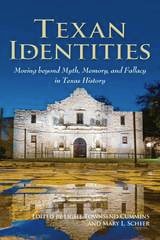
Texan Identities
Moving beyond Myth, Memory, and Fallacy in Texas HistoryLight Townsend Cummins
University of North Texas Press, 2016

Texan Jazz
By Dave Oliphant
University of Texas Press, 1996
Texas musicians and jazz share a history that goes all the way back to the origins of jazz in ragtime, blues, and boogie-woogie. Texans have left their mark on all of jazz's major movements, including hot jazz, swing, bebop, the birth of the cool, hard bop, and free jazz. Yet these musicians are seldom identified as Texans because their careers often took them to the leading jazz centers in New Orleans, Chicago, New York, Kansas City, and Los Angeles.
In Texan Jazz, Dave Oliphant reclaims these musicians for Texas and explores the vibrant musical culture that brought them forth. Working through the major movements of jazz, he describes the lives, careers, and recordings of such musicians as Scott Joplin, Hersal Thomas, Blind Lemon Jefferson, Sippie Wallace, Jack Teagarden, Buster Smith, Hot Lips Page, Eddie Durham, Herschel Evans, Charlie Christian, Red Garland, Kenny Dorham, Jimmy Giuffre, Ornette Coleman, John Carter, and many others.
The great strength of Texan Jazz is its record of the contributions to jazz made by African-American Texans. The first major book on this topic ever published, it will be fascinating reading for everyone who loves jazz.
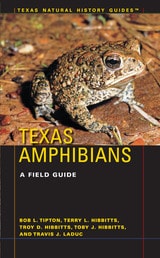
Texas Amphibians
A Field GuideBy Bob L. Tipton, Terry L. Hibbitts, Troy D. Hibbitts, Toby J. Hibbitts, and Travis J. LaDuc
University of Texas Press, 2012
With a wide variety of habitats ranging from southeastern swamps to western deserts, Texas is home to numerous species of frogs, toads, and salamanders. Each area of Texas has a particular set of species that has evolved there over thousands of years. Indeed, most amphibians are not very mobile, and many live their entire lives within a few square meters. This makes them particularly vulnerable to environmental degradation and habitat destruction.
Texas Amphibians is the only field guide focused exclusively on the state’s frogs, toads, and salamanders. It presents brief, general accounts of the two orders and fifteen families. Then it identifies each of the seventy-two species in detail, including size, description, voice (if applicable), similar species, distribution (with maps), natural history, reproduction, subspecies (if applicable), and comments and conservation information. Color photographs illustrate the species.
The book also includes a general introduction to amphibian natural history, conservation, observation and collection, maintenance in captivity, museum and preserved specimens, and scientific and common names, as well as scientific keys to Texas salamanders and frogs and a generic key to amphibian larvae. This wealth of information, compiled by a team of experts who collectively have over a century of experience in field herpetology, will increase our appreciation for amphibians and the vital role they play as an early indicator of threats to the quality of the environment that we all share.
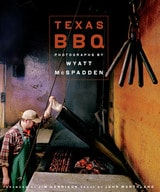
Texas BBQ
Photographs by Wyatt McSpaddenBy Wyatt McSpadden
University of Texas Press, 2009
To Texans, barbecue is elemental. Succulent, savory, perfumed with smoke and spice, it transcends the term "comfort food." It's downright heavenly, and it's also a staff of Texas life. Like a dust storm or a downpour, barbecue is a force of Texas nature, a stalwart tie to the state's cultural and culinary history. Though the word is often shortened to "BBQ," the tradition of barbecue stands Texas-tall.
Photographer Wyatt McSpadden has spent some twenty years documenting barbecue—specifically, the authentic family-owned cafes that are small-town mainstays. Traveling tens of thousands of miles, McSpadden has crisscrossed the state to visit scores of barbecue purveyors, from fabled sites like Kreuz's in Lockhart to remote spots like the Lazy H Smokehouse in Kirbyville. Color or black-and-white, wide angle or close up, his pictures convey the tradition and charm of barbecue. They allow the viewer to experience each place through all five senses. The shots of cooking meat and spiraling smoke make taste and smell almost tangible. McSpadden also captures the shabby appeal of the joints themselves, from huge, concrete-floored dining halls to tiny, un-air-conditioned shacks. Most of all, McSpadden conveys the primal physicality of barbecue—the heat of fire, the heft of meat, the slickness of juices—and also records ubiquitous touches such as ancient scarred carving blocks, torn screen doors and peeling linoleum, and toothpicks in a recycled pepper sauce jar.

Texas Bobwhites
A Guide to Their Foods and Habitat ManagementBy Jon A. Larson, Timothy E. Fulbright, Leonard A. Brennan, Fidel Hernández, and Fred C. Bryant
University of Texas Press, 2010
Northern bobwhites are one of the most popular game birds in the United States. In Texas alone, nearly 100,000 hunters take to the field each fall and winter to pursue wild bobwhite quail. Texas is arguably the last remaining state with sufficient habitat to provide quail-hunting opportunities on a grand scale, and Texas ranchers with good bobwhite habitat often generate a greater proportion of their income from fees paid by quail hunters than from livestock production. Managing and expanding bobwhite habitat makes good sense economically, and it benefits the environment as well. The rangelands and woodlands of Texas that produce quail also support scores of other species of wildlife.
Texas Bobwhites is a field guide to the seeds commonly eaten by northern bobwhites, as well as a handbook for conserving and improving northern bobwhite habitat. It provides identifying characteristics for the seeds of 91 species of grasses, forbs, woody plants, and succulents. Each seed description includes a close-up and a scale photo of the seed and the plant that produces it, along with a range map. Using this information, hunters can readily identify concentrations of plants that are most likely to attract quail. Landowners and rangeland managers will greatly benefit from the book's state-of-the-art guidance for habitat management and restoration, including improving habitat dominated by invasive and nonnative grasses.

Texas Cemeteries
The Resting Places of Famous, Infamous, and Just Plain Interesting TexansBy Bill Harvey
University of Texas Press, 2003
Winner, Journalistic Achievement Award, Texas Historical Foundation, 2004
From the simplest slab of weathered stone to the most imposing mausoleum, every marker in a Texas cemetery bears witness to a life that—in ways small or large—helped shape the history and culture of the state. Telling the stories of some of these significant lives is the purpose of this book. Within its pages, you'll meet not only the heroes of the Texas Revolution, for example, but also one of the great African American cowboys of the traildriving era (Bose Ikard) and the first woman in Texas elected to statewide office (Annie Webb Blanton). Visiting cemeteries from every era and all regions of the state, Bill Harvey recounts the histories of famous, infamous, and just plain interesting Texans who lie at rest in Texas cemeteries.
The book is organized alphabetically by city for easy reference. For each city, Harvey lists one or more cemeteries, giving their location and history, if significant. At the heart of the book are his profiles of the noteworthy people buried in each cemetery. They include not only famous but also lesser-known and even unknown Texans who made important contributions to the state in the arts, sports, business, military service, politics—truly every area of communal life. For those who want to visit these resting places, Harvey also includes tips on finding cemeteries, locating gravesites, and taking good photographs. Spend time with him in the graveyards of Texas, and you'll soon appreciate what fascinating stories the silent stones can tell.

Texas Earthquakes
By Cliff Frohlich and Scott D. Davis
University of Texas Press, 2003
When nature goes haywire in Texas, it isn't usually an earthshaking event. Though droughts, floods, tornadoes, and hail all keep Texans talking about the unpredictable weather, when it comes to earthquakes, most of us think we're on terra firma in this state. But we're wrong! Nearly every year, earthquakes large enough to be felt by the public occur somewhere in Texas.
This entertaining, yet authoritative book covers "all you really need to know" about earthquakes in general and in Texas specifically. The authors explain how earthquakes are caused by natural forces or human activities, how they're measured, how they can be predicted, and how citizens and governments should prepare for them. They also thoroughly discuss earthquakes in Texas, looking at the occurrences and assessing the risks region by region and comparing the amount of seismic activity in Texas to other parts of the country and the world. The book concludes with a compendium of over one hundred recorded earthquakes in Texas from 1811 to 2000 that briefly describes the location, timing, and effects of each event.

Texas Furniture, Volume One
The Cabinetmakers and Their Work, 1840-1880, Revised editionBy Lonn Taylor and David B. Warren
University of Texas Press, 2012
The art of furniture making flourished in Texas during the mid-nineteenth century. To document this rich heritage of locally made furniture, Miss Ima Hogg, the well-known philanthropist and collector of American decorative arts, enlisted Lonn Taylor and David B. Warren to research early Texas Furniture and its makers. They spent more than a decade working with museums and private collectors throughout the state to examine and photograph representative examples. They also combed census records, newspapers, and archives for information about cabinetmakers. These efforts resulted in the 1975 publication of Texas Furniture, which quickly became the authoritative reference on this subject.
Now updated with an expanded Index of Texas Cabinetmakers that includes information that has come to light since the original publication and corrects errors, Texas Furniture presents a catalog of more than two hundred pieces of furniture, each superbly photographed and accompanied by detailed descriptions of the piece’s maker, date, materials, measurements, history, and owner, as well as an analysis by the authors. The book also includes chapters on the material culture of nineteenth-century Texas and on the tools and techniques of nineteenth-century Texas cabinetmakers, with a special emphasis on the German immigrant cabinetmakers of the Hill Country and Central Texas. The index of Texas cabinetmakers contains biographical information on approximately nine hundred men who made furniture in Texas, and appendices list information on the state’s largest cabinet shops taken from the United States census records.
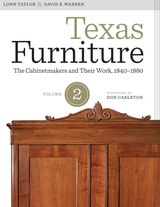
Texas Furniture, Volume Two
The Cabinetmakers and Their Work, 1840–1880By Lonn Taylor and David B. Warren
University of Texas Press, 2012
The art of furniture making flourished in Texas during the mid-nineteenth century. To document this rich heritage of locally made furniture, Miss Ima Hogg, the well-known philanthropist and collector of American decorative arts, enlisted Lonn Taylor and David B. Warren to research early Texas furniture and its makers. After more than a decade of investigation, they published Texas Furniture in 1975, and it quickly became the authoritative reference on this subject. An updated edition, Texas Furniture, Volume One, was issued in the spring of 2012.
Texas Furniture, Volume Two presents over 150 additional pieces of furniture that were not included in Volume One, each superbly photographed in color and accompanied by detailed descriptions of the piece’s maker, date, materials, measurements, history, and owner, as well as an analysis by the authors. Taylor and Warren have also written a new introduction for this volume, in which they amplify the story of early Texas furniture. In particular, they compare and contrast the two important traditions of cabinetmaking in Texas, Anglo-American and German, and identify previously unknown artisans. The authors also discuss nineteenth-century Texans’ desire for refinement and gentility in furniture, non-commercial furniture making, and marquetry work. And they pay tribute to the twentieth-century collectors who first recognized the value of locally made Texas furniture and worked to preserve it. A checklist of Texas cabinetmakers, which contains biographical information on approximately nine hundred men who made furniture in Texas, completes the volume.
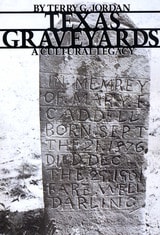
Texas Graveyards
A Cultural LegacyBy Terry Jordan
University of Texas Press, 1982
Where more poignantly than in a small country graveyard can a traveler fathom the flow of history and tradition? During the past twenty years, Terry G. Jordan has traveled the back roads and hidden trails of rural Texas in search of such cemeteries. With camera in hand, he has visited more than one thousand cemeteries created and maintained by the Anglo-American, black, Indian, Mexican, and German settlers of Texas. His discoveries of sculptured stones and mounds, hex signs and epitaphs, intricate landscapes and unusual decorations represent a previously unstudied and unappreciated wealth of Texas folk art and tradition. Texas Graveyards not only marks the distinct ethnic and racial traditions in burial practices but also preserves a Texas legacy endangered by changing customs, rural depopulation, vandalism, and the erosion of time.
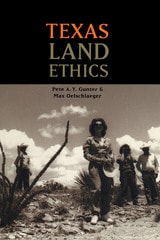
Texas Land Ethics
By Pete A. Y. Gunter and Max Oelschlaeger
University of Texas Press, 1997
From the dense forests of the Big Thicket to the limitless vistas of the Davis Mountains, Texas is a land of astonishing diversity and natural beauty. Yet it is also a land where commuters endure endless traffic jams in the major cities and where pollution and environmental degradation threaten the most essential elements of our common living space—the land, air, and water.
In this thoughtful, practical book, Pete Gunter and Max Oelschlaeger offer a new vision for living on the land, a 'land ethic' that respects the stability, integrity, and beauty of the "land community." Avoiding harsh rhetoric that seeks only to place blame and foretell doom, they discuss how economic and environmental goals may be reconciled so that Texans can continue to enjoy a reasonable prosperity while living in a land free of pollutants and scars, where some wild lands still exist and animals range freely.
In presenting their land ethic, the authors draw on the ideas of Aldo Leopold, whose A Sand County Almanac persuasively urges human beings to respect the land—with all of its animal and plant inhabitants—that supports us. This is an ethic to take Texas into the twenty-first century, in which the wise choices we make now will create a stable and sustainable future.
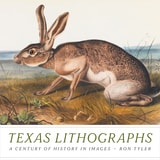
Texas Lithographs
A Century of History in ImagesRon Tyler
University of Texas Press, 2023
2024 Ewell L. Newman Book Award, American Historical Print Collectors Society
2024 Kate Broocks Bates Award for Historical Research, Texas State Historical Association
2024 TCU Texas Book Prize, Friends of the TCU Library and the TCU Press
2024 Kempner Family Book Prize—Nonfiction,The Philosophical Society of Texas
A stunning and comprehensive collection of lithographs from 1818 to 1900 Texas.
Westward expansion in the United States was deeply intertwined with the technological revolutions of the nineteenth century, from telegraphy to railroads. Among the most important of these, if often forgotten, was the lithograph. Before photography became a dominant medium, lithography—and later, chromolithography—enabled inexpensive reproduction of color illustrations, transforming journalism and marketing and nurturing, for the first time, a global visual culture. One of the great subjects of the lithography boom was an emerging Euro-American colony in the Americas: Texas.
The most complete collection of its kind—and quite possibly the most complete visual record of nineteenth-century Texas, period—Texas Lithographs is a gateway to the history of the Lone Star State in its most formative period. Ron Tyler assembles works from 1818 to 1900, many created by outsiders and newcomers promoting investment and settlement in Texas. Whether they depict the early French colony of Champ d’Asile, the Republic of Texas, and the war with Mexico, or urban growth, frontier exploration, and the key figures of a nascent Euro-American empire, the images collected here reflect an Eden of opportunity—a fairy-tale dream that remains foundational to Texans’ sense of self and to the world’s sense of Texas.

Texas Lizards
A Field GuideBy Troy and Toby Hibbitts
University of Texas Press, 2015
“Texas offers the opportunity to observe lizard diversity like no other part of the country,” writes Laurie J. Vitt in the foreword to Texas Lizards. From the moist eastern Piney Woods to the western deserts, lizards can be found in every part of Texas. The state has forty-five native and six naturalized species of lizards, almost half of the 115 species that live in the continental United States. Yet Texas lizards have not received full coverage in regional field guides, and no other guide dedicated solely to the state’s lizards has ever been published.
Texas Lizards is a complete identification guide to all fifty-one native and established exotic lizard species. It offers detailed species accounts, range maps, and excellent color photographs (including regional, gender, and age variations for many species) to aid field identification. The authors, two of the state’s most knowledgeable herpetologists, open the book with a broad overview of lizard natural history, conservation biology, observation, and captive maintenance before providing a key to Texas lizards and accounts of the various lizard families and species. Appendices list species of questionable occurrence in Texas and nonestablished exotic species. Informational resources on Texas lizards, a map of Texas counties, a glossary, a bibliography, and indexes of common and scientific names round out the volume.
Texas Mexican Americans and Postwar Civil Rights
By Maggie Rivas-Rodriguez
University of Texas Press, 2015
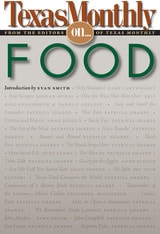
Texas Monthly On . . .
FoodFrom the editors of <em>Texas Monthly</em>
University of Texas Press, 2008
From reviews of the newest, hippest restaurants in cities across Texas to stories about the comfort foods we all love, Texans have long relied on Texas Monthly to dish up some of the best writing about food in the Lone Star state. This anthology brings together twenty-eight classic articles about food in Texas and the culture that surrounds it—markets that purvey exotic and traditional foods, well-known chefs, tributes to the cooks and cookbooks of days gone by, and even a feature on how to open a restaurant. Many of the articles are by Patricia Sharpe, Texas Monthly's longtime restaurant critic and winner of the James Beard Journalism Award for Magazine Feature Writing without Recipes. Joining her are Texas Monthly editor Evan Smith and contributors Gary Cartwright, Jordan MacKay, Skip Hollandsworth, Pamela Colloff, Anne Dingus, Suzy Banks, Joe Nick Patoski, and Prudence Mackintosh.

Texas Monthly On . . .
Texas True CrimeFrom the editors of Texas Monthly
University of Texas Press, 2007
Since 1973, one magazine has covered crime in Texas like no one else, delving deep into stories that may turn your stomach—but won't let you turn away. Texas Monthly On... Texas True Crime is a high-speed read around Texas, chasing criminals from the Panhandle to the Piney Woods, through gated mansions and trailer parks, from 1938 to the twenty-first century. The stories, which originally appeared as articles in the magazine, come from some of its most notable writers: Cecilia Ballí investigates the drug-fueled violence of the border; Pamela Colloff reports on Amarillo's lethal feud between jocks and punks; Michael Hall re-visits the legend of Joe Ball, a saloon owner who allegedly fed his waitresses to pet alligators; Skip Hollandsworth uncovers the computer nerd who became Dallas' most notorious jewel thief; and Katy Vine tracks a pair of teenage lesbians inspired by Thelma and Louise.
Texas Monthly On... Texas True Crime is the second in a series of books in which the editors of Texas Monthly offer the magazine's inimitable perspective on various aspects of Texas culture, including food, politics, travel, and music, among other topics. Texas Monthly On... Texas Women was released in 2006.
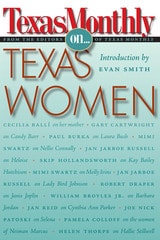
Texas Monthly On . . .
Texas WomenFrom the editors of Texas Monthly
University of Texas Press, 2006
Since 1973, Texas Monthly has spotlighted hundreds of Texans who, for better or worse, make this state like no place else. TEXAS MONTHLY On . . . Texas Women profiles thirteen women who are not only fascinating in their own right, but also representative of the legions of women who have contributed to the character and uniqueness of Texas. They range from First Ladies Laura Bush and Lady Bird Johnson to pop culture icons such as Candy Barr and Janis Joplin—and all of them exemplify the qualities that make Texas women distinctive. The women's profiles originally appeared as articles in the magazine, authored by some of Texas Monthly's notable writers—Cecilia Ballí, Gary Cartwright, Paul Burka, Mimi Swartz, Jan Jarboe Russell, Skip Hollandsworth, Robert Draper, William Broyles Jr., Jan Reid, Joe Nick Patoski, Pamela Colloff, and Helen Thorpe. The writers also introduce their pieces with headnotes that update the stories or, in some cases, tell the story behind the story.
TEXAS MONTHLY On . . . Texas Women is the first in a series of books in which the editors of Texas Monthly will offer the magazine's inimitable perspective on various aspects of Texas culture, including food, politics, travel, and music, among other topics.
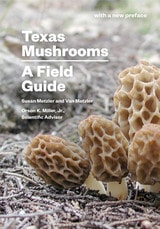
Texas Mushrooms
A Field GuideBy Susan and Van Metzler
University of Texas Press, 1992
Hundreds of species of mushrooms flourish in Texas, from the desert and semiarid regions of West Texas to the moist and acid soils of East Texas, where species that can also be found in South America live alongside those that might be spotted in Malaysia and Europe. Texas Mushrooms was the first—and is still the only—guide to all of the state’s mushrooms.
This colorful, easy-to-follow book will surprise and delight uninitiated nature enthusiasts while also supplying the experienced mushroom hunter with expert identification information. Excellent color photographs and precise descriptions of over 200 species will enable the mushroom hunter—even the amateur—to make quick, careful, easy distinctions between the edible varieties and the potentially toxic ones. In addition, kitchen-tested recipes are included, along with charts giving spore sizes and a list of recommended further reading.
In Texas, mushroom hunting can be a year-round, state-wide activity, and with this enticing field guide, collecting, identifying, and preparing wild mushrooms will become an activity the entire family can enjoy while appreciating the beauty of Texas from a new and fascinating angle.

Texas Place Names
By Edward Callary, with Jean K. Callary
University of Texas Press, 2020
Was Gasoline, Texas, named in honor of a gas station? Nope, but the name does honor the town’s original claim to fame: a gasoline-powered cotton gin. Is Paris, Texas, a reference to Paris, France? Yes: Thomas Poteet, who donated land for the town site, thought it would be an improvement over “Pin Hook,” the original name of the Lamar County seat. Ding Dong’s story has a nice ring to it; the name was derived from two store owners named Bell, who lived in Bell County, of course. Tracing the turning points, fascinating characters, and cultural crossroads that shaped Texas history, Texas Place Names provides the colorful stories behind these and more than three thousand other county, city, and community names.
Drawing on in-depth research to present the facts behind the folklore, linguist Edward Callary also clarifies pronunciations (it’s NAY-chis for Neches, referring to a Caddoan people whose name was attached to the Neches River during a Spanish expedition). A great resource for road trippers and historians alike, Texas Place Names alphabetically charts centuries of humanity through the enduring words (and, occasionally, the fateful spelling gaffes) left behind by men and women from all walks of life.
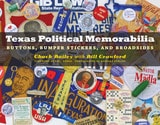
Texas Political Memorabilia
Buttons, Bumper Stickers, and BroadsidesBy Chuck Bailey, with Bill Crawford
University of Texas Press, 2007
Texas politicians are a lively, sometimes controversial, always entertaining breed, and the ways they have chosen to put themselves and their messages before the public are equally as interesting. Anything and everything that can be printed with a candidate's name, image, and slogan—from buttons and bumper stickers to chewing gum, pocket knives, and plastic pickles—is likely to turn up in a Texas political campaign. Though many consider these items ephemeral, collectors value political memorabilia as a fascinating "sound bite" record of the candidates and issues that engaged the voting public over decades. Texas Political Memorabilia presents just such a pictorial history of Texas politics, the first ever compiled.
Drawn from the vast personal collection of Chuck Bailey and augmented with items from other private and public collections, this book presents the most exceptional, most memorable, and most informative examples of Texas political memorabilia. The featured items cover everything from the presidential campaigns of Lyndon Johnson and both George Bushes, to U.S. House and Senate elections, to statewide races for governor and the Texas House and Senate, to county and city elections. All the major figures of twentieth-century Texas politics—as well as Sam Houston and Davy Crockett—are represented in the book. To set the images in context, Chuck Bailey and Bill Crawford provide background on the candidates, races, and issues that inspired many of the pieces pictured in the book.
From LBJ's Stetson-shaped ashtrays to Jake Pickle's plastic squeaker pickles to George W. Bush's "W" buttons, Texas Political Memorabilia is a treasure trove of the nuts and bolts and buttons of Texas politics.
Texas Ranger Captain William L. Wright
Richard B. McCaslin
University of North Texas Press, 2021
Texas Ranger John B. Jones and the Frontier Battalion, 1874-1881
Rick Miller
University of North Texas Press, 2012
Texas Ranger Lee Hall
From the Red River to the Rio GrandeChuck Parsons
University of North Texas Press, 2020
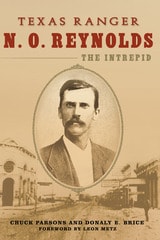
Texas Ranger N. O. Reynolds, the Intrepid
Chuck Parsons
University of North Texas Press, 2014
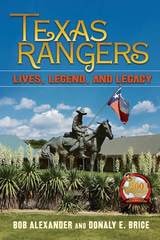
Texas Rangers
Lives, Legend, and LegacyBob Alexander
University of North Texas Press, 2017

Texas Seafood
A Cookbook and Comprehensive GuideBy PJ Stoops and Benchalak Srimart Stoops
University of Texas Press, 2019
The abundance of seafood available from the northwest Gulf of Mexico includes hundreds of delicious species that are often overlooked by consumers. Celebrating this regional bounty, Texas Seafood showcases the expertise of longtime fishmongers and chefs PJ and "Apple Srimart" Stoops. Readers will find familiar fish like Red Snapper along with dozens of little-known finfish and invertebrates, including tunas, mackerels, rays, and skates, as well as bivalves, shrimps, crabs, and other varieties, many of which are considered “bycatch” (seafood that a fisher didn’t intend to catch), but that are no more difficult to prepare and just as delicious as those commonly found at your local supermarket.
The Stoopses provide a complete primer on sourcing these wild-caught delicacies, with fascinating details about habitats and life cycles as well as practical advice on how to discern quality. Texas Seafood concludes with simple, delectable recipes, many infused with the flavors of Apple’s Thai heritage. Dishes such as Steamed Curried Crab, Crispy White Shrimp, Escolar on a Grill with Green Mango Salad, Cast-Iron-Roasted Shortfin Mako Shark with Rio Grande Grapefruit, and Chicken-Fried Ribbonfish are just a few ways to savor the best of the Gulf.

Texas Snakes
A Field GuideBy James R. Dixon, John E. Werler, and Michael R. J. Forstner; Line drawings by Regina Levoy
University of Texas Press, 2020

Texas Sports
Unforgettable Stories for Every Day of the YearBy Chad S. Conine
University of Texas Press, 2017
When it comes to sports, Texas more than earns its bragging rights. The Lone Star State has produced championship teams and legendary athletes not only in football, baseball, and basketball, but in dozens of other sports as well. Texas Sports celebrates more than a century of achievements in a day-by-day record of the people and events—both unforgettable and little-known—that have made Texas a powerhouse in the world of sports.
Chad S. Conine packs a wealth of sports facts and stories into 366 days. He ranges from firsts such as UT’s first football game (an 1893 win against Dallas University Football Club) to peak moments such as Earl Campbell running through defenders, Nolan Ryan throwing heat past baffled batters, and Babe Didrickson Zaharias winning the Western Open golf championship for the fourth time. Conine covers more than twenty-five sports and all levels from high school to professional, reminding us that if Texas had never seen a pigskin or a backboard, its sports legacy would still be secure. With a winning combination of victories and heartbreaks, men’s and women’s sports, and all regions of the state, Texas Sports is a must-read for all sports fans and trivia buffs.
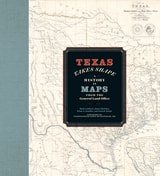
Texas Takes Shape
A History in Maps from the General Land OfficeBy Mark Lambert, James Harkins, Brian A. Stauffer, and Patrick Walsh
University of Texas Press, 2025
2025 Second Place, Presidio La Bahía Award, Sons of the Republic of Texas
2026 Ron Tyler Award for Best Illustrated Book on Texas History and Culture, Texas State Historical Association (TSHA)
A comprehensive volume on historical mapping in Texas.
The Texas General Land Office’s map collection contains over 45,000 maps, some dating from the sixteenth century, making it one of the most important cartographic archives in Texas. As products and agents of history drawn by cartographers with motives and means as diverse as the places they document, maps provide a unique perspective on geopolitical, cultural, and economic processes. The maps of the GLO offer key insights into Texas’s sprawling history. They speak to issues of changing borders, social and political upheaval, and questions of sovereignty and power.
Texas Takes Shape offers an illuminating selection from the GLO archive: over one hundred maps that tell—and sometimes obscure—the stories of European colonization, Spanish and Mexican rule, the Republic of Texas, and the modern US state. There are maps here of every scale, from the hemispheric visions of European explorers to individual survey plats. Accompanying essays offer fascinating lessons on topics ranging from Indigenous cartography to military and railroad mapmaking and frontier surveys. Artful and informative, Texas Takes Shape examines a unique place through the eyes and imaginations of those who sought to govern it, profit from it, understand it, and call it home.

Texas Takes Wing
A Century of Flight in the Lone Star StateBy Barbara Ganson
University of Texas Press, 2014
This book celebrates the aviators, astronauts, airline executives, and other innovators who have made Texas an influential world leader in the aerospace industry over the past century.
Tracing the hundred-year history of aviation in Texas, aviator and historian Barbara Ganson brings to life the colorful personalities that shaped the phenomenally successful development of this industry in the state. Weaving stories and profiles of aviators, designers, manufacturers, and those in related services, Texas Takes Wing covers the major trends that propelled Texas to the forefront of the field. Covering institutions from San Antonio’s Randolph Air Force Base (the West Point of this branch of service) to Brownsville’s airport with its Pan American Airlines instrument flight school (which served as an international gateway to Latin America as early as the 1920s) to Houston’s Johnson Space Center, home of Mission Control for the U.S. space program, the book provides an exhilarating timeline and engaging history of dozens of unsung pioneers as well as their more widely celebrated peers.
Drawn from personal interviews as well as major archives and the collections of several commercial airlines, including American, Southwest, Braniff, Pan American Airways, and Continental, this sweeping history captures the story of powered flight in Texas since 1910. With its generally favorable flying weather, flat terrain, and wide open spaces, Texas has more airports than any other state and is often considered one of America’s most aviation-friendly places. Texas Takes Wing also explores the men and women who made the region pivotal in military training, aircraft manufacturing during wartime, general aviation, and air servicing of the agricultural industry. The result is a soaring history that will delight aviators and passengers alike.

Texas Through Women's Eyes
The Twentieth-Century ExperienceBy Judith N. McArthur and Harold L. Smith
University of Texas Press, 2010
Winner, Liz Carpenter Award For Research in the History of Women, Texas State Historical Association, 2010
Texas women broke barriers throughout the twentieth century, winning the right to vote, expanding their access to higher education, entering new professions, participating fully in civic and political life, and planning their families. Yet these major achievements have hardly been recognized in histories of twentieth-century Texas. By contrast, Texas Through Women's Eyes offers a fascinating overview of women's experiences and achievements in the twentieth century, with an inclusive focus on rural women, working-class women, and women of color.
McArthur and Smith trace the history of Texas women through four eras. They discuss how women entered the public sphere to work for social reforms and the right to vote during the Progressive era (1900–1920); how they continued working for reform and social justice and for greater opportunities in education and the workforce during the Great Depression and World War II (1920–1945); how African American and Mexican American women fought for labor and civil rights while Anglo women laid the foundation for two-party politics during the postwar years (1945–1965); and how second-wave feminists (1965–2000) promoted diverse and sometimes competing goals, including passage of the Equal Rights Amendment, reproductive freedom, gender equity in sports, and the rise of the New Right and the Republican party.

Texas Tornado
The Times and Music of Doug SahmBy Jan Reid, with Shawn Sahm
University of Texas Press, 2010
Doug Sahm was a singer, songwriter, and guitarist of legendary range and reputation. The first American musician to capitalize on the 1960s British invasion, Sahm vaulted to international fame leading a faux-British band called the Sir Douglas Quintet, whose hits included "She's About a Mover," "The Rains Came," and "Mendocino." He made the cover of Rolling Stone magazine in 1968 and 1971 and performed with the Grateful Dead, Dr. John, Willie Nelson, Boz Scaggs, and Bob Dylan.
Texas Tornado is the first biography of this national music legend. Jan Reid traces the whole arc of Sahm's incredibly versatile musical career, as well as the manic energy that drove his sometimes turbulent personal life and loves. Reid follows Sahm from his youth in San Antonio as a prodigy steel guitar player through his breakout success with the Sir Douglas Quintet and his move to California, where, with an inventive take on blues, rock, country, and jazz, he became a star in San Francisco and invented the "cosmic cowboy" vogue. Reid also chronicles Sahm's later return to Texas and to chart success with the Grammy Award–winning Texas Tornados, a rowdy "conjunto rock and roll band" that he modeled on the Beatles and which included Sir Douglas alum Augie Meyers and Tejano icons Freddy Fender and Flaco Jimenez.
With his exceptional talent and a career that bridged five decades, Doug Sahm was a rock and roll innovator whose influence can only be matched among his fellow Texas musicians by Buddy Holly, Roy Orbison, Janis Joplin, and Stevie Ray Vaughan. Texas Tornado vividly captures the energy and intensity of this musician whose life burned out too soon, but whose music continues to rock.
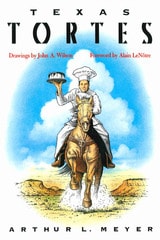
Texas Tortes
By Arthur L. Meyer
University of Texas Press, 1997
With layer upon layer of rich, dense cake and delicate buttercream subtly flavored with fruit, chocolate, or nuts, classic European tortes crown the pinnacle of Old World baking. Make them with the freshest produce of the fields and orchards of Texas—oranges, peaches, pecans, raspberries, blueberries, plums, apricots, figs, strawberries, and kiwis—and you will discover the New World's ultimate desserts.
In this cookbook, Master Baker Arthur L. Meyer presents forty-three original, kitchen-tested recipes for fruit, nut, and chocolate tortes, cassate, tarts and pies, cheesecakes, and other classic European desserts. The recipes take advantage of fresh Texas ingredients, and each recipe contains clear, easy-to-follow instructions that demystify the processes involved in creating these desserts.
In addition to the recipes, Meyer guides the home baker through the basic steps in producing tart and cheesecake crusts, fillings and icings, and other standard components of special desserts. Throughout the book, he gives tips on proper techniques and equipment drawn from many years of experience.
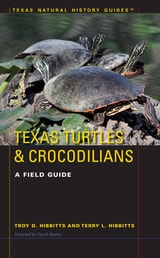
Texas Turtles & Crocodilians
A Field GuideBy Troy D. Hibbitts and Terry L. Hibbitts
University of Texas Press, 2016
Texas has a large and diverse turtle population, with forms that are found nowhere else (Cagle’s Map Turtle and the Texas Map Turtle) and wide-ranging species that barely touch the state, including the Painted Turtles and the Rough-footed Mud Turtle. From the Sabine River to El Paso, and from the Rio Grande to the Panhandle, thirty-one native and established exotic turtle species are definitely known in Texas, along with one crocodilian, the American Alligator.
Texas Turtles & Crocodilians is the first complete identification guide to all the state’s turtles and to its single alligator. It offers detailed species accounts, range maps, and excellent color photographs to aid in field identification. The authors, two of the state’s most knowledgeable herpetologists, open the book with a broad overview of turtle natural history, conservation biology, observation, and captive maintenance before providing a key to Texas turtles and accounts of the various turtle families and species. Appendices provide brief accounts of species that occurred prehistorically in Texas and non-established exotic species, as well as a table of Texas’ major watersheds and the turtle diversity in each one. Informational resources on Texas turtles and alligators, a map of Texas counties, a glossary, a bibliography, and indexes of common and scientific names complete the volume.
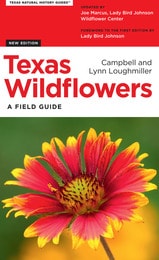
Texas Wildflowers
A Field GuideBy Campbell and Lynn Loughmiller; updated by Joe Marcus; foreword to the first edition by Lady Bird Johnson
University of Texas Press, 2018
With more than 175,000 copies sold, Texas Wildflowers has established itself as the go-to guide for identifying the state’s roadside flowers. This new edition has been completely reorganized by flower colors (and within each color section, by flowering season) to make it even easier to identify the flowers you see as you travel through Texas. Every wildflower is illustrated with a beautiful full-color photograph—over 250 of which are new to this edition. All of the descriptive identifying information is presented in a consistent format—common and botanical names, plant and leaves, flowers and fruit, flowering season, habitat and range, and notes.
What hasn’t changed is the book’s sturdy binding, which will hold up through years of active use, and its wealth of information, which has been thoroughly updated by the expert staff of the Lady Bird Johnson Wildflower Center:
- 300 species descriptions, including engaging comments about the plants’ natural histories, landscape uses, edible or medicinal properties, and folklore
- A map of Texas’s vegetational areas
- Glossaries that define and illustrate botanical terms
- A bibliography of books for learning more about wildflowers
- Indexes to common and botanical plant names, as well as plant families, that distinguish between native and non-native species
As Lady Bird Johnson observed in the foreword, Texas Wildflowers “makes me want to reach for my sunhat, put on my walking shoes, take this knowledge-filled book, and fare forth to seek and discover!”
Texas Wildlife Resources and Land Uses
Edited by Raymond C. Telfair II
University of Texas Press, 1998
Natural habitats for wildlife in Texas and the many species they support are dwindling at an alarming rate as an ever-growing population continues to develop the land for commercial, industrial, and agricultural uses. To take stock of our current wildlife and land resources, identify challenges facing them, and offer strategies for future management and conservation, this book presents over twenty-five essays by experts from a wide range of governmental and private organizations involved in wildlife policy and management.
Modeled on the proceedings of a 1982 wildlife symposium published by the Texas Chapter of The Wildlife Society, this book updates and expands the issues involved in wildlife and land use. The chapters are grouped into five sections-perspectives on Texas wildlife resources, future expectations in land use, the public and future demands for wildlife, wildlife management and research, and wildlife management on public lands. The diverse and sometimes competing viewpoints presented here will be important reading for everyone concerned with managing land for wildlife.
Texas and Northeastern Mexico, 1630-1690
By Juan Bautista Chapa
University of Texas Press, 1997
An English translation of Chapa's Historia de Nuevo León, the first history of the region that eventually became Texas and northeastern Mexico.
Winner, Presidio La Bahía Award, Sons of the Republic of Texas
In the seventeenth century, South Texas and Northeastern Mexico formed El Nuevo Reino de León, a frontier province of New Spain. In 1690, Juan Bautista Chapa penned a richly detailed history of Nuevo León for the years 1630 to 1690. Although his Historia de Nuevo León was not published until 1909, it has since been acclaimed as the key contemporary document for any historical study of Spanish colonial Texas.
This book offers the only accurate and annotated English translation of Chapa's Historia. In addition to the translation, William C. Foster also summarizes the Discourses of Alonso de León (the elder), which cover the years 1580 to 1649. In the appendix, Foster includes a translation of Alonso (the younger) de León's previously unpublished revised diary of the 1690 expedition to East Texas and an alphabetical listing of over 80 Indian tribes identified in this book.
Chapa was also an authority on the local Indians, and his Historia lists the names and locations of over 300 Indian tribes. This information, together with descriptions of the vegetation, wildlife, and climate in seventeenth-century Texas, make this book essential reading for ethnographers, anthropologists, and biogeographers, as well as students and scholars of Spanish borderlands history.
Texas and the Civil War
Carl H. Moneyhon
University of North Texas Press, 2026