Results by title
61 books match the query 'Third Edition' and 14 start with t
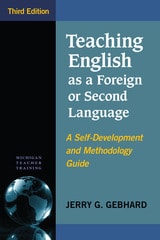
Teaching English as a Foreign or Second Language, Third Edition
A Self-Development and Methodology GuideJerry G. Gebhard
University of Michigan Press, 2017
This edition has the same three major sections: (1) Self-Development, Exploration, and Settings; (2) Principles of EFL/ESL Teaching; and (3) Teaching Language Skills. New to this edition are:
- a chapter on digital literacy, technology, and teaching
- the addition of technology issues as they relate to the teaching of the various skills in Part 3
- discussions of task-based teaching, student presentations, how corpus linguistics can inform teaching, metacognitive reading strategies, collaborative writing, assessing writing, and the teaching of grammar.
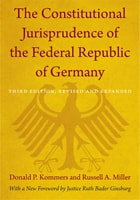
The Constitutional Jurisprudence of the Federal Republic of Germany
Third edition, Revised and ExpandedDonald P. Kommers and Russell A. Miller
Duke University Press, 2012
Compared to previous editions of The Constitutional Jurisprudence of the Federal Republic of Germany, this third edition more closely tracks Germany's Basic Law and, therefore, the systematic approach reflected in the most-respected German constitutional law commentaries. Entirely new chapters address the relationship between German law and European and international law; social and economic rights, including the property and occupational rights cases that have emerged from Reunification; jurisprudence related to issues of equality, particularly gender equality; and the tension between Germany's counterterrorism efforts and its constitutional guarantees of liberty. Kommers and Miller have also updated existing chapters to address recent decisions involving human rights, federalism, European integration, and religious liberty.
The Craft of Research, Third Edition
Wayne C. Booth, Gregory G. Colomb, and Joseph M. Williams
University of Chicago Press, 2008
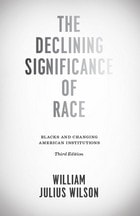
The Declining Significance of Race
Blacks and Changing American Institutions, Third EditionWilliam Julius Wilson
University of Chicago Press, 2012
When first published in 1980, The Declining Significance of Race immediately sparked controversy with its contentious thesis that race was becoming less of a deciding factor in the life chances of black Americans than class. This new edition of the seminal book includes a new afterword in which William Julius Wilson not only reflects on the debate surrounding the book, but also presents a provocative discussion of race, class, and social policy.
“The intellectual strength of this book lies in his capacity to integrate disparate findings from historical studies, social theory and research on contemporary trends into a complex and original synthesis that challenges widespread assumptions about the cause of black disadvantage and the way to remove it.”—Paul Starr, New York Times Book Review
“This publication is easily one of the most erudite and sober diagnoses of the American black situation. Students of race relations and anybody in a policy-making position cannot afford to bypass this study.”—Ernest Manheim, Sociology
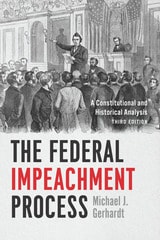
The Federal Impeachment Process
A Constitutional and Historical Analysis, Third EditionMichael J. Gerhardt
University of Chicago Press, 2019
For more than twenty years, The Federal Impeachment Process has served as the most complete analysis of the constitutional and legal issues raised in every impeachment proceeding in American history. Impeachment, Michael J. Gerhardt shows, is an inherently political process designed to expose and remedy political crimes—serious breaches of duty or injuries to the Republic. Subject neither to judicial review nor to presidential veto, it is a unique congressional power that involves both political and constitutional considerations, including the gravity of the offense charged, the harm to the constitutional order, and the link between an official’s misconduct and duties. For this third edition, Gerhardt updates the book to cover cases since President Clinton, as well as recent scholarly debates. He discusses the issues arising from the possible impeachment of Donald Trump, including whether a sitting president may be investigated, prosecuted, and convicted for criminal misconduct or whether impeachment and conviction in Congress is the only way to sanction a sitting president; what the “Emoluments Clause” means and whether it might provide the basis for the removal of the president; whether gross incompetence may serve as the basis for impeachment; and the extent to which federal conflicts of interest laws apply to the president and other high ranking officials.
Significantly updated, this book will remain the standard work on the federal impeachment process for years to come.
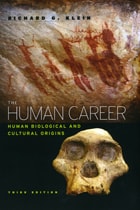
The Human Career
Human Biological and Cultural Origins, Third EditionRichard G. Klein
University of Chicago Press, 2009
Since its publication in 1989, The Human Career has proved to be an indispensable tool in teaching human origins. This substantially revised third edition retains Richard G. Klein’s innovative approach while showing how cumulative discoveries and analyses over the past ten years have significantly refined our knowledge of human evolution.
Klein chronicles the evolution of people from the earliest primates through the emergence of fully modern humans within the past 200,000 years. His comprehensive treatment stresses recent advances in knowledge, including, for example, ever more abundant evidence that fully modern humans originated in Africa and spread from there, replacing the Neanderthals in Europe and equally archaic people in Asia. With its coverage of both the fossil record and the archaeological record over the 2.5 million years for which both are available, The Human Career demonstrates that human morphology and behavior evolved together. Throughout the book, Klein presents evidence for alternative points of view, but does not hesitate to make his own position clear.
In addition to outlining the broad pattern of human evolution, The Human Career details the kinds of data that support it. For the third edition, Klein has added numerous tables and a fresh citation system designed to enhance readability, especially for students. He has also included more than fifty new illustrations to help lay readers grasp the fossils, artifacts, and other discoveries on which specialists rely. With abundant references and hundreds of images, charts, and diagrams, this new edition is unparalleled in its usefulness for teaching human evolution.
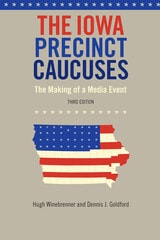
The Iowa Precinct Caucuses
The Making of a Media Event, Third EditionHugh Winebrenner
University of Iowa Press, 2010
Although some people
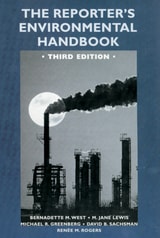
The Reporter's Environmental Handbook
Third EditionBernadette M West, M. Jane Lewis, Michael R Greenberg, David B. Sachsman, and Renee M. Rogers
Rutgers University Press, 2003
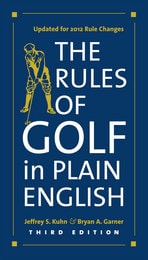
The Rules of Golf in Plain English, Third Edition
Jeffrey S. Kuhn and Bryan A. Garner
University of Chicago Press, 2012
The hopes of renowned writer and golfer Henry Longhurst—and millions of golfers before and after him—have finally been realized. In The Rules of Golf in Plain English, Bryan A. Garner, American English language and usage expert, and Jeffrey S. Kuhn, volunteer USGA rules official, have translated the knotty Rules with the encouragement and permission of the United States Golf Association. The result is a modern, readable version that offers, for the first time, clear guidance to both amateurs and professionals.
Based on a 338-word set of thirteen rules written in 1744, the official Rules have grown, over two and a half centuries, to 40,000 words. Numerous contributors and a complex revision process have rendered these Rules so opaque and stylistically inconsistent that a companion volume—the 600-page Decisions on the Rules of Golf—has been published to help golfers navigate them.
Both lawyers and avid golfers, Kuhn and Garner recognized the difficulties that the language of the Rules of Golf created, especially in a sport that expects players to call penalties on themselves. By reworking the Rules line by line, word by word, they have produced an accessible resource that no golfer—from the duffer to the pro—should be without.
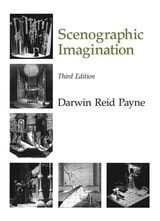
The Scenographic Imagination, Third Edition
Darwin Reid Payne
Southern Illinois University Press, 1993
In this enlarged and thoroughly revised third edition of his widely used text, Darwin Reid Payne explores the principles and philosophies that shape the visual elements of theatre.
Payne sets out to discover who scenographers are and to define their responsibilities. He sees scenographers as not merely craftspersons but artists with "a special vision that spans all the arts." Such artists are in a position to "extend and amplify underlying meanings of the production." The proper goal of beginning scenographers, according to Payne, is one day to be able to approach the job as artists in full command of their craft.
Payne seeks to instill in beginning scenographers a basic core of knowledge: an understanding of theatre history and the development of drama; a knowledge of art history and an understanding of periods and styles of architecture, painting, sculpture, furnishings, and costume; and a familiarity with the principles, techniques, and materials of pictorial and three-dimensional design. This new edition contains 248 illustrations, 38 more than the second edition. Payne’s goal, certainly, is to teach students what to do and how to do it; equally important, however, is Payne’s view that scenographers must know why.
To Payne, "Scenography is an art whose scope is nothing less than the whole world outside the theatre." Scenographers must read not only in their own field but in others as well. Payne has incorporated into his text many suggestions for outside readings, quoting passages and even entire chapters from important works. Stressing research, Payne argues that without knowledge of the literature of their own and related arts, scenographers cannot grow. And that is the emphasis of this book: to present aspiring scenographers with an approach and a set of concepts that will enable them to grow. Toward that end, Payne establishes five priorities, the first of which is to develop in students what he calls "time vision," or the ability to "see" the historical past as a living place with living inhabitants. The second priority is to bring about an awareness that allows students to "see" beneath the surface of objects and events. Third, students must be helped to recognize and appreciate the difference between the "concept of space as it exists outside the theatre and the concept of space as it is used within the theatre." The fourth priority is to ingrain in students an understanding of the importance of imagery to the scenographer, and the final priority is to teach those technical skills necessary to carry out the concepts of the scenographer.
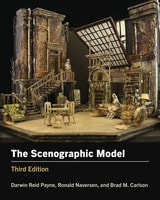
The Scenographic Model
Third EditionDarwin Reid Payne, Ronald Naversen, and Brad M. Carlson
Southern Illinois University Press, 2025
An authoritative guide to modelmaking for theater
This third edition of noted scenographer Darwin Reid Payne’s landmark text builds upon Payne’s theories and exercises to provide a modern exploration of the practice of theatrical modelmaking. With chapters on traditional and contemporary materials, tools, and techniques, the book serves as a foundational guide to understanding the historical, theoretical, and practical aspects of scenographic modelmaking, making it essential for the beginner, generalist, and professional design practitioner.
The volume begins with a brief history of the scenographic model and explores how modelmaking has adapted to changes in materials, technology, and commercial influences over time. It details setting up a safe, productive model-building studio before introducing the types and purposes of various scenographic models. It then instructs the reader in constructing common model elements and accessories. Later chapters explore how the models reveal stage space and create mood and atmosphere through tonal shading and lighting; discuss the use of found objects, collage techniques, and projection models in scenic design; and delve into 3D printing and computer routering. The final chapter provides information on various aspects of photography and image sharing related to design and production communication.
This comprehensive text provides information not just from theater but also from other modeling disciplines and sources, including architecture, film, dioramas, dollhouse modeling, and model railroading. A useful resource for high school, community college, university, and community theater enthusiasts, it is an excellent reference book for theater designers throughout the country.
The Social Medicine Reader, Volume I, Third Edition
Ethics and Cultures of BiomedicineJonathan Oberlander, Mara Buchbinder, Larry R. Churchill, Sue E. Estroff, Nancy M. King, Barry F. Saunders, Ronald P. Strauss, and Rebecca L. Walker, editors
Duke University Press, 2019
Volume 1, Ethics and Cultures of Biomedicine, contains essays, case studies, narratives, fiction, and poems that focus on the experiences of illness and of clinician-patient relationships. Among other topics the contributors examine the roles and training of professionals alongside the broader cultures of biomedicine; health care; experiences and decisions regarding death, dying, and struggling to live; and particular manifestations of injustice in the broader health system. The Reader is essential reading for all medical students, physicians, and health care providers.
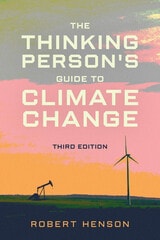
The Thinking Person's Guide to Climate Change, Third Edition
Robert Henson
University of Chicago Press, 2027
Updated throughout, the definitive guide for students, practitioners, and anyone interested in where climate science, politics, and policy stand today.
The physics and chemistry that drive human-caused climate change are surprisingly clear-cut. How we think about, talk about, and respond to the situation is dizzyingly complex. Meteorologist and journalist Robert Henson has spent years making climate science approachable and engaging. His internationally recognized book, The Thinking Person’s Guide to Climate Change, provides both specialists and newcomers with the background, insights, and confidence to engage with the paramount environmental issues of our lives (and beyond).
Drawing on a wealth of studies and assessments, this comprehensive yet lively guide brings a fresh eye to topics often buried in rhetoric. Introductory sections bring to life more than a century of painstaking research that tells us what we know and don’t know about human effects on climate. Henson discusses how and where fossil fuel use has been linked to heat waves, melting ice, wildfires, and other extremes. The guide also explores the high-stakes debates that swirl around climate change—including efforts to deny, downplay, or distract from the crisis—and how political, diplomatic, and legal systems are grappling with it. Color illustrations help explain everything from how the greenhouse effect traps heat to which everyday activities emit the most carbon. Special-feature boxes take readers to locations across the globe: small Pacific islands confronting sea level rise, Africa and its major rainfall shifts, California and year-round wildfire threats, and Florida with hurricanes intensifying ever more rapidly.
Thoroughly updated, this third edition has new coverage of the survivability of extreme heat, the use of global temperature thresholds, the challenge of carbon pricing, and other timely topics. It spotlights the Intergovernmental Panel on Climate Change’s Sixth Assessment Report as well as evolving geopolitics. This book acknowledges controversy, underscores points of agreement, and favors action over apathy and doomism.

Treatment of Error in Second Language Student Writing, Third Edition
Dana R. Ferris and Sabina Simon
University of Michigan Press, 2027
Treatment of Error in Second Language Student Writing is a practical book for teachers to help students writing in a second/other language develop greater precision (accuracy and style) in the language they use. While it does focus on language errors made by student writers, it goes beyond error to helping them develop strategies to become independent self-editors. It also discusses ongoing second language development—how students can increase and deploy their linguistic resources (grammar and vocabulary) to become more effective communicators of their written ideas.
This new edition retains the accessible design that helps teachers prepare themselves to treat error effectively. It contains guidance on how to organize course syllabi and lessons to provide authentically integrated error treatment and language development that is complementary to the overall goals of a writing course. In addition, the authors have incorporated new research and theory on written corrective feedback, discussion of philosophical questions raised by the translingual and Critical Language Awareness (CLA) movements, and analysis of how AI tools can help (or hinder) the students working to gain greater linguistic control of their writing.