80 books match the query 'Transition' and 22 start with t

cover of Techniques for Electronic Resource Management: TERMS and the Transition to Open

Techniques for Electronic Resource Management

TERMS and the Transition to Open

Jill Emery

American Library Association, 2020

[more]
cover of Television after TV: Essays on a Medium in Transition

Television after TV

Essays on a Medium in Transition

Lynn Spigel and Jan Olsson, eds.

Duke University Press, 2004

In the last ten years, television has reinvented itself in numerous ways. The demise of the U.S. three-network system, the rise of multi-channel cable and global satellite delivery, changes in regulation policies and ownership rules, technological innovations in screen design, and the development of digital systems like TiVo have combined to transform the practice we call watching tv. If tv refers to the technologies, program forms, government policies, and practices of looking associated with the medium in its classic public service and three-network age, it appears that we are now entering a new phase of television. Exploring these changes, the essays in this collection consider the future of television in the United States and Europe and the scholarship and activism focused on it.

With historical, critical, and speculative essays by some of the leading television and media scholars, Television after TV examines both commercial and public service traditions and evaluates their dual (and some say merging) fates in our global, digital culture of convergence. The essays explore a broad range of topics, including contemporary programming and advertising strategies, the use of television and the Internet among diasporic and minority populations, the innovations of new technologies like TiVo, the rise of program forms from reality tv to lifestyle programs, television’s changing role in public places and at home, the Internet’s use as a means of social activism, and television’s role in education and the arts. In dialogue with previous media theorists and historians, the contributors collectively rethink the goals of media scholarship, pointing toward new ways of accounting for television’s past, present, and future.

Contributors. William Boddy, Charlotte Brunsdon, John T. Caldwell, Michael Curtin, Julie D’Acci, Anna Everett, Jostein Gripsrud, John Hartley, Anna McCarthy, David Morley, Jan Olsson, Priscilla Peña Ovalle, Lisa Parks, Jeffrey Sconce, Lynn Spigel, William Uricchio
[more]
cover of The American Economy in Transition

The American Economy in Transition

Edited by Martin Feldstein

University of Chicago Press, 1980

This unusual volume marks the sixtieth anniversary of the National Bureau of Economic Research. In contrast to the technical and specialized character of most NBER studies, the current book is designed to provide the general reader with a broad and critical overview of the American economy. The result is a volume of essays that range from monetary policy to productivity development, from population change to international trade.
[more]
cover of The American and Japanese Auto Industries in Transition: Report of the Joint U.S.–Japan Automotive Study

The American and Japanese Auto Industries in Transition

Report of the Joint U.S.–Japan Automotive Study

Robert E. Cole and Taizo Yakushiji, Editors

University of Michigan Press, 1984

This report was prepared for the Policy Board by the U.S. and Japanese research staffs of the Joint U.S.–Japan Automotive Study under the general direction of Professors Paul W. McCracken and Keichi Oshima, with research operations organized and coordinated by Robert E. Cole on the U.S. side, in close communication with the Taizo Yakushiji on the Japanese side. [preface]
In view of the importance of stable, long-term economic relationships between Japan and the United States, automotive issues have to be dealt with in ways consistent with the joint prosperity of both countries. Furthermore, the current economic friction has the potential to adversely affect future political relationships. Indeed, under conditions of economic stagnation, major economic issues inevitably become political issues.
With these considerations in mind, the Joint U.S.–Japan Automotive Study project was started in September 1981 to determine the conditions that will allow for the prosperous coexistence of the respective automobile industries. During this two-year study, we have identified four driving forces that will play a major role in determining the future course of the automotive industry of both countries. These are: (1) consumers’ demands and aspirations vis-à-vis automobiles; (2) flexible manufacturing systems (FMS); (3) rapidly evolving technology; and (4) the internationalization of the automotive industry. [exec. summary]
[more]
cover of The Art of Transition: Latin American Culture and Neoliberal Crisis

The Art of Transition

Latin American Culture and Neoliberal Crisis

Francine Masiello

Duke University Press, 2001

The Art of Transition addresses the problems defined by writers and artists during the postdictatorship years in Argentina and Chile, years in which both countries aggressively adopted neoliberal market-driven economies. Delving into the conflicting efforts of intellectuals to name and speak to what is real, Francine Masiello interprets the culture of this period as an art of transition, referring to both the political transition to democracy and the formal strategies of wrestling with this change that are found in the aesthetic realm.
Masiello views representation as both a political and artistic device, concerned with the tensions between truth and lies, experience and language, and intellectuals and the marginal subjects they study and claim to defend. These often contentious negotiations, she argues, are most provocatively displayed through the spectacle of difference, which constantly crosses the literary stage, the market, and the North/South divide. While forcefully defending the ability of literature and art to advance ethical positions and to foster a critical view of neoliberalism, Masiello especially shows how issues of gender and sexuality function as integrating threads throughout this cultural project. Through discussions of visual art as well as literary work by prominent novelists and poets, Masiello sketches a broad landscape of vivid intellectual debate in the Southern Cone of Latin America.
The Art of Transition will interest Latin Americanists,literary and political theorists, art critics and historians, and those involved with the study of postmodernism and globalization.

[more]
cover of The Central Asian Arabs of Afghanistan: Pastoral Nomadism in Transition

The Central Asian Arabs of Afghanistan

Pastoral Nomadism in Transition

By Thomas J. Barfield

University of Texas Press, 1981

The Soviet invasion of Afghanistan in 1979 focused international attention on this country for the first time in nearly a century. The need for reliable information has only become been greater. Because of their traditional xenophobia toward the West, successive Afghan governments have restricted the number of scholars permitted to undertake extensive fieldwork. For this reason Thomas Barfield's study of the Central Asian Arabs of Afghanistan is a welcome addition to the literature, a literature which is not likely to grow in the coming years as war, domestic unrest and restrictive travel policies continue to make the research environment in Afghanistan unfavorable. The Central Asian Arabs are a little-known people of northeastern Afghanistan. This book is an account of the changes that have taken place in their way of life over the twentieth century as they switched from a form of subsistence pastoralism to a cash economy. Barfield's research constitutes a substantial revision of the standard hypothesis on the economic and social status of nomadic pastoralists, as originally posited by Fredrik Barth. One of Barfield's main purposes is to provide a case study that illustrates the wide-ranging complexity of pastoral nomadism, its integration into a regional economy, and how structural changes have occurred within the pastoral economy itself.
[more]
cover of The Hero in Transition

The Hero in Transition

Ray B. Browne

University of Wisconsin Press, 1983

An investigation of society’s heroes during any time period will reveal the personnel deemed worthy of being emulated at that particular time by that particular society. There will be many old and time-tested figures, sometimes with new faces and new profiles; there will also be a mix of new faces. Thus the hero—like history itself—is constantly in transition, and both the hero and the transition are fundamental to the study of a culture. These essays turn the pantheon of heroes around before our eyes and reveal the many complicated aspects of hero worship.
[more]
cover of The Late Great Johnny Ace and the Transition from R&B to Rock 'n' Roll

The Late Great Johnny Ace and the Transition from R&B to Rock 'n' Roll

James M. Salem

University of Illinois Press, 1999

Johnny Ace's crooning style and stirring ballads made him the first postwar African American artist to cross over to a white audience. After a string of R&B hits, Ace released the million-selling "Pledging My Love," a song headed to the top of the charts when the singer accidentally shot himself in his dressing room between sets at a show. 

James M. Salem captures the enigmatic, captivating, and influential R&B legend. Venturing from raucous Beale Street to Houston's vibrant Fourth Ward, Salem places Johnny Ace within a multifaceted world of postwar rhythm and blues that included B. B. King, Johnny Otis, Big Mama Thornton, and Gatemouth Brown. Salem also examines how entrepreneur Don D. Robey and his wife Evelyn Johnson promoted Ace to the top of the charts. Yet fame, as always, had a price. Ace's tours on the Chitlin' Circuit meant endless one-night stands and a grueling schedule that kept him on the road 340 days per year. 

Comprehensive and filled with anecdotes, The Late Great Johnny Ace and the Transition from R&B to Rock 'n' Roll tells the story of the star who fused black and white styles and changed American popular music forever.

[more]
cover of The Long Shadow: Family Background, Disadvantaged Urban Youth, and the Transition to Adulthood

The Long Shadow

Family Background, Disadvantaged Urban Youth, and the Transition to Adulthood

Karl Alexander

Russell Sage Foundation, 2014

A volume in the American Sociological Association's Rose Series in Sociology West Baltimore stands out in the popular imagination as the quintessential “inner city”—gritty, run-down, and marred by drugs and gang violence. Indeed, with the collapse of manufacturing jobs in the 1970s, the area experienced a rapid onset of poverty and high unemployment, with few public resources available to alleviate economic distress. But in stark contrast to the image of a perpetual “urban underclass” depicted in television by shows like The Wire, sociologists Karl Alexander, Doris Entwisle, and Linda Olson present a more nuanced portrait of Baltimore’s inner city residents that employs important new research on the significance of early-life opportunities available to low-income populations. The Long Shadow focuses on children who grew up in west Baltimore neighborhoods and others like them throughout the city, tracing how their early lives in the inner city have affected their long-term well-being. Although research for this book was conducted in Baltimore, that city’s struggles with deindustrialization, white flight, and concentrated poverty were characteristic of most East Coast and Midwest manufacturing cities. The experience of Baltimore’s children who came of age during this era is mirrored in the experiences of urban children across the nation. For 25 years, the authors of The Long Shadow tracked the life progress of a group of almost 800 predominantly low-income Baltimore school children through the Beginning School Study Youth Panel (BSSYP). The study monitored the children’s transitions to young adulthood with special attention to how opportunities available to them as early as first grade shaped their socioeconomic status as adults. The authors’ fine-grained analysis confirms that the children who lived in more cohesive neighborhoods, had stronger families, and attended better schools tended to maintain a higher economic status later in life. As young adults, they held higher-income jobs and had achieved more personal milestones (such as marriage) than their lower-status counterparts. Differences in race and gender further stratified life opportunities for the Baltimore children. As one of the first studies to closely examine the outcomes of inner-city whites in addition to African Americans, data from the BSSYP shows that by adulthood, white men of lower status family background, despite attaining less education on average, were more likely to be employed than any other group in part due to family connections and long-standing racial biases in Baltimore’s industrial economy. Gender imbalances were also evident: the women, who were more likely to be working in low-wage service and clerical jobs, earned less than men. African American women were doubly disadvantaged insofar as they were less likely to be in a stable relationship than white women, and therefore less likely to benefit from a second income. Combining original interviews with Baltimore families, teachers, and other community members with the empirical data gathered from the authors’ groundbreaking research, The Long Shadow unravels the complex connections between socioeconomic origins and socioeconomic destinations to reveal a startling and much-needed examination of who succeeds and why.
[more]
cover of The Poetics of Transition: Emerson, Pragmatism, and American Literary Modernism

The Poetics of Transition

Emerson, Pragmatism, and American Literary Modernism

Jonathan Levin

Duke University Press, 1999

The Poetics of Transition examines the connection between American pragmatism and literary modernism by focusing on the concept of transition as a theme common to both movements. Jonathan Levin begins with the Emersonian notion that transition—the movement from one state or condition to another or, alternately, the figural enactment of that movement—is infused with power. He then offers a revisionary reading of the pragmatists’ view of the permeability of subjective and objective realms and of how American literary modernists stage this permeability in the language and form of their writing.
Levin draws on the pragmatist and neopragmatist writings of William James, John Dewey, George Santayana, Richard Rorty, and Cornel West to illuminate the work of modernist literature. In turn, he illuminates the poetic imperatives of pragmatism by tracing the ways in which Henry James, Gertrude Stein, and Wallace Stevens capture the moment of transition—a paradoxical moment that, once it is represented in language or art, requires its own perpetual overcoming. Throughout, he explores how modernist writers, who are masters at recording such “illegible” moments of transition in their poetry and prose, significantly contribute to an expanded understanding of pragmatism and its underlying aesthetics. By linking Emerson with the progressive philosophy of turn-of-the-century pragmatism and the experimentation of American literary modernism, Levin offers new insight into Emerson’s lasting influence on later American philosophers, novelists, and poets.
The Poetics of Transition will interest scholars and students in the fields of literary criticism, neopragmatism, literary modernism, and American literature.


[more]
cover of The Self in Transition: Infancy to Childhood

The Self in Transition

Infancy to Childhood

Edited by Dante Cicchetti and Marjorie Beeghly

University of Chicago Press, 1990

Twenty-four distinguished behavioral scientists present recent research on the self during the pivotal period of transition from infancy to childhood and place it in historical perspective, citing earlier work of such figures as William James, George Herbert Mead, Sigmund Freud, and Heinz Kohut.

Contributors are Elizabeth Bates, Marjorie Beeghly, Barbara Belmont, Leslie Bottomly, Helen K. Buchsbaum, George Butterworth, Vicki Carlson, Dante Cicchetti, James P. Connell, Robert N. Emde, Jerome Kagan, Robert A. LeVine, Andrew N. Meltzoff, Editha Nottelmann, Sandra Pipp, Marian Radke-Yarrow, Catherine E. Snow, L. Alan Sroufe, Gerald Stechler, Sheree L. Toth, Malcolm Watson, and Dennie Palmer Wolf.
[more]
cover of The Technology of Transition: Science and Technology Policies for Transition Countries

The Technology of Transition

Science and Technology Policies for Transition Countries

David A. Dyker

Central European University Press, 1997
This book addresses the crucial question of how countries which have suffered losses in productivity levels and innovatory momentum over perhaps twenty-thirty years can rediscover their dynamism. Because the contributors have the immediate experience of tackling such complex problems and possess first-hand knowledge of a wide range of developmental patterns, each is well-placed to advise on the search for comprehensive solutions. The book not only focuses on the problems of innovation and technology transfer as they are reflected in the experience of the transition period to date, but also develops conceptual and strategic approaches to problems which will take a generation or more to resolve.
[more]
cover of The Terminal Classic in the Maya Lowlands: Collapse, Transition, and Transformation

The Terminal Classic in the Maya Lowlands

Collapse, Transition, and Transformation

Arthur A. Demarest

University Press of Colorado, 2004

The Terminal Classic in the Maya Lowlands revisits one of the great problems in Mayan archaeology - the apparent collapse of Classic Maya civilization from roughly A.D. 830 to 950. During this period the Maya abandoned their power centers in the southern lowlands and rather abruptly ceased the distinctive cultural practices that marked their apogee in the Classic period. Archaeological fieldwork during the past three decades, however, has uncovered enormous regional variability in the ways the Maya experienced the shift from Classic to Postclassic society, revealing a period of cultural change more complex than acknowledged by traditional models.

Featuring an impressive roster of scholars, The Terminal Classic presents the most recent data and interpretations pertaining to this perplexing period of cultural transformation in the Maya lowlands. Although the research reveals clear interregional patterns, the contributors resist a single overarching explanation. Rather, this volume's diverse and nuanced interpretations provide a new, more properly grounded beginning for continued debate on the nature of lowland Terminal Classic Maya civilization.
[more]
cover of The Transition in Eastern Europe, Volume 1

The Transition in Eastern Europe, Volume 1

Edited by Olivier Jean Blanchard, Kenneth A. Froot, and Jeffrey D. Sachs

University of Chicago Press, 1994

When communism fell in 1989, the question for most Eastern European countries was not whether to go to a market economy, but how to get there. Several years later, the difficult process of privatization and restructuring continues to concern the countries of the region. The Transition in Eastern Europe, Volumes 1 and 2 is an analysis of the experiences of various countries making the transition to market economies and examines the most important challenges still in store.

Volume 1, Country Studies, gives an in-depth, country-by-country analysis of various reform experiences, including historical backgrounds and discussions of policies and results to date. The countries analyzed are Poland, Czechoslovakia, Hungary, eastern Germany, Slovenia, and Russia. Written by leading economists, some of whom helped shape local and national reforms, this volume identifies common progress, common difficulties, and tentative solutions to the problems of economic transition.

Volume 2, Restructuring, focuses on specific issues of transition, including how to design labor market institutions, privatization, new fiscal structures, and bankruptcy laws; how to reorganize foreign trade; and how to promote foreign direct investment. The articles, written by experts in the field, will be of direct help to those involved in the transition process.

These volumes provide a standard reference on economic transition in the region for policymakers in Eastern Europe and in western countries, for international agencies concerned with the transition process, and for anyone interested in learning about the dramatic changes that have recently occurred in Eastern Europe.
[more]
cover of The Transition in Eastern Europe, Volume 2: Restructuring

The Transition in Eastern Europe, Volume 2

Restructuring

Edited by Olivier Jean Blanchard, Kenneth A. Froot, and Jeffrey D. Sachs

University of Chicago Press, 1994

When communism fell in 1989, the question for most Eastern European countries was not whether to go to a market economy, but how to get there. Several years later, the difficult process of privatization and restructuring continues to concern the countries of the region. The Transition in Eastern Europe, Volumes 1 and 2 is an analysis of the experiences of various countries making the transition to market economies and examines the most important challenges still in store.

Volume 1, Country Studies, gives an in-depth, country-by-country analysis of various reform experiences, including historical backgrounds and discussions of policies and results to date. The countries analyzed are Poland, Czechoslovakia, Hungary, eastern Germany, Slovenia, and Russia. Written by leading economists, some of whom helped shape local and national reforms, this volume identifies common progress, common difficulties, and tentative solutions to the problems of economic transition.

Volume 2, Restructuring, focuses on specific issues of transition, including how to design labor market institutions, privatization, new fiscal structures, and bankruptcy laws; how to reorganize foreign trade; and how to promote foreign direct investment. The articles, written by experts in the field, will be of direct help to those involved in the transition process.

These volumes provide a standard reference on economic transition in the region for policymakers in Eastern Europe and in western countries, for international agencies concerned with the transition process, and for anyone interested in learning about the dramatic changes that have recently occurred in Eastern Europe.
[more]
cover of The Welfare State in Transition: Reforming the Swedish Model

The Welfare State in Transition

Reforming the Swedish Model

Edited by Richard B. Freeman, Robert H. Topel, and Birgitta Swedenborg

University of Chicago Press, 1997

Once heralded in the 1950s and 1960s as a model welfare state, Sweden is now in transition and in trouble since its economic plunge in the early 1990s.

This volume presents ten essays that examine Sweden's economic problems from a U.S. perspective. Exploring such diverse topics as income equalization and efficiency, welfare and tax policy, wage determination and unemployment, and international competitiveness and growth, they consider how Sweden's welfare state succeeded in eliminating poverty and became a role model for other countries. They then reflect on Sweden's past economic problems, such as the increase in government spending and the fall in industrial productivity, warning of problems to come. Finally they review the consequences of the collapse of Sweden's economy in the early 1990s, exploring the implications of its efforts to reform its welfare state and reestablish a healthy economy.

This volume will be of interest to policymakers and analysts, social scientists, and economists interested in welfare states.
[more]
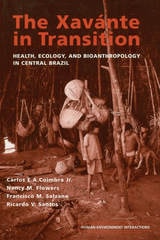
cover of The Xavante in Transition: Health, Ecology, and Bioanthropology in Central Brazil

The Xavante in Transition

Health, Ecology, and Bioanthropology in Central Brazil

Carlos E. A. Coimbra, Jr., Nancy M. Flowers, Francisco M. Salzano, and Ricardo V. Santos

University of Michigan Press, 2004

The Xavánte in Transition presents a diachronic view of the long and complex interaction between the Xavánte, an indigenous people of the Brazilian Amazon, and the surrounding nation, documenting the effects of this interaction on Xavánte health, ecology, and biology.
A powerful example of how a small-scale society, buffeted by political and economic forces at the national level and beyond, attempts to cope with changing conditions, this study will be important reading for demographers, economists, environmentalists, and public health workers.

". . . an integrated and politically informed anthropology for the new millennium. They show how the local and the regional meet on the ground and under the skin."
--Alan H. Goodman, Professor of Biological Anthropology, Hampshire College
"This volume delivers what it promises. Drawing on twenty-five years of team research, the authors combine history, ethnography and bioanthropology on the cutting edge of science in highly readable form."
--Daniel Gross, Lead Anthropologist, The World Bank
"No doubt it will serve as a model for future interdisciplinary scholarship. It promises to be highly relevant to policy formulation and implementation of health care programs among small-scale populations in Brazil and elsewhere."
--Laura R. Graham, Professor of Anthropology, University of Iowa

Carlos E. A. Coimbra Jr. is Professor of Medical Anthropology at the National School of Public Health, Rio de Janeiro.Nancy M. Flowers is Adjunct Associate Professor of Anthropology, Hunter College. Francisco M. Salzano is Emeritus Professor, Department of Genetics, Federal University of Rio Grande do Sul, Brazil. Ricardo V. Santos is Professor of Biological Anthropology at the National School of Public Health and at the National Museum IUFRJ, Rio de Janeiro.
[more]
cover of Toward a Natural Forest: The Forest Service in Transition (A Memoir)

Toward a Natural Forest

The Forest Service in Transition (A Memoir)

Jim Furnish

Oregon State University Press, 2015

Jim Furnish joined the U.S. Forest Service in 1965, enthusiastic and naive, proud to be part of such a storied and accomplished agency. Nothing could have prepared him for the crisis that would soon rock the agency to its foundation, as a burgeoning environmental movement challenged the Forest Service’s legacy and legitimacy.

The Forest Service stumbled in responding to a wave of lawsuits from environmental groups in the late 20th Century—a phenomenon best symbolized by the spotted owl controversy that shut down logging on public forests in the Pacific Northwest in the 1990s. The agency was brought to its knees, pitted between a powerful timber industry that had been having its way with the national forests for decades, and organized environmentalists who believed public lands had been abused and deserved better stewardship.

Toward a Natural Forest offers an insider’s view of this tumultuous time in the history of the Forest Service, presenting twin tales of transformation, both within the agency and within the author’s evolving environmental consciousness. While stewarding our national forests with the best of intentions, had the Forest Service diminished their natural essence and ecological values? How could one man confront the crisis while remaining loyal to his employer?

In this revealing memoir, Furnish addresses the fundamental human drive to gain sustenance from and protect the Earth, believing that we need not destroy it in the process. Drawing on the author’s personal experience and his broad professional knowledge, Toward a Natural Forest illuminates the potential of the Forest Service to provide strong leadership in global conservation efforts. Those interested in our public lands—environmentalists, natural resource professionals, academics, and historians—will find Jim Furnish’s story deeply informed, thought-provoking, and ultimately inspiring.
[more]
cover of Transition & Development in Algeria: Economic, Social and Cultural Challenges

Transition & Development in Algeria

Economic, Social and Cultural Challenges

Mohammed Saad

Intellect Books, 2013

This book deals with the economic and developmental challenges facing contemporary society. The social structures, the political institutions, the movements and ideologies, as well as cultural dilemmas, are considered in depth to give the fullest picture of the twenty-first century development.


The contributors represent a range of expertise in economics, business management, sociology, linguistics, political science and cultural studies. Their diverse backgrounds and perspectives permit this publication to explore new avenues of debate, which represent a significant contribution to the understanding of the present problems and solutions.

[more]
cover of Transition in Post-Soviet Art: The Collective Actions Group Before and After 1989

Transition in Post-Soviet Art

The Collective Actions Group Before and After 1989

Octavian Esanu

Central European University Press, 2013
The artistic tradition that emerged as a form of cultural resistance in the 1970s changed during the transition from socialism to capitalism. This volume presents the evolution of the Moscow-based conceptual artist group called Collective Actions, proposing it as a case-study for understanding the transformations that took place in Eastern European art after the fall of the Berlin Wall. Esanu introduces Moscow Conceptualism by performing a close examination of the Collective Actions group's ten-volume publication Journeys Outside the City and of the Dictionary of Moscow Conceptualism. He analyzes above all the evolution of Collective Actions through ten consecutive phases, discussing changes that occur in each new volume of the Journeys. Compares the part of the Journeys produced in the Soviet period with those volumes assembled after the dissolution of the USSR. The concept of "transition" and the activities of Soros Centers for Contemporary Art are also analyzed.
[more]
cover of Transport in Transition: The Evolution of Traditional Shipping in China

Transport in Transition

The Evolution of Traditional Shipping in China

Translated by Andrew Watson

University of Michigan Press, 1972
Water transport is a major feature of the traditional Chinese economy because of its magnitude and comparative efficiency. Yet this feature has all too often been ignored by scholars, with the notable exception of Japanese scholars. We cannot hope to gain any real conception of how the Chinese economy worked in the past, or works now, until we have a clearer picture of the circulation of men and commodities. In this circulation, water transport has been and is of crucial importance.
Transport in Transition collects and translates notable Japanese articles to throw some light on the evolution of traditional junk shipping during a key transitional phase, 1900–1940, when it was absorbing the influences of various forms of modernization and on the eve of its major organizational transformation under the direction of the Communisty Party. The articles chosen concentrate on two main themes: the institutional organization of the shipping business, and the forms of ownership and operation. They will be of value to business historians and economic sociologists generally as well as to economic historians interested in transport.
Several features of the Chinese economy are sharply illuminated. Most striking is the extent of regional variation. North and central Chinese shipping are shown to have differed both in their methods of operaiton and organization. Also noteworthy is the enduring strength of some traditional features of shipping operation and business practice. An unexpected feature of this endurance was the strength of traditional shipping in the face of steady competition from all forms of modern transport and from reputdely more efficient forms of business management.
[more]
[more]