Results by title
171 books match the query 'True Crime' and 39 start with t
Ten Percent of Nothing
The Case of the Literary Agent from HellJim Fisher
Southern Illinois University Press, 2004
Former FBI agent Jim Fisher upends the genteel racket of fee-based literary agents and vanity publishers in this searing look at the rise and fall of one bogus entrepreneur who systematically swindled thousands of would-be writers out of millions of dollars with promises of having their work turned into salable books. In divulging the details of this colossal and shocking confidence game, Ten Percent of Nothing: The Case of the Literary Agent from Hell exposes a growing and serious crime against writers and a dark, ugly secret about the American publishing industry.
In 1989, Dorothy L. Deering, possessing a high school degree, a recent embezzlement conviction, and no experience as a professional writer, editor, or publisher, began operating a fee-based literary agency out of her garage in Nicholasville, Kentucky. Over the next ten years, she racked up a fortune in reading and marketing fees, learning the business of sham publishing as she went along. Later, as the owner of a vanity press, she bilked 1.5 million dollars out of her clients, masterfully manufacturing dreams of literary success until she was brought to justice by Fisher’s investigative journalism, an FBI probe, and the retaliation and testimonies of numerous victims.
Deering never sold a single manuscript to a major publisher. With the money in her pocket and her clients’ hopes and hard work wrapped up in fraudulent contracts, Deering produced a few copies of four cheaply printed, poorly edited paperbacks. These she used as bait to hoodwink more clients. She was abetted by her husband, Charles, a former car salesman; his son, Daniel, a drug user with a ninth-grade education; and her brother, Bill, a fugitive from the law at the time he headed her vanity press.
By successfully impersonating a literary agent for ten years, Deering operated one of the longest-running confidence games in American history. The financial loss for her clients was devastating, and the heartbreak was extreme. Drawing on victims’ experiences and documents recovered from the Deering venture, Fisher shows how Deering engineered and executed her scam, emphasizing the warning signs of sham agents, crook book doctors, and mendacious publishers.
Ten Percent of Nothing provides essential information for aspiring writers and publishing professionals. Fisher’s findings also prompt new inquiries into the potential licensing of literary agents and the prosecution of interstate scam artists. The volume’s gallery of illustrations includes reproductions of correspondence, newsletters, and advertisements used by the Deering operation.
Texas Monthly On . . .
Texas True CrimeFrom the editors of Texas Monthly
University of Texas Press, 2007
Since 1973, one magazine has covered crime in Texas like no one else, delving deep into stories that may turn your stomach—but won't let you turn away. Texas Monthly On... Texas True Crime is a high-speed read around Texas, chasing criminals from the Panhandle to the Piney Woods, through gated mansions and trailer parks, from 1938 to the twenty-first century. The stories, which originally appeared as articles in the magazine, come from some of its most notable writers: Cecilia Ballí investigates the drug-fueled violence of the border; Pamela Colloff reports on Amarillo's lethal feud between jocks and punks; Michael Hall re-visits the legend of Joe Ball, a saloon owner who allegedly fed his waitresses to pet alligators; Skip Hollandsworth uncovers the computer nerd who became Dallas' most notorious jewel thief; and Katy Vine tracks a pair of teenage lesbians inspired by Thelma and Louise.
Texas Monthly On... Texas True Crime is the second in a series of books in which the editors of Texas Monthly offer the magazine's inimitable perspective on various aspects of Texas culture, including food, politics, travel, and music, among other topics. Texas Monthly On... Texas Women was released in 2006.

The "Counterfeit" Man
The True Story of the Boorn-Colvin Murder CaseGerald W. McFarland
University of Massachusetts Press, 1993
The Atlanta Youth Murders and the Politics of Race
Bernard Headley
Southern Illinois University Press, 1998
At least twenty-nine black children and young adults were murdered by an Atlanta serial killer between the summer of 1979 and the spring of 1981. Drawing national media attention, the “Atlanta tragedy,” as it became known, was immediately labeled a hate crime. However, when a young black man was arrested and convicted for the killings, public attention quickly shifted. Noted criminologist Bernard Headley was in Atlanta as the tragedy unfolded and provides here a thoughtful exploration of the social and political implications of the case both locally and nationally. Focusing on a singular historical event, Headley exposes broader tensions of race and class in contemporary America.
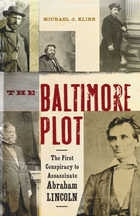
The Baltimore Plot
The First Conspiracy to Assassinate Abraham LincolnMichael J. Kline
Westholme Publishing, 2008
The Complete Story of the First Attempt to Assassinate President Abraham Lincoln
"In a thrilling detective story of conspiracy, treachery and assassination, Michael J. Kline suggests how close the Baltimore plotters came to achieving their goal, and reveals how Lincoln and a few guards outwitted them. Meticulously researched and written with verve, "The Baltimore Plot" takes readers aboard Lincoln's inaugural train for a perilous and unforgettable journey." —James L. Swanson, author of the Edgar Award-winning New York Times bestseller Manhunt: The 12-Day Chase for Lincoln's Killer
On February 11, 1861, the "Lincoln Special" - Abraham Lincoln's private train—began its journey from Springfield, Illinois, to the City of Washington, carrying the president-elect to his inauguration as the sixteenth president of the United States. Considered a "sectional candidate" by the South, and winning the election without the popular vote, Lincoln was so despised that seven states immediately seceded from the Union. Over the next twelve days, Lincoln would speak at numerous stops, including Indianapolis, Columbus, Cleveland, Pittsburgh, Buffalo, Albany, New York, and Philadelphia, expressing his desire to maintain the Union. But as Lincoln made his way east, America's first private detective, Allan Pinkerton, and a separate undercover operation by New York City detectives, uncovered startling evidence of a conspiracy to assassinate Lincoln during his next-to-last stop in Baltimore. Long a site of civil unrest—even Robert E. Lee's father, Henry "Light Horse Harry" Lee, was nearly beaten to death in its streets—Baltimore provided the perfect environment for a strike. The largest city of a border state with secessionist sympathies, Baltimore had been infiltrated by paramilitary groups bent on killing Lincoln, the "Black Republican." The death of the president-elect would, it was supposed, throw the nation into chaos and allow the South to establish a new nation and claim Washington as its capital. Warned in time, Lincoln outfoxed the alleged conspirators by slipping through Baltimore undetected, but at a steep price. Ridiculed by the press for "cowardice" and the fact that no conspirators were charged, Lincoln would never hide from the public again. Four years later, when he sat unprotected in the balcony of Ford's Theatre, the string of conspiracies against his life finally succeeded. One of the great presidential mysteries and long a source of fascination among Lincoln scholars, the Baltimore Plot has never been fully investigated until now. In The Baltimore Plot: The First Conspiracy to Assassinate Abraham Lincoln, Michael J. Kline turns his legal expertise to evaluating primary sources in order to discover the extent of the conspiracy and culpability of the many suspects surrounding the case. Full of memorable characters, including Kate Warne, the first female undercover agent, and intriguing plot twists, the story is written as an unfolding criminal proceeding in which the author allows the reader to determine whether there was a true plot to kill Lincoln and if the perpetrators could have been brought to trial.
The Business of Crime
Italians and Syndicate Crime in the United StatesHumbert S. Nelli
University of Chicago Press, 1981
"A definitive history of organized crime in America."—American Historical Review
The Case That Never Dies
The Lindbergh KidnappingLloyd C. Gardner
Rutgers University Press, 2012
Winner of the 2004 New Jersey Studies Academic Alliance Book Award for Scholarly Non-Fiction | Named a 2005 Honor Book by the New Jersey Council for the Humanities
Essential reading for anyone interested in the most famous American crime of the twentieth century
Since its original publication in 2004, The Case That Never Dies has become the standard account of the Lindbergh kidnapping. Now, in a new afterword, historian Lloyd C. Gardner presents a surprise conclusion based on recently uncovered pieces of evidence that were missing from the initial investigation as well as an evaluation of Charles Lindbergh’s role in the search for the kidnappers. Out of the controversies surrounding the actions of Colonel Lindbergh, Norman Schwarzkopf, commander of the New Jersey State Police, and FBI director J. Edgar Hoover, Gardner presents a well-reasoned argument for what happened on the night of March 1, 1932.
The Case That NeverDies places the Lindbergh kidnapping, investigation, and trial in the context of the Depression, when many feared the country was on the edge of anarchy. Gardner delves deeply into the aspects of the case that remain confusing to this day, including Lindbergh’s dealings with crime baron Owney Madden, Al Capone’s New York counterpart, as well as the inexplicable exploits of John Condon, a retired schoolteacher who became the prosecution’s best witness. The initial investigation was hampered by Colonel Lindbergh, who insisted that the police not attempt to find the perpetrator because he feared the investigation would endanger his son’s life. He relented only when the child was found dead.
After two years of fruitless searching, Bruno Richard Hauptmann, a German immigrant, was discovered to have some of the ransom money in his possession. Hauptmann was arrested, tried, and sentenced to death. Throughout the book, Gardner pays special attention to the evidence of the case and how it was used and misused in the trial. Whether Hauptmann was guilty or not, Gardner concludes that there was insufficient evidence to convict him of first-degree murder.
Set in historical context, the book offers not only a compelling read, but a powerful vantage point from which to observe the United States in the 1930s as well as contemporary arguments over capital punishment.
The Central Intelligence Agency
History and DocumentsWilliam M. Leary
University of Alabama Press, 1984
In late 1974 the U.S. Senate Select Committee on the CIA, headed by Frank Church of Idaho, began collecting documents and materials to buttress the committee hearings on the CIA’s role and activities that were to begin in the fall of 1975. Among the materials prepared for the Church Committee is History of the Central Intelligence Agency, which was written by committee staff member Anne Karalekas.
This book reproduces the History, with an introduction by Leary that establishes the historical framework for the Church Committee hearings, and also includes ten relevant documents covering events from 1944 to 1981.

The Cold Dark Basement
True Stories of Animal Rescues and InterventionsJodi LeBombard
Parkhurst Brothers, Inc., 2024
The Combat Zone
Murder, Race, and Boston's Struggle for JusticeJan Brogan
University of Massachusetts Press, 2021
At the end of the 1976 football season, more than forty Harvard athletes went to Boston's Combat Zone to celebrate. In the city's adult entertainment district, drugs and prostitution ran rampant, violent crime was commonplace, and corrupt police turned the other way. At the end of the night, Italian American star athlete Andy Puopolo, raised in the city's North End, was murdered in a stabbing. Three African American men were accused of the crime. His murder made national news and led to the eventual demise of the city's red-light district.
Starting with this brutal murder, The Combat Zone tells the story of the Puopolo family's struggle with both a devastating loss and a criminal justice system that produced two trials with opposing verdicts, all within the context of a racially divided Boston. Brogan traces the contentious relationship between Boston’s segregated neighborhoods during the busing crisis; shines a light on a court system that allowed lawyers to strike potential jurors based purely on their racial or ethnic identity; and lays bare the deep-seated corruption within the police department and throughout the Combat Zone. What emerges is a fascinating snapshot of the city at a transitional moment in its recent past.
The Courtship of Eva Eldridge
A Story of Bigamy in the Marriage Mad FiftiesDiane Simmons
University of Iowa Press, 2016
Everyone got married in the 1950s, then moved to the suburbs to have the children of the soon-to-be-famous baby boom. For Americans who had survived the Great Depression and World War II, prosperous married life was a triumph. The unwed were objects of pity, scorn, even suspicion. And so in the 1950s, Eva Eldridge, no longer so young and marginally employed, was the perfect target for handsome Vick, who promised everything: storybook romance, marital respectability, and the lively social life she loved. When he disappeared not long after their honeymoon, she was devastated.
Eva hadn’t always been so vulnerable. Growing up pretty and popular in rural Oregon, she expected to marry young and live a life much like that of her parents, farming and rearing children. But then the United States threw its weight into World War II and as men headed to battle, the government started recruiting women to work in their places. Eva, like many other young women, found that life in the city with plenty of money, personal freedom, and lots of soldiers and sailors eager to pay court was more exhilarating than life down on the farm. After the war, she was ambivalent about getting married and settling down—at least until Vick arrived.
Refusing to believe her brand-new husband had abandoned her, Eva set about tracking down a man who, she now believed, was more damaged by wartime trauma than she had known. But instead of a wounded hero, she found a long string of women much like herself—hard-working, intelligent women who had loved and married Vick and now had no idea where—or even who—he was.
Drawing on a trove of some eight hundred letters and papers, Diane Simmons tells the story of Eva’s poignant struggle to get her dream husband back, as well as the stories of the women who had stood at the altar with Vick before and after her. Eva’s remarkable life illuminates women’s struggle for happiness at a time when marriage—and the perfect husband—meant everything.
The End of American Lynching
Ashraf H. A. Rushdy
Rutgers University Press, 2012
The End of American Lynching questions how we think about the dynamics of lynching, what lynchings mean to the society in which they occur, how lynching is defined, and the circumstances that lead to lynching. Ashraf H. A. Rushdy looks at three lynchings over the course of the twentieth century—one in Coatesville, Pennsylvania, in 1911, one in Marion, Indiana, in 1930, and one in Jasper, Texas, in 1998—to see how Americans developed two distinct ways of thinking and talking about this act before and after the 1930s.
One way takes seriously the legal and moral concept of complicity as a way to understand the dynamics of a lynching; this way of thinking can give us new perceptions into the meaning of mobs and the lynching photographs in which we find them. Another way, which developed in the 1940s and continues to influence us today, uses a strategy of denial to claim that lynchings have ended. Rushdy examines how the denial of lynching emerged and developed, providing insight into how and why we talk about lynching the way we do at the dawn of the twenty-first century. In doing so, he forces us to confront our responsibilities as American citizens and as human beings.
The Gambler King of Clark Street
Michael C. McDonald and the Rise of Chicago's Democratic MachineRichard C. Lindberg with a Foreword by John Miya.
Southern Illinois University Press, 2009
The Gambler King of Clark Street tells the story of a larger-than-life figure who fused Chicago’s criminal underworld with the city’s political and commercial spheres to create an urban machine built on graft, bribery, and intimidation. Lindberg vividly paints the life of the Democratic kingmaker against the wider backdrop of nineteenth-century Chicago crime and politics.
McDonald has long been cited in the published work of city historians, members of academia, and the press as the principal architect of a unified criminal enterprise that reached into the corridors of power in Chicago, Cook County, the state of Illinois, and ultimately the Oval Office. The Gambler King of Clark Street is both a major addition to Chicago’s historical literature and a revealing biography of a powerful and troubled man.
Illinois State Historical Society Scholarly Award, Certificate of Excellence, 2009
Society of Midland Authors Biography Award, 2009
The Ghosts of Hopewell
Setting the Record Straight in the Lindberg CaseJim Fisher
Southern Illinois University Press, 2006
In this illustrated examination of the Lindbergh kidnapping case, Jim Fisher seeks to set the record straight regarding Bruno Hauptmann's guilt in "the crime of the century."
In February 1935, following a sensational, six-week trial, a jury in Flemington, New Jersey, found German carpenter Hauptmann guilty of kidnapping and murdering the twenty-month-old son of Charles and Anne Lindbergh. Although circumstantial, the evidence against Hauptmann—the handwriting on the ransom notes, the homemade kidnapping ladder, Colonel Lindbergh's money found in his garage, his matching the description of the man who accepted the ransom payoff in the Bronx cemetery, his inability to prove an alibi, and his incredible explanation of his possession of the ransom money—was overwhelming, leaving few to doubt his guilt. After a series of appeals and stays, Hauptmann died fourteen months later in the electric chair. A confession would have spared him the death sentence, but Hauptmann chose to die maintaining his innocence.
It was not until the mid-1970s that revisionists began to challenge the conventional wisdom in the case: that Hauptmann was the lone killer. Revisionist books and articles appeared, as did plays, TV shows, and a movie, all portraying Hauptmann as the victim of a massive police and prosecution frame-up.
At this point, the focus shifted from the evidence to the conduct of the police. By the 1980s, most people familiar with the case were convinced of Hauptmann's complete innocence. Many denied the murder, believing that the Lindbergh baby remained alive. Several men claimed to be the firstborn son of Charles and Anne Lindbergh, one of whom sued to claim his share of the Lindbergh estate after Charles Lindbergh's death in 1974.
Another group held that the kidnapping was an elaborate hoax to cover up the murder of the baby by his parents. Anna Hauptmann¹s series of federal lawsuits against New Jersey and others in the mid-1980s fueled further interest in the case. Although Hauptmann's widow lost all of her lawsuits, she had won the hearts and minds of the American people before her death at the age of ninety-four.
Former FBI agent Fisher discusses the hard evidence, such as the ransom notes and the wood of the kidnapping ladder. He analyzes and debunks the various revisionist theories and presents new evidence that, coupled with the undisputed facts, prove beyond a reasonable doubt that Hauptmann was guilty as charged: he kidnapped and murdered the infant son of Charles and Anne Lindbergh.
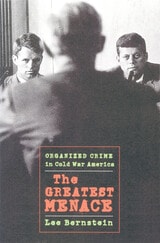
The Greatest Menace
Organized Crime in Cold War AmericaLee Bernstein
University of Massachusetts Press, 2002
The term Cold War has long been associated with the “red menace” of communism at home and abroad. Yet as Lee Bernstein shows in this illuminating study, during the 1950s the threat posed by organized crime preoccupied Americans at least as much as the fear of communist subversion. At the beginning of the decade, the televised hearings of Senator Estes Kefauver's crime committee, focusing on colorful mob figures such as Lucky Luciano and Frank Costello, attracted far more attention than the spy trial of Julius and Ethel Rosenberg. In the years that followed, public concern about gangsters and racketeering continued unabated, even after the anticommunist fever of McCarthyism had begun to subside.
Drawing on a broad range of evidence, from government records to films, television shows, and pulp novels, Bernstein explains how the campaign against organized crime, like the crusade against communism, reflected deep social and political anxieties. Just as the inquisitions of Senator McCarthy fed on popular fears of international conspiracy and alien infiltration, the anticrime investigations of the 1950s raised the specter of a foreign-based criminal cartel—the Sicilian Mafia— preying on a vulnerable American public. In both cases, the association of the foreign-born with criminal or un-American activity led to the creation of state and local citizens committees and to calls for new restrictions on immigration. Labor unions also came under attack, particularly after the McClellan Committee and its chief counsel, Robert F. Kennedy, claimed to have found a link between the International Brotherhood of Teamsters, led by Jimmy Hoffa, and the Mafia.
As Bernstein points out, despite significant changes in the way organized crime actually operated, and despite repeated protests from Italian Americans, the popular image of the sinister gangster persisted, because it served a more profound need. In an era marked by widespread uncertainty and rapid social change, the fight against a common enemy, real or imagined, helped forge a Cold War consensus across shifting lines of race, class, and ethnicity by redefining what it meant to be an American.
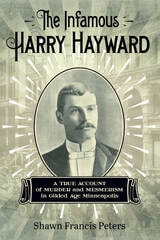
The Infamous Harry Hayward
A True Account of Murder and Mesmerism in Gilded Age MinneapolisShawn Francis Peters
University of Minnesota Press, 2018
A fascinating tale of seduction, murder, fraud, coercion—and the trial of the “Minneapolis Monster”
On a winter night in 1894, a young woman’s body was found in the middle of a road near Lake Calhoun on the outskirts of Minneapolis. She had been shot through the head. The murder of Kittie Ging, a twenty-nine-year-old dressmaker, was the final act in a melodrama of seduction and betrayal, petty crimes and monstrous deeds that would obsess reporters and their readers across the nation when the man who likely arranged her killing came to trial the following spring. Shawn Francis Peters unravels that sordid, spellbinding story in his account of the trial of Harry Hayward, a serial seducer and schemer whom some deemed a “Svengali,” others a “Machiavelli,” and others a “lunatic” and “man without a soul.”
Dubbed “one of the greatest criminals the world has ever seen” by the famed detective William Pinkerton, Harry Hayward was an inveterate and cunning plotter of crimes large and small, dabbling in arson, insurance fraud, counterfeiting, and illegal gambling. His life story, told in full for the first time here, takes us into shadowy corners of the nineteenth century, including mesmerism, psychopathy, spiritualism, yellow journalism, and capital punishment. From the horrible fate of an independent young businesswoman who challenged Victorian mores to the shocking confession of Hayward on the eve of his execution (which, if true, would have made him a serial killer), The Infamous Harry Hayward unfolds a transfixing tale of one of the most notorious criminals in America during the Gilded Age.
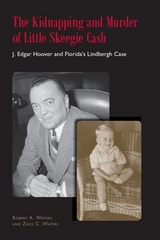
The Kidnapping and Murder of Little Skeegie Cash
J. Edgar Hoover and Florida's Lindbergh CaseRobert Alvin Waters
University of Alabama Press, 2014
In his long and storied career, J. Edgar Hoover investigated only one case personally, the 1938 kidnapping and murder of five-year-old Floridian James “Skeegie” Cash. What prompted the director himself to fly from Washington, DC, to a rain-drenched hamlet on the edge of the Everglades? Congress had slashed FBI funding, forcing Hoover to lay off half his agents. The combative Hoover believed if he could bring Skeegie’s killer to justice, the halo of positive publicity would revive the fortunes of the embattled FBI.
In The Kidnapping and Murder of Little Skeegie Cash, Robert A. Waters and Zack C. Waters bring to life the drama of the abduction, the payment of a $10,000 ransom, the heartbreaking manhunt for Skeegie and his kidnapper, the arrest and confession of Franklin Pierce McCall, and the killer’s trial and execution. Hordes of reporters swarmed into the little village south of Miami, and for thirteen days until McCall confessed, the case dominated national headlines. The authors capture the drama and the detail as well as the desperate and sometimes extralegal lengths to which Hoover went to crack the case.
Using the Freedom of Information Act, the authors obtained more than four thousand pages of FBI files and court documents to reconstruct this important but forgotten case. The tragedy that played out in the swamps of Dade County constituted the backdrop for a political struggle that would involve J. Edgar Hoover, the United States Congress, and even president Franklin Delano Roosevelt. Hoover and the president prevailed, and within two years the FBI grew from 680 employees to more than 14,000. No books and few articles have been published about this historic case.
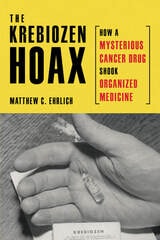
The Krebiozen Hoax
How a Mysterious Cancer Drug Shook Organized MedicineMatthew C. Ehrlich
University of Illinois Press, 2024
The brainchild of an obscure Yugoslav physician, Krebiozen emerged in 1951 as an alleged cancer treatment. Andrew Ivy, a University of Illinois vice president and a famed physiologist dubbed “the conscience of U.S. science,” wholeheartedly embraced Krebiozen. Ivy’s impeccable credentials and reputation made the treatment seem like another midcentury medical miracle. But after years of controversy, the improbable saga ended with Krebiozen proved a sham, its inventor fleeing the country, and Ivy’s reputation and legacy in ruins.
Matthew C. Ehrlich’s history of Krebiozen tells a quintessential story of quackery. Though most experts dismissed the treatment, it found passionate public support not only among cancer patients but also people in good health. The treatment’s rise and fall took place against the backdrop of America’s never-ending suspicion of educational, scientific, and medical expertise. In addition, Ehrlich examines why people readily believe misinformation and struggle to maintain hope in the face of grave threats to well-being.
A dramatic account of fraud and misplaced trust, The Krebiozen Hoax shines a light on a forgotten medical scandal and its all-too-familiar relevance in the twenty-first century.
The Labor Day Ghost
A Murder, Its Cover-Up, and the Long Road to JusticeCarol Dawson
University of Texas Press, 0
In Corsicana, Texas, Shelley Watkins, the charismatic young wife of Jerry Mack Watkins, disappeared on Labor Day, 1993; her body, tied and taped in plastic and chained to concrete blocks, was found in the Trinity River eight days later. Although a wealth of circumstantial evidence pointed toward Jerry Mack, corruption and its legacy have kept the investigation and legal proceedings in limbo for decades. Now, as DNA evidence offers hope for a long-overdue resolution, author Carol Dawson chronicles both one woman’s tragic story and the history of violence in small-town Texas.
Beginning with Shelley’s life before she arrived in Corsicana, Dawson reveals how her death perpetuates a Gothic history of crime within the town—including a devastating number of murdered women. She also delves into the closed culture of financial control and how the Watkins family became one of the town’s wealthiest, and pulls new details from the witnesses, cops, and prosecutors connected with a case that has haunted her for thirty years. Rooted in the complex history of author Carol Dawson’s hometown, and framed by her family connections to the case, The Labor Day Ghost delivers an arresting narrative that traces the way this tragedy has continued to split Corsicana’s citizenry during the long deferral of justice.
The Lives and Times of Bonnie & Clyde
E. R. Milner
Southern Illinois University Press, 2003
Although the mythology surrounding Bonnie and Clyde is charged with drama and fascination, Milner reveals the truth behind the bloody legend, carefully gleaning materials from obscure locally published accounts, previously untapped court records, and archived but unpublished oral history accounts from some sixty victims, neighbors, relatives, and police who were involved in the exploits of the infamous duo. And the truth proves to be sufficiently exciting. Romance aside, the Barrow gang carved a grisly swath through Texas, Arkansas, Oklahoma, and Missouri. The string of deaths was long— and real: Akota, Oklahoma, sheriff severely wounded, deputy killed; Sherman, Texas, grocery clerk killed; Temple, Texas, man killed as gang attempts to steal his car; Joplin, Missouri, two officers killed; Alma, Arkansas, police officer killed; Crockette, Texas, prison guard killed; Miami, Oklahoma, police officer killed.
Milner traces this violent path until 23 May 1934, when Bonnie and Clyde die in an ambush. Even dead, they draw crowds and are buried in a circus-like atmosphere. In death they continue to intrigue us in ways few criminals had before or have since.
The Lost Cause
The Trials of Frank and Jesse JamesJames P. Muehlberger
Westholme Publishing, 2013
On a dreary December 7, 1869, two strangers entered the Daviess County Savings and Loan in Gallatin, Missouri. One of the men asked the cashier for change and then unexpectedly raised a revolver and shot him at point-blank range. Until now, this crime has been considered the first of a string of bank and train robberies committed by Jesse James, his brother Frank, and other gang members. But a story has circulated for more than a century that the case was actually brought to trial by a young Missouri lawyer—and it was through this case that twenty-two-year-old Jesse was first identified as a criminal to the country. But until recently no evidence for such an action could be found. After years of painstaking searches through dusty court archives across Missouri, defense attorney James P. Muehlberger finally discovered the historic documents in 2007. These fascinating and important records reveal that the gunmen were forced to leave behind a magnificent thoroughbred that linked James to the murder and, more intriguing, that the attack was not a bank robbery at all, but a calculated assassination in retribution for a Civil War killing.
The Lost Cause: The Trials of Frank and Jesse James is a thoroughly researched, thrilling account of the rise, pursuit, and prosecution of the legendary outlaw gang. Beginning with the newfound evidence of the Gallatin bank teller murder, the author explains how Jesse James attempted to avenge the death of his Confederate partisan leader, “Bloody Bill” Anderson, but shot the wrong man. Having lost his thoroughbred, Jesse stole another horse. Newly minted lawyer Henry McDougal brashly sued Jesse and Frank James for the loss of property, which would hang the murder on their heads. While Jesse professed his innocence and remained at large, his case was taken up by John Newman Edwards, editor of the Kansas City Times. Through Edwards’s pen, the James brothers were transformed from petty criminals to noble outlaws still fighting for Southern honor—the “Lost Cause.” Not fooled by Edwards’s rhetoric and populist appeal, McDougal and others, including Pinkerton detectives and the governor of Missouri, led a behind-the-scenes fight to bring down the gang. As the author explains, they first prosecuted lesser gang members, and by infiltrating the group, the authorities slowly unraveled the gang, with Jesse being shot by a paid informant in 1882. Frank James gave himself up, and in what was called the “trial of the century,” he was exonerated on all charges and retired to become a notable horse racing official until his death in 1915. Combining true crime, western adventure, and the transformation of America into a modern nation, The Lost Cause is engaging, entertaining history.
The Michigan Murders
Edward Keyes
University of Michigan Press, 2010
"True crime devotees won't want to miss this one!"
---Publishers Weekly
"Very engrossing . . . in the finest you can't put it down tradition."
---Hartford Courant
"This factual account of each murder, through the conviction of the killer, has all the excitement of a first-rate work of fiction, and is told straight, without the usual sociological jargon. Keyes collaborated with Robin Moore on The French Connection; The Michigan Murders is his first solo effort, and it is a good one."
---Miami Herald
"The Michigan Murders is the ultimate True Crime classic, unfolding like great mystery fiction while still delivering the powerful charge of real life."
---Jamie Agnew, Aunt Agatha's Mystery Bookshop
With a new prologue by Mardi Link and a new epilogue by Laura James
The true story of the savage coed killings---by the boy who could have lived next door!
Southeastern Michigan was rocked in the late 1960s by the terrifying serial murders of young women, whose bodies were dumped in Ann Arbor and Ypsilanti. In each case, few clues were left at the scene, and six separate police agencies were unable to end the horror. Then, almost by accident, a break came. The suspect: John Norman Collins, a young, quiet, all-American boy.
Collins was caught, went to trial, and, on August 19, 1970, was found guilty and sentenced to life imprisonment with no possibility of parole. He is now in his sixties and is serving his sentence in Marquette, Michigan.
Collins was one of the first serial killers exposed in the region, and his crimes had many in the area locking their doors for the first time. Edward Keyes's harrowing The Michigan Murders covers every step of the case. It fell out of print for more than a decade before being revived for this special edition.
Mardi Link, author of the new prologue, is the author of two regionally best-selling true crime books based in northern Michigan, When Evil Came to Good Hart and Isadore's Secret.
Laura James, author of the new epilogue, is a trial lawyer, crime historian, and true crime author who blogs about the true crime genre at her Web site CLEWS (www.laurajames.com).
Edward Keyes, now deceased, spent several years in the early 1970s investigating the Michigan murders. He also authored the works Double Dare and Cocoanut Grove. The Michigan Murders was a finalist for the Edgar Allan Poe Award for Best Fact Crime in 1977.
The Montesi Scandal
The Death of Wilma Montesi and the Birth of the Paparazzi in Fellini's RomeKaren Pinkus
University of Chicago Press, 2003
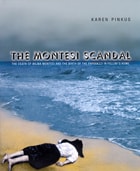
How this news item of everyday life exploded into one of the greatest scandals of a modern democracy is the story Karen Pinkus tells in The Montesi Scandal. Wilma's death brought to the surface every simmering element of Italian culture: bitter aspiring actresses, corrupt politicians, nervous Jesuits in sunglasses, jaded princes. Italians of all types lined up to testify-in court or to journalists of varying legitimacy-about the death of the middle-class carpenter's daughter, in the process creating a media frenzy and the modern culture of celebrity. Witnesses sold their stories to the tabloids, only to retract them. They posed for pictures, pretending to shun the spotlight. And they in turn became celebrities in their own right.
Pinkus takes us through the alleys and entryways of Rome in the 1950s, linking Wilma's death to the beginnings of the dolce vita, now synonymous with modern Roman life. Pinkus follows the first paparazzi on their scooters as they shoot the protagonists and gives us an insider's view of the stories and trials that came to surround this lonely figure that washed up on the shores of Ostia. Full of the magnificent paparazzi photos of the protagonists in the drama and film stills from the era's landmark movies, The Montesi Scandal joins true crime with "high" culture in an original form, one true to both the period and the cinematic conception of life it created. More than a meditation of the intricate ties among movies, paparazzo photography, and Italian culture, The Montesi Scandal narrates Wilma's story and its characters as the notes for an unrealized film, but one that, as the reader discovers, seems impossible to produce.
The Notorious Edward Low
Pursuing the Last Great Villain of Piracy's Golden AgeLen Travers
Westholme Publishing, 2025
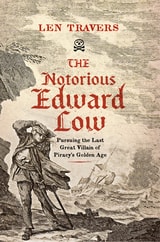
In The Notorious Edward Low: Pursuing the Last Great Villain of Piracy’s Golden Age, historian Len Travers reexamines this critical period through the career of Low, a complicated pirate leader, and his nemesis, Peter Solgard, captain of the Royal Navy warship HMS Greyhound. By the time Solgard, aboard Greyhound, was tracking Low in 1723, the era’s other notable pirates were gone—dead, captured, or disappeared. Drawing on previously unpublished Admiralty records and consulting both contemporary and modern chroniclers, Travers directs readers to much powerful testimony minimized in or excluded from histories of piracy’s “Golden Age,” leveling a critical eye at familiar sources too long accepted at face value. Travers demonstrates that, feared as they certainly were, pirates were largely ordinary seamen trapped in desperate circumstances who, in the end, had little to show for their efforts. Contrary to popular portrayals, for pirates the second decade of the eighteenth century was a time of radically diminishing returns, scant treasure, buried or otherwise, and increasingly successful suppression by state authorities. One by one, safe havens shut out the sea-rovers, who with their depredations in America quickly squandered the sympathy and support they had once enjoyed among common folk. The Notorious Edward Low puts individual actors, from colonial governors to captains to common seamen, at center stage, and reveals how British authorities used new anti-piracy laws to reclaim a measure of authority over their fractious North American colonies—a compelling and meaningful story with its own brand of true-life swashbuckling on the high seas.
The Outlaws of Cave-in-Rock
Otto A. Rothert. Foreword by Robert Clark
Southern Illinois University Press, 1996
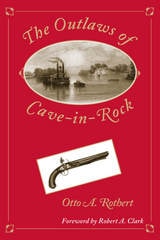
Exceptionally rare and valued by book collectors, Otto A. Rothert’s riveting saga of the outlaws and scoundrels of Cave-in-Rock chronicles the adventures of an audacious cast of river pirates and highwaymen who operated in and around the famous Ohio River cavern from 1795 through 1820 (adventures featured in Disney’s Davy Crockett and the film How the West Was Won). Once sporting the enticing sign "Liquor Vault and House for Entertainment," this beautiful cavern location decoyed the unsuspecting by offering a venue for food, drink, and rest.
Compellingly lively, The Outlaws of Cave-in-Rock is nonetheless the work of a scholar, a historian who documents his findings and leaves a detailed bibliographical trail. Presenting many eyewitness accounts, Rothert supplies the lore and legend of the colorful villains of Cave-in-Rock. Always maintaining the difference between stories he tells with historical authority and those that are pure speculation, Rothert provides both a fascinating narrative and a valuable regional history.
The Plea
The True Story of Young Wesley Elkins and His Struggle for RedemptionPatricia L. Bryan
University of Iowa Press, 2022
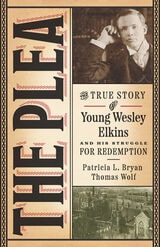
On a moonlit night in 1889, Iowa farmer John Elkins and his young wife, Hattie, were brutally murdered in their bed. Eight days later, their son, eleven-year-old Wesley Elkins, was arrested and charged with murder. The community reeled with shock by both the gruesome details of the homicides and the knowledge of the accused perpetrator—a small, quiet boy weighing just 75 pounds.
Accessible and fast-moving, The Plea delivers a complete, complex, and nuanced narrative of this horrific crime, while shedding light on the legal, social, and political environment of Iowa and the country in the late 1800s and early 1900s.
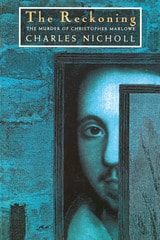
The Reckoning
The Murder of Christopher MarloweCharles Nicholl
University of Chicago Press, 1995
Here, in a tour de force of scholarship and ingenuity, Charles Nicholl penetrates four centuries of obscurity to reveal not only a complex and unsettling story of entrapment and betrayal, chimerical plot and sordid felonies, but also a fascinating vision of the underside of the Elizabethan world.
"Provides the sheer enjoyment of fiction, and might just be true."—Michael Kenney, Boston Globe
"Mr. Nicholl's glittering reconstruction of Marlowe's murder is only one of the many fascinating aspects of this book. Indeed, The Reckoning is equally compelling for its masterly evocation of a vanished world, a world of Elizabethan scholars, poets, con men, alchemists and spies, a world of Machiavellian malice, intrigue and dissent."—Michiko Kakutani, New York Times
"The rich substance of the book is his detail, the thick texture of betrayal and evasion which was Marlowe's life."—Thomas Flanagan, Washington Post Book World
Winner of the Crime Writer's Gold Dagger Award for Nonfiction Thriller
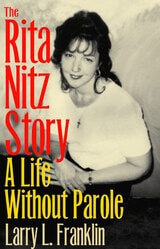
The Rita Nitz Story
Larry L. Franklin
Southern Illinois University Press, 2005
The April 1988 murder and decapitation of twenty-three-year-old Michael Miley in rural southern Illinois horrified and enraged local residents and law enforcement officials, some of whom suspected the homicide was a hate crime. The Rita Nitz Story: A Life Without Parole is an in-depth personal investigation into Miley’s murder, for which Rita Nitz was convicted as an accomplice to life in prison. Born in 1959, Rita was thirty when she was sentenced in 1989. Her husband, Richard Nitz, was convicted of the murder. Detailing the crime and its aftermath, Larry L. Franklin uncovers a disturbing set of facts that illuminate a possible miscarriage of justice.
Was Rita Nitz involved in the murder of Michael Miley? Franklin doesn’t purport her guilt or her innocence but instead details the plight of a troubled woman who was a victim of sexual abuse and domestic violence at the hands of family members and spouses and who may also have been a victim of inadequate legal representation and a judicial system more interested in delivering the maximal punishment than in serving justice. Consulting with experts in prosecutorial conduct, jury psychology, and forensic evidence, Franklin discovered details that were withheld from the jury and the public during the trial in 1989. He also suggests other theories and names possible perpetrators involved in the murder that further imply shoddy police work and a tainted criminal investigation.
Drawing on numerous conversations with Rita at the Dwight Correctional Center in Illinois, Franklin divulges the story of Rita’s tumultuous youth and her three problematic marriages. He shows her to be a battered woman who didn’t fully understand the circumstances and behavior that led to her being implicated in such a hideous crime and who lacked the financial resources and emotional strength to navigate the legal tangle that entrapped her.
Franklin also points out the disparity in justice between Rita and Richard, who is up for parole in less than twenty years, while Rita remains sentenced to life without parole. In attempting to reach the truth about Miley’s murder, Franklin highlights abuses in the Illinois correctional system and disparities between the treatment of male and female convicts, sketching a blueprint that could improve law enforcement and justice in rural Illinois.
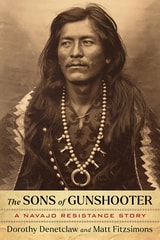
The Sons of Gunshooter
A Navajo Resistance StoryDorothy Denetclaw and Matt Fitzsimons
University of Arizona Press, 2026
In 1919, the brother of one of the West’s most famous Indian traders was shot to death in a remote corner of the Navajo Nation.
Part history, part true crime, The Sons of Gunshooter reexamines the killing and subsequent murder trial, while simultaneously embedding the story in a much larger saga of colonization and resistance. The result is a book that’s sweeping in its scope and surgical in its approach. Rewinding the clock to 1868, the authors follow the intertwining paths of two families to offer a riveting, deeply personal account that has been hailed as “a new way of doing historiography.”
One of the authors is a descendant of participants in the case; the other is an investigative journalist. By merging Diné oral traditions with archival evidence, they succeed in upending one false narrative after another.
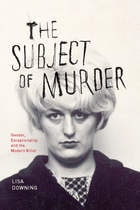
The Subject of Murder
Gender, Exceptionality, and the Modern KillerLisa Downing
University of Chicago Press, 2013
The Topography of Violence in the Greco-Roman World
Werner Riess and Garrett G. Fagan, editors
University of Michigan Press, 2016
The contributors to The Topography of Violence in the Greco-Roman World take on a task not yet addressed in classical scholarship: they examine how topography shaped the perception and interpretation of violence in Greek and Roman antiquity. After an introduction explaining the “spatial turn” in the theoretical study of violence, “paired” chapters review political assassination, the battlefield, violence against women and slaves, and violence at Greek and Roman dinner parties. No other book either adopts the spatial theoretical framework or pairs the examination of different classes of violence in classical antiquity in this way.
Both undergraduate and graduate students of classics, history, and political science will benefit from the collection, as will specialists in those disciplines. The papers are original and stimulating, and they are accessible to the educated general reader with some grounding in classical history.
The Wagon and Other Stories from the City
Martin Preib
University of Chicago Press, 2010
Martin Preib is an officer in the Chicago Police Department—a beat cop whose first assignment as a rookie policeman was working on the wagon that picks up the dead. Inspired by Preib’s daily life on the job, The Wagon and Other Stories from the City chronicles the outer and inner lives of both a Chicago cop and the city itself.
The book follows Preib as he transports body bags, forges an unlikely connection with his female partner, trains a younger officer, and finds himself among people long forgotten—or rendered invisible—by the rest of society. Preib recounts how he navigates the tenuous labyrinths of race and class in the urban metropolis, such as a domestic disturbance call involving a gang member and his abused girlfriend or a run-in with a group of drunk yuppies. As he encounters the real and imagined geographies of Chicago, the city reveals itself to be not just a backdrop, but a central force in his narrative of life and death. Preib’s accounts, all told in his breathtaking prose, come alive in ways that readers will long remember.
The Whole Truth?
A Case of Murder on the Appalachian TrailH. L. Pohlman
University of Massachusetts Press, 1999
On May 13, 1988, Stephen Roy Carr, a so-called mountain man living in Michaux State Forest in south central Pennsylvania, shot two female hikers while they were making love at a campsite near the Appalachian Trail. Rebecca Wight died at the scene. Claudia Brenner, despite five bullet wounds, survived to testify against her attacker.
In this book, H. L. Pohlman reconstructs the dramatic story of this murder case and traces its disposition through the criminal justice system. Drawing on interviews with participants as well as court records, he closely examines competing interpretations of the evidence. Was the attack a hate crime? A sex crime? A class crime? At the same time, he shows how a broad range of substantive and procedural issues—from the rights of the accused to evaluation of potential mitigating circumstances—can influence the assessment of culpability in homicide cases.
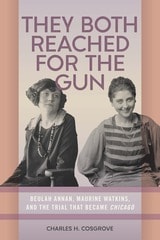
They Both Reached for the Gun
Beulah Annan, Maurine Watkins, and the Trial That Became ChicagoCharles H. Cosgrove
Southern Illinois University Press, 2024
Honorable Mention, 2025 Society of Midland Authors Award in History!
Examining the case that inspired a pop culture phenomenon
In 1924 Beulah Annan was arrested and incarcerated for killing her lover, Harry Kalsted. Six weeks later, a jury acquitted her of murder. Inspired by the sordid event, trial, and acquittal, Maurine Watkins, a reporter at the time, wrote the play Chicago, a Broadway hit that was adapted several times. Through a fresh retelling of the story of Annan and of Watkins’s play, Charles H. Cosgrove provides the first critical examination of the criminal case, and an initial exploration of the era’s social assumptions that made the message of the play so plausible in its own time. His careful historical research challenges the received portrait of Annan as a killer who got away with murder, and of Watkins as a savvy cub reporter and precocious playwright.
In They Both Reached for the Gun, Charles H. Cosgrove expertly combines inquest and police records, and interviews with Annan’s relatives, to analyze the participants, the trial, and the subsequent play. Although no one will ever know what really happened in the Kenwood apartment on Chicago’s south side one hundred years ago, Cosgrove’s interrogation shows how sensationalized Watkins’s writing was. Her reporting on the Annan case perpetuated falsehoods about Annan’s so-called “confession,” and her play gave an inaccurate portrayal of Chicago’s criminal justice system. Despite Watkins’s insistence that her drama revealed the truth about its subjects without any exaggeration, her play depicted police, prosecutors, and judges as the only “good guys” in the story, ignoring those who lied, misled, and used brutal methods to obtain forced confessions.
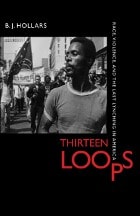
Thirteen Loops
Race, Violence, and the Last Lynching in AmericaB. J. Hollars
University of Alabama Press, 2011
The death of Vaudine Maddox—and the lynchings that followed—serves as a cautionary tale about the violence that occurred in the same region nearly fifty-years later, highlighting the cowardice, ignorance, and happenstance that sustained a culture of racial intolerance far into the future.Nearly half a century later, after a black bank robber was acquitted for the murder of police Sergeant Gene Ballard, two Klansmen took it upon themselves to exact revenge on an innocent victim--nineteen-year-old African American Michael Donald. Donald's murder--deemed the last lynching in America--reignited the race debate in America and culminated in a courtroom drama in which the United Klans of America were at long last put on trial.
While tracing the relationships among these murders, B. J. Hollars's research led him deep into the heart of Alabama’s racial, political, and legal landscapes. A work of literary journalism, Thirteen Loops draws upon rarely examined primary sources, court documents, newspaper reports, and first-hand accounts in an effort to unravel the twisted tale of a pair of interconnected murders that forever altered United States' race relations.
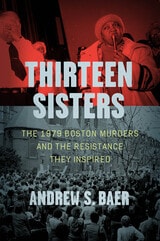
Thirteen Sisters
The 1979 Boston Murders and the Resistance They InspiredAndrew S. Baer
University of Chicago Press, 2027
The murder of thirteen women and girls in 1979 and the social movement they launched.
In four terrifying months in 1979, thirteen women and girls—twelve Black, one white—were murdered in Boston. All were found in or near Roxbury, a predominantly Black neighborhood in a city famously beset by racial strife and division. Fears of a serial killer spread within Black communities. But the authorities wouldn’t hear of it: these were just ordinary, everyday murders of unimportant people, killed by men they knew. The police said Black residents had nothing to fear—and the media implied that white people could safely ignore the carnage.
Yet Black feminists refused to accept the murders of Black women and girls. The real serial killers, they argued, were chronic racism, sexism, poverty, and domestic violence, including violence committed by Black men. Something had to be done.
Thirteen Sisters tells the gripping stories of the women who died—their lives, their brutal deaths, the attempts to solve them—and the renowned Combahee River Collective, whose activism in the wake of the murders brought national attention to the overlapping oppressions that made Black women and girls so vulnerable to violence. Historian Andrew S. Baer interviews family members and activists to introduce readers to the victims as complete people and investigate the events surrounding their deaths, unspooling a fast-paced and urgent narrative about crime, race, and marginalization. Baer also pays tribute to the Black feminists who saw the social roots of this violence and called for radical change, demands that remain all too relevant today.
Riveting, enraging, and humane, Thirteen Sisters is an indictment of the neglectful institutions that have failed Black women and a testament to the activists who transformed how we understand systemic oppression.
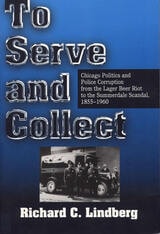
To Serve and Collect
Chicago Politics and Police Corruption from the Lager Beer Riot to the Summerdale Scandal, 1855-1960Richard C. Lindberg
Southern Illinois University Press, 1998
Crooked politicians, gangsters, madams, and cops on the take: To Serve and Collect tells the story of Chicago during its formative years through the history of its legendary police department.
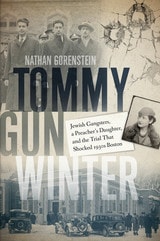
Tommy Gun Winter
Jewish Gangsters, a Preacher's Daughter, and the Trial That Shocked 1930s BostonNathan Gorenstein
University Press of New England, 2015
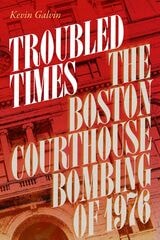
Troubled Times
The Boston Courthouse Bombing of 1976Kevin Galvin
Brandeis University Press, 2026
Interweaves the stories of a revolutionary and a bombing victim to explore the roots and unintended consequences of political violence.
1976. The Vietnam War had ended, but radical political groups still operated clandestinely throughout the United States. Nowhere was the threat of civil unrest greater than in Boston. Racial tensions had been building since a federal judge ordered the desegregation of the Boston Public Schools, and civic leaders were counting on the pageantry of the nation’s Bicentennial to boost both tourism and investment. In April, the Sam Melville-Jonathan Jackson Unit, prison reformers schooled in Marxism and angered by US interventions abroad, bombed the Suffolk County Courthouse, injuring twenty-two people. The site of the blast marked the spot where the lives of two men intersected: a mill town kid who’d been radicalized in Vietnam and prison, and an immigrant waiting in line because he needed to renew a cab license.
Fifty years after the bombing shook the city, Troubled Times tells the story of lives changed by political violence at a time when the American experiment is again in crisis.