Results by title
124 books match the query 'Twenty - First Century' and 21 start with t

Teaching Shakespeare into the Twenty-First Century
Ronald E. Salomone
Ohio University Press, 1997
Shakespeare is a central shaping and defining figure in our culture. His plays are being taught, filmed, and performed every day in many places and in most of the world’s languages. At the same time, teachers and students from junior high through the early undergraduate years often struggle with the Bard in discomfort and negativity that can only be counter-productive.
Teaching Shakespeare into the Twenty-First Century is by teachers and for teachers. Specifically, it is a collection of essays in which teachers describe their best ideas and experiences as they confront the challenges of bringing Shakespeare alive for students who often feel intimidated and less than eager to participate.
It is on behalf of these students that this book has been prepared. Written by middle school, high school, and college teachers from around the country, the essays record successful efforts at bringing Shakespeare and the student together in fresh, exciting, and productive ways.
From today’s performance techniques, designed to make students active participants in the learning process, through a host of extra-textual resources such as festivals and films, to a look at applications of the computer and cyberspace, Teaching Shakespeare into the Twenty-First Century is a book of success stories.
Covering the most contemporary issues, critical theory, and classroom approach, it is designed to provide teachers with a useful, friendly, and forward-looking resource as they continue to make Shakespeare available into the future.
The Color Line
Legacy for the Twenty-First CenturyJohn Hope Franklin
University of Missouri Press, 1993
The Color Line
Legacy for the Twenty-First CenturyJohn Hope Franklin
University of Missouri Press, 1993
The Divided States
Unraveling National Identities in the Twenty-First CenturyEdited by Laura J. Beard and Ricia Anne Chansky
University of Wisconsin Press, 2023
Working across auto/biography studies, American studies, and human geography—all of which deal with the current interest in competing narratives, “alternative facts,” and accountability—the essays engage in and contribute to critical conversations in classrooms, scholarship, and the public sphere. The authors draw from a variety of fields, including anthropology; class analysis; critical race theory; diasporic, refugee, and immigration studies; disability studies; gender studies; graphic and comix studies; Indigenous studies; linguistics; literary studies; sociology; and visual culture. And the genres under scrutiny include diary, epistolary communication, digital narratives, graphic narratives, literary narratives, medical narratives, memoir, oral history, and testimony.
This fresh and theoretically engaged volume will be relevant to anyone interested in the multiplicity of voices that make up the US national narrative.
The Essential Guide to Aging in the Twenty-First Century
Mind, Body, and BehaviorDonald H. Kausler, Barry C. Kausler & Jill A. Krupsaw
University of Missouri Press, 2007
For more than a decade, The Graying of America has helped thousands of middle-aged and senior citizens find their way through the thickets and thorns of growing old. Now greatly revised and expanded to include information gleaned from studies of the past five years, this third edition has been retitled to stress its ongoing purpose: conveying a wealth of commonsense information for general readers in nontechnical language.
The book is a storehouse of concise, useful information on the effects of aging on health, the mind, and behavior. Its 588 entries (including 172 new and 150 substantially revised) cover a broad spectrum of topics—from adjusting to retirement to grandparenting, sleep disorders to Alzheimer’s disease. All are directed to the average reader; all stress successful aging and how to accomplish it.
New entries cover such topics as the incidence and causes of frailty, the cognitive benefits of diversified activity, and findings of the Women’s Health Initiative. There is new information on matters like the effects of untreated hearing impairment on spouses and the impact of insufficient exposure to sunlight on sleep, plus new insight into what to look for in searching for a quality nursing home for a loved one.
Also included are results of recent studies on interventions that help to reduce age-related declines in mental and physical health, among them revelations that reports on age-related declines in memory have been skewed by testing errors. And with memory a concern for seniors fearful of declining mental agility, the book tells how to bypass memory problems—such as how to remember where you parked your car—and how physical exercise and challenging mental games can help reduce the risk of dementia. Other “how to avoid” entries offer ways to protect against eye fatigue in computer use, hip fractures when falling, and back injuries while lifting heavy objects.
No other book is so specifically geared to the challenges of how to reduce or even eliminate many of the problems associated with growing old. Aging in the Twenty-First Century can help seniors come to grips with their own aging process—and help younger adults understand what is happening to older family members.
The Indecent Screen
Regulating Television in the Twenty-First CenturyChris, Cynthia
Rutgers University Press, 2019
The Megachurch and the Mainline
Remaking Religious Tradition in the Twenty-first CenturyStephen Ellingson
University of Chicago Press, 2007
Religious traditions provide the stories and rituals that define the core values of church members. Yet modern life in America can make those customs seem undesirable, even impractical. As a result, many congregations refashion church traditions so they may remain powerful and salient. How do these transformations occur? How do clergy and worshipers negotiate which aspects should be preserved or discarded?
Focusing on the innovations of several mainline Protestant churches in the San Francisco Bay Area, Stephen Ellingson’s The Megachurch and the Mainline provides new understandings of the transformation of spiritual traditions. For Ellingson, these particular congregations typify a new type of Lutheranism—one which combines the evangelical approaches that are embodied in the growing legion of megachurches with American society’s emphasis on pragmatism and consumerism. Here Ellingson provides vivid descriptions of congregations as they sacrifice hymns in favor of rock music and scrap traditional white robes and stoles for Hawaiian shirts, while also making readers aware of the long history of similar attempts to Americanize the Lutheran tradition.
This is an important examination of a religion in flux—one that speaks to the growing popularity of evangelicalism in America.
The Myth of Opportunity
Music, Labor, and Platforms in the Twenty-First CenturyEdiz Ozelkan
Rutgers University Press, 2027
Justin Bieber launched his music career on YouTube in 2007, Lil Nas X’s “Old Town Road” exploded on TikTok in 2019, and Oliver Anthony’s “Rich Men North of Richmond” soared to the top of the Billboard charts just two weeks after its YouTube debut in 2023. These viral successes inspire countless artists to upload music online, fueled by the promise that technology can democratize opportunity, but does this promise hold true?
The Myth of Opportunity: Music, Labor, and Platforms in the Twenty-First Century critically examines the myth of technology as a great equalizer in the music industry. While platforms like Spotify claim to empower artists, the reality is that rewards remain highly unequal. Through macroeconomic analysis and time series methodology, this book investigates how streaming services have reshaped opportunity from a labor perspective across professions, industries, and regions, offering a comprehensive, empirical view on the true impact of digital platforms on cultural production with a focus on music.
The New Black Middle Class in the Twenty-First Century
Landry, Bart
Rutgers University Press, 2018
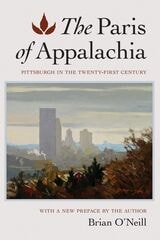
The Paris of Appalachia
Pittsburgh in the Twenty-First CenturyBrian O'Neill
Carnegie Mellon University Press, 2026
Maybe you never wondered if any metro area nearly straddles the borders of three major regions of the country, but The Paris of Appalachia: Pittsburgh in the Twenty-First Century tells us why this city is a place apart. It’s not East Coast, Midwest, or Southern, but the rest of America can fret about how to label Pittsburgh. It’s just fine being a walkable town that plays a big city on TV. Brian O'Neill, who walked its streets for more than three decades as a newspaper columnist, fell in love with the place from the moment he arrived. And when you read what he found, odds are better than even that you will, too. This reissue of the book includes a new introduction.
The Passport That Does Not Pass Ports
African Literature of Travel in the Twenty-First CenturyIsabel Balseiro
Michigan State University Press, 2020
The Planetary Turn
Relationality and Geoaesthetics in the Twenty-First CenturyEdited by Amy J. Elias and Christian Moraru
Northwestern University Press, 2015
A groundbreaking essay collection that pursues the rise of geoculture as an essential framework for arts criticism, The Planetary Turn shows how the planet—as a territory, a sociopolitical arena, a natural space of interaction for all earthly life, and an artistic theme—is increasingly the conceptual and political dimension in which twenty-first-century writers and artists picture themselves and their work. In an introduction that comprehensively defines the planetary model of art, culture, and cultural-aesthetic interpretation, the editors explain how the living planet is emerging as distinct from older concepts of globalization, cosmopolitanism, and environmentalism and is becoming a new ground for exciting work in contemporary literature, visual and media arts, and social humanities. Written by internationally recognized scholars, the twelve essays that follow illustrate the unfolding of a new vision of potential planetary community that retools earlier models based on the nation-state or political “blocs” and reimagines cultural, political, aesthetic, and ethical relationships for the post–Cold War era.
The Power of Writing
Dartmouth '66 in the Twenty-First CenturyEdited by Christiane Donahue and Kelly Blewett
Dartmouth College Press, 2015
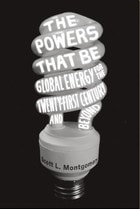
The Powers That Be
Global Energy for the Twenty-first Century and BeyondScott L. Montgomery
University of Chicago Press, 2010
Thirty years ago, our global energy landscape did not look remarkably different from what it does today. Three or four decades from now, it certainly will: dwindling oil reserves will clash with skyrocketing demand, as developing nations around the world lead their citizens into the modern energy economy, and all the while, the grave threat of catastrophic climate change looms ever larger. Energy worries are at an all-time high—just how will we power our future?
With The Powers That Be, Scott L. Montgomery cuts through the hype, alarmism, and confusion to give us a straightforward, informed account of where we are now, and a map of where we’re going. Starting with the inescapable fact of our current dependence on fossil fuels—which supply 80% of all our energy needs today—Montgomery clearly and carefully lays out the many alternative energy options available, ranging from the familiar, like water and solar, to such nascent but promising sources as hydrogen and geothermal power. What is crucial, Montgomery explains, is understanding that our future will depend not on some single, wondrous breakthrough; instead, we should focus on developing a more diverse, adaptable energy future, one that draws on a variety of sources—and is thus less vulnerable to disruption or failure.
An admirably evenhanded and always realistic guide, Montgomery enables readers to understand the implications of energy funding, research, and politics at a global scale. At the same time, he doesn’t neglect the ultimate connection between those decisions and the average citizen flipping a light switch or sliding behind the wheel of a car, making The Powers That Be indispensible for our ever-more energy conscious age.
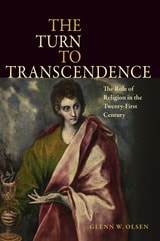
The Turn to Transcendence
The Role of Religion in the Twenty-First CenturyGlenn Olsen
Catholic University of America Press, 2010
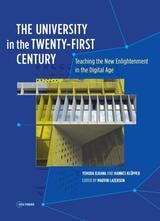
The University in the Twenty-first Century
Teaching the New Enlightenment in the Digital AgeHannes Klöpper
Central European University Press, 2016
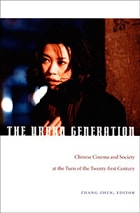
The Urban Generation
Chinese Cinema and Society at the Turn of the Twenty-First CenturyZhen Zhang, ed.
Duke University Press, 2007
The contributors analyze the historical and social conditions that gave rise to the Urban Generation, its aesthetic innovation, and its ambivalent relationship to China’s mainstream film industry and the international film market. Focusing attention on the Urban Generation’s sense of social urgency, its documentary impulses, and its representations of gender and sexuality, the contributors highlight the characters who populate this new urban cinema—ordinary and marginalized city dwellers including aimless bohemians, petty thieves, prostitutes, postal workers, taxi drivers, migrant workers—and the fact that these “floating urban subjects” are often portrayed by non-professional actors. Some essays concentrate on specific films (such as Shower and Suzhou River) or filmmakers (including Jia Zhangke and Zhang Yuan), while others survey broader concerns. Together the thirteen essays in this collection give a multifaceted account of a significant, ongoing cinematic and cultural phenomenon.
Contributors. Chris Berry, Yomi Braester, Shuqin Cui, Linda Chiu-han Lai, Charles Leary, Sheldon H. Lu, Jason McGrath, Augusta Palmer, Bérénice Reynaud, Yaohua Shi, Yingjin Zhang, Zhang Zhen, Xueping Zhong
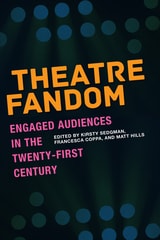
Theatre Fandom
Engaged Audiences in the Twenty-first CenturyKirsty Sedgman
University of Iowa Press, 2025
Contributors: Tom Cantrell, Francesca Coppa, Ruth Foulis, Helen Freshwater, Emily Garside, Caroline Heim, Matt Hills, Natalie Ibu, Laura MacDonald, Dominique Morisseau, Rachael Nicholas, Louie Lang Norman, Owen G. Parry, Stephanie E. Pitts, Sarah M. Price, Beth Emily Richards, Kirsty Sedgman, Megan Vaughan, Ben Walmsley, Sarah K. Whitfield
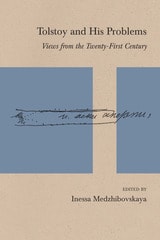
Tolstoy and His Problems
Views from the Twenty-First CenturyEdited by Inessa Medzhibovskaya
Northwestern University Press, 2019
In the broadest sense—with essays on a variety of issues that occupied Tolstoy, such as nihilism, mysticism, social theory, religion, Judaism, education, opera, and Shakespeare—the volume offers a fresh evaluation of Tolstoy's program to reform the ways we live, work, commune with nature and art, practice spirituality, exchange ideas and knowledge, become educated, and speak and think about history and social change.
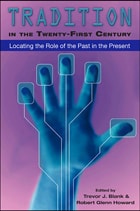
Tradition in the Twenty-First Century
Locating the Role of the Past in the PresentTrevor J. Blank and Robert Glenn Howard
Utah State University Press, 2013
Emphasizing how tradition adapts, survives, thrives, and either mutates or remains stable in today’s modern world, the contributors pay specific attention to how traditions now resist or expedite dissemination and adoption by individuals and communities. This complex and intimate portrayal of tradition in the twenty-first century offers a comprehensive overview of the folkloristic and popular conceptualizations of tradition from the past to present and presents a thoughtful assessment and projection of how “tradition” will fare in years to come. The book will be useful to advanced undergraduate or graduate courses in folklore and will contribute significantly to the scholarly literature on tradition within the folklore discipline.
Additional Contributors: Simon Bronner, Stephen Olbrys Gencarella, Merrill Kaplan, Lynne S. McNeill, Elliott Oring, Casey R. Schmitt, and Tok Thompson
Transition Scenarios
China and the United States in the Twenty-First CenturyDavid P. Rapkin and William R. Thompson
University of Chicago Press, 2013